Dubai Police Counterfeit Products Warning Puts Young Online Sellers on Notice, Sharing Fakes Is Also a Crime
A Dubai Police counterfeit products warning issued this week makes one thing crystal clear to young UAE residents: promoting or selling fake goods on social media is not a grey area, it is illegal, and it is punishable under UAE law.
## The Rumor Going AroundWalk into any school common room, university group chat, or family WhatsApp thread in Dubai right now, and you will likely hear some version of this: *”It’s just Instagram. As long as you’re not running a shop, you can’t get in trouble for posting about cheap stuff.”*Some young people genuinely believe that reposting a deal, tagging a seller, or earning a small commission for promoting a product online puts them safely outside the law. Others think the rules only apply to large-scale operations, warehouses full of fake handbags, not a teenager’s phone screen. That assumption is wrong, and Dubai Police have now said so explicitly.The Reality: Dubai Police Official Channels Set the Record Straight
Dubai Police confirmed through their official channels that promoting or selling counterfeit products on social media is a violation of UAE law, full stop. The warning was directed specifically at young people, reflecting a clear-eyed understanding of where the trade has moved: away from back-street markets and onto Instagram stories, TikTok shops, and Snapchat DMs.
Here is where it gets serious for anyone who thought “sharing” was harmless. Under the UAE’s legal framework, liability does not stop at the person completing the transaction. Anyone amplifying a counterfeit listing, a micro-influencer posting an affiliate link, a friend reposting a “deal”, can carry legal exposure. The logic is straightforward: amplification expands reach, normalises illegal trade, and makes enforcement harder once listings vanish and accounts get deleted. Authorities are not just targeting the seller at the end of the chain. They are targeting the chain itself.
Why This Warning Lands Hard in Dubai’s Digital Economy
Dubai’s position as a global retail and logistics hub means brand protection is a standing enforcement priority, not a seasonal crackdown. The UAE treats counterfeit trade as an economic crime that can involve fraud, trademark infringement, and organised distribution networks. When fake goods move through social media, they reach residents and tourists at speed, with almost no way to verify product origin, storage conditions, or authenticity. The consumer safety stakes are real: counterfeit cosmetics, perfumes, pharmaceuticals, and electrical accessories have been linked to allergic reactions, poisoning, fires, and device damage. For families, the risk is sharper when these items are sold cheaply to students through platforms they use daily.
The Dubai Police advisory also sits within a wider campaign on digital responsibility. Authorities have been consistently messaging on cyber scams, online fraud, and dangerous social media trends. The counterfeit warning is the latest layer of that effort, and it signals a tightening expectation: verify what you sell, verify what you promote, keep proof of purchase, and treat suspiciously low prices as a red flag rather than a bargain. For legitimate small businesses and retailers, consistent enforcement on this front also protects fair competition, illegal sellers undercut honest traders and erode consumer trust in Dubai’s retail ecosystem.
- Who issued the warning: Dubai Police, via official channels
- Who it targets: Young people promoting or selling counterfeit goods on social media
- What is prohibited: Selling AND promoting counterfeit products online, both carry legal exposure
- Legal basis: UAE law on counterfeit trade, covering fraud, trademark infringement, and organised distribution
- Consumer risks flagged: Fake cosmetics, perfumes, pharmaceuticals, and electrical items linked to health and safety hazards
- Broader context: Part of Dubai Police’s wider online safety campaign covering scams and harmful digital trends
- How to report: Through Dubai Police’s official channels and the eCrime platform
If you are earning commissions, reposting deals, or running an informal online store in the UAE, the product’s authenticity is your legal responsibility, not just the original seller’s. Dubai Police have made the boundary clear: fake goods on social media are an enforcement priority, and “I was just sharing it” is not a defence. When in doubt, verify the source, keep your receipts, and report suspicious listings through official channels.

Free Parking Eid Al Adha 2026: 4 UAE Emirates Join In
Free Parking Eid Al Adha 2026 Is Confirmed Across Four UAE Emirates, And Dubai Is Going Further With Extended Metro and Tram Hours
Free parking Eid Al Adha 2026 is officially on the table for residents across four UAE emirates, with public parking fees set to be waived from Monday, May 25 through Friday, May 29, and Dubai is sweetening the deal by running extended Dubai Metro and Dubai Tram services throughout the entire holiday window.
What's Actually Being Waived, And Where the Free Ride Ends
The fee waiver covers standard paid public parking zones managed by the relevant municipal and transport authorities across the four participating emirates. That means the usual hourly or daily charges residents pay at street-level bays and open-air public lots will simply not apply during the five-day Eid Al Adha break. For most drivers, that translates directly to a lighter wallet load during one of the busiest travel periods of the year.
Before you assume every parking spot in the country is up for grabs, there are firm boundaries. Multi-storey parking buildings, private developer-controlled facilities, special event zones, and any area with safety restrictions, think loading bays, fire hydrant clearances, and no-parking corridors, remain under normal rules. Critically, traffic enforcement does not take a holiday: fines for illegal parking, blocking traffic, or occupying reserved spaces will still be issued even when the fee meters go dark. The waiver is about cost, not about suspending road safety.
How This Changes Your Eid Plans From Day One
For Dubai residents specifically, the RTA's decision to extend Dubai Metro and Dubai Tram operating hours is the detail that reshapes evening plans most dramatically. The Metro is the backbone connector between Downtown Dubai, Deira, and the Marina and JBR corridor, all of which see enormous footfall during Eid. Longer service windows mean families can stay out later for shopping, dining, and waterfront events without watching the clock for the last train, and without defaulting to taxis during peak surge-pricing hours. For anyone who has been caught paying three times the normal fare on a busy Eid night, that alone is worth planning around.
- Holiday window: May 25, 29, 2026 (five days)
- Emirates covered: Four UAE emirates, including Dubai
- What's free: Standard paid public parking zones managed by authorities
- What's not free: Multi-storey buildings, private lots, restricted and safety zones
- Enforcement status: Illegal parking fines remain active throughout
- Dubai transport bonus: Extended Dubai Metro and Dubai Tram service hours across the full holiday period
- Source: Khaleej Times (reported May 23, 2026)
Five days of waived parking fees across four emirates removes a real daily cost for residents during one of the UAE's highest-traffic holiday periods. Dubai's extended Metro and Tram hours add a layer of practical mobility that keeps late-night plans viable without the taxi surge-pricing penalty. Check your specific zone and emirate authority before heading out, the free window is generous, but the rules around restricted areas haven't changed.

Hajj 2026 Arrivals Top 1.5 Million in Saudi Arabia
Hajj 2026 Arrivals Break 1.5 Million, Surpassing Last Year Despite Regional Conflict
Hajj 2026 arrivals in Saudi Arabia have crossed the 1.5 million mark, already outpacing the full early-season count recorded in 2025, a number that signals just how resilient demand for the pilgrimage remains even as the wider Middle East navigates a period of sustained tension.
The Numbers Behind the Season's Biggest Mass Movement
Saudi Arabia's General Directorate of Passports has confirmed that more than 755,000 pilgrims have entered the Kingdom through official, monitored entry channels alone. When combined with arrivals processed through other regulated pathways, the cumulative figure has cleared 1.5 million, and the season is far from over. Authorities are now projecting total participation to approach 2 million Muslims before the final rites conclude.
Hajj entry operates through a tightly controlled visa and permit system. Saudi border and passport infrastructure tracks every arrival against an approved permit type, a framework designed specifically to prevent unauthorised pilgrimage attempts and reduce dangerous overcrowding across Makkah, Mina, Arafat, and Muzdalifah. Pilgrims move through timed group dispatches along designated corridors, with multi-agency operations managing heat-risk, emergency response, and transport flow simultaneously. When early-season volumes run this high, that entire system absorbs pressure from day one.
What This Means for Your Wallet and Your Travel Plans
For UAE-based pilgrims and the operators serving them, the headline figure translates directly into tighter availability and higher costs. When arrivals trend toward 2 million, flight seats and Makkah accommodation fill faster, last-minute changes become significantly more expensive, and the window for securing compliant, operator-led packages narrows sharply. UAE travel companies and corporate HR teams managing staff leave cycles around Hajj return dates should treat current booking timelines as compressed. The Saudi General Directorate of Passports' enforcement focus on correct visa and permit types also means airlines operating UAE-Saudi routes are applying stricter pre-boarding documentation checks, a detail that catches underprepared travellers at the gate.
| Data Point | Figure | Context |
|---|---|---|
| Total arrivals to date (2026) | 1.5 million+ | Surpasses equivalent 2025 arrival levels |
| Arrivals via official entry channels | 755,000+ | Confirmed by Saudi General Directorate of Passports |
| Projected total season participation | ~2 million | Saudi authority forecast; season ongoing |
| Key sites under crowd management | Makkah, Mina, Arafat, Muzdalifah | Timed group dispatch system in operation |
| Claim verification status | Unverified (independent audit) | Figures sourced from Saudi authorities; not independently verified at time of publication |
- Booking window: Higher volumes compress availability, early confirmed bookings through licensed operators carry a clear cost advantage this season.
- Documentation checks: UAE-based pilgrims should verify permit type and visa compliance before reaching the airport; airlines are applying stricter pre-departure screening.
- Heat and crowd risk: Arrivals peaking early in the season means on-ground crowd density builds sooner, pilgrims should follow official timed-movement guidance strictly.
- Leave planning: UAE employers with staff travelling for Hajj should confirm return logistics now; last-minute flight changes near 2 million total arrivals carry a significant price premium.
Hajj 2026 is shaping up to be one of the largest pilgrimages in recent years, with Saudi Arabia's operational infrastructure already absorbing volumes that have overtaken last year's pace. For UAE residents, the practical consequence is simple: the earlier documentation, bookings, and compliance checks are locked in, the smoother, and cheaper, the journey becomes. Regional conflict has not dampened demand; it has, if anything, underscored how central the pilgrimage remains for millions of Muslims across the GCC and beyond.

ICP Eid Al Adha Working Hours 2026: What to Know
ICP Eid Al Adha Working Hours 2026 Are Adjusted, Here's What Every Resident Needs to Do Before Visiting
If you have an Emirates ID to collect, a residency stamp to sort, or any ICP service centre visit planned around the Eid Al Adha break, the ICP Eid Al Adha working hours 2026 announcement from the Federal Authority for Identity, Citizenship, Customs and Port Security is the one update you cannot afford to miss.
So What Has ICP Actually Said?
The Federal Authority for Identity, Citizenship, Customs and Port Security, better known as ICP, has confirmed that its service centres across the UAE will operate on adjusted working hours during the Eid Al Adha holiday for 1447H (2026). The authority issued the guidance on 23 May 2026 via its official channels, flagging that timings are not a blanket, one-size-fits-all schedule. Hours can shift depending on which centre you are heading to and which specific service you need.
In plain terms: the centre near you may open later, close earlier, or run on a reduced counter setup compared to a normal working day. Some services, particularly those requiring a physical counter visit, like biometric capture or document collection, may only be available during tighter windows or by pre-booked appointment. The safest move is to verify your specific centre's schedule directly on the ICP official website or app before you leave home.
Why This Hits Harder Than a Typical Long Weekend
Eid Al Adha is one of the UAE's most significant public holidays, and it consistently triggers a spike in last-minute ICP requests. Residents planning to travel during the break often scramble to collect Emirates IDs, get residency stamps processed, or push through pending visa applications before they fly. When service windows shrink, that demand gets squeezed into fewer operating hours, meaning queues build faster, appointment slots disappear quickly, and anything left to the final day before the holiday can easily slip past the deadline.
- Authority: Federal Authority for Identity, Citizenship, Customs and Port Security (ICP)
- Holiday Period: Eid Al Adha 1447H, 2026
- What's Changing: Service centre working hours are adjusted; timings vary by centre and service type
- Services Most Affected: Emirates ID collection, residency stamping, entry permit processing, biometric appointments
- Digital Alternative: Application submission, status tracking, and fee payment remain available via ICP's online portal and app where applicable
- Verification Source: ICP official website and official social channels (@UAEICP)
The Federal Authority for Identity, Citizenship, Customs and Port Security has adjusted its service centre hours for Eid Al Adha 1447H (2026), and the exact timings can differ from one centre to the next. If you have anything time-sensitive, Emirates ID, residency, or visa-related, get it done before the holiday window or confirm your centre's hours before making the trip. When in doubt, go digital first and save the in-person visit for what genuinely cannot be done online.
Your Next Steps, Don't Wing It
Before you visit any ICP centre during the Eid Al Adha period, do this:1. Check the ICP official website at icp.gov.ae for the latest centre-by-centre timings and service availability. 2. Follow @UAEICP on official social channels for real-time announcements, holiday schedules can update at short notice. 3. Use the ICP smart app to submit applications, track status, and pay fees without needing to visit a centre at all. 4. Book an appointment in advance if your service requires a counter visit, walk-in availability during holiday periods is significantly reduced. 5. HR managers and PRO teams: Clear any pending biometrics or document collections before the Eid window opens. Non-urgent submissions are better rescheduled for after the holiday.FAQ
*Credit: Federal Authority for Identity, Citizenship, Customs and Port Security (ICP) Official Website*
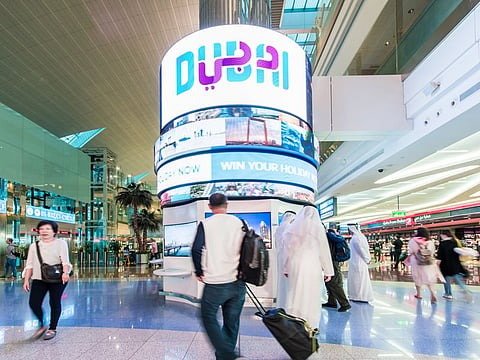
DXB Airlines List: 40+ Carriers Flying Now
The DXB Airlines List Is Bigger Than You Think, Here's Every Reason That Should Excite You
The DXB airlines list currently runs to more than 40 active carriers, making Dubai International Airport one of the most connected single-runway hubs on the planet, and if you're flying out any time soon, knowing who's operating (and how to confirm it in real time) could save you a serious headache.
Why This List Is Worth Three Minutes of Your Time Right Now
As of 23 May 2026, Gulf News confirmed that upwards of 40 airlines are actively operating flights through Dubai International Airport (DXB). That's not a historical figure or a pre-pandemic peak, that's the live picture today. The roster spans European legacy carriers like Lufthansa and KLM, transatlantic heavyweights like Delta Air Lines, and South Asian giants like Air India, alongside dozens of regional and low-cost operators connecting Dubai to virtually every time zone.
But here's the part most travellers miss: the list shifts. IATA runs two seasonal timetable cycles each year, summer and winter, and airlines routinely adjust frequencies, suspend routes, or add new services between those windows. A carrier that flew daily last month may now operate three times a week. One that wasn't on your radar six weeks ago may have just launched a new route. That's why the number "40+" is a floor, not a ceiling, and why live data always beats memory.
The Full Breakdown: What 40+ Airlines Actually Means for You
For Dubai residents and frequent flyers, a deep airline roster at DXB translates directly into competitive fares, broader departure time windows, and genuine choice across baggage policies, loyalty programmes, and cabin products. When 40-plus carriers compete for the same passenger on a Dubai, London or Dubai, Mumbai route, pricing pressure works in your favour. You're also less exposed to a single carrier's disruption, if one airline cancels, alternatives are usually available on the same day.
The flip side? More airlines means more terminal complexity. DXB operates across Terminal 1 (Star Alliance and select carriers), Terminal 2 (flydubai and regional operators), and the flagship Terminal 3 (Emirates and its codeshare partners). Getting your terminal wrong, especially during peak morning and evening banks, can cost you a connection. Always confirm your terminal assignment when you check in online, not at the kerb.
The Carriers You're Most Likely to Book, Confirmed at DXB
| Airline | Home Region | Terminal (Verify Before Travel) | |---|---|---| | Emirates | UAE | Terminal 3 | | flydubai | UAE | Terminal 2 | | Lufthansa | Germany | Terminal 1 | | KLM | Netherlands | Terminal 1 | | Delta Air Lines | USA | Terminal 1 | | Air India | India | Terminal 1 | | British Airways | UK | Terminal 1 | | Air Arabia | UAE | Terminal 2 |> Note: Terminal allocations are subject to change. Always verify via [Dubai Airports' official flight status tool](https://www.dubaiairports.ae) before travel.Why Schedules Move Fast, And What Triggers the Changes
Airline operations at DXB don't change on a whim, but they do change regularly, and for very specific reasons. The biggest drivers are IATA seasonal schedule flips (the next major changeover hits in late October 2026), short-notice disruptions like airspace constraints or aircraft maintenance pulls, and commercial calls by airlines on route profitability. A carrier might increase frequency on a high-demand leisure route for summer, then pull back to three weekly flights once school terms resume. Code-share adjustments, where one airline sells seats on another's metal, can also make a flight appear or disappear from booking engines without the operating carrier changing at all.
The practical upshot: even if an airline is confirmed on the DXB roster, your specific flight number, departure time, and day-of-week can shift right up to 72 hours before departure. Checking Dubai Airports' official flight status page and your airline's own manage-booking tool within 24 hours of travel isn't paranoia, it's just smart planning.
The Economic Engine Behind the Numbers
Dubai Airports, the authority that manages DXB, doesn't just count airlines for bragging rights. A diverse, 40-plus carrier mix directly supports the UAE's wider economic architecture. Inbound tourism arrivals, cargo belly-hold capacity on passenger flights, and the ease of business travel for multinationals headquartered in Dubai all depend on a deep and competitive airline network. The General Civil Aviation Authority (GCAA), which oversees aviation regulation across the UAE, works alongside Dubai Airports to ensure that new entrants can access slots and that operational standards remain consistent regardless of how many carriers are on the board.
- Confirmed carriers (examples): Lufthansa, KLM, Delta Air Lines, Air India, Emirates, flydubai
- Total active airlines at DXB: 40+ as of 23 May 2026
- Primary official check tool: Dubai Airports Flight Status (dubaiairports.ae)
- Regulatory authority: General Civil Aviation Authority (GCAA), UAE
- IATA schedule cycles: Summer (late March) / Winter (late October)
- Key terminals: T1 (international carriers), T2 (flydubai/regional), T3 (Emirates)
The Verdict: Best Move Before You Head to DXB
With 40-plus airlines operating through Dubai International Airport right now, you have more choice than at almost any other hub in the world, but that choice comes with moving parts. Before you leave for the airport, spend 90 seconds on Dubai Airports' live flight status tool and cross-check with your airline's app; it's the single highest-return travel habit you can build. The network is strong, the options are real, and the only thing standing between a smooth departure and a stressful one is live information.

UAE Oil Policy: Reported OPEC Exit And Strategic Shift: A report claims the UAE ended...
[SEO_TITLE] UAE OPEC exit claim: What's true and what isn't[META_DESCRIPTION] A report claims the UAE quit OPEC on May 1 after 60 years. Here's what official sources actually say, and what to watch next.UAE OPEC Exit Report Is Circulating, But Official Confirmation Is Still Missing
A UAE OPEC exit claim is spreading fast, with a report asserting the country walked away from nearly 60 years of membership on May 1, but neither OPEC's Secretariat nor the UAE Ministry of Energy and Infrastructure has publicly confirmed it.
## THE RUMOR: What People Are Forwarding on WhatsAppIf you've seen a message this week saying the UAE has quit OPEC after nearly six decades, you're not alone. The claim is doing the rounds across group chats and news feeds, citing a report published by Arabian Post that frames the reported departure as a calculated revenue-protection move, a way for Abu Dhabi to free itself from collective production ceilings before global oil demand softens over the long term.The story has a logical hook. The UAE has, for years, pushed for a higher production quota inside OPEC+, arguing its expanded capacity at ADNOC deserved greater recognition. Add in the global energy transition narrative, and an exit story feels plausible enough to share without questioning.But plausible is not the same as confirmed.THE REALITY: What OPEC and UAE Authorities Have, and Haven't, Said
The two authoritative sources on any OPEC membership change are the OPEC Secretariat in Vienna and the UAE Ministry of Energy and Infrastructure in Abu Dhabi. As of the time of publication, neither has issued a statement confirming that the UAE submitted a formal withdrawal notice, that any exit took effect on May 1, or that the UAE has stepped away from the OPEC+ coordination framework.
OPEC membership and OPEC+ participation are governed by formal processes. A country does not exit by simply announcing a strategic shift, there are procedural steps, including written notification to the Secretariat, that generate official documentation. When Ecuador and Qatar left OPEC in previous years, those departures were confirmed through official OPEC communications before any exit date was reported as fact. No equivalent confirmation exists for the UAE claim at this stage.
THE IMPACT: Why This Would Be a Seismic Shift If True
To be clear about the stakes: if the UAE did exit, the consequences for Gulf energy policy would be significant. The UAE is one of the world's top ten crude producers, and ADNOC has been aggressively expanding output capacity toward a 5 million barrel-per-day target. Outside a coordinated quota framework, Abu Dhabi would have full discretion over production volumes, a direct lever on global supply and, by extension, oil prices. For UAE residents and businesses, hydrocarbon revenues fund government spending, infrastructure investment, and the diversification projects that underpin Vision 2031. Any structural change to how those revenues are managed and protected carries real fiscal weight.
- Claim Source: Arabian Post report, published ahead of any official statement
- Reported Exit Date: May 1, 2026
- Membership Duration: Nearly 60 years
- Stated Rationale: Protecting national revenue ahead of projected long-term global oil demand decline
- Official Confirmation Status: Unverified, no statement from OPEC Secretariat or UAE Ministry of Energy and Infrastructure
- Key Precedent: Ecuador (2020) and Qatar (2019) exits were both confirmed via official OPEC communications before reporting as fact
THE VERDICT
The UAE OPEC exit claim is currently unverified. The Arabian Post report may be tracking a genuine policy direction, but a reported departure is not a confirmed departure, and the absence of any official statement from either OPEC's Secretariat or the UAE Ministry of Energy and Infrastructure is a significant gap. Watch for formal communications from those two sources before treating this as settled fact. Until then, forward with caution.