(Credit - Khaleej Times)
FIFA’s Reusable Water Bottle Ban Will Change How You Hydrate at Every 2026 World Cup Match
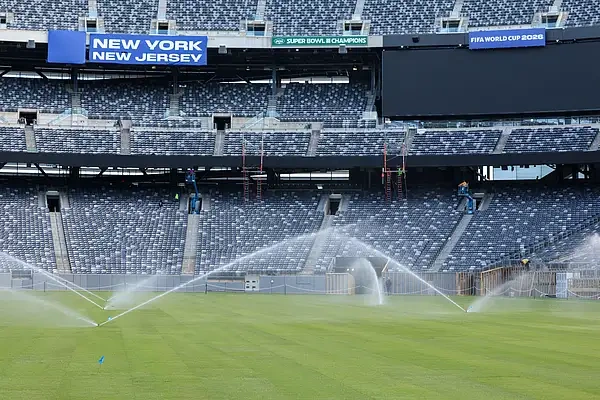
If you’re planning to attend a 2026 World Cup match, the FIFA reusable water bottle ban means your trusty refillable flask stays at the hotel, and your wallet takes the hit at the concession stand instead. FIFA has moved to prohibit reusable water bottles from all 16 stadiums across the United States, Canada, and Mexico, citing safety and security risk management in a late reversal of its earlier policy stance. The change was reported on June 4, 2026, just weeks before the tournament kicks off.
What Exactly Changed, and Why It Hits Your Pocket
Until recently, bringing a reusable water bottle into a World Cup venue appeared to be permitted under FIFA‘s fan guidance. That position has now been reversed, with FIFA framing the prohibition as a security measure, the same rationale used to ban hard-sided containers and certain liquids at major sporting events globally. The practical consequence is straightforward: fans who would have refilled a personal bottle throughout a match must now rely entirely on in-stadium bottled water sales.
With summer fixtures scheduled across North American venues, many of which face high heat and humidity, the shift from “bring-your-own” to “in-venue purchase” raises real questions about cost, queue times, and heat-safety access. No confirmed pricing cap or mandatory free-water policy has been announced by FIFA or the host venue operators at the time of publication.
How This Plays Out for Different Types of Fans
If you’re a general ticket holder attending a group-stage match in July heat, budget for multiple water purchases per person. In-stadium bottled water at major US sporting events typically costs between $5, $8 per bottle, though FIFA has not published a capped price for 2026 venues.If you’re travelling with children or have a medical condition, the absence of confirmed exceptions is the most pressing gap in current guidance. FIFA has not yet published a formal prohibited-items list that addresses medical hydration needs or infant formula. Check FIFA’s official fan information portal before matchday, and carry documentation if you require a medical exemption.If you’re an international fan flying in from outside North America, factor hydration costs into your matchday budget from the outset. Arriving at a stadium in Dallas, Miami, or Los Angeles in summer without a plan for water access is a genuine health-risk scenario, not just an inconvenience.- Policy status: Reusable water bottles banned across all 16 World Cup venues (US, Canada, Mexico)
- Reason given: Safety and security risk management, a reversal of FIFA’s earlier position
- Hydration access: In-stadium bottled water sales only; no confirmed refill stations or price caps announced
- Exceptions: No confirmed exemptions published yet for medical needs or children’s bottles
Before and After: What the Ban Changes for Fans
| Factor | Before the Ban | After the Ban |
|---|---|---|
| Bringing water into the stadium | Reusable bottle permitted under earlier guidance | Prohibited across all 16 venues |
| Hydration cost per person | Near-zero (refill your own bottle) | In-stadium purchase required; price unconfirmed |
| Queue impact | No concession queue needed for water | Additional pressure on concession throughput |
| Medical/family exceptions | Not formally addressed | Not yet confirmed or published by FIFA |
| Refill station availability | Not applicable | Not announced; status unknown |
What to Do Before You Go
1. Check FIFA’s official fan portal at FIFA.com for the finalised prohibited-items list for your specific venue, rules may be refined venue-by-venue before opening fixtures. 2. Review your host venue’s matchday guide directly (e.g., SoFi Stadium, MetLife Stadium, Estadio Azteca each publish their own entry policies) to confirm whether any stadium-level exceptions apply. 3. Budget for water costs per person, per match, particularly for afternoon kick-offs in high-heat cities. Do not assume free water access will be available at entry points. 4. If you have a medical hydration need, contact FIFA’s fan services team in advance and carry a doctor’s letter on matchday. Do not rely on gate staff to make on-the-spot exceptions without documentation. 5. Watch for updates on whether FIFA or host operators introduce sealed single-use bottle allowances, capped-price water policies, or free refill stations, these details are still unconfirmed as of June 5, 2026.FIFA’s reusable water bottle ban is a late, significant change that shifts the cost and logistics of staying hydrated entirely onto fans, at a summer tournament where heat safety is a genuine concern. The full prohibited-items list, any medical exceptions, and in-stadium water pricing have not yet been formally confirmed across all 16 venues. Until FIFA publishes complete matchday entry guidance, the safest approach is to check your specific venue’s policy, plan to purchase water inside, and carry any medical documentation you may need.

Emirates' First Emirati Female Captains Take Command
Emirates' First Emirati Female Captains, Hanan and Bakhita, Have Joined the Ranks
Emirates' first Emirati female captains, Hanan and Bakhita, have officially taken command of the flight deck, the airline confirmed this June, marking a moment that the UAE aviation community has been watching for years.
From First Officer to Final Authority: What the Promotion Actually Means
The captain's rank is not ceremonial. At Emirates, as on any commercial flight, the captain holds final operational authority, every safety call, every crew decision, every departure clearance runs through them. For Hanan and Bakhita, the promotion means they now sit in the left seat with full command responsibility, not just as a milestone on paper but as a daily operational reality on routes the airline operates out of Dubai International Airport.
Emirates announced the achievement through its official channels on June 5, 2026, with a direct statement: "Our first Emirati female Captains have joined the ranks." The airline framed the promotion as an inspiration for future generations, a signal that the command-upgrade pathway is open and has now been walked by Emirati women for the first time.
What This Signals for UAE Aviation and Emiratisation
For residents and families across Dubai who have daughters in aviation training or cadets working through Emirates' flight programmes, this promotion carries real weight. Emirates is one of the UAE's flagship employers and sits at the centre of the country's broader Emiratisation drive. High-profile command promotions like these are closely tracked as indicators of whether national talent pipelines are producing long-term leadership, not just entry-level placements.
- Who: Hanan and Bakhita, Emirati pilots promoted to captain rank at Emirates
- When: June 2026, confirmed by Emirates via official channels
- What changes: Both now hold final flight authority, including safety decision-making and crew leadership on commercial operations
- Why it resonates: First Emirati women to reach captain rank at the airline, a role historically held by men across global commercial aviation
The General Civil Aviation Authority (GCAA), which oversees pilot licensing and certification standards in the UAE, sets the regulatory framework that all captains, including Hanan and Bakhita, must meet before assuming command. Their promotion confirms they have cleared every technical and operational threshold required under UAE civil aviation regulations.
Hanan and Bakhita's promotion to captain at Emirates is the clearest signal yet that Emirati women are not just entering aviation, they are leading it. For the next generation of UAE cadets watching from flight schools and university aviation programmes, the left seat is no longer a distant prospect. The question now is whether Emirates and other UAE carriers accelerate the command-track pathways that got them there.

Lamine Yamal injury update: fit for June 15 opener
Lamine Yamal Injury Update: Spain Coach Expects Winger Ready for June 15 World Cup Opener Against Cape Verde
The Lamine Yamal injury update from Spain's camp is encouraging, coach Luis de la Fuente said on June 5 that the teenage winger is likely to be available for Spain's FIFA World Cup 2026 opening match against Cape Verde on June 15. Yamal has been managing a hamstring injury, but de la Fuente described his recovery as progressing positively.
Spain's Attack Hinges on a Hamstring: What De la Fuente Said
De la Fuente stopped short of guaranteeing a start, but his language was notably optimistic, "likely to feature" is the clearest signal yet that Spain's medical and coaching staff are confident Yamal will clear fitness protocols before the group-stage opener. Hamstring injuries carry a well-documented risk of recurrence in elite football, which means Spain's staff will almost certainly manage his training load and potentially his minutes in the first match, even if he is passed fit.
The June 15 fixture against Cape Verde is Spain's first competitive game of the tournament. Having Yamal available, even in a controlled, minutes-managed role, preserves Spain's preferred wide-threat structure and reduces the need for contingency lineups that would otherwise require opponents to prepare for a different attacking shape. If the medical team opts for a cautious return, an appearance from the bench remains a credible scenario.
Why Availability in Match One Carries Outsized Weight
Opening matches at a World Cup set the tactical tone for the entire group stage. A team's pressing intensity, chance-creation patterns, and substitution strategy in Match 1 directly shape how opponents in subsequent fixtures prepare their defensive setups. Yamal's presence, or absence, on June 15 will influence Spain's rotation decisions and opponent scouting reports for the remainder of the group phase.
- Player: Lamine Yamal, Spain winger
- Injury: Hamstring, recovery described as progressing well
- Target date: June 15, Spain vs Cape Verde, FIFA World Cup 2026 opener
- Coach assessment: Luis de la Fuente says Yamal is likely to be available
Spain's World Cup preparations received a significant boost as coach Luis de la Fuente confirmed Lamine Yamal's hamstring recovery is on track for the June 15 opener against Cape Verde. The teenager is expected to feature, though the exact role, starter or substitute, will depend on final fitness assessments in the days ahead. Spain's attacking options and tactical shape for the group stage will become clearer once the medical staff signs off ahead of kick-off.*Source: Khaleej Times / Luis de la Fuente press comments, June 5, 2026.*

IEA Red Zone Warning: Hormuz Oil Crisis Deepens
IEA Red Zone Warning: Hormuz Crisis Is Draining the World's Oil Safety Net
The IEA red zone warning, issued June 5, 2026, is unambiguous, the International Energy Agency says the global economy is approaching a threshold where oil market buffers can no longer absorb further shocks from the ongoing Strait of Hormuz crisis, and severe supply shortages could materialise as early as July.
The Chess Move: Not Just a Shipping Dispute, A Systemic Stress Test
The IEA isn't just flagging a regional chokepoint problem. It's signalling that the architecture of global energy security, spare production capacity, commercial inventories, and emergency strategic stocks, is being quietly hollowed out in real time. When those layers thin simultaneously, the system loses its ability to absorb the next shock. That is what "red zone" means in operational terms: the cushion is gone before the crisis peaks.
The Strait of Hormuz is the world's single most consequential oil-shipping corridor. A sustained disruption there doesn't require a complete blockade to cause damage, even partial interference with tanker traffic compresses the physical availability of prompt cargoes, forces rerouting, and drives up freight and insurance costs. The IEA's warning is that this compression is already happening, and the buffers that would normally absorb it are no longer adequate.
Economic Driver: Buffers Were Already Thin Before This Crisis
Global oil markets entered 2026 with limited spare capacity headroom and commercial inventories that had not been rebuilt to pre-pandemic norms. The Hormuz disruption has accelerated the drawdown. Once commercial stocks fall below operational minimums, importers and refiners shift from managing price risk to managing physical availability, a qualitatively different and more destabilising problem. The IEA's July, August window is not arbitrary: summer demand peaks for transport and power generation in the Northern Hemisphere, tightening the market precisely when the buffer erosion is most advanced.
Geopolitical Driver: The Strait Cannot Be Rerouted Around
Unlike some chokepoints, the Strait of Hormuz has no commercially viable bypass for the volumes it carries. Alternative routing, around the Arabian Peninsula via overland pipelines or longer sea lanes, exists for a fraction of normal throughput. The IEA's explicit call for a "full reopening" of the strait reflects this structural reality: there is no market-based workaround at scale. The geopolitical resolution of the crisis, not a supply-side adjustment, is the primary variable the agency is watching.
Inflation Driver: Energy Costs Feed Everything Else
A supply shock of the magnitude the IEA is describing does not stay contained to fuel prices. Higher crude costs transmit into transport, petrochemicals, fertilisers, and manufacturing inputs within weeks. For central banks already navigating sticky inflation, an energy-driven price spike complicates the path to rate normalisation, potentially keeping borrowing costs elevated for longer and compressing growth. The IEA's "red zone" framing is, in part, a warning to fiscal and monetary policymakers, not just energy ministers.
The Ripple Effect: Three Groups Facing Immediate Exposure
Energy-intensive industries and manufacturers face the most direct near-term pressure. If prompt crude and refined product availability tightens in July, August as the IEA warns, procurement costs rise and supply reliability falls simultaneously. Sectors with thin margins and limited hedging, mid-sized manufacturers, logistics operators, airlines, have the least capacity to absorb the shock. Inventory building ahead of the peak window is the rational response, but it accelerates the very drawdown the IEA is warning about.Governments managing import-dependent economies, particularly across South and Southeast Asia, which rely heavily on Gulf crude, face a dual exposure: higher import bills that widen current account deficits, and potential fuel subsidy pressures if retail prices are administered. The speed of any diplomatic resolution to the Hormuz situation will determine whether emergency stock releases become necessary. Strategic petroleum reserve drawdowns, if triggered, provide weeks of cover, not months.Financial markets and commodity traders are already pricing in elevated volatility. The IEA warning validates the directional risk that has been building in crude futures, tanker freight rates, and energy equity positioning. Wider spreads between near-term and forward delivery prices, a structure known as backwardation, signal that physical tightness is being priced into prompt markets. Shipping insurers and protection-and-indemnity clubs are also recalibrating war-risk premiums for Hormuz transits, a cost that ultimately flows through to end consumers.The Contrarian View
The strongest counter-argument is that the IEA has institutional incentives to issue precautionary warnings, and that markets, which process real-time tanker tracking, cargo data, and inventory flows, have not yet priced in a catastrophic shortage scenario. If major producers outside the Hormuz corridor accelerate output, or if a diplomatic channel opens faster than the IEA's timeline assumes, the July, August crunch could prove less severe than the agency's framing implies. The warning is calibrated to the current trajectory, not to a resolved scenario, and trajectories can change.
- Agency: International Energy Agency (IEA), warning issued June 5, 2026
- Risk window: Severe oil market shortages flagged for July and August 2026
- Core mechanism: Strait of Hormuz disruption draining spare capacity, commercial inventories, and emergency buffer stocks
- IEA's stated requirement: Full reopening of the Strait of Hormuz to avert a deeper supply shock
The IEA's red zone designation is a structural alarm, not a price forecast, it signals that the system's shock-absorption capacity is being consumed faster than it can be replenished. The July, August window is the critical test: if the Strait of Hormuz remains disrupted through peak summer demand, the gap between available supply and market need narrows to a point where price and availability stress become unavoidable. The next key signals to watch are tanker traffic data, any coordinated emergency stock release, and the diplomatic timeline for strait access.

Germany UN Security Council Seat Lost to Austria, Portugal
Germany's UN Security Council Seat Loss Exposes the Real Cost of Middle East Positioning
Germany's bid for a non-permanent UN Security Council seat has collapsed at the UN General Assembly in New York, with Austria and Portugal taking the available places, a defeat being described as Berlin's first such failure in 16 years and one that is now forcing a hard conversation about whether German foreign policy has drifted out of step with the broader UN membership.
Why a Security Council Seat Is a Strategic Asset, Not a Ceremonial One
Non-permanent seats on the UN Security Council are elected by the UN General Assembly, requiring a two-thirds majority of members present and voting. Regional groupings shape the competitive field, states within the same bloc compete for a fixed number of seats, meaning the contest is as much about coalition management and bilateral deal-making as it is about a country's global standing. Germany, Austria, and Portugal were all competing within the Western European and Others Group (WEOG), and the outcome was decided by secret ballot, which means the precise vote breakdown is not publicly available.
The seat itself carries concrete operational weight: agenda-setting authority on active conflicts, a platform for coalition-building on sanctions regimes, and direct influence over humanitarian resolutions and peacekeeping mandates. For a country like Germany, which has built its post-war identity around multilateralism and European diplomatic leadership, losing this platform is not a symbolic inconvenience. It is a measurable reduction in leverage at the table where the most consequential international decisions are made.
The Middle East Variable: Real Signal or Convenient Narrative?
Some diplomats and analysts are attributing the loss, at least in part, to Germany's positioning on Israel and the broader Middle East conflict. The argument is that Berlin's perceived alignment in Israel-related votes and statements alienated enough UN member states, particularly from the Global South and Arab blocs, to shift the outcome. However, this causal link is unverified. UN ballots are secret, and member states weigh a complex mix of factors when casting votes: regional solidarity agreements, bilateral aid relationships, reciprocity on past votes, and campaign commitments made in the lead-up to the election. Attributing the result to a single policy variable is analytically convenient but not confirmed by any official record.
What is documented is the outcome: Germany lost. Austria and Portugal won. And the debate inside Berlin over whether to recalibrate Middle East messaging is now live and public.
Three Groups Watching Berlin's Next Move
European Diplomatic Partners Germany's loss creates a quiet recalibration moment within the EU's collective diplomatic posture. Berlin has historically anchored European positions at the UN, and a weakened German platform means less German weight in shaping bloc-wide resolutions on conflicts, sanctions, and humanitarian access. Austria's successful bid now gives Vienna an elevated role in Security Council deliberations that would otherwise have defaulted to German influence.Global South Member States For the bloc of UN members that voted against Germany, whether motivated by Middle East policy perceptions, regional deals, or other bilateral calculations, the result sends a signal that established European powers are not immune to accountability through the ballot. These states now hold a demonstrated record of shifting outcomes, which increases their leverage in future UN campaign negotiations.German Policymakers and the Foreign Ministry The internal pressure in Berlin is now structural. A 16-year winning streak on Security Council bids has ended, and the foreign policy establishment must decide whether the loss reflects a genuine erosion of diplomatic capital or a one-cycle anomaly. The debate over Middle East policy recalibration, regardless of whether it actually drove the vote, will now be conducted against the backdrop of a concrete, public defeat.The Contrarian View
The strongest counter-argument to the "Middle East policy cost Germany the vote" narrative is that UN Security Council elections are notoriously opaque and driven by factors that have nothing to do with any single policy position. Austria and Portugal ran active, well-resourced campaigns with strong regional and bilateral support networks. Germany may have simply been outmanoeuvred in the coalition-building phase, not punished for a principled stance. Framing the loss as ideological blowback risks producing a policy overcorrection, adjusting positions not because they are wrong, but because they are politically costly in a specific voting context.- Vote Mechanism: UN General Assembly secret ballot; two-thirds majority required for election to non-permanent Security Council seats
- Competing Bloc: Germany, Austria, and Portugal all ran within the Western European and Others Group (WEOG)
- Historical Marker: Described as Germany's first failure to secure a non-permanent seat in 16 years
- Causality Status: The claim that Germany's Israel stance caused the loss is unverified; ballots are secret and multiple factors drive UN voting outcomes
Germany's UN Security Council seat loss is the most visible diplomatic setback Berlin has absorbed in over a decade and a half. The debate it has triggered over Middle East policy is real, but the causal link between that policy and the vote remains unproven. What is certain is that Austria and Portugal now hold the seats, and Germany must rebuild its campaign from scratch for the next available cycle.

Kuwait International Airport Drone Strike Kills One
Kuwait International Airport Drone Strike Kills One, Forces Temporary Closure as Regional Tensions Escalate
A drone strike hit Kuwait International Airport on June 3, 2026, killing one person and injuring several others in an attack that forced the temporary closure of one of the Gulf's busiest aviation hubs. Open-web reports attribute the drone to Iran, though Kuwait's Directorate General of Civil Aviation (DGCA) had not issued a fully verified official statement confirming the origin at the time of publication.
Significant Damage Reported as Kuwait DGCA Manages Reopening Timeline
The strike caused what open-web reports describe as significant structural damage to the airport, triggering an immediate suspension of operations. Flights were disrupted, with airlines facing diversions, slot compression, and cargo backlogs across GCC air corridors as a direct consequence. The incident occurred against a backdrop of heightened regional tensions between Iran and the United States, which have intensified pressure on Gulf aviation infrastructure in recent weeks.
Kuwait International Airport processes a substantial volume of transit and origin-destination traffic connecting the wider Gulf region to Europe, Asia, and beyond. Even a short-duration closure at a hub of this scale typically cascades into missed connections, rerouted aircraft, and knock-on delays that can persist well beyond the initial reopening. The Kuwait DGCA is the competent authority responsible for issuing airspace and operational directives; passengers and carriers should monitor its official channels directly for slot restoration timelines and any revised security screening procedures.
What UAE-Based Travellers and Airlines Need to Know Right Now
UAE residents with bookings transiting through Kuwait International Airport should contact their carrier immediately to confirm rebooking options and check whether alternative routing via other GCC airports has been arranged. UAE carriers operating Gulf routes, including those coordinating with the General Civil Aviation Authority (GCAA) on regional airspace management, are expected to adjust schedules in response to any sustained disruption at Kuwait's hub. Passengers are advised not to proceed to departure gates without confirmed flight status updates from their airline.
- Incident Date: June 3, 2026, Kuwait International Airport
- Casualties: One person killed; several others injured (figures unverified by DGCA at time of publication)
- Airport Status: Temporarily closed following the strike; reopening timeline subject to DGCA directive
- Claim Status: Iranian drone origin reported via open-web sources; not yet confirmed by Kuwait DGCA official statement
A drone strike at Kuwait International Airport on June 3, 2026 killed one person and forced a temporary closure, sending disruption across GCC flight corridors. The Kuwait DGCA remains the authoritative source for operational updates, and passengers should treat any unconfirmed detail, including the drone's origin, with caution until official statements are released. UAE-based travellers with Kuwait connections should contact their airlines without delay and monitor DGCA advisories for the latest on resumption of normal operations.*Source: Open-web reports; Kuwait Directorate General of Civil Aviation (DGCA) official channels. Image credit: Emirates 24|7.*