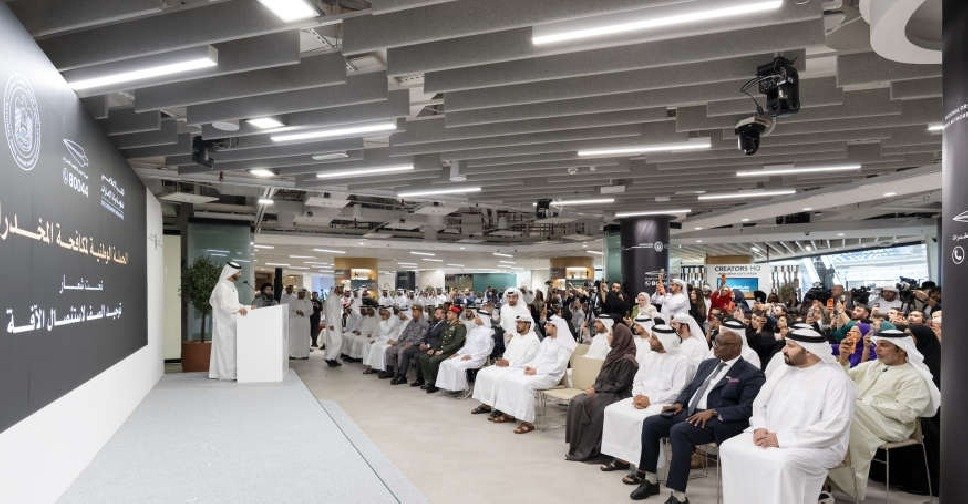
(Credit - UAE Government Media Office)
UAE Launches Nationwide Anti-Drugs Awareness Campaign
On June 24, 2026, the UAE’s National Drugs Enforcement Authority, in collaboration with the UAE Government Media Office, launched a nationwide anti-drugs awareness campaign. This initiative aims to strengthen prevention efforts and protect communities from the harms of drug abuse, aligning with the global observance of World Drug Day.
The campaign’s impact on local communities will be significant, as it focuses on reducing demand for narcotics through education and community engagement. By targeting youth, parents, schools, and workplaces, the campaign prioritizes early education and clear guidance to reduce risk and improve detection of harmful behavior. For instance, schools in Dubai’s Jumeirah Beach Road area can expect outreach activations and educational programs to raise awareness about drug dangers and prevention strategies.
The rollout of the campaign across the UAE will involve a series of activations, including school outreach programs, community events, and official guidance on accessing support resources or reporting drug-related concerns. Employers, schools, and community operators will play a crucial role in determining the campaign’s impact, as they will be responsible for deploying messaging, prioritizing audiences, and emphasizing reporting and support pathways. Clear internal policies and staff awareness can reduce risk and improve early intervention, making it essential for organizations to update their awareness and escalation processes.
The UAE’s anti-drug strategy typically combines strict enforcement with prevention messaging, and this campaign is a significant step towards reducing first-time use, encouraging early intervention, and reinforcing community reporting norms. As the campaign progresses, residents can expect to see a range of initiatives, from educational programs to community events, all aimed at promoting a safer, healthier community.
The campaign’s connection to the UAE’s broader public safety strategy is evident, as it aligns with the government’s efforts to protect communities and promote a culture of prevention. By launching this nationwide anti-drugs awareness campaign, the UAE is reaffirming its commitment to combating drug-related issues and promoting a safer, healthier environment for all residents.
Iran Fires Cruise Missiles at Oil Tanker in Strait of Hormuz
Oil Tanker Ablaze After Iran Missile Strike in Strait of Hormuz
Iran has launched multiple anti-ship cruise missiles at an oil tanker in the Strait of Hormuz, setting the vessel on fire off the coast of Oman. The attack, which occurred on August 9, 2026, reportedly targeted a tanker transiting the US-backed southern shipping corridor of the Strait of Hormuz. The vessel was said to be on fire, according to reports circulating on social media.
Local shipping companies and maritime authorities are closely monitoring the situation, as the attack has prompted concerns over global energy supply security. The United Arab Emirates' Defense Ministry has also reported that Iran attacked two tankers in the Strait of Hormuz, killing one mariner and wounding eight others. The attacks have drawn condemnation from Gulf and Arab governments, who have accused Iran of threatening regional stability and global energy security.
The UKMTO has reported an incident 18 nautical miles east of Khasab, Oman, where a vessel was struck by an unknown projectile, causing a fire that has since been extinguished. Iran has previously targeted vessels using the southern corridor near Oman, asserting that ships must follow Tehran-designated paths or face consequences.
The attack is the latest in a series of incidents in the region, which has seen a significant increase in tensions between Iran and other countries in recent months. The Strait of Hormuz is a critical waterway for global energy trade, and any disruption to shipping in the area could have significant consequences for the global economy.

Will Scharf White House counsel named
Trump Names Will Scharf as New White House Counsel
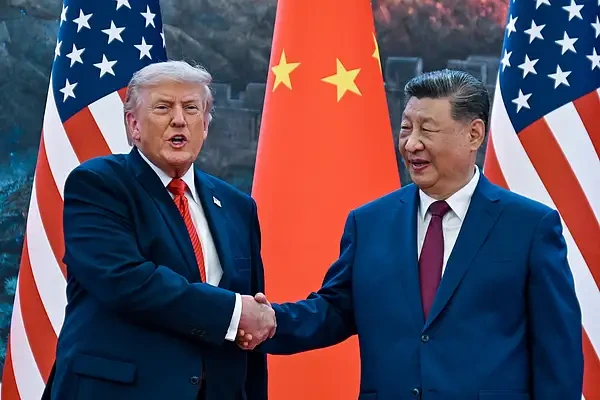
President Donald Trump announced that his new White House counsel will be Will Scharf, the staff secretary who previously served as a federal prosecutor and represented him in several cases. Scharf will replace David Warrington, who is leaving the administration to join the private sector, starting September 1. The White House counsel's office advises on legal and policy questions related to the presidency and handles presidential pardons, judicial appointments, and reviews legislation.
Trump praised Scharf, saying he is "Tough, Strong, and Smart" and will do a great job as White House Counsel. Scharf's appointment comes at a critical juncture, just months ahead of the midterm elections, where Trump's Republican Party will be fighting to hold on to control of Congress. The White House counsel's office will play a key role in handling congressional investigations into the administration and lawsuits against the president.
Scharf previously served as the chair of the National Capital Planning Commission, where he helped secure approval for the $400 million ballroom project. However, a divided federal appeals court recently ruled that construction on the project must stop because Congress had not approved it. Trump has vowed to appeal to the U.S. Supreme Court.
This development comes as Democrats have vowed to pursue investigations into Trump and his administration if they are successful in November. The White House counsel's office will be crucial in advising on legal and policy questions related to these investigations.
The appointment of Scharf as White House counsel is the latest shakeup in the White House counsel's office, which has seen several changes in recent months. Scharf's experience as a federal prosecutor and his representation of Trump in several cases make him a strong candidate for the role.
In a similar move last year, Trump named Scharf as chair of the National Capital Planning Commission, the executive branch agency with jurisdiction over construction and major renovations to government buildings in the region.

Ebola DR Congo 2026: Death Toll Hits 1,887
Ebola Death Toll Reaches 1,887 in DR Congo
The Democratic Republic of Congo has reported 1,887 Ebola deaths and 4,120 confirmed cases in its ongoing outbreak. The latest government figures represent a significant increase from the 4,053 confirmed cases and 1,850 deaths reported as of August 5-6. The outbreak, caused by the Bundibugyo strain of Ebola virus, was declared in northeastern Congo in May and has since spread across multiple provinces.
The World Health Organisation's July 30 update had recorded 3,605 confirmed cases and 1,587 deaths, meaning the outbreak has continued to accelerate rapidly in just days. The fatality rate is currently 45.8%, according to the Congolese Ministry of Communication. Cases have been reported across five provinces, Ituri, North Kivu, South Kivu, Haut-Uélé, and Tshopo, involving dozens of health zones.
The outbreak involves the Bundibugyo virus, a relatively rare Ebola species for which there is currently no approved vaccine or specific treatment. Researchers and health authorities are testing potential vaccines and treatments, but they are not yet established tools for controlling this outbreak. The outbreak is also occurring in a region affected by armed conflict, population displacement, weak health infrastructure, and extensive population movement, all of which complicate surveillance, contact tracing, and treatment.
The World Health Organisation has described the situation as a rapidly evolving public-health emergency. The CDC said this outbreak passed 1,000 confirmed cases within about 40 days of response activation, compared with roughly 235 days during Congo's 2018 outbreak. WHO Director-General Tedros Adhanom Ghebreyesus has warned that the outbreak is outpacing the response, while aid organizations have reported shortages of personnel and other resources.
This outbreak is the second-largest Ebola outbreak ever recorded, behind the 2014-16 West Africa epidemic. Health authorities are racing to improve early detection, contact tracing, isolation, and treatment, while researchers work to evaluate medical countermeasures against Bundibugyo Ebola.
The situation is connected to the previous Ebola outbreak in West Africa, which was declared a Public Health Emergency of International Concern in 2014. The current outbreak has been declared a Public Health Emergency of International Concern by the WHO since May 17, 2026.

Typhoon Dolphin Hits Zhejiang
Typhoon Dolphin Batters Zhejiang, 388 Flights Canceled
Typhoon 'Dolphin' made its second landfall in China's Zhejiang Province at Yueqing City at around 6:40 p.m. on Sunday, according to the National Meteorological Center. The maximum sustained wind near the typhoon center hit Force 13, or 38 meters per second. Local residents and travelers are affected as the Hangzhou Xiaoshan International Airport in Hangzhou City, capital of Zhejiang, has canceled 388 inbound and outbound flights for the day due to the typhoon.
The typhoon first landed at Yuhuan in Taizhou City, Zhejiang, at around 5:30 p.m., with the maximum sustained wind near the typhoon center hitting Force 14. The National Meteorological Center warned local authorities in the affected areas to guard against extreme downpours.
The severe weather system has also impacted flight schedules, with Emirates delaying Dubai-China flights due to the typhoon. Over 1,000 flights have been canceled as Typhoon Dolphin looms.
This typhoon is one of several severe weather systems currently active, including Tropical Storm Chan-hom heading towards mainland Japan, and three more systems spinning around the Mariana Islands.

Oil prices rise as Hormuz deal hopes clash
Oil Nears $85 as Hormuz Deal Hopes Stall
Oil prices were higher in early Asian trading on August 10, 2026, as uncertainty over a possible agreement to reopen the Strait of Hormuz continued to outweigh hopes for a quick return to normal shipping. Traders and investors are closely watching the developments, as the situation affects the global energy market. The prices of West Texas Intermediate crude and Brent crude rose, with WTI at $78.71 a barrel, up 53 cents, or 0.68%, and Brent crude at $84.28, up 73 cents, or 0.87%, at 8:33 am Tokyo time.
The gains came despite renewed diplomatic efforts to reopen the strategic waterway, reflecting traders' concern that an emerging Iran-Oman arrangement may not immediately restore unrestricted global shipping. Iran has tied a full reopening to additional concessions from Washington, which has led to a stalemate in the negotiations. The central problem is that Tehran and Washington appear to have different ideas about what “reopening” means, with Iran seeking concessions linked to the conflict and sanctions before unrestricted passage can resume.
The situation in the region remains volatile, with Iran stepping up attacks on ships in the Middle East Gulf, including vessels from South Korea and the UAE. The UAE accused Iran of attacking an empty crude oil tanker belonging to Abu Dhabi state oil firm ADNOC with drones as it attempted to transit the Strait. The UK Maritime Trade Operations reported incidents involving cargo vessels in the region, adding to the tensions.
The ongoing tensions and uncertainty have led to a rise in oil prices, with Brent futures climbing toward $85 per barrel and WTI hovering near $79. The global oil market remains highly volatile, with traders and investors closely watching the developments in the region. The situation is being monitored by the UAE, which has left OPEC, and the US, which has stepped up its naval blockade of Iran.
The UAE's energy minister stated that the country owes it to its people to ensure the stability of the energy market, as the situation continues to unfold. The US has redirected eight commercial vessels and disabled another ship as its military campaign entered an 11th consecutive night. The ongoing tensions and uncertainty in the region are likely to continue to affect the global energy market, with oil prices remaining volatile.
As the situation in the Strait of Hormuz continues to evolve, it is connected to the prior story of the US-Iran ceasefire that came into force in early April, which had initially led to hopes of a reduction in tensions in the region. However, the recent escalation of attacks and the stalemate in the negotiations have led to a rise in oil prices and increased uncertainty in the global energy market.