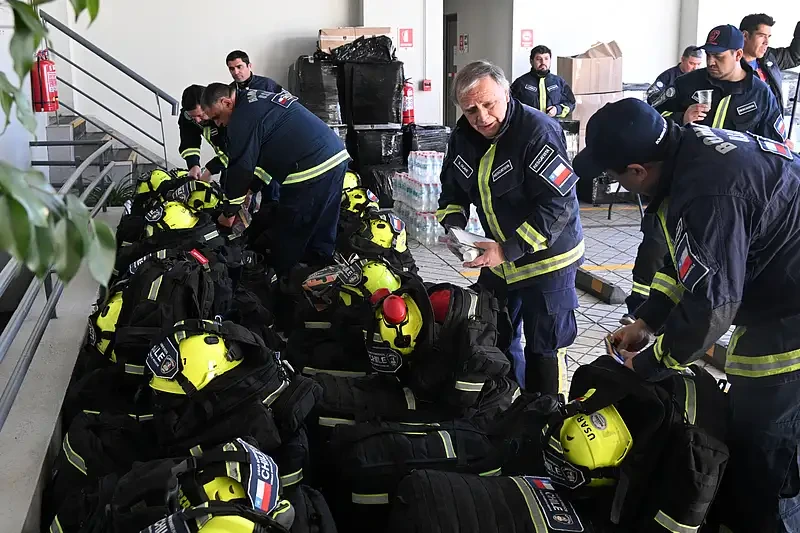
(Credit - Khaleej Times)
Venezuela Quake Death Toll Climbs to 235, Rescue Efforts Ongoing
Two powerful earthquakes struck Venezuela on June 24, 2026, killing at least 235 people and injuring more than 4,300. Venezuelan emergency services and rescue teams, with international aid being mobilized, are racing to find survivors as rescue operations continue. The death toll is expected to rise as rescuers reach harder-to-access neighborhoods and hospitals report delayed fatalities.
The earthquakes have caused widespread destruction, prompting urgent rescue operations and international aid efforts. The affected areas are facing significant challenges, including disrupted transport corridors, damaged utilities, and supply-chain delays. The immediate business and operational risks include workforce displacement and paused operations, especially for firms with on-ground staff, contractors, or critical inventory in affected zones.
The rescue efforts are being hindered by aftershocks, which can slow operations and force evacuations of unstable structures. The search-and-rescue operations are ongoing, with responders and incoming aid teams still searching for survivors. The international community is mobilizing aid, including urban search-and-rescue teams, field medical support, temporary shelters, and logistics for water, power, and communications.
The situation in Venezuela is dire, with the death toll expected to rise and the injured facing significant challenges in receiving medical attention. The international community is urged to provide support and aid to those affected by the earthquakes. The rescue efforts are a reflection of the resilience and determination of the Venezuelan people and the international community’s commitment to providing aid and support in times of crisis.
The hardest-hit areas are still being assessed, but it is clear that the earthquakes have caused significant damage and destruction. The full extent of the damage is still being determined, but it is evident that the affected areas will need significant support and aid in the coming days and weeks. The international community is coming together to provide aid and support, and it is essential that this support continues in the days and weeks ahead.


False emergency alerts UAE fixed
UAE Emergency Alerts: NCEMA Resolves Technical Malfunction
The UAE's early warning system issued false emergency alerts due to a technical malfunction, according to the National Emergency Crisis and Disaster Management Authority (NCEMA). The issue has been resolved, and NCEMA urged the public to rely only on official sources for emergency information.
Residents across the UAE were affected by the false alerts, which were caused by a technical malfunction in the early warning system. NCEMA's statement emphasized the importance of verifying information through official channels to prevent confusion and the spread of misinformation.
In terms of day-to-day impact, residents should be cautious when receiving unexpected alerts and avoid forwarding unverified messages. Instead, they should check official UAE government or authority channels for confirmation before taking any action, unless the alert includes immediate life-safety instructions that can be independently verified.
This incident is a reminder of the importance of early warning systems and the need for accurate and reliable information during emergencies. The UAE's early warning system is designed to provide timely safety instructions, and false alerts can trigger unnecessary panic and disruption.
NCEMA's guidance on relying on official sources for emergency information is a standard protocol during incidents to reduce panic and limit the spread of unverified messages. The authority's statement also highlights the importance of verification through official government communications to prevent confusion and misinformation.
The information in this article comes from the National Emergency Crisis and Disaster Management Authority (NCEMA).

NCEMA incorrect alert messages resolved in UAE
UAE Early Warning System Sends Incorrect Alerts, NCEMA Resolves Technical Issue
The UAE's National Emergency, Crisis and Disaster Management Authority (NCEMA) confirmed that a technical issue caused incorrect messages to be sent via the national early warning system. The issue has been resolved, according to NCEMA. Residents and citizens who received the incorrect alerts are advised to rely on official updates for accurate information.
Those affected by the incorrect alerts include the general public, who may have been confused or alarmed by the messages. NCEMA's resolution of the technical issue should help to alleviate concerns and provide clarity on the situation.
The real-world impact of this incident is that residents and citizens should be cautious when receiving emergency alerts and verify the information through official channels before taking any action. This is especially important in the UAE, where the national early warning system is designed to rapidly notify residents about hazards and urgent public-safety instructions.
In the context of prior UAE news, this incident highlights the importance of having a reliable and efficient early warning system in place to ensure public safety. NCEMA's prompt resolution of the technical issue demonstrates the authority's commitment to maintaining the integrity of the system.
The information in this story came from the National Emergency, Crisis and Disaster Management Authority (NCEMA).

UAE E-Invoicing Pilot Launches: What You Need to Know
UAE Businesses Must Adapt to New E-Invoicing System by January 1, 2027
The UAE Ministry of Finance has launched the pilot phase of its national e-invoicing system, moving businesses toward structured digital invoices instead of traditional formats. Companies will need to appoint an Accredited Service Provider by October 30, 2026, ahead of mandatory implementation starting January 1, 2027. This shift aims to standardize how invoices are issued and exchanged, reducing manual reconciliation and improving compliance monitoring.
For businesses, the immediate operational impact is vendor selection and systems readiness. Appointing an Accredited Service Provider is a critical step that will affect ERP configuration, invoicing workflows, customer/supplier onboarding, and internal controls. The UAE's e-invoicing program is designed to replace traditional invoices with structured electronic invoices, modernizing invoice exchange and compliance processes.
To comply with the new system, businesses must take the following steps:
- Confirm whether their invoicing flows will be in scope for the mandatory phase starting January 1, 2027.
- Select and appoint an Accredited Service Provider by October 30, 2026.
- Map current invoice data fields to the required structured format and test end-to-end exchange during/after the pilot period.
- Update finance policies and train AP/AR teams.
Businesses must prepare for the new e-invoicing system by understanding the requirements and timelines. The UAE Ministry of Finance has set a deadline of October 30, 2026, for businesses to appoint an Accredited Service Provider, and mandatory implementation will start on January 1, 2027.
| Category | Deadline |
|---|---|
| Accredited Service Provider Appointment | October 30, 2026 |
In conclusion, the UAE's e-invoicing pilot phase has launched, and businesses must take immediate action to comply with the new system. By understanding the requirements and timelines, businesses can ensure a smooth transition to the new e-invoicing system.
Etihad Rail Launches Passenger Services in UAE
Etihad Rail Passenger Services Now Operating in UAE
As the UAE's first national passenger railway network becomes fully operational, Etihad Rail has officially begun passenger services, connecting major cities across the country. This launch marks a significant shift in the UAE's intercity mobility, providing a new choice for commuting and weekend travel that can reduce highway congestion and improve trip predictability during peak periods.
| Category | Details |
|---|---|
| Launch Date | June 26, 2026 |
| Connected Cities | Major cities across the UAE |
For residents, the practical impact of Etihad Rail's passenger services is a new option for commuting and weekend travel. This can help reduce highway congestion and improve trip predictability during peak periods. Safety campaigns will also play a crucial role in setting clear public rules around rail corridors and station behavior.
Employers, logistics-adjacent businesses, and city operators will need to consider the implications of Etihad Rail's passenger services on their operations. This includes predictable intercity travel windows, potential shifts in peak road demand, and new last-mile requirements around stations, such as parking, feeder buses, and timed transfers. Compliance and safety messaging will also be essential for staff travel policies and site access near rail infrastructure.
To use Etihad Rail's passenger services, residents can follow these steps:
- Check the schedule and routes on the Etihad Rail website or mobile app.
- Purchase tickets online or at the station.
- Arrive at the station with plenty of time to spare before the scheduled departure.
- Follow safety guidelines and rules at the station and on board.

Salik Fines in Dubai: Avoid Penalties
Dubai Salik Fines: A Guide to Checking and Paying
As a driver in Dubai, navigating the city's roads can be challenging, especially when it comes to managing Salik tolls. With fines starting at Dh50 for insufficient balance, it's essential to stay on top of your Salik account to avoid accumulating penalties. The good news is that the RTA Dubai app and portal provide a convenient way to check, view, and pay Salik fines, as long as you keep your account active and sufficiently topped up, and register your vehicle with Salik within 10 days of first use.
To avoid Salik penalties, drivers must keep their Salik account active and ensure it's sufficiently topped up. This means regularly checking your balance and topping it up before long commutes. Additionally, registering a vehicle with Salik within 10 days of first use is crucial to prevent penalties. The RTA Dubai app and portal offer a unified digital service that allows drivers to log in, link their Traffic File, vehicles, and Salik account, making it easy to manage Salik-related services and payments in one place.
For individual drivers, the key to avoiding Salik fines is to stay organized and proactive. This means regularly checking your Salik balance, ensuring your account is active, and registering any new vehicles with Salik within the required 10-day window. By taking these simple steps, drivers can avoid the stress and financial burden of accumulating Salik penalties.
For fleet operators, delivery platforms, and daily commuters, the impact of Salik fines can be even more significant. Repeated toll crossings while underfunded can compound costs, disrupt expense controls, and create reconciliation issues across drivers and vehicles. To mitigate this risk, it's essential to audit Salik balances and vehicle registration status regularly, rather than waiting for penalties to appear.
To check and pay Salik fines, drivers can follow these steps:
- Log in to the RTA Dubai app or portal.
- Link your Traffic File, vehicles, and Salik account.
- Navigate to the fines/payment options to view and settle any outstanding amounts.