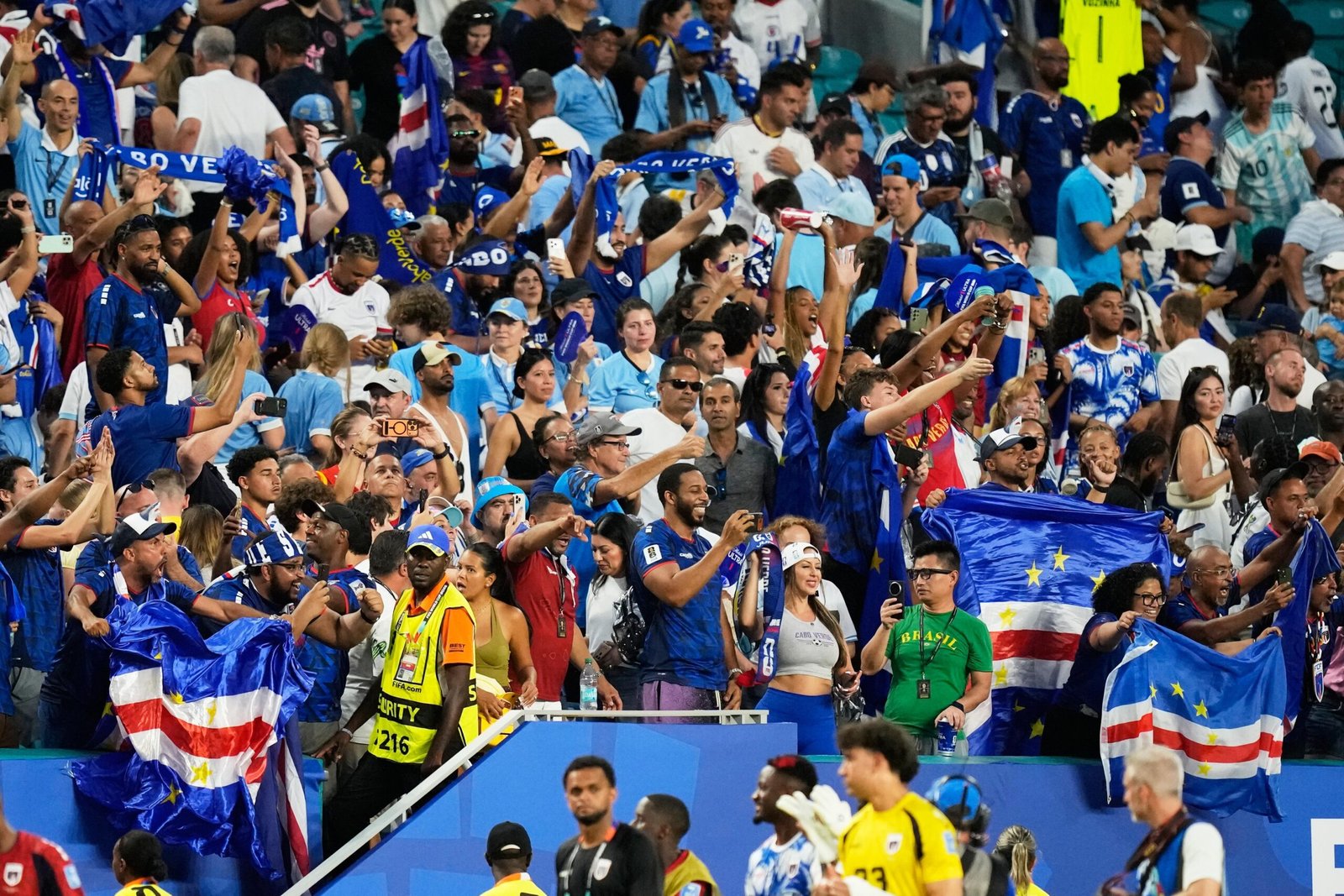
Cape Verde Advances to World Cup Round of 32 After Goalless Draw with Saudi Arabia
Cape Verde progressed to the World Cup round of 32 after drawing 0-0 with Saudi Arabia, a result that eliminated the Saudis. The draw sets up a July 4, 2026 knockout showdown between Cape Verde and Argentina in the next phase.
The 0-0 draw was enough for Cape Verde to move into the World Cup round of 32, highlighting how knockout qualification can hinge on a single point and defensive game management rather than goals.
The result ends Saudi Arabia’s tournament, underscoring the fine margins in final group-stage fixtures where one match can simultaneously decide advancement and elimination. The upcoming Cape Verde, Argentina tie on July 4, 2026 frames a classic knockout dynamic: a debutant/underdog nation facing a heavyweight, where tactical discipline, set pieces, and game-state management often become decisive.
This development comes as the World Cup round of 32 is set to begin, with Cape Verde’s match against Argentina being one of the highly anticipated fixtures.
The draw provided Cape Verde with the point(s) needed to qualify for the round of 32, while Saudi Arabia failed to secure the result required to stay in the tournament.

Dubai 4-day work week summer starts June 29
Dubai Introduces Flexible Summer Working Hours for Government Employees
On Jumeirah Beach Road and across Dubai, a new initiative is set to change the daily routine for many government employees. The "Our Flexible Summer" programme, launched by the Dubai government, offers either a four-day workweek or reduced daily hours during the hottest months, aiming to improve work-life balance while maintaining government service delivery. This programme will run from June 29 to September 10.
The introduction of flexible summer working hours is expected to have a significant impact on the daily commute and productivity of government employees. With the option to choose between a four-day workweek or reduced daily hours, employees can enjoy fewer commuting days or shorter workdays during the summer. For departments, the operational challenge will be ensuring continuity of service, response times, and inter-agency coordination across mixed schedules.
The shift to flexible working hours will also affect the way government entities operate. Each entity will choose the model that best fits their service needs and staffing coverage, allowing for more flexibility and autonomy. This change is expected to improve productivity and employee wellbeing, as well as maintain operational requirements and service continuity.
The Dubai government's "Our Flexible Summer" initiative is part of a broader strategy to enhance work-life balance and productivity in the public sector. By introducing flexible working hours, the government aims to improve the overall wellbeing of its employees, while also maintaining the high standards of service delivery that citizens expect. As the programme rolls out, it will be interesting to see how government entities adapt to the new working models and how it impacts the community at large.
UAE false missile alert sparks concern
Nationwide Emergency Alert Withdrawn After Technical Malfunction
A false emergency missile warning was sent to mobile phones across the UAE on June 26 and then withdrawn within minutes, after authorities confirmed there was no security threat. The alert, which warned of "potential missile threats," was blamed on a technical malfunction in the national early warning system.
UAE authorities and residents nationwide who received the alert were affected by the false warning. The incident highlights the importance of having a reliable early warning system in place, as well as protocols for quickly correcting false alarms to minimize disruption and anxiety.
The impact of this incident is a reminder to residents to wait for official follow-up messages and rely on verified government channels for confirmation in the event of an emergency alert. Residents should be cautious of resharing unverified screenshots and instead, wait for official updates from authorities.
This incident comes amid heightened regional security sensitivity, which can amplify public reaction to emergency notifications even when no local threat exists.

UAE July 2026 Changes: Etihad Rail Launches Passenger Services
Etihad Rail Passenger Services Start June 30: What You Need to Know
As the UAE gears up for a new wave of transport and compliance updates, residents and businesses are bracing for changes that will impact their daily lives. The most significant development is the launch of Etihad Rail's passenger services, which will initially connect Abu Dhabi and Fujairah, with additional stations in Dubai and Al Dhaid scheduled to open on September 30, 2026.
For commuters, the new rail service promises to revolutionize inter-emirate travel, offering a faster and more convenient alternative to driving. The first passenger is expected to be nominated by UAE residents, making the launch a significant public-engagement moment.
| Category | Details |
|---|---|
| Initial Route | Abu Dhabi to Fujairah |
| Launch Date | June 30, 2026 |
Businesses, on the other hand, will need to prepare for the rollout of e-invoicing, which will require them to adapt their invoicing systems and workflows to meet mandated digital requirements. This change is expected to have a significant impact on businesses, particularly those that are not already using digital invoicing systems.
Residents who drive in Dubai will also need to be aware of changes to parking rules, including extended parking hours. While the exact details of these changes have not been announced, it is expected that they will have a significant impact on city driving and parking routines.
To stay ahead of these changes, residents and businesses should keep an eye on official announcements from the relevant authorities, including the RTA and the FTA. They should also take steps to prepare for the launch of Etihad Rail's passenger services, including planning their travel routes and schedules in advance.
Here are the next steps to take:
- Check the official Etihad Rail website for updates on ticketing and timetables.
- Register for e-invoicing with the FTA to ensure compliance with the new regulations.
- Visit the RTA website for information on parking rules and updates.

Senegal vs Iraq 5-0 World Cup Thrashing
Senegal Stuns Iraq with 5-0 Win, Boosts Knockout Hopes
Senegal thrashed Iraq 5-0 on June 27, 2026, with Pape Gueye scoring twice to boost Senegal's hopes of reaching the World Cup knockout stage. The result marked the first time an African team scored five goals in a World Cup match.
Senegal’s 5-0 win over Iraq came in their final Group I match, keeping their chances of progressing alive via the tournament’s best third-placed teams route.
This decisive victory has significant implications for the group stage standings, as the large margin of victory improves Senegal's goal difference, potentially becoming a crucial factor in determining which teams advance to the knockout stage.
Pape Gueye scored twice for Senegal, while Seck, Sarr and Ndiaye also found the net in the 5-0 victory over Iraq.
According to the FIFA match report, this was a historic win for Senegal, marking a new milestone for African teams in the World Cup.
France finished top of Group I after defeating Norway, shaping the group’s final standings after Senegal’s win over Iraq. Senegal’s 5-0 victory over Iraq kept their qualification hopes alive rather than confirming advancement, with their fate dependent on comparisons with other groups’ third-placed teams.

Lebanon Israel framework agreement signed
US-Brokered Lebanon-Israel Deal Aims for Sovereignty and Security
Lebanon and Israel signed a US-brokered framework agreement on June 26, 2026, alongside the United States, aimed at restoring Lebanese sovereignty and reducing Hezbollah activity. The framework includes a phased Israeli withdrawal and security coordination intended to lower cross-border tensions and support longer-term regional stability.
The U.S.-mediated framework agreement does not include Hezbollah as a party to the deal, despite the accord’s stated aim of supporting Lebanese sovereignty and reducing border tensions..
The US-brokered framework agreement between Lebanon and Israel marks a significant step towards de-escalation in the region. By pairing security coordination with a staged withdrawal mechanism, the deal aims to reduce the risk of renewed border clashes.
The deal explicitly links sovereignty and security outcomes to curbing armed non-state activity, a central fault line in Lebanon’s internal politics and Israel’s border-security doctrine.
The framework agreement is designed as a structured pathway to de-escalation rather than an immediate final-status peace treaty. The key elements of the agreement include a phased Israeli withdrawal, intended to create measurable milestones, and security coordination, meant to manage incidents, verification, and communication channels that can prevent escalation.
The United States' role in brokering the deal highlights its continued involvement in Middle East diplomacy, particularly in regards to the complex relationships between Lebanon, Israel, and other regional actors.