ADNOC Gas Explores East Coast LNG Plant
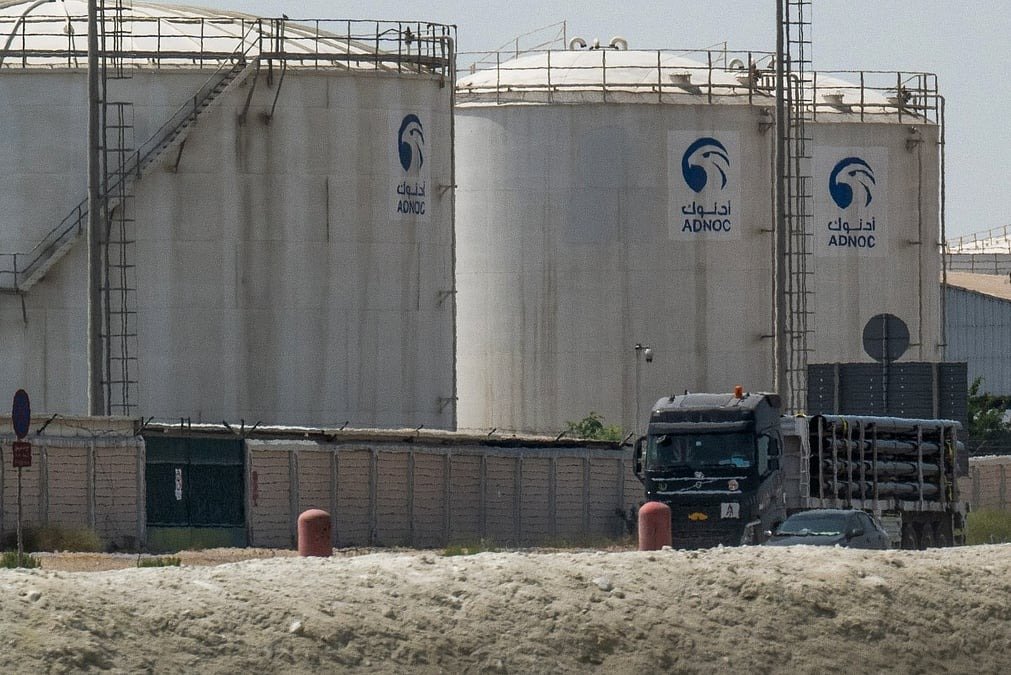
ADNOC Gas is considering a new liquefied natural gas export facility on the UAE’s east coast, potentially providing an alternative route for LNG shipments outside the Strait of Hormuz. The company’s Chief Financial Officer, Peter van Driel, announced that ADNOC Gas is exploring options for the facility, although no final decision has been made and the project remains in its exploratory stage.
The potential east coast plant would offer additional flexibility for LNG exports, following disruptions to maritime movements through the Strait of Hormuz that affected the company’s product liftings during the second quarter. ADNOC Gas worked with customers and partners to mitigate the impact, using inventory, logistics, and supply-chain management to manage temporary constraints and fulfill commitments.
In a separate development, ADNOC Gas reported that recovery at its Habshan complex has progressed faster than expected, with gas supply already restored to 85% following security-related incidents at the site on April 3 and April 8. This surpasses the year-end recovery target set by the company in May.
The progress at Habshan marks a significant operational recovery during a quarter in which ADNOC Gas faced disruption both at one of its major processing sites and to maritime movements affecting product liftings. The company expects third-quarter net income of $600 million to $800 million, based on an assumption that maritime routes through the Strait continue to face disruption. For the full year, ADNOC Gas expects net income of $3.5 billion to $4 billion if maritime operations are fully restored by the fourth quarter of 2026 and pricing realisations normalise.
ADNOC Gas’s exploration of a new east coast LNG facility and the recovery at Habshan demonstrate the company’s efforts to assess its future export infrastructure and mitigate the impact of recent disruptions. As the company moves forward, it will be important to monitor developments in the Strait of Hormuz and the progress of the potential east coast plant.
The UAE’s energy sector is a critical component of the country’s economy, and ADNOC Gas plays a significant role in the industry. The company’s efforts to expand its export capabilities and improve its operational efficiency will be closely watched by investors and industry analysts.
In the context of the UAE’s strategic development plans, ADNOC Gas’s initiatives align with the country’s goals to diversify its economy and increase its competitiveness in the global energy market. However, without a specific target or deadline from these plans, it is unclear how the company’s efforts will contribute to the broader national objectives.
ADNOC Gas’s exploration of a new east coast LNG facility and the recovery at Habshan are significant developments for the company and the UAE’s energy sector. As the company continues to navigate the challenges posed by maritime disruptions, its efforts to expand its export capabilities and improve its operational efficiency will be crucial to its success.

Trump, Iran Locked in Strait of Hormuz Standoff
Hormuz Showdown: Trump's Clock Ticking Faster?
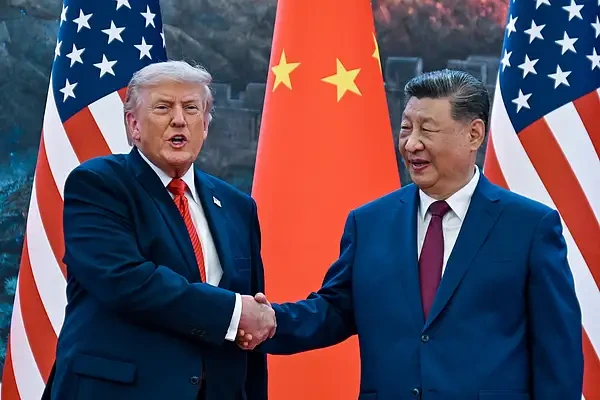
The conflict between the US and Iran over the Strait of Hormuz has evolved into a strategic battle of clocks, with Washington betting economic pressure will force Tehran to compromise while Iran calculates that US political pressures, dwindling munitions, and rising energy costs will force President Trump to seek an exit first. This standoff is not just about military power, but about which side can outlast the other. The US is counting on sanctions, a maritime blockade, and months of military pressure to weaken Iran's economy, while Iran is leveraging its control over the Strait of Hormuz to pressure the US into offering a favorable exit.
The drivers behind this standoff are economic and geopolitical. The US is facing growing public frustration with the war, pressure on Patriot and THAAD missile stocks, and higher petrol and energy prices. According to CNN, average US petrol prices are back above $4 a gallon, creating a domestic political problem for Trump. On the other hand, Iran is withstanding the effects of sanctions, the US blockade, and damage inflicted during months of conflict. However, Tehran's strategy is hardly risk-free, and the country must navigate the risks of renewed US strikes, pressure to restore normal trade, and the need to compensate for the war and sanctions relief.
The stakeholders affected by this conflict are numerous. The US midterm elections are approaching, and Trump's political timetable is a critical factor in the standoff. The conflict is also affecting the global energy market, with the Strait of Hormuz being one of the world's most important energy routes. Iran's control over the strait has become a valuable leverage point, allowing the country to exert pressure on the US. Meanwhile, the US is trying to maintain its military commitments elsewhere while expending expensive weapons and resources on Iran.
The strongest counter-argument to the US position is that Iran may be able to outlast the US, given the country's ability to withstand economic pressure and its leverage over the Strait of Hormuz. According to CNN political and national security analyst David Sanger, Iran's leaders sense that Trump wants a way out of the conflict, and the US is "running out of munitions," options, and patience. This perception could help explain why Tehran has little incentive to quickly accept a compromise over Hormuz. Instead, Iran has hardened its conditions for fully reopening the strait, demanding measures including an end to the US maritime blockade, withdrawal of American forces from the region, compensation for the war and sanctions relief.

Colombia earthquake: 7.4 magnitude quake hits
7.4 Magnitude Earthquake Strikes Colombia and Ecuador
A 7.4-magnitude earthquake struck western Colombia on Monday, August 10, 2026, shaking wide areas of the country and neighbouring Ecuador, prompting residents to evacuate homes, offices, and other buildings. The earthquake's epicentre was located near San José del Palmar in western Colombia, approximately 400 kilometres west of Bogotá, according to the United States Geological Survey (USGS) and Colombia's geological authorities.
The tremor was felt across large parts of Colombia and in neighbouring Ecuador, causing people to leave buildings as a precaution. No immediate reports of injuries, fatalities, or significant damage were issued by authorities. Emergency services and government agencies continued to assess the impact of the earthquake and monitor the situation in affected areas.
The earthquake occurred at a relatively deep depth, which may have helped limit the extent of surface damage. Government workers and residents in Panama City also felt the earthquake, with many standing outside their office buildings as a precaution.
This earthquake is reminiscent of previous seismic events in the region, such as the ones reported in recent years, which have highlighted the importance of disaster preparedness and emergency response planning.

Bezos Nears Liverpool FC Stake Deal
Bezos Eyes £4.4B Liverpool FC Stake
A consortium including Amazon founder Jeff Bezos is close to agreeing a deal to acquire a stake of about one-third in Premier League club Liverpool, multiple media outlets reported on Monday. The investor group also includes Eduardo Saverin, the Facebook co-founder. The investment would reportedly value the club at approximately £4.4 billion ($5.9 billion), making it one of the biggest valuations ever achieved in a football club deal.
This development comes at a time of significant change on and off the pitch at Anfield. Liverpool finished a disappointing fifth in the Premier League last season despite spending about £446 million on new players. The club subsequently parted ways with Dutch manager Arne Slot and appointed former Bournemouth boss Andoni Iraola in a bid to revive their fortunes, while their talismanic Egypt forward Mohamed Salah has also departed.
The genuine upside of this deal is the potential for Liverpool to benefit from the strategic investment, which could lead to improved performance on the pitch and increased financial stability. However, the downside is that the club's ownership structure may become more complex, which could lead to potential conflicts of interest.
The deal is being led by Amit Bhatia, the son-in-law of steel magnate Lakshmi Mittal and a former shareholder in English Championship club Queens Park Rangers. Liverpool owner Fenway Sports Group could announce a deal as early as this week. "An investment consortium led, managed and represented by Amit Bhatia has expressed interest in making a strategic minority investment in Liverpool Football Club," an FSG spokesperson said last month.
Liverpool, one of world football's most successful clubs, are also among the sport's most valuable and widely supported teams, with their iconic Anfield stadium at the heart of a global fan base. They won a joint-record 20th English league title in the 2024-25 season. Their honours also include six European Cups, eight FA Cups, a record 10 League Cups and one FIFA Club World Cup.

Gianni Infantino Scraps $20B FIFA Plan
FIFA's $20B Plan Scrapped Amid Global Backlash
FIFA President Gianni Infantino has withdrawn a controversial $20-billion commercial proposal, known as Fifa Forward Enterprise (FFE), to run the World Cup and its other events. The decision comes after intense global opposition and key executive resignations, including that of Infantino's senior adviser Carlos Cordeiro, who called the plan "a bad deal for football." FIFA's Chief Operating Officer Kevin Lamour also criticized the proposal, stating that staff had been "deceived" by Infantino.
European soccer's governing body, UEFA, had threatened a boycott of events and accused FIFA of putting the sport's "soul" up for sale. In response to the opposition, Infantino announced that he would not proceed with the proposal, citing the need to unite and improve the sport. FIFA had argued that selling a minority stake in its commercial operations would raise billions of dollars to fund global sports development.
The United Arab Emirates and Sri Lanka have welcomed the decision to scrap the investment plan, while reaffirming their support for Infantino. Other nations, such as Morocco and Egypt, have also expressed their continued backing for the FIFA president. Meanwhile, opposition to Infantino's leadership continues to grow, with British Prime Minister Andy Burnham stating that Infantino is "the wrong man to lead the organisation." North American football chief Victor Montagliani is reportedly looking to challenge Infantino in next year's election.
Infantino's decision to withdraw the proposal has been seen as a significant setback for his presidency, which is up for reelection next year. However, with no clear candidate emerging to challenge him, Infantino may still have an advantage in the upcoming election. The proposal's withdrawal has also sparked reactions from various football associations, with some welcoming the decision and others expressing their continued support for Infantino.

Mojtaba Khamenei military reshuffle: 6 commanders appointed
Iran's Military Overhaul: 6 New Commanders Appointed Amid US Tensions
Iran's Supreme Leader Mojtaba Khamenei has appointed six senior military commanders to key positions across the country's Armed Forces, the Islamic Revolutionary Guard Corps (IRGC), and the Basij Resistance Force. The reshuffle, which marks Khamenei's first major military overhaul since taking power, includes the appointment of Ali Abdollahi as chief of staff of Iran's Armed Forces, Kioumars Heydari as deputy chief of staff, and Ahmad Vahidi as commander-in-chief of the IRGC. The IRGC's new deputy commander-in-chief is Mostafa Izadi, while Ali Azmaei has been appointed commander of the IRGC Navy, and Hossein Taeb has been named head of the Basij Resistance Force.
These appointments come amid ongoing conflict with the United States and speculation over Khamenei's health, following his absence from public view since taking office. Iranian President Masoud Pezeshkian has stated that Khamenei is "completely healthy" after a nearly seven-hour meeting with the supreme leader, during which they discussed Iran's economy and the impact of US sanctions.
The reshuffle also follows the appointment of former IRGC chief Mohsen Rezaee as Khamenei's representative to Iran's Supreme National Security Council, replacing Mohammad Baqir Zolghadr. Rezaee's experience as one of the early commanders during Iran's eight-year war with Iraq was cited as the reason for his appointment.
In the context of recent events, this military reshuffle is significant, as it comes after the death of Khamenei's father, Ayatollah Ali Khamenei, in a US-Israeli strike in February. The move is seen as an effort to strengthen Iran's military command structure amid ongoing tensions with the United States.