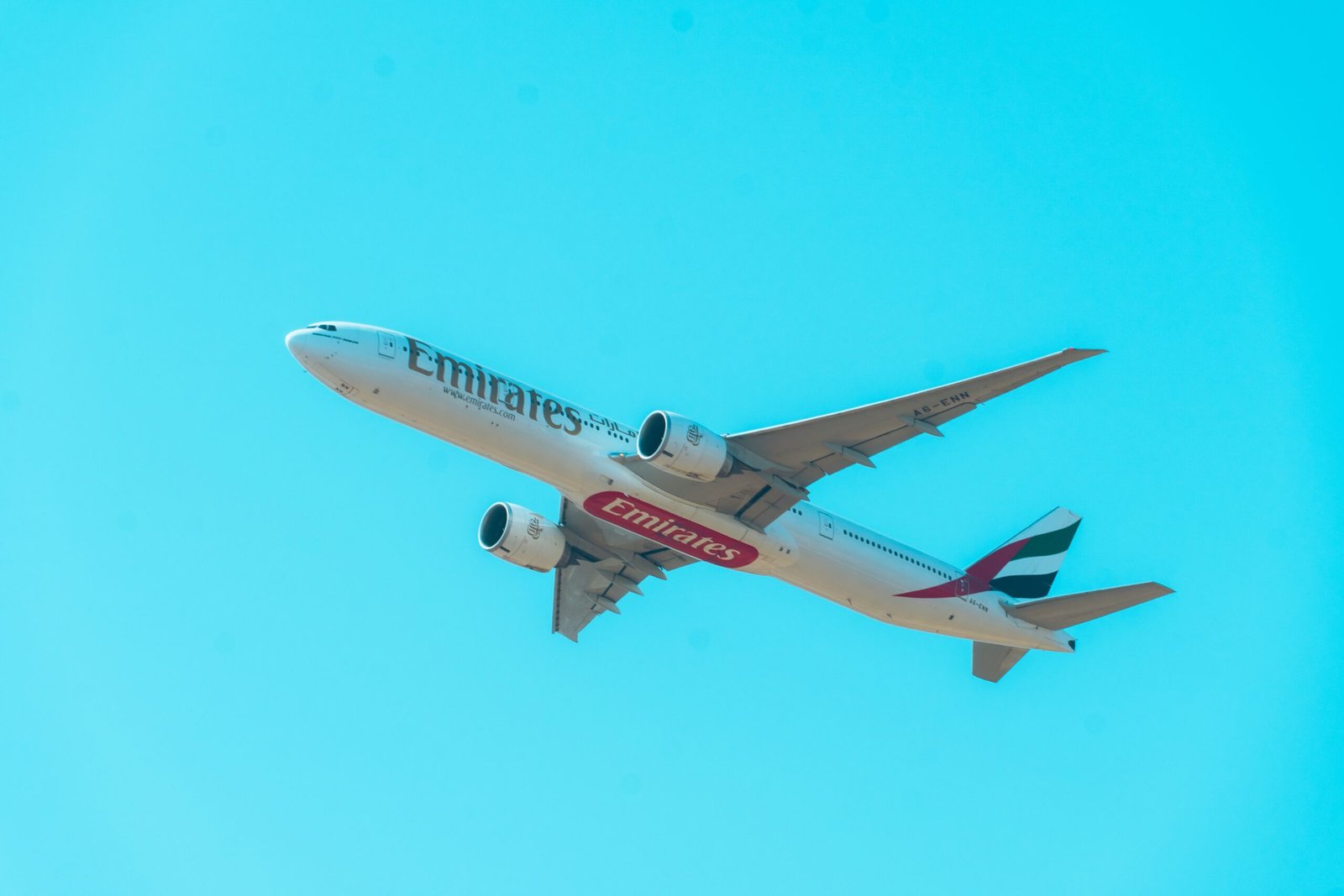
Fly to Dubai with Flexibility: Emirates Introduces Free Date Changes
Emirates has announced a major upgrade to its customer experience, offering passengers flying to Dubai unprecedented flexibility with free date changes on flight bookings. Passengers traveling to Dubai can now change their travel dates without incurring heavy penalties, giving them total freedom and confidence to adapt their travel itineraries seamlessly. This new measure allows passengers to modify their departure dates without facing penalties, whether plans shift due to unexpected personal events or work schedule changes.
The airline has also introduced a comprehensive travel insurance policy, offering built-in protection against travel disruptions, emergency medical expenses, and unexpected trip cancellations. By embedding these safeguards directly into the booking process, Emirates ensures passengers remain fully supported from the moment they reserve their ticket until they touch down at their final destination. This double-layered protection empowers passengers to plan their future trips with complete peace of mind, knowing their investments are protected every step of the way.
The introduction of free date changes and comprehensive travel insurance sets a new standard for global aviation, prioritizing customer convenience and flexibility. Emirates continues to lead the industry by providing passengers with the freedom to adjust their travel plans without incurring significant costs.
This development is connected to the UAE’s ongoing efforts to enhance its tourism and travel sector, with Emirates playing a significant role in promoting Dubai as a premier destination.


Trump Backs FIFA's Infantino Amid Replacement Threats
Trump: Replacing Infantino 'Terrible Mistake'
US President Donald Trump on Monday backed FIFA President Gianni Infantino, who is facing allegations of a workplace affair and criticism of a failed private investment scheme. Trump stated that replacing Infantino would be a "terrible mistake" and called the FIFA president "fantastic," saying he "presided over the most successful World Cup, by four times, ever presented." FIFA's governing body has been under fire from UEFA, CONCACAF, and the AFC, with some leaders calling for Infantino's replacement ahead of the FIFA presidential election in March 2027.
Infantino has received support from the Confederation of African Football and some individual member associations, including Mexico and Qatar. However, UEFA, CONCACAF, and the AFC have expressed strong opposition to Infantino's leadership, citing a "failure of judgment" and a "shabby, opaque, backroom deal" regarding his private investment plan. The plan was later withdrawn due to widespread criticism.
The FIFA president has denied any wrongdoing and has received "full support" from senior FIFA directors in an emergency meeting. Despite this, the opposition from UEFA, CONCACAF, and the AFC remains, with some leaders viewing CONCACAF President Victor Montagliani as a potential challenger to Infantino in the upcoming election.
The controversy surrounding Infantino's leadership has sparked a heated debate within the football community, with some calling for his replacement and others defending his tenure as FIFA president. As the FIFA presidential election approaches, the situation is likely to continue to unfold, with potential consequences for the future of the organization.
The UAE has not been directly involved in the controversy, but as a member of the FIFA community, the outcome of the situation may have implications for the country's football scene.

China Rocket Launch Fails After Anomaly
China Rocket Explodes 85 Seconds After Launch
A Chinese Long March 7A rocket carrying a communications satellite failed during launch after experiencing a "flight anomaly" and subsequent explosion. The incident occurred at the Wenchang Space Launch Site in Hainan province on Monday, August 10, at 8:02 pm local time. State news agency Xinhua reported that an "anomaly" occurred when the rocket was in flight, and the cause of the failure is under investigation.
The Long March 7A rocket was carrying the Zhongxing-4B communications satellite when it exploded around 85 seconds after blasting off, leaving behind a cloud of grey smoke as debris fell to the ground. Videos posted on social media showed awestruck crowds watching a fiery ball in the sky. This incident marks a setback for China's space program, which has been investing heavily in recent years to achieve its "space dream" as outlined by President Xi Jinping.
China's space agency had previously successfully landed a reusable rocket for the first time in July, marking a major step in its space ambitions and in reducing launch costs. The country is aiming to land astronauts on the Moon before 2030, competing with the United States in this endeavor. SpaceX CEO Elon Musk commented on the failed launch, stating that "rockets are insanely hard" and wishing China a speedy recovery.
This is not the first failure of a Long March 7A rocket; the maiden launch of the rocket from the Wenchang site in 2020 was also unsuccessful due to a malfunction. The investigation into the cause of the current failure is ongoing.
The failed launch of the Long March 7A rocket is a significant development in the context of China's space program, which has been making strides in recent years. In July, China successfully landed a reusable rocket, and the country is planning to send astronauts to the Moon before 2030.

Colombia Earthquake 2026: 7.4 Magnitude Quake Kills 132
132 Dead in Colombia's 7.4 Magnitude Earthquake Disaster
A 7.4-magnitude earthquake struck western Colombia, killing at least 132 people and injuring more than 570. The quake, which occurred at a depth of 110 kilometers, was felt across Colombia, including the capital Bogota, and in neighboring Ecuador and Panama. Colombian President Abelardo de la Espriella declared a state of emergency as rescue workers search through collapsed structures amid power outages.
Volunteers and rescuers are working together to find survivors, forming human chains to remove bricks and masonry, and stopping every few minutes to listen for signs of life from those trapped below. The city of Pereira, which was among those hit hardest, was mostly plunged into darkness amid power outages on Monday night. Residents are describing the scene as "like a zombie city" with structures on the verge of collapsing.
The quake has caused widespread destruction, with furniture and fabrics sandwiched between concrete, walls and floors tossed into irregular angles, and cabling strewn across roads. In Manizales, the quake crumpled a tower of the city's beloved neo-Gothic cathedral. Hospitals in five Colombian cities were put on red alert, and a nighttime curfew was declared in Cali.
The international community is offering support, with messages coming in from countries across the region and the world. The devastation comes less than two months after powerful twin quakes rattled neighboring Venezuela, killing over 6,300 people and leaving tens of thousands homeless.
The Colombian Association of Capital Cities reported that the quake killed 132 people and injured more than 570 as of Monday afternoon. President de la Espriella vowed a concerted rescue effort, saying "we are trying to get everyone out alive." The US Geological Survey said the quake was likely caused by movement along a deep fault within the Nazca tectonic plate.
This earthquake is the strongest to hit Colombia in a decade, and the rescue efforts are ongoing. The situation is being closely monitored by the international community, with the United States stating that it "stands ready to support" the affected areas.

ETIAS Launch Delayed: EU Scraps 2026 Timeline
Europe Delays ETIAS Launch: No Permit Needed for Now
The European Union has scrapped its late-2026 launch timeline for the European Travel Information and Authorisation System, or ETIAS, meaning travellers heading to Europe will not need to apply for the pre-trip travel authorisation yet. Visa-exempt travellers, including those from the UAE, do not need to obtain an ETIAS authorisation before travelling at present, as there is currently no application process open to the public.
Travellers planning European trips will be informed of the specific launch date several months before the system goes live, according to the EU. Once operational, ETIAS will apply to visa-exempt nationals travelling to 30 European countries for short stays, and travellers will have to secure the electronic authorisation before beginning their journey. An approved ETIAS will be linked to the traveller’s passport and will generally remain valid for three years or until the passport expires, whichever comes first.
The ETIAS system is different from Europe's Entry/Exit System, known as EES, which deals with border registration for non-EU nationals arriving for short stays. The EES became fully operational across participating Schengen countries on April 10, 2026, and records information including passport details, facial images, fingerprints, and entry and exit data at the external border. ETIAS, on the other hand, requires eligible visa-exempt travellers to obtain authorisation online before travelling.
This development is significant for visa-exempt travellers, as the EU had previously indicated that ETIAS would begin operating in the final quarter of 2026. The latest change does not provide a replacement launch date, and the EU’s current guidance only says that the specific date will be communicated several months before implementation.
The ETIAS system has faced repeated changes to its planned introduction since it was originally expected to begin operating in 2021. Until the EU announces a new start date, visa-exempt visitors can continue travelling without an ETIAS authorisation, subject to the existing entry requirements applicable to their nationality.
This news follows recent changes in European travel rules, including Germany's 2026 visa-free list and Italy's suspension of Schengen travel rules with Spain. Travellers are advised to stay informed about the latest developments in European travel regulations to ensure a smooth journey.

Qatar Bans 27 From Healthcare Over Fake Certificates
27 Banned From Qatar Healthcare Jobs Over Fake Certs
Qatar has banned 27 individuals from working in the healthcare sector after they submitted fake experience certificates to get a healthcare license in the first six months of the year. These individuals have been permanently blocked from working in the country's healthcare sector. The Ministry of Public Health said that it is committed to maintaining the highest standards for licensing international healthcare practitioners.
The decision to ban these individuals is part of the ministry's efforts to verify the authenticity of the information provided by applicants. This verification process is conducted in collaboration with specialized institutions to ensure the credibility of the documents submitted. The move aims to uphold high standards for licensing international healthcare practitioners and eliminate document fraud in the sector.
The nation has also recently centralized its healthcare system, allowing residents to access medical services without a health card. Instead, their health number will be available with their Qatar Identity Card, as per a decision issued by Public Health Minister Mansoor bin Ebrahim Al Mahmoud in April this year.
This development is part of Qatar's ongoing efforts to improve its healthcare system and ensure that only qualified and genuine practitioners are allowed to work in the sector. The ban on the 27 individuals is a significant step towards achieving this goal and maintaining the trust of the public in the healthcare system.
In related news, the UAE has also taken steps to improve its healthcare system, including the announcement of a fee for cafes, hotels, and malls for playing music from December. Additionally, Dubai has announced a shared housing initiative, allowing families and bachelors to rent homes on a monthly basis.