$520M Arab media AI spending set to reshape newsrooms
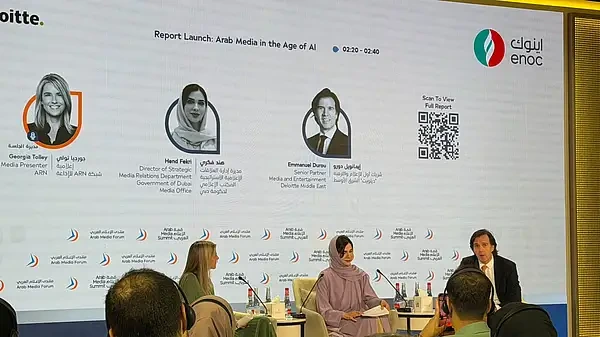
The discussions at the Arab Media Summit in Dubai pulled back the curtain on a massive shift happening across newsrooms in the region, sparked by the release of the *Arab Media in the Age of AI* report. Artificial intelligence is no longer just a collection of standalone novelties for regional newsrooms. It is becoming the underlying engine of daily operations.
Spending on AI by media companies across the Middle East and North Africa region is projected to hit $520 million in 2026. That is a sharp climb from an estimated $380 million in 2025 and $260 million in 2024. For scale, global AI spending by media outfits is expected to reach $15.9 billion this year.
Right here in the UAE, the market is driving a major share of that regional budget. The country accounts for roughly 18 per cent of MENA spending, translating to $94.7 million in 2026. Saudi Arabia leads the region at 26 per cent, while Qatar represents seven per cent.
Software takes the lion’s share of that investment, making up 62 per cent of MENA media AI spending in 2026, while services account for the remaining 38 per cent. Within software alone, content distribution commands 32 per cent of the budget, followed closely by content generation at 26 per cent.
Protecting the next generation of journalists
As automated systems take over the heavy lifting of research, early-stage writing, and routine drafting, the report raises a hard question about where future reporters learn their trade. Traditionally, those grunt-work assignments served as the first rung on the career ladder, building the baseline judgement young journalists need before stepping into bigger roles.
Emmanuel Durou, senior partner for Media and Entertainment at Deloitte Middle East, pointed out during the summit that the industry is shifting from isolated use cases to treating AI as an everyday capability across the entire media value chain, from production and post-production to dubbing and platform formatting. But the report warns that wiping out entry-level tasks without a replacement strategy risks creating a talent gap down the road. Productivity gains today could leave newsrooms short on seasoned editorial judgement tomorrow.
The fix isn’t to hold back the technology, but to shift human focus earlier toward creativity, responsibility, and editorial decision-making.
That sentiment was echoed by Hend Fekri, director of the Strategic Media Relations Department at the Government of Dubai Media Office. Speaking at the session, Fekri emphasized that organizations shouldn’t pick tools first. Communications leaders need to start with the specific problem they want to solve, focusing on intelligence, integration, and judgement. While AI can process information and parse audience data at speed, the final call on whether content is appropriate or even usable still rests firmly in human hands.