470 Seats and $12 Billion: How the US Midterms Impact Policy
How the 2026 Midterm Results Restrict Executive Power
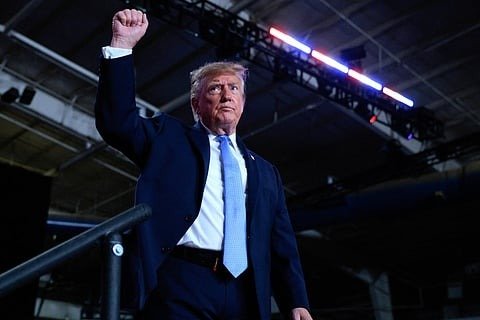
Voters heading to the polls this November will decide which party takes control of Congress, setting the exact boundaries for President Donald Trump’s remaining two years in the White House. While Trump himself is not on the ballot, the outcome across 470 congressional seats, a cycle driven by roughly $12 billion in political spending, will dictate how easily federal legislation moves forward until his term ends on January 20, 2029.
A midterm loss does not remove a sitting president from office or trigger an early election. Even if Democrats secure majorities in Congress, the president retains full authority to direct federal agencies, issue executive orders, and manage foreign policy and national security. Furthermore, Trump keeps his presidential veto. Overriding that veto requires a two-thirds vote in both the House of Representatives and the Senate, meaning a simple Democratic majority would only gain legislative leverage rather than total statutory control.
Constitutional removal remains extremely difficult even under an opposition Congress. While a Democratic-controlled House could vote to impeach the president by a simple majority, actual conviction requires a two-thirds supermajority in the Senate. If all 100 senators participate in a trial, 67 votes are needed to convict, a threshold that cannot be met without substantial support from Republican senators.
Economic Shifts and Global Investment Stakes
Investors and global markets are tracking the outcome closely due to stark differences in economic platform between the two parties. Republicans push for free-market rules and lower corporate tax rates, while Democrats advocate for regulated capitalism, raising concerns among some market analysts that anticipated corporate tax hikes could pressure equity prices. The economic debate is currently dominated by voter frustration over the cost of living, energy price spikes linked to the US war with Iran, and inflation levels that remain below the target established by the US Federal Reserve.
Global investors and institutional commitments remain closely connected to the US policy environment. Hussein Sajwani, founder of UAE conglomerate DAMAC, directed $20 billion into US data centres in January 2025, just days before the presidential inauguration, alongside a broader 10-year, $1.4 trillion commitment framework from the UAE. Major corporate figures have also retained a heavy footprint in this cycle; Elon Musk continues to back Republican midterm campaigns financially, even as he raises public discussion around potentially combining Tesla and SpaceX into a single corporate entity.