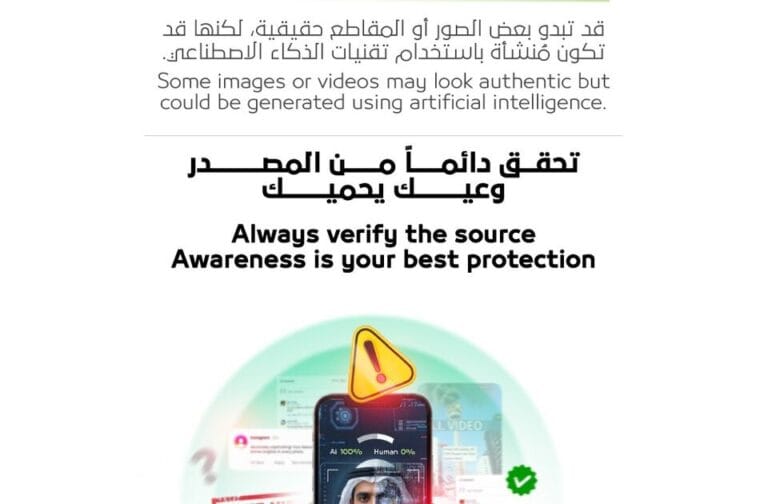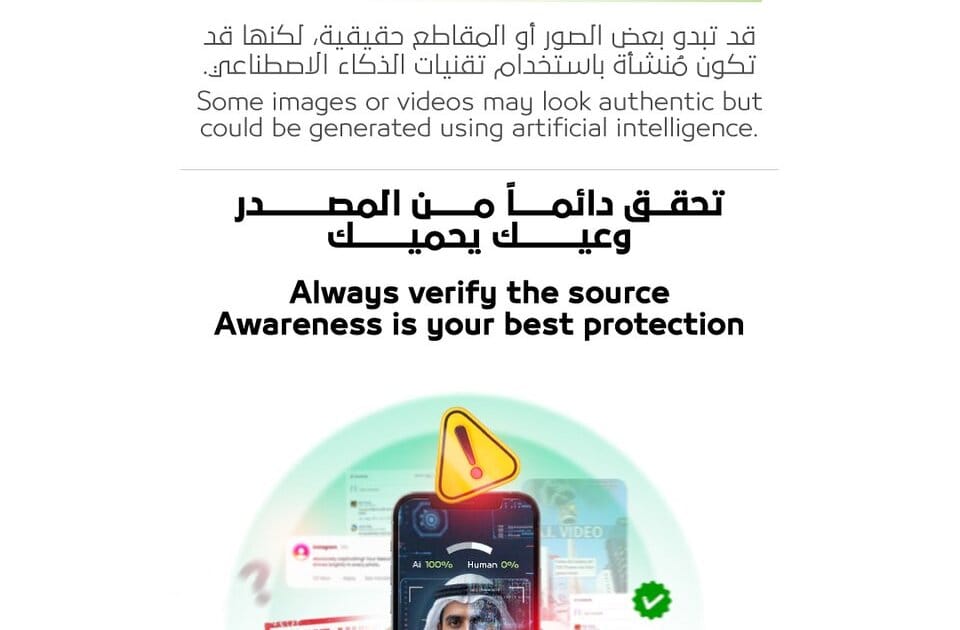
Dubai Police has issued a public awareness message warning that AI-generated fake videos and images can look real online, but may be created using Artificial intelligence, the goal is simple: stop people from getting misled and reduce the spread of Online Misinformation across social media.
Key Takeaways: AI-generated media verification
- Some online images and videos can appear authentic but be AI-generated.
- Verify the source before sharing, especially on social media.
- Awareness is the first line of defense against manipulated media.
What did Dubai Police warn about AI-generated content on social media?
In its message posted on online platforms, Dubai Police urged residents and expats to pause before reposting viral clips. The warning is that some content that looks like a real recording may actually be AI-generated content, including deepfakes that mimic real people, real voices, and real events.
How can I tell if a video is AI-generated?
There is no single giveaway that works every time, which is why the message focuses on awareness and verification rather than “spotting tricks.” Still, the risk is highest when a clip triggers a strong emotional reaction and spreads fast, which is a common pattern in misinformation.
For practical public Digital Literacy, treat sensational videos as unverified until you can confirm where they came from. Deepfakes can look convincing, so the safest approach is content verification: check whether a trusted original source posted it, and whether credible outlets or official accounts have confirmed it.
How do I verify the source of a viral video before sharing?
Content verification starts with the basics: identify the earliest available upload, confirm the account behind it, and look for an official statement if the video claims to show a public incident. If the clip appears only on repost pages, anonymous accounts, or heavily edited compilations, treat it as unconfirmed.
This message supports safer online behavior by reducing the spread of AI-generated misinformation that can harm public trust, reputations, and consumer decision-making. Stronger verification habits can also protect businesses and communities from fraud, scams, and panic driven by manipulated media.
The focus is on misleading material presented as authentic, especially when it spreads through social media without a clear source.
What you should do next
Slow down before you share. If you cannot verify the source, do not amplify it. When in doubt, look for confirmation from official channels, including Dubai Police updates and other government official channels. That habit strengthens deepfake awareness and safety, and it protects your community from online misinformation.