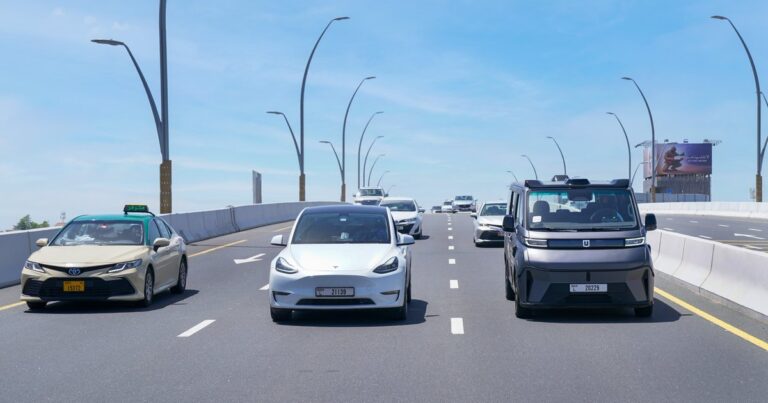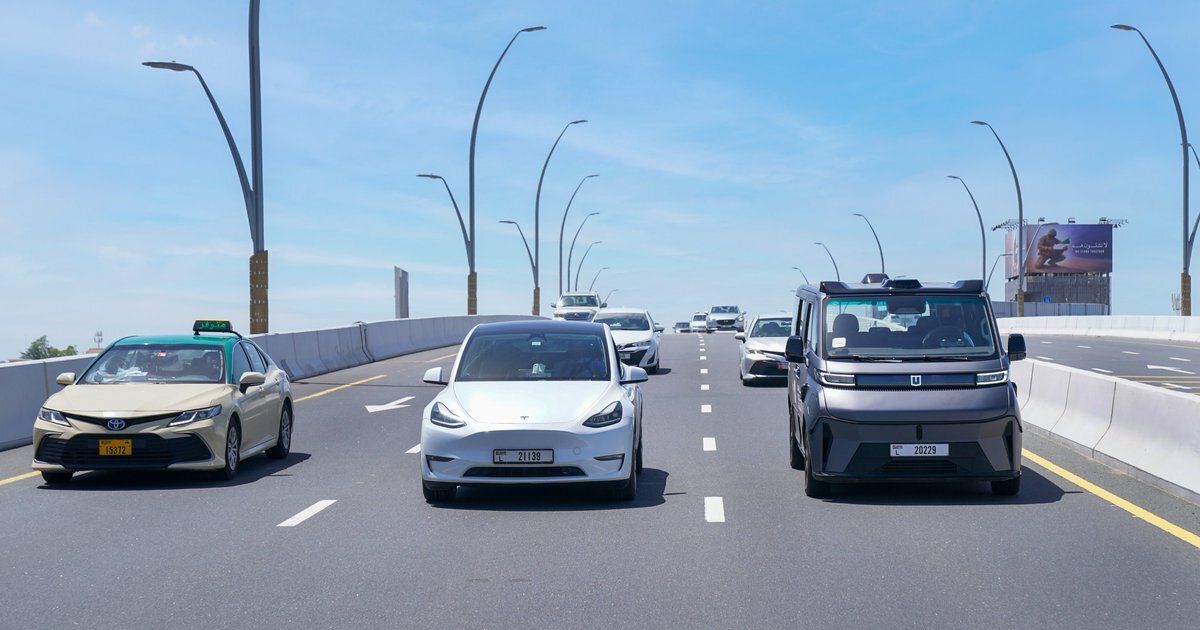
Dubai’s first Dubai autonomous taxi service has moved into paid, on-demand use in real neighbourhoods, with the Roads and Transport Authority (RTA) confirming commercial operations of self-driving, electric taxis in Umm Suqeim and Jumeirah. The Robotaxi rollout is being delivered with Apollo Go and WeRide, and riders can book trips through the Uber app as well as the Apollo Go app.
The commercial self-driving taxi service kicks off in March 2026. Book driverless, all-electric rides through the Apollo Go or Uber apps. The fleet, featuring 6th-gen RT6 vehicles, will expand from 100 to over 1,000, prioritizing safe AI-driven mobility. For coastal residents, this isn’t a limited test or demo; it’s a real ride option in two of the city’s busiest areas for quick trips between homes, hotels, beaches, and shops. In Dubai, it proves that self-driving vehicles are now a regular transport choice, not just a glimpse of the future.
Fast Facts: RTA’s robotaxi service in two coastal districts
- Who: Dubai Roads and Transport Authority (RTA) with Apollo Go and WeRide
- Where: Umm Suqeim and Jumeirah, Dubai
- How to ride: Book via the Uber app or the Apollo Go app
- What’s next: Fleet expansion planned across 2026
From test flights to paid rides
Dubai has conducted autonomous vehicle trials for years, but today’s transition to robotaxi commercial operations elevates the situation. A commercial launch signifies that the service is now available as a paid, on-demand option on regular streets, utilizing app-based ordering similar to what residents already use for ride-hailing.
RTA’s choice of Umm Suqeim autonomous taxi coverage and Jumeirah autonomous taxi coverage is telling. These are high-demand areas where ride-hailing is already part of the routine, especially for short trips that stack up quickly during beach hours, school runs, and weekend traffic.
What changes for riders this week
If you live, work, or often go to Umm Suqeim or Jumeirah, there’s an easy update. You can now book an RTA self-driving taxi using familiar apps. Riders can request an autonomous taxi through Uber or Apollo Go Dubai.
In practical terms, this focuses on convenience and availability. When a service expands, it can reduce the rush during peak times by enhancing fleet utilization. Initial commercial phases typically remain within approved service zones and operating conditions, so riders should expect the service to concentrate on these two districts as the rollout stabilizes.
| Item | Details |
|---|---|
| Service | Commercial autonomous (self-driving) electric taxi service |
| Operator and oversight | RTA |
| Technology partners | Apollo Go, WeRide |
| Launch areas | Umm Suqeim, Jumeirah |
| Booking apps | Uber app, Apollo Go app |
| Next milestone | Fleet expansion planned in 2026 |
Smart mobility, with rules behind the scenes
This launch fits well within Dubai’s smart mobility goals, which have been developing for years. These include digital payments, on-demand transport, and better connections between metro, tram, buses, marine transport, and last-mile services. The introduction of autonomous vehicles in the UAE follows a familiar model in the area, with approved zones, safety checks, and ongoing monitoring, especially when commercial service begins.
For RTA innovation projects, the rationale is also economic. Autonomy aims to reduce the long-term cost per trip by decreasing labor intensity and enhancing the frequency of vehicle use. This can alter competition among operators and encourage greater investment in electric vehicles support systems, including charging and specialized maintenance.
What to watch as 2026 unfolds
Dubai’s transport playbook tends to scale what works in steps, more vehicles, wider service zones, and tighter operating procedures. If that pattern holds, 2026 could be the year autonomous taxis become a normal sight for everyday trips, not just a headline.
Sheikh Hamdan bin Mohammed approves AED1bn Incentives for Dubai economy boost starting April 2026
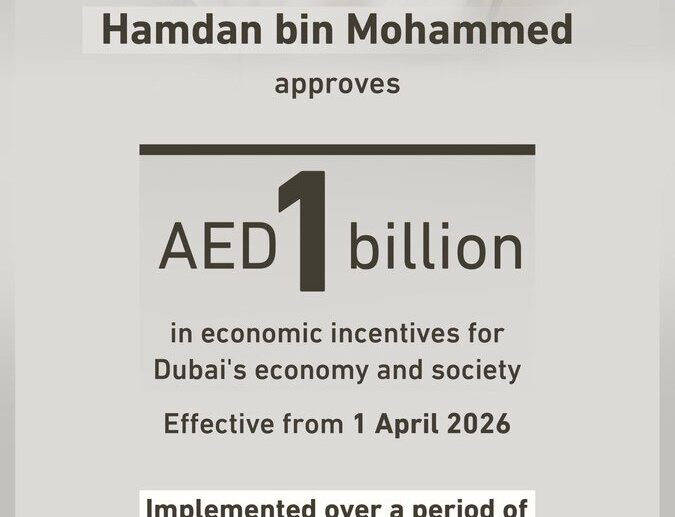
Dubai has moved fast on a fresh shot of economic support. Sheikh Hamdan bin Mohammed bin Rashid Al Maktoum, the Dubai Crown Prince, approved AED 1 billion in incentives during a Dubai Executive Council meeting, setting up a time-bound push designed to lift activity across the Economy and keep Business confidence high as the emirate heads into the second quarter of 2026.
The incentives are scheduled to begin in April 1, 2026 and run for three to six months, a tight window that signals urgency. For companies weighing hiring, expansion, or new launches, the message is simple: Dubai wants decisions pulled forward, and it wants momentum on the ground quickly.
A Quick Look: Dubai's New Incentives
- Approved by: Sheikh Hamdan bin Mohammed bin Rashid Al Maktoum at a Dubai Executive Council meeting
- Package size: AED 1 billion in economic incentives
- Start date: April 1, 2026
- Duration: Three to six months, aimed at boosting economic activity in Dubai and across the UAE business ecosystem
What this means for Dubai
Dubai has traditionally employed time-limited packages to stimulate growth, particularly when there is a need for rapid increases in hiring, investment, and consumer spending. The 2026 economic stimulus for Dubai is based on this concept, providing a brief period that motivates companies to take immediate action.
| Item | Detail |
|---|---|
| Decision forum | Dubai Executive Council |
| Total value | AED 1 billion |
| Start | April 1, 2026 |
| Planned run | Three to six months |
| Stated purpose | Boost economic activity |
How incentives impact residents and businesses
Economic incentives backed by Hamdan bin Mohammed aim to provide financial relief for businesses and individuals. For residents, the effects are tangible in daily life: increased job opportunities, active retail and services, and companies intensely competing for customers and talent.
For business owners and operators, UAE business incentives often include lower or delayed government fees, quicker approvals, targeted support for small and medium enterprises and entrepreneurs, and specific programs that encourage private-sector involvement. This combination can reduce cashflow pressure and shorten the time between making a decision and starting a business.
AED 1 billion will be invested starting in April, with a three to six month timeline. With that, Dubai aims to accelerate and boost its economic activity.

Dubai World Cup 2026 Winner: MAGNITUDE storms to victory at Meydan on Emirates-sponsored night
Dubai has its Dubai World Cup 2026 winner, and the grandstands at Meydan erupted as the result hit. MAGNITUDE clinched the Emirates-sponsored $12Million Dubai World Cup on March 28, 2026, grabbing the biggest headline in Dubai sports on the UAE’s most thrilling night of horse racing. In a major upset, MAGNITUDE defeated the favorite, Forever Young, in the 2026 Dubai World Cup. The winning horse, owned by Winchell, was ridden to victory by US jockey Jose Ortiz and together they lit up Racing Dubai’s flagship showcase at Meydan Racecourse, with global eyes locked on Dubai.
Dubai World Cup night is more than just a trophy moment. It's a citywide event that draws residents together, from packed roads around Nad Al Sheba to last-minute restaurant bookings, ride-hailing surges, and hospitality venues operating at full capacity. With Emirates as sponsor, the win also serves as a global branding moment for the UAE, ready for broadcast and designed for impact.
Tonight's Dubai World Cup Headline: A Quick Look
- Winner: MAGNITUDE, racing under the ownership of Winchell
- Race: Dubai World Cup 2026, sponsored by Emirates
- Date and venue: March 28, 2026 at Meydan Racecourse, Dubai, UAE
- Promoted by: RacingDubai, with Emirates tagged as event sponsor
Inside the Meydan finish that set Dubai talking
MAGNITUDE’s win lands at the centre of Dubai’s annual racing calendar, the night when Meydan becomes the city’s front row seat to a global sport. Dubai horse racing has a rhythm locals know well. The build-up starts early, the traffic thickens as the sun drops, and by the time the main event arrives, the entire venue feels tuned to one moment. Tonight, that moment belonged to MAGNITUDE.
| Item | Detail |
|---|---|
| Event | Dubai World Cup 2026 |
| Result | MAGNITUDE wins Dubai World Cup |
| Ridden by | US jockey Jose Ortiz |
| Where | Meydan Racecourse, Dubai, UAE |
| When | Meydan Dubai World Cup March 28 2026 |
| Ownership | Winchell ownership MAGNITUDE |
Racing Dubai’s promotion of the result, alongside Emirates, locked in the headline quickly. For many residents, the Dubai World Cup is the rare sports event that cuts across circles, racing regulars, corporate groups, tourists, and families who treat the evening as a once-a-year outing at Meydan.
What residents feel first: Roads, bookings, and late-night plans
For Dubai locals, Dubai World Cup night hits home with its practical effects before the races even start. Traffic around Meydan and Nad Al Sheba surges, while taxi and ride-hailing pick-ups jam as crowds converge. Citywide, restaurants and lounges buzz with reservations, especially for groups planning dinner around the main event.
Even if you never hit the track, the event still impacts your evening. Friends gather later, drivers change routes, and hospitality staff in Dubai tackle one of their busiest shifts. This is the hidden force behind the spectacle: one race night that shakes up the city's routine.
Event Context
The Dubai World Cup sits among the UAE’s flagship international sporting events and remains the centrepiece of Dubai’s racing season. Staged at Meydan Racecourse, it draws owners, trainers, jockeys, and fans who follow thoroughbred racing in Dubai and beyond. The race is sport at the highest level, but it is also a major hospitality weekend that Dubai has learned to package and export through global coverage.
Economic & Tourism Impact
Dubai World Cup night is closely tied to the city’s events economy. Hotels, restaurants, and premium hospitality packages typically see a lift around the race weekend, and transport demand rises as crowds move between Meydan and the rest of the city. For UAE-based businesses, the night doubles as a high-visibility platform for corporate entertainment and international media exposure, especially with a national carrier in the title position.
Local Relevance & Racing Ecosystem
Beyond the trophy, the night spotlights the scale behind horse racing in the UAE. Racing operations, veterinary and training services, logistics, and event production all sit behind the scenes, supporting specialist jobs and supply chains. High-profile wins can also ripple into breeding and sales valuations internationally, while reinforcing Meydan’s role as a year-round venue that hosts racing and large-scale entertainment programming.
What happens next
Tonight's result is in: MAGNITUDE clinches the Dubai World Cup 2026! Winchell takes the crown as owner, with Emirates as the proud sponsor on this grand stage. Tomorrow, Dubai wakes up to the familiar buzz of a major UAE sports event, social feeds buzzing with finish-line clips, and everyone asking: did you catch the action at Meydan?
UAE Golden Visa 2026: The Exact Eligibility Routes That Actually Work (Salary, Property, Business, and Talent)
The phrase “UAE Golden Visa 2026” is now more of a planning tool than a status symbol. For skilled professionals considering career changes, families concerned about school stability, entrepreneurs wanting to build without visa worries, and investors linking Residency to long-term investments, the Golden Visa shows the UAE's intent for people to stay and contribute. It is a long-term residence visa, usually for 10 years, aimed at reducing reliance on short, employer-tied cycles and keeping valuable talent and investment in the country.
The reality is that "Golden Visa UAE eligibility" involves multiple paths, each with its own requirements and overseers. Most emirates process applications through the ICP (Federal Authority for Identity, Citizenship, Customs and Port Security). Dubai handles many residency cases through GDRFA Dubai. This distinction is important because the same basic requirements can be interpreted differently depending on the authority, the case type, and how well your documents fit the category you claim. This guide focuses on the paths that most often succeed: high-salary skilled employment, qualifying property investment, approved business pathways, and officially endorsed talent categories.
Quick Look: Routes That Usually Get Approved
- Salary route: A common UAE Golden Visa salary requirement cited in recent policy communications is AED 30,000 per month for the skilled professional category, backed by contract, salary proof, and an attested degree aligned to the role.
- Property route: The UAE Golden Visa property 2 million threshold is commonly referenced at AED 2,000,000 in qualifying real estate, with title deed or accepted ownership evidence and authority-accepted valuation rules.
- Entrepreneur route: The UAE Golden Visa entrepreneur pathway usually needs a UAE trade license, proof of ownership or partnership, evidence of real business activity, and in many cases endorsement such as UAE entrepreneur visa incubator approval.
- Talent route: UAE Golden Visa talent categories depend on nomination or endorsement by a competent UAE authority, supported by verifiable achievements such as awards, publications, patents, or a strong portfolio.
Eligibility
The UAE Golden Visa is a long-term residence visa commonly issued for 10 years for key categories such as investors, entrepreneurs, specialized talents, and outstanding students or graduates. Some frontline or humanitarian roles may qualify depending on approvals. Applicants can be inside the UAE or applying from abroad, and the process is handled through ICP for most emirates, while Dubai cases often run through GDRFA Dubai.
That split is not just a technical detail. It affects what evidence is accepted, how carefully documents are checked, and how quickly a file is processed. If you live in Dubai, you will often hear the process called the GDRFA Dubai Golden Visa route. If you are in Abu Dhabi or other emirates, you will more often use ICP Golden Visa channels, with local offices like the Abu Dhabi Residents Office (ADRO) providing guidance and support.
Salary Route (Skilled Professionals)
For many people living in the UAE, the easiest way to get a Golden Visa is through the skilled professional path. To qualify, you need to have a job in a skilled position and show that you earn a high monthly salary. The most common salary mentioned in recent policies for this route is AED 30,000 per month.
What makes this route “work” is not the number alone. Authorities look for a coherent story across your job title, your academic background, and your salary trail. Applicants typically need a valid employment contract, proof of salary such as bank statements and or a salary certificate, and an attested academic degree. Your role classification needs to align with skilled categories, and this is where confusion often starts for applicants who assume a MOHRE work permit is the same thing as residence eligibility. MOHRE governs labour and work permits, while the Golden Visa is a residence decision processed through ICP or GDRFA Dubai.
- Common approval friction: job title and degree mismatch, short or inconsistent salary history, or employer documentation that does not match across systems.
- Practical tip: make sure the salary evidence shows a stable pattern, not a one-off spike, and that your contract and salary certificate match what hits your bank.
Property Route (Real Estate Investor)
The UAE property investor visa route is often described in one line: own property worth at least AED 2,000,000. In reality, the “UAE Golden Visa property 2 million” threshold is only the start. Authorities typically require official ownership evidence, such as a title deed for ready property, and they may apply rules on whether the property is completed or off-plan, and whether financing is acceptable under current interpretations.
In Dubai, keeping your documents in line with the Dubai Land Department is key. In other emirates, similar land records and approved valuation methods are just as important. This is where rules for off-plan property Golden Visas and property valuation for Golden Visas can mean the difference between easy approval and a delayed process. Mortgage and Golden Visa eligibility can also depend on how the authority evaluates ownership value and what it considers for the required amount.
- Common approval friction: the authority’s assessed valuation falls short of AED 2,000,000, the property type is not accepted for the category, or the documents do not match land department records.
- Practical tip: Use your title deed and land department records as the main reference for the file. Any differences in names, unit numbers, or ownership shares can delay the process.
Business / Entrepreneur Route
For business founders and operators, the UAE Golden Visa for entrepreneurs can be a strong option, but it usually involves more than just paperwork. You generally need to show that you own or are a partner in a UAE-registered business, or that you have an approved startup profile backed by an incubator, accelerator, or a recognized authority.
Evidence commonly includes a trade license, company incorporation documents, shareholding proof, and bank or accounting evidence that the business is active. Authorities are looking for substance, not just a license. If your company is dormant, has unclear ownership, or cannot show real activity, the file can struggle even if the paperwork looks complete at first glance.
- Common approval friction: inactive or low-substance companies, unclear ownership structure, missing endorsements, or licensing that does not match the claimed activity.
- Practical tip: prepare a clean ownership trail and a simple “business activity pack” that shows operations, not just incorporation.
Talent Route (Outstanding Talent / Special Achievements)
The UAE outstanding talent visa is the route people talk about most and understand least. It is not a self-declared category. It is built around nomination or endorsement by a competent UAE authority relevant to your field, such as culture and arts, sports, digital and tech, or science and research.
Evidence often includes awards, publications, patents, a portfolio, media coverage, memberships, recommendation letters, and proof of a sustained track record. The strongest applications read like a career narrative that can be verified quickly. The weakest are impressive in conversation but hard to prove on paper.
- Common approval friction: no clear endorsing authority, achievements that cannot be verified, or documents that are not properly translated or attested where required.
- Practical tip: build a portfolio that is easy to audit. If a reviewer cannot validate an award, publication, or role in minutes, expect questions.
Documents Required
Across routes, the UAE Golden Visa documents checklist tends to converge on a baseline set, then expands based on category. Expect to prepare a passport copy, a personal photo, and proof of your current UAE residence status if you are applying from inside the country.
When converting or issuing residence, you will complete the Golden Visa medical test and Emirates ID steps. Health insurance enforcement can be emirate-specific, so applicants should be ready to show coverage where required. Education documents, where applicable, may need attestation. Documents not in Arabic or English may require legal translation.
| Document Type | Who Usually Needs It | What Authorities Commonly Check |
|---|---|---|
| Passport copy and photo | All applicants | Identity match across all forms and supporting records |
| Employment contract and salary proof | Skilled Professionals | Consistency between contract, salary certificate, and bank statements |
| Attested academic degree | Skilled Professionals (where applicable) | Degree relevance to job title and role classification |
| Title deed or official ownership evidence | Property Investment applicants | Ownership, value threshold, and alignment with land department records such as DLD |
| Trade license and incorporation documents | Entrepreneurs | Ownership structure, licensed activity, and evidence of substance |
| Endorsement or nomination evidence | Talents and many Entrepreneurs | Competent authority support and verifiable achievements |
| Medical fitness test and Emirates ID biometrics | Most applicants when issuing or converting residence | Fitness clearance and identity capture for Emirates ID |
Step-by-Step Process
The UAE Golden Visa application process is usually predictable when you treat it like a file-building exercise rather than a form submission. The typical flow looks like this:
- Step 1: Choose the correct category and the correct authority, ICP for most emirates, GDRFA Dubai for Dubai-issued residency cases.
- Step 2: Secure any required nomination or endorsement, especially for the talent route and many entrepreneur files.
- Step 3: Submit the application with supporting evidence, making sure documents match each other in names, dates, and classifications.
- Step 4: Receive initial approval, then complete medical fitness testing and Emirates ID biometrics.
- Step 5: Final visa issuance and Emirates ID delivery.
Many applicants begin with an eligibility or pre-approval stage before final residence issuance, particularly for Talents and Entrepreneurs. That extra stage is not a delay for its own sake. It is the system’s way of confirming that the endorsing authority and the visa authority agree on the category.
Exact Costs
Readers often ask for a single number for UAE Golden Visa cost. There is no universal figure that applies to every case. Total costs vary by emirate, application channel, and whether dependents are included. Fees can change and are not uniform across categories or service bundles.
The only safe approach is to verify current fees at the time of filing through official channels, either ICP digital services or GDRFA Dubai channels, because fee schedules and bundled services are updated periodically.
Timelines
Timelines vary widely by category and by how complete your documents are on day one. Salary and property files can move faster when evidence is clean and consistent. Endorsement-based routes, especially the talent route and some entrepreneur cases, can take longer because they depend on external approvals before the residence stage can proceed.
If you are planning around school admissions, job transitions, or property completion dates, build in buffer time and avoid treating any single processing estimate as a promise.
Renewal & Family Sponsorship
Golden Visas are designed for long-term residency and are renewable, subject to continuing eligibility and compliance with UAE residency rules. In practical terms, UAE Golden Visa renewal is easiest when you can show you still meet the route you were approved under, whether that is ongoing skilled employment, continued qualifying property ownership, an active business, or sustained standing in your endorsed talent field.
Golden Visa holders can generally sponsor eligible family members, including spouse and children, under long-term residence sponsorship rules. Requirements can differ by case and emirate, so families should plan documentation early, especially when coordinating medical tests, Emirates ID steps, and insurance expectations.
Where to Apply (Official Channels)
Where you apply is not a preference. It is structural.
- Federal route: ICP digital services for most emirates, including many cases in Abu Dhabi and the wider UAE.
- Dubai route: GDRFA Dubai channels for Dubai-issued residency cases, commonly referred to as the GDRFA Dubai Golden Visa process.
If you are unsure which authority should handle your file, start by anchoring it to where your residency is issued and where your supporting records sit, such as employment records, property records, and endorsements.
Real Estate Market Context
Property Investment and the Golden Visa remain tightly linked in buyer psychology, especially in prime areas where the residency angle becomes part of the purchase decision. Golden Visa-linked demand is most sensitive to the AED 2,000,000 threshold, how valuations are recognized, and whether off-plan purchases and mortgaged properties are accepted under current interpretations.
That sensitivity shows up in how buyers structure deals, how they time handovers, and how they think about financing. For many households, the property is not just an asset. It is a residency anchor.
What “Actually Works” in 2026
In 2026, the Golden Visa is still best understood as a documentation and approval system, not a marketing promise. The routes that most consistently work are the ones where your evidence is easy to verify and your category is easy to defend: Skilled Professionals with a clear salary trail and aligned qualifications, property investors with clean land department records at or above the commonly referenced AED 2,000,000 threshold, Entrepreneurs with real substance and any required endorsements, and Talents whose achievements are both strong and formally backed by a competent authority.
If you want the process to feel less stressful, treat it like building a case file. Make every document match, choose the right authority from the start, and assume that endorsements and valuations will be checked, not waved through.
You can find more resource here: UAE Golden Visa Myths: The 9 viral claims distorting residency decisions in Dubai and Abu Dhabi

Dubai Police received 56,608 emergency calls during bad weather, with 97% answered in 10 seconds
Dubai Police reported handling a record 56,608 emergency calls during a recent period of unstable weather in Dubai, efficiently managing the increased demand throughout the city. The force stated that 97% of these calls were answered within 10 seconds, a crucial speed when roads flood, crashes occur, and stranded drivers need quick assistance. Dubai Police credited its Command-and-Control Centre for organizing a coordinated response with partner agencies to ensure public safety during weather-related incidents that can make regular commutes dangerous.
Quick Look: Swift Action When It Counts
- Dubai Police said it handled 56,608 emergency calls during a period of unstable weather in Dubai.
- Police reported 97% of calls were answered within 10 seconds, highlighting Dubai Police 999 response time performance during peak demand.
- The Command and Control Centre Dubai Police credited for coordinating an integrated response with partner entities.
- The focus was public safety, keeping emergency call handling and field dispatch running smoothly despite weather-driven disruption.
UAE emergency system
In Dubai and throughout the UAE, emergency services use a central system for dispatching help. Calls to 999 for police emergencies are sorted, recorded, and directed to patrols and special units. The number 998 is used for ambulance services, and 997 is for fire emergencies. When bad weather occurs, calls increase rapidly, often due to traffic accidents, stuck vehicles, flooded roads, and requests for help. This is why the speed of handling 999 calls is so important. It is the first step in getting help on the way.
Command-and-control operations
Dubai Police stated its Command and Control Centre functions as the operational hub, monitoring incidents, prioritizing cases, and coordinating resources in real time. During weather-related events, this crisis coordination typically involves multiple partners across Dubai emergency services, including road and transport authorities, civil defense, ambulance services, and municipal teams. The objective is practical: manage diversions and closures, support rescues as needed, and keep the public informed while officers respond on the ground.
For residents, the impressive figure of 97% of 56,608 calls answered within 10 seconds shows that emergency help was readily available during a stressful time. This means quicker guidance for a driver stuck in water, faster dispatch to a crash, and more efficient patrol routing as conditions change. In a city where many depend on road transport for work, school runs, and deliveries, a rapid response can swiftly resolve dangerous situations.
The broader impact on UAE public safety
Performance in disruptive weather is key to the UAE's resilience planning. Keeping services running, protecting infrastructure, and maintaining public trust hinge on effective emergency communications during high demand. Dubai Police operations during unstable weather ensure road and commercial area continuity. Every minute saved on call answering speeds up dispatch and minimizes further disruption.

UAE Emergency Alerts: The official channels to trust, what to do during regional escalations, and the rumors to ignore
On days when the region feels tense, the UAE can still feel the knock-on effects even when daily life on the ground is calm. A sudden shift in airspace rules can ripple into flight delays and reroutes. A burst of online chatter can trigger panic buying, road congestion, and a flood of forwarded screenshots claiming “official” warnings. For UAE residents, travelers, employers, and schools, the safest routine is also the simplest: follow UAE emergency alerts from official sources, treat travel as a live situation until you check your airline and airport, and do not amplify misinformation that spreads faster than any verified update.
This matters right now because rumor cycles move at the speed of a group chat. A recycled clip of air defence intercepts from another country can be reposted as “over Dubai now” within minutes. A fake statement can be dressed up to look like NCEMA or the Ministry of Interior. Meanwhile, the real disruptions that do affect residents tend to be practical and time-sensitive: airport queues, missed connections, last-minute rerouting, and school or work messages that must come from the right authority to be trusted. If you live in Dubai, Abu Dhabi, Sharjah, or any other emirate, the goal is not to track every headline. The goal is to know exactly where to look, what to do, and what not to share.
The quick summary: UAE Emergency Alerts
- For UAE official safety alerts, rely on NCEMA, the Ministry of Interior, Dubai Police, Abu Dhabi Police, and the National Center of Meteorology (NCM) for weather and sea conditions.
- For UAE travel disruption alerts, check your airline and the airport directly before leaving home, including airport flight status for DXB and AUH (Zayed International Airport).
- Do not forward “incoming missile” screenshots, recycled intercept videos, or fake government statements. UAE misinformation safety starts with not being the next link in the chain.
- In an emergency, use the UAE’s widely published emergency numbers: police 999, ambulance 998, fire 997.
Official channels to follow
When people say “check official sources,” they often mean very different things. In the UAE, the most reliable sources are consistent, recognisable, and tied to specific responsibilities. If an alert is real, it will match the role of the organisation issuing it.
- NCEMA, the UAE National Emergency Crisis and Disaster Management Authority, for national-level crisis guidance and public safety messaging. This is where you look for NCEMA guidelines during fast-moving situations.
- UAE Ministry of Interior for official safety and security communications. For many residents, the MOI UAE app is also a familiar channel for police-related services and updates.
- Emirate-level police channels for local advisories and operational updates, including the Dubai Police app and the Abu Dhabi Police app.
- National Center of Meteorology for UAE weather alerts NCM, including fog, dust storms, sea conditions, and reduced visibility. These conditions are frequently misrepresented online as “attack footage,” especially at night.
- Airports and airlines for live travel changes. For Dubai International Airport (DXB) and Emirates, and for Zayed International Airport (AUH) and Etihad Airways, the most useful updates are flight status pages and official travel update channels.
Step-by-step process
If you see a post, hear a rumour, or receive a forwarded message during a regional escalation, use this checklist before you act, travel, or share anything.
- 1) Verify the source. Ask one question first: does this come from NCEMA UAE, the Ministry of Interior UAE alerts, Dubai Police, Abu Dhabi Police, NCM, or an airline or airport official channel. If not, treat it as unverified.
- 2) Confirm location and time. Viral clips are often old or from another country. Look for a clear date, a clear location, and identifiable markers. If the post cannot show when and where, it cannot be treated as a real-time alert.
- 3) If you hear sirens or see unusual activity, do not speculate online. Follow official instructions and avoid crowding roads. Posting guesses can spread fear and can also interfere with emergency response.
- 4) For travel, treat everything as live until you check. Use your airline app or website and confirm airport flight status DXB AUH before leaving. During airspace closure rerouting, flights can change quickly, including gate changes, holding patterns, diversions, and cancellations.
- 5) For work and school, follow the right authority. Trust messages from your school operator and emirate-level education authority communications. Ignore WhatsApp “school closure announcements UAE” unless they are confirmed by official channels. The same applies to “work from home announcements UAE” that circulate without a named authority.
- 6) If it is an emergency, call the correct number. Police emergencies are handled via 999. Ambulance emergency UAE calls go to 998. Fire emergencies go to 997. These police emergency numbers UAE are widely published and remain the fastest route to help.
Common misinformation to avoid
Misinformation in the UAE often follows repeatable patterns. Once you recognise them, it becomes easier to stop the spread in your own chats and family groups.
- Fake “incoming missile” screenshots or fabricated statements designed to look like NCEMA or the Ministry of Interior. These often use urgent language, poor formatting, or cropped images that hide the original source.
- Recycled videos of air-defence intercepts from other countries posted as “over Dubai” or “over Abu Dhabi now.” The same clips often resurface during every spike in regional tension.
- Misread skies. Aircraft holding patterns, contrails, and flares can be mislabelled as “missiles.” This is especially common when visibility is reduced by haze or dust, or when people are already on edge.
- Unverified port and airspace claims. Posts claiming Jebel Ali Port or Khalifa Port shutdowns, or a blanket airspace closure, should be treated as rumours unless confirmed by the relevant official authority, airport, or airline.
- Forwarded “orders” about evacuations, curfews, or closures. Rumours of mandatory evacuations, school closures, or curfews often spread via WhatsApp and Telegram without any official confirmation.
What changes for residents during escalations
Most residents will not experience a direct security incident, but they may feel second-order effects. This is where practical planning helps, especially for families, frequent flyers, and businesses moving goods.
- Aviation becomes unpredictable. Flight delays, reroutes, and cancellations can occur due to regional airspace constraints. This is where travel advisories, airline rebooking policies, and travel insurance terms start to matter.
- Logistics can tighten. Headline risk can raise freight costs and stretch delivery timelines. That can filter into consumer prices and business operations, especially for time-sensitive shipments moving through major corridors linked to Jebel Ali Port and Khalifa Port.
- Public behaviour can shift fast. Misinformation can trigger panic buying and unnecessary road congestion. Official guidance is designed to keep continuity and calm, even when social feeds are loud.
Emergency numbers and quick reference
| Need | What to do in the UAE | Number or channel |
|---|---|---|
| Police emergency | Call immediately for urgent police assistance | 999 (Dubai emergency number 999 and Abu Dhabi emergency number 999, used nationwide) |
| Ambulance | Medical emergency response | 998 |
| Fire | Fire and rescue services | 997 |
| Weather, fog, dust, sea conditions | Check authoritative updates before driving or boating | National Center of Meteorology (NCM) alerts |
| Flights from Dubai | Confirm status before leaving for the airport | DXB flight status and Emirates travel updates |
| Flights from Abu Dhabi | Confirm status before leaving for the airport | Zayed International Airport flight status and Etihad travel updates |
A calm routine that works every time
The most effective safety habit in the UAE is not constant monitoring. It is disciplined verification. Follow NCEMA, the Ministry of Interior, Dubai Police, Abu Dhabi Police, and NCM for what they each do best. For travel, treat DXB and AUH as live systems and check flight status and airline advisories before you move. For everything else, resist the urge to forward a dramatic screenshot. In a fast rumour cycle, the most helpful thing a resident can do is slow the spread.