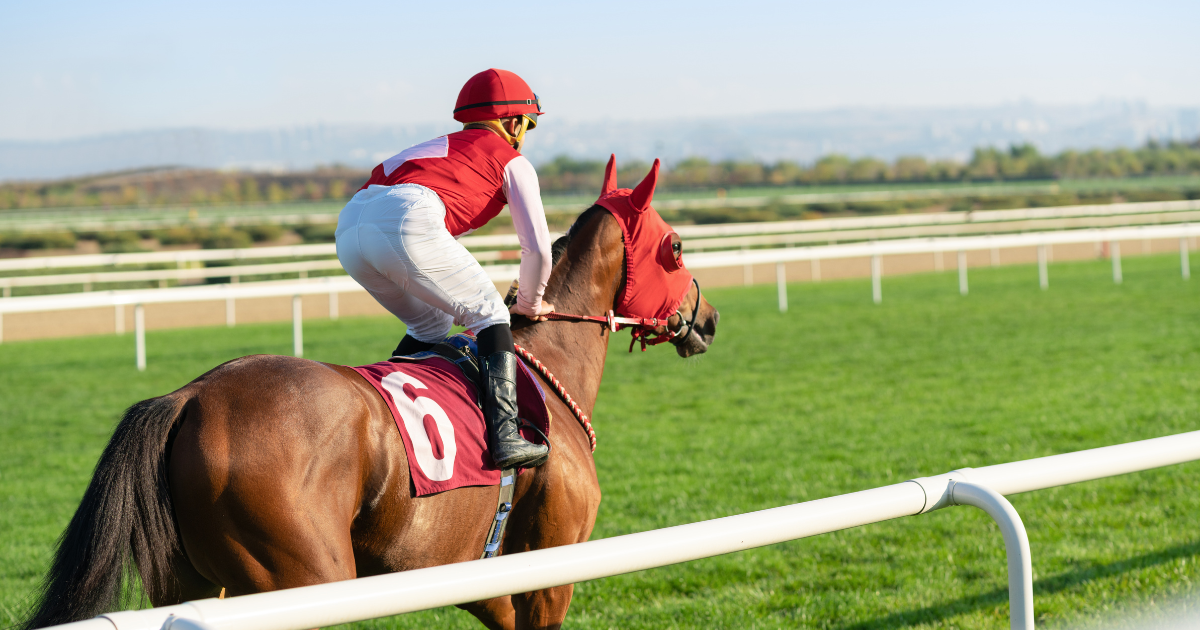
Dubai’s message to racegoers, residents, and the global racing circuit is simple today: the city is ready. The UAE’s Event Security Committee has confirmed full readiness for Dubai World Cup 2026 security, saying comprehensive plans are already in place and operational ahead of the high-profile meeting in Dubai. The statement, shared via Dubai Police channels, lands as hotels fill, hospitality calendars tighten, and transport planning starts to matter for anyone moving around Meydan on race weekend.
The Dubai World Cup is not a regular Saturday out. It is one of the UAE’s flagship international sporting events, drawing VIP delegations, international owners and trainers, and global media. That mix brings glamour, but it also brings pressure on roads, entry points, and crowd flow. A public readiness confirmation is designed to reassure visitors and stakeholders that public safety, crowd management, and emergency response are being handled as a single, coordinated operation.
At a Glance: The readiness call ahead of race weekend
- Who: The UAE’s Event Security Committee, via Dubai Police communications.
- What: Confirmed full readiness for Dubai World Cup 2026, with security plans described as comprehensive and already operational.
- Where: Dubai, with the event closely associated with Meydan Racecourse and its surrounding road network.
- Why it matters: Signals coordinated public safety planning for a major Dubai events weekend that typically drives heavy traffic and dense pedestrian movement.
The statement, in their words
“Security plans are comprehensive and operational.” “Preparations are complete.”
UAE Event Security Committee, in a readiness statement shared via Dubai Police channels on March 27, 2026
What residents will feel first: roads, arrivals, and the rush out
For most people in Dubai, the first sign of Dubai World Cup week is not the horses. It’s the increase in traffic around Meydan Racecourse, especially during busy times. A readiness message usually indicates that road access is managed, parking is controlled, and there is clearer guidance for ride-hailing pick-up and drop-off areas as the event gets closer.
If you are not attending, expect traffic jams at certain times and plan your routes when traffic updates are given. If you are attending, be prepared for tighter security checks, organized walking paths, and visible coordination between venue staff and Dubai Police event teams.
Event overview
The Dubai World Cup is a key event in Dubai’s yearly sports and hospitality schedule. It serves as both a horse racing event and a tourism attraction, impacting hotels, restaurants, transport, and shopping. Therefore, security discussions focus not just on the venue but also on how the city manages an influx of visitors while maintaining normal activities.
Security and operations
For mega-events in Dubai, readiness is typically built on multi-agency coordination. That can include policing, emergency medical response, civil defense and fire services, traffic management, and venue operations working from shared plans and shared communications.
When authorities describe a Dubai World Cup safety plan as “comprehensive and operational”, it generally signals layered measures such as access control and credentialing, crowd-flow design, surveillance and command coordination, rapid incident response protocols, and contingency planning for weather, medical incidents, and transport congestion. At Meydan Racecourse, where large crowds move in waves, crowd management Dubai events planning is often as important as what happens inside the grandstand.
For visitors, the readiness statement is part reassurance and part expectation-setting. Dubai sells major events on comfort and order as much as spectacle. For families and international guests, visible public safety planning is often a deciding factor in whether a day at the races feels like a celebration or a logistical grind.
For residents, it shows that the city is getting ready to keep traffic moving smoothly. A good plan can lead to fewer traffic jams, better signs, and faster help if problems arise. It also benefits local businesses, like restaurants and shops, since the Dubai World Cup 2026 weekend usually brings in more visitors than just those at the track.
Economic and reputational impact
High-visibility security planning supports Dubai’s wider push to host global events year-round. Delivering a smooth Dubai World Cup weekend protects the city’s reputation with international participants, sponsors, and broadcasters, while supporting hospitality occupancy and premium food and beverage spending across Dubai.
What we know right now
| Item | Confirmed detail |
|---|---|
| Authority | UAE Event Security Committee |
| Event | Dubai World Cup 2026 |
| Location | Dubai, with operations centred on Meydan Racecourse |
| Status as of March 27, 2026 | Security plans are comprehensive and operational; preparations are complete |
| Public information source | dphq.ae link shared via Dubai Police social channels |
The committee’s readiness announcement sets the stage, but the details residents look for usually come after: access instructions, traffic plans for Meydan Dubai World Cup, parking guidance, and any updates on public transport or ride-hailing during busy times. For now, the main point is that Dubai event planners are fully prepared for one of the city’s biggest weekends of the year.
Diesel prices surge 7.4% to $4.19
Diesel prices spike 7.4% to $4.19 a gallon
Diesel prices have surged globally following refinery attacks in Russia and Saudi Arabia, alongside lingering shipping disruptions in the Strait of Hormuz. US ultra-low-sulfur diesel futures jumped 7.4% to $4.19 a gallon, driven by distillate inventories dropping to three-decade lows. US distillate inventories, which include diesel and heating oil, stood at 107.2 million barrels as of July 31, reaching their lowest level for this time of year in three decades.
European diesel refining margins rose nearly 10%, as traders focus increasingly on shortages of refined products rather than crude itself. The disruptions come on top of the continuing fallout from the closure of the Strait of Hormuz, a critical energy shipping route whose disruption has constrained global flows of crude and refined petroleum products. Russia has also moved to protect its domestic fuel supply by extending restrictions on gasoline and diesel exports through January 2027, further reducing the amount of refined fuel available to international buyers.
The Jazan refinery in Saudi Arabia, which has been offline since July 27, is now expected to resume operations around August 30. The market is particularly sensitive to diesel because refining capacity cannot quickly switch between products. Diesel is also critical to freight transport, agriculture, construction, and industrial activity, meaning prolonged shortages can feed directly into transportation and food costs.
The squeeze illustrates why a disruption to oil infrastructure can hit consumers even when crude prices do not rise by the same magnitude. Refineries must turn crude into usable products such as diesel and jet fuel, and outages can cause the price of those products to spike rapidly when inventories are already low. For consumers, the biggest concern is that diesel could remain under pressure even if crude prices stabilize.
In a related development, Brent and US crude settled about 5% higher as uncertainty persisted over when the Strait of Hormuz might reopen and as Washington and Tehran continued to trade demands over compensation and the conflict. This comes as the global energy market is still reeling from the aftermath of the Ukrainian attack on a refinery in Russia's Tatarstan region.
This recent surge in diesel prices follows a period of heightened tensions in global energy markets, marked by supply disruptions and geopolitical instability. As the situation continues to unfold, it remains to be seen how the global economy will respond to the challenges posed by the refined-fuel squeeze.

Oman Oil Spill: 390km² Affected
Oman Battles 390km² Oil Slick
Oman is working to contain an oil spill off its southern coast after a tanker ran aground in June inside a protected marine area. The Oman Environment Authority said the ongoing spill had affected roughly 390 square kilometres, according to its most recent analysis. Environmentalists have triggered calls for action, with advocacy groups Greenpeace and PAX warning that the spill is on the verge of causing an "environmental disaster".
The tanker, Caroline Bezengi, was carrying around one million barrels of crude when it ran aground at Al Hallaniyat Islands in the Governorate of Dhofar. The vessel was rocked by explosions in early June, causing water to enter several sections. Authorities have not yet identified the cause of the spill but are in the early stages of developing a plan to transfer the vessel's oil cargo to reduce risks and protect the marine environment.
The slick is concentrated around Oman's Hallaniyat archipelago, where a marine reserve was established last year to protect sensitive ecosystems home to diverse marine life, including rare sea turtles. The country's environment authority has emphasized the need for rapid action to protect the area's biodiversity, including coral reefs, turtle nesting areas, and coastal areas of ecological importance.
This incident follows a similar environmental concern in the region, where marine life has been impacted by human activities. The Oman Environment Authority's efforts to contain the spill are crucial in preventing further damage to the marine ecosystem.
Trump Iran Compensation Demand
Trump Seeks $87 Oil Price Surge Compensation from Iran
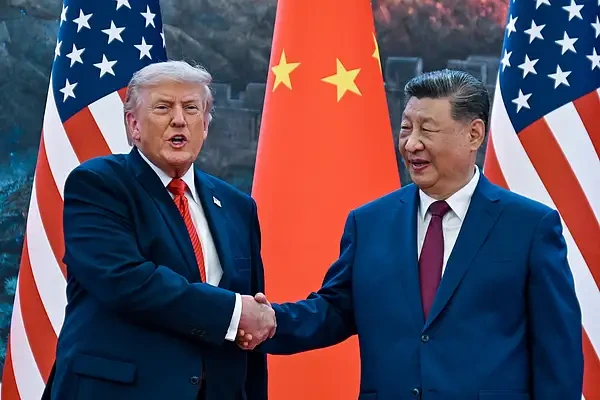
US President Donald Trump has demanded that Iran pay compensation for the people it has allegedly killed in wars, attacks, and protests. This move is a response to Tehran's demands for compensation and an end to sanctions, which were largely in line with the terms of a preliminary peace deal signed in June. Trump's proposal complicates efforts to reopen the Strait of Hormuz, a crucial oil shipping route.
The US President stated that he would seek compensation for people who have been killed or wounded in previous conflicts, as well as payments to the families of hundreds of thousands of protesters whom he said Iran had killed. Trump also mentioned that Iran should compensate families of the 17 US sailors killed in an October 2000 attack in Yemen on the naval vessel USS Cole.
Oil prices rose after Trump's announcement, with Brent crude trading at $87, up 4.6% for the day. The increase in oil prices is likely to have significant implications for the global economy, particularly for countries that rely heavily on oil imports.
This development is a continuation of the ongoing conflict between the US and Iran, which has been escalating since February. The situation remains uncertain, with neither side likely to accept the other's terms, making it challenging to predict the outcome of the negotiations.
The US-Iran conflict has significant implications for the Middle East region, particularly for countries such as Lebanon, Syria, Yemen, and Gaza, which have been affected by the conflict. The situation is being closely monitored by the international community, with many countries calling for a peaceful resolution to the conflict.

Trump Backs FIFA's Infantino Amid Replacement Threats
Trump: Replacing Infantino 'Terrible Mistake'
US President Donald Trump on Monday backed FIFA President Gianni Infantino, who is facing allegations of a workplace affair and criticism of a failed private investment scheme. Trump stated that replacing Infantino would be a "terrible mistake" and called the FIFA president "fantastic," saying he "presided over the most successful World Cup, by four times, ever presented." FIFA's governing body has been under fire from UEFA, CONCACAF, and the AFC, with some leaders calling for Infantino's replacement ahead of the FIFA presidential election in March 2027.
Infantino has received support from the Confederation of African Football and some individual member associations, including Mexico and Qatar. However, UEFA, CONCACAF, and the AFC have expressed strong opposition to Infantino's leadership, citing a "failure of judgment" and a "shabby, opaque, backroom deal" regarding his private investment plan. The plan was later withdrawn due to widespread criticism.
The FIFA president has denied any wrongdoing and has received "full support" from senior FIFA directors in an emergency meeting. Despite this, the opposition from UEFA, CONCACAF, and the AFC remains, with some leaders viewing CONCACAF President Victor Montagliani as a potential challenger to Infantino in the upcoming election.
The controversy surrounding Infantino's leadership has sparked a heated debate within the football community, with some calling for his replacement and others defending his tenure as FIFA president. As the FIFA presidential election approaches, the situation is likely to continue to unfold, with potential consequences for the future of the organization.
The UAE has not been directly involved in the controversy, but as a member of the FIFA community, the outcome of the situation may have implications for the country's football scene.

China Rocket Launch Fails After Anomaly
China Rocket Explodes 85 Seconds After Launch
A Chinese Long March 7A rocket carrying a communications satellite failed during launch after experiencing a "flight anomaly" and subsequent explosion. The incident occurred at the Wenchang Space Launch Site in Hainan province on Monday, August 10, at 8:02 pm local time. State news agency Xinhua reported that an "anomaly" occurred when the rocket was in flight, and the cause of the failure is under investigation.
The Long March 7A rocket was carrying the Zhongxing-4B communications satellite when it exploded around 85 seconds after blasting off, leaving behind a cloud of grey smoke as debris fell to the ground. Videos posted on social media showed awestruck crowds watching a fiery ball in the sky. This incident marks a setback for China's space program, which has been investing heavily in recent years to achieve its "space dream" as outlined by President Xi Jinping.
China's space agency had previously successfully landed a reusable rocket for the first time in July, marking a major step in its space ambitions and in reducing launch costs. The country is aiming to land astronauts on the Moon before 2030, competing with the United States in this endeavor. SpaceX CEO Elon Musk commented on the failed launch, stating that "rockets are insanely hard" and wishing China a speedy recovery.
This is not the first failure of a Long March 7A rocket; the maiden launch of the rocket from the Wenchang site in 2020 was also unsuccessful due to a malfunction. The investigation into the cause of the current failure is ongoing.
The failed launch of the Long March 7A rocket is a significant development in the context of China's space program, which has been making strides in recent years. In July, China successfully landed a reusable rocket, and the country is planning to send astronauts to the Moon before 2030.