(Credit - Dubai Municipality)
Dubai Drone Delivery Is Coming to Parks and Beaches , Here’s What Visitors Need to Know
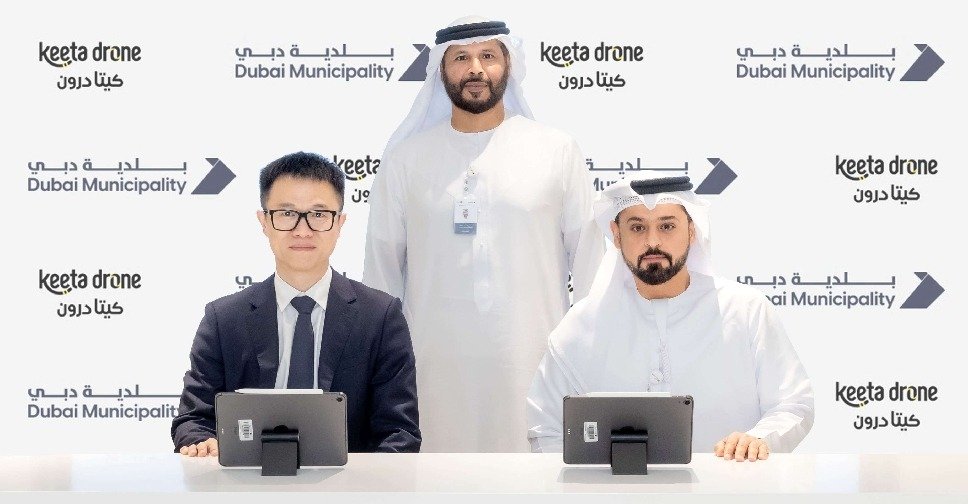
Dubai drone delivery is about to change how you spend a day at the beach or park. Later in 2026, Dubai Municipality , in partnership with Keeta Drone , will roll out drone delivery services across selected public parks and beaches, giving visitors on-demand access to food, drinks, and everyday essentials without ever leaving their spot on the sand or grass. If you’ve ever queued at a kiosk on a packed Friday at Jumeirah Beach or walked halfway across a park to grab a bottle of water, this is the upgrade you didn’t know was coming.
Dubai Municipality and Keeta Drone: What the Partnership Actually Delivers
Dubai Municipality is leading the rollout in collaboration with Keeta Drone, a delivery platform built specifically for aerial last-mile logistics. The service is designed to cover lightweight, high-frequency items , think meals, cold drinks, and small convenience goods , dispatched quickly through defined drone corridors above selected public spaces. Specific parks and beaches have not yet been publicly confirmed for the first phase, but the programme sits squarely within Dubai’s broader smart mobility agenda, which aims to blend transport, logistics, and municipal services into a seamless visitor experience.
In practice, the system will rely on designated take-off and landing points within each location, with geofenced flight routes and altitude controls to keep operations safe above crowded recreational areas. UAE drone activity is governed through civil aviation requirements and local operational permissions, meaning every corridor Keeta Drone flies will need to meet strict airspace, privacy, and public safety standards before a single delivery goes live.
What This Means for Your Weekend at the Beach or Park
For residents and tourists, the most immediate effect is convenience during peak periods. Dubai’s beaches and major parks see their heaviest footfall on weekends and public holidays , exactly when kiosk queues are longest and walking to a nearby shop feels like a mission. Drone delivery cuts that friction entirely. Visitors will be able to place an order and have it dropped at a designated point close to them, reducing the need to leave their spot, carry heavy bags, or wait in line. For families with young children, elderly visitors, or anyone simply trying to make the most of a beach day, that’s a meaningful shift in how public spaces feel to use.
Beyond individual convenience, the rollout creates a new data layer for city operators. Delivery times, demand hotspots, and peak-hour patterns will give Dubai Municipality measurable insight into how people use parks and beaches , information that can sharpen staffing decisions, cleanliness schedules, and facility planning over time.
The Bigger Picture: Smart Mobility Gets a New Layer
This initiative is one piece of a much larger smart city push. Dubai has been systematically building out last-mile delivery infrastructure, and drone services in public recreational spaces represent a logical next step , one that reduces short-trip ground traffic, improves response times, and creates commercial opportunities for F&B operators willing to plug into the platform. Successful pilots in controlled public environments like parks and beaches typically become templates for wider rollouts, so what launches later in 2026 in a handful of locations could eventually scale across the emirate’s entire network of public spaces.
- Operator: Dubai Municipality in partnership with Keeta Drone
- Launch Window: Later in 2026
- Locations: Selected public parks and beaches in Dubai (specific sites to be confirmed)
- Items Covered: Food, drinks, and essential convenience goods
- Infrastructure Required: Designated drone landing points, geofenced routes, altitude controls
- Regulatory Framework: UAE civil aviation requirements and local operational permissions
- Primary Goal: Faster visitor access to essentials as part of Dubai’s smart mobility agenda
Families, weekend beachgoers, and regular park visitors across Dubai are the group with the most to gain from this rollout , and the most to lose if the first-phase location list is too limited. The risk is a slow, narrow pilot that takes years to scale, leaving the majority of Dubai’s public spaces untouched while demand builds. To stay ahead of the launch and find out which parks and beaches make the first phase, monitor Dubai Municipality’s official channels and the Keeta Drone platform directly for confirmed locations and go-live dates.
Frequently Asked Questions
- Q1: Which parks and beaches in Dubai will get drone delivery first?
- A1: Dubai Municipality has not yet publicly confirmed the specific parks and beaches included in the first phase. The rollout is planned for later in 2026, and official location announcements are expected through Dubai Municipality’s channels ahead of the launch.
- Q2: How will I actually order food or drinks via drone at a Dubai park or beach?
- A2: The ordering mechanism has not been fully detailed publicly, but the service is expected to operate through the Keeta Drone platform. Deliveries will be made to designated drop points within each location rather than directly to individual visitors on the sand or grass.
- Q3: Is drone delivery in Dubai parks and beaches safe for the public?
- A3: All drone operations under this programme must comply with UAE civil aviation requirements and local operational permissions. This includes geofenced flight corridors, defined altitude limits, designated take-off and landing zones, and procedures for weather disruptions , all designed to protect public safety in crowded recreational spaces.

Etihad Rail cuts Abu Dhabi‑Fujairah commute to 1h 40m
Kalba commuter shaves two hours off daily trip thanks to new rail
At 7 a.m. on a Tuesday, a Kalba commuter steps onto the Etihad Rail platform, ticket in hand, ready for a journey that will end in Abu Dhabi in just 1 hour 40 minutes.
From three‑hour drives to a two‑hour commute

Emirates urges early arrival at DXB July 3‑5
DXB faces heavy traffic July 3‑5; Emirates tells flyers to add three‑hour buffer
Dubai International Airport (DXB) will see a surge of passengers from July 3‑5, 2026.
Longer queues and tighter gate cut‑offs at DXB terminals
The advisory reflects Dubai’s broader effort to keep airport flow smooth during seasonal travel spikes.

Dubai Customs Foil Pregabalin Smuggling Attempt
Dubai Authorities Thwart Pregabalin Smuggling Attempt
Dubai Customs and Dubai Police seized 278,850 Pregabalin pills in the initial smuggling attempt, according to official details of the joint operation, a controlled substance, weighing around 200 kg. The operation resulted in the arrest of a four-member gang, underscoring the authorities' ongoing efforts in border-security and anti-narcotics enforcement.
The seizure of 278,850 pregabalin tablets is a significant blow to drug trafficking networks in the UAE. Dubai Customs and Dubai Police have been working together to identify and intercept shipments of controlled substances, and this operation reflects their effective collaboration.
Dubai Customs and Dubai Police's joint operation is part of a broader effort to protect the community from the harm caused by controlled substances. Pregabalin is treated as a controlled substance in the UAE, and trafficking cases are typically handled as serious narcotics/controlled-medicine offenses.
The authorities' actions have prevented the diversion of these pills into local distribution markets, reducing the risk of harm linked to their misuse. This operation demonstrates the commitment of Dubai Customs and Dubai Police to enforcing border security and anti-narcotics laws, ensuring the safety and well-being of the community.
Officials said the joint operation reinforced Dubai’s leadership in border security and efforts to counter smuggling and protect the community.
The 200kg shipment of pregabalin pills was seized in a joint operation, resulting in the arrest of a four-member gang. This operation is a significant achievement for Dubai Customs and Dubai Police, demonstrating their effectiveness in identifying and intercepting shipments of controlled substances.

Emirates ID: Risks You Should Know Before You Share
Protect Your Emirates ID: The Hidden Dangers of Routine Sharing
As a resident in the UAE, you're likely familiar with the importance of your Emirates ID. However, a common habit among residents - sending Emirates ID copies for routine requests - can increase your exposure to identity theft and fraud. Authorities are warning against this practice, especially when sharing ID copies over WhatsApp or email.
The warning focuses on the potential risks of sharing Emirates ID copies, which can be stored, forwarded, or reused without the holder's knowledge. Emirates ID is a high-trust identifier used across many verification flows, and if misused, it can enable impersonation attempts, fraudulent account creation, unauthorized service sign-ups, or social-engineering scams.
Residents are advised to verify whether the request is mandatory and whether the recipient is authorized. It's recommended to prefer official portals or in-person verification when possible, avoid sending ID images over informal channels like WhatsApp, and limit exposure by sharing only what is necessary for the stated purpose. Red flags include requests from unverified numbers or emails, pressure to share immediately, unclear purpose for collection, or businesses that cannot explain how the data will be stored and protected.
For those who have already shared their Emirates ID copies, it's essential to be vigilant and monitor their accounts and personal data for any suspicious activity. If you suspect that your Emirates ID has been misused, you should report it to the relevant authorities immediately.
In the UAE, residents can take steps to protect their Emirates ID data by being cautious when sharing their ID copies. By being aware of the potential risks and taking the necessary precautions, residents can reduce their exposure to identity theft and fraud.
To protect your Emirates ID data, follow these best practices:
- Verify the recipient's authenticity before sharing your ID copy.
- Use official portals or in-person verification when possible.
- Avoid sending ID images over informal channels like WhatsApp.
- Limit exposure by sharing only what is necessary for the stated purpose.

Trump's $1.4B Crypto Income Disclosure
Trump's Crypto Income Sparks Scrutiny
If you're following the latest developments in cryptocurrency and US politics, a recent report has shed light on Donald Trump's significant income from crypto ventures. According to the report, Donald Trump’s 2025 financial disclosure reported total income of at least $2.2 billion, including more than $1.4 billion tied to cryptocurrency-related earnings largely linked to meme coins, with the largest share attributed to World Liberty Financial, a venture he co-founded. This disclosure has drawn attention due to the potential conflict of interest, as policy positions and regulatory decisions can materially affect digital-asset valuations and related business interests.
For individuals invested in or following the cryptocurrency market, this news may have significant implications. The reported income is substantial, and the fact that it's primarily linked to World Liberty Financial, a venture Trump co-founded, raises questions about the nature of this income and how it might influence his policy positions.
The disclosure described the cryptocurrency income as being largely driven by meme-coin activity, a detail that has intensified questions about how political statements and regulatory signals can move thinly traded digital assets. The filing did not provide a detailed breakdown of counterparties, transaction timing, or the ownership structure underpinning the cryptocurrency income attributed to meme-coin activity.
The disclosure of Trump's crypto income could lead to increased scrutiny of his policy decisions and their potential impact on the digital asset market. As such, it's essential to stay informed about developments in this area and consider the potential implications for investment strategies and risk management.
The disclosure did not specify whether the more than $1.4 billion in cryptocurrency-related income represented realized cash proceeds, unrealized gains, or valuation-based estimates.