(Credit - Arabian Post)
Etihad Rail Passenger Station Fujairah Opens a New Era for East Coast Commuters
The Etihad Rail passenger station Fujairah crossed a major milestone on 21 May 2026, becoming the first fully completed passenger station on the UAE’s national rail network , and for the hundreds of thousands of residents who make the long haul between the east coast and Dubai or Abu Dhabi every week, that is genuinely big news.
Etihad Rail Passenger Station Fujairah: What Got Built and Where
The station sits in Madinat Al Hilal, Fujairah, and covers a reported 51,900 square metres , roughly the footprint of seven football pitches. It is not a stub or a shell; this is a completed passenger-handling facility, which means the structural and civil works that typically take the longest have already been signed off. That puts Fujairah ahead of every other city on the Etihad Rail passenger map at this stage of the rollout.
Etihad Rail is the UAE’s national railway developer and operator, mandated to build a countrywide rail backbone covering both freight logistics and inter-emirate passenger travel. The freight network has been operational for some time, moving goods across the country. The passenger phase is the next chapter , and Fujairah’s completed station is the first piece of visible, walk-in-ready infrastructure to confirm that chapter is actually being written, not just planned.
The Route That Changes the Drive You’ve Been Dreading
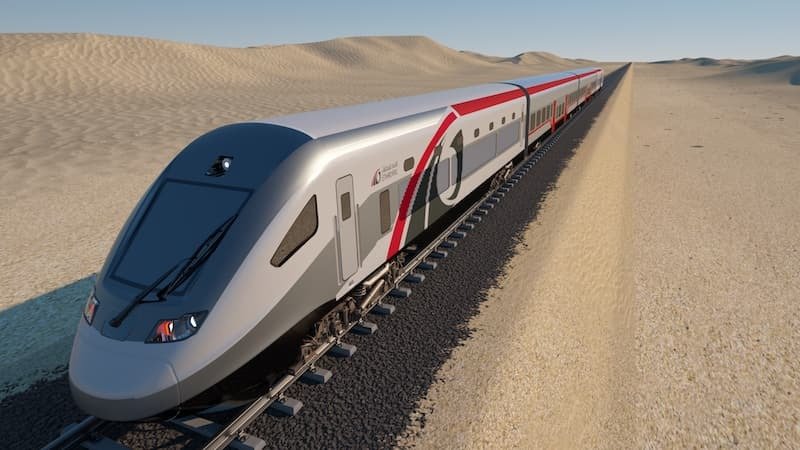
The opening-stage corridor is expected to connect Fujairah, Dubai, and Abu Dhabi in a single passenger service. For context: the road trip from Fujairah to Dubai currently runs around 120 kilometres and can stretch well past two hours during peak traffic or holiday weekends. A rail connection on that corridor would make same-day return trips far more predictable , no fuel stops, no tailbacks on the E311, no hunting for parking near a meeting in Business Bay.
Passenger services are expected to begin during 2026 as part of a phased rollout. The specific launch window, confirmed timetables, fare structure, and ticketing channels have not yet been officially published by Etihad Rail. Residents should treat the 2026 timeline as the current working target and watch Etihad Rail’s official channels for the operational details that will actually govern day-to-day use.
Why Fujairah Being First Actually Makes Sense
Fujairah is the UAE’s only emirate on the Gulf of Oman coastline, which gives it a distinct geography , and a distinct transport gap. Unlike Dubai or Abu Dhabi, Fujairah has no metro, no tram, and no direct rail link to the country’s main employment hubs. Residents have been entirely dependent on road travel for inter-emirate movement. Anchoring the passenger network’s first completed station here is a deliberate signal: the east coast is not an afterthought in the UAE’s connectivity strategy.
Beyond daily commuters, the route also opens up weekend tourism flows in both directions. Residents in Dubai and Abu Dhabi gain a clean, direct option to reach Fujairah’s coastline and heritage sites. Fujairah-based workers gain a reliable route to the country’s two largest employment centres without needing a car.
Key Facts at a Glance
| Detail | Information |
|---|---|
| Station Name / Location | Etihad Rail Passenger Station, Madinat Al Hilal, Fujairah |
| Station Size | 51,900 sq m (reported) |
| Network Status | First completed passenger station on Etihad Rail’s national network |
| Opening Route | Fujairah , Dubai , Abu Dhabi (initial corridor) |
| Passenger Services Expected | 2026 (phased rollout; exact date pending official announcement) |
| Operator | Etihad Rail |
| Claim Verification Status | Unverified , check Etihad Rail’s official website and social channels |
- Who benefits first: Fujairah residents commuting to Dubai and Abu Dhabi for work
- Secondary benefit: Dubai and Abu Dhabi residents seeking a direct east coast leisure route
- What’s still missing: Official fares, timetables, baggage rules, and local transport connections at each station
- Where to monitor: Etihad Rail’s official website and verified social media accounts
What You Should Do Right Now
The station is built. The route is confirmed in principle. But the details that govern whether you can actually use this service , ticket prices, booking platforms, departure times, and how you get to and from the station at either end , are still to come. Here is the practical checklist:
- Follow Etihad Rail officially: Subscribe to their website and social channels. That is where confirmed launch dates and booking information will first appear.
- Check local transport links: If you are in Fujairah, start thinking about how you will reach Madinat Al Hilal , whether by taxi, bus, or private car , and whether parking will be available at the station.
- If you commute regularly: Keep an eye on the 2026 service window. Once fares are published, you can compare the cost and time against your current road commute and make an informed switch.
- Do not book anything yet: No ticketing system has been officially launched. Ignore any third-party sites claiming to sell Etihad Rail passenger tickets at this stage.
For anyone who has sat in a Friday-evening crawl on the road from Dubai to Fujairah, watching the mountains inch closer for two-plus hours, the completion of this station carries a very specific kind of relief. It is the moment a project stops being a render on a government website and becomes a building you could, in theory, walk into , and that shift from abstract to concrete is exactly what changes public confidence in infrastructure timelines. The east coast has long been the UAE’s quieter side, beloved for its beaches and mountain drives but consistently underserved by the kind of fast, reliable public transport that residents in Dubai and Abu Dhabi take for granted. A direct rail link does not just shave time off a commute; it changes where people are willing to live, where employers consider opening offices, and how families plan their weekends.In the broader sweep of the UAE’s 2026 infrastructure agenda, Fujairah’s completed station is a proof point that Etihad Rail’s passenger programme has moved past the point of no return. The freight network already runs. The stations are being built. The question now is purely operational , fares, schedules, and the last-mile connections that make a train station genuinely useful rather than just impressive. Residents and commuters should keep a close watch on Etihad Rail’s official announcements for the confirmed service launch window; that is the moment the east coast’s transport equation changes for good.