Hajj 2026 Arrivals Break 1.5 Million, Surpassing Last Year Despite Regional Conflict
Hajj 2026 arrivals in Saudi Arabia have crossed the 1.5 million mark, already outpacing the full early-season count recorded in 2025, a number that signals just how resilient demand for the pilgrimage remains even as the wider Middle East navigates a period of sustained tension.
The Numbers Behind the Season’s Biggest Mass Movement
Saudi Arabia’s General Directorate of Passports has confirmed that more than 755,000 pilgrims have entered the Kingdom through official, monitored entry channels alone. When combined with arrivals processed through other regulated pathways, the cumulative figure has cleared 1.5 million, and the season is far from over. Authorities are now projecting total participation to approach 2 million Muslims before the final rites conclude.
Hajj entry operates through a tightly controlled visa and permit system. Saudi border and passport infrastructure tracks every arrival against an approved permit type, a framework designed specifically to prevent unauthorised pilgrimage attempts and reduce dangerous overcrowding across Makkah, Mina, Arafat, and Muzdalifah. Pilgrims move through timed group dispatches along designated corridors, with multi-agency operations managing heat-risk, emergency response, and transport flow simultaneously. When early-season volumes run this high, that entire system absorbs pressure from day one.
What This Means for Your Wallet and Your Travel Plans
For UAE-based pilgrims and the operators serving them, the headline figure translates directly into tighter availability and higher costs. When arrivals trend toward 2 million, flight seats and Makkah accommodation fill faster, last-minute changes become significantly more expensive, and the window for securing compliant, operator-led packages narrows sharply. UAE travel companies and corporate HR teams managing staff leave cycles around Hajj return dates should treat current booking timelines as compressed. The Saudi General Directorate of Passports’ enforcement focus on correct visa and permit types also means airlines operating UAE-Saudi routes are applying stricter pre-boarding documentation checks, a detail that catches underprepared travellers at the gate.
| Data Point | Figure | Context |
|---|---|---|
| Total arrivals to date (2026) | 1.5 million+ | Surpasses equivalent 2025 arrival levels |
| Arrivals via official entry channels | 755,000+ | Confirmed by Saudi General Directorate of Passports |
| Projected total season participation | ~2 million | Saudi authority forecast; season ongoing |
| Key sites under crowd management | Makkah, Mina, Arafat, Muzdalifah | Timed group dispatch system in operation |
| Claim verification status | Unverified (independent audit) | Figures sourced from Saudi authorities; not independently verified at time of publication |
- Booking window: Higher volumes compress availability, early confirmed bookings through licensed operators carry a clear cost advantage this season.
- Documentation checks: UAE-based pilgrims should verify permit type and visa compliance before reaching the airport; airlines are applying stricter pre-departure screening.
- Heat and crowd risk: Arrivals peaking early in the season means on-ground crowd density builds sooner, pilgrims should follow official timed-movement guidance strictly.
- Leave planning: UAE employers with staff travelling for Hajj should confirm return logistics now; last-minute flight changes near 2 million total arrivals carry a significant price premium.
Hajj 2026 is shaping up to be one of the largest pilgrimages in recent years, with Saudi Arabia’s operational infrastructure already absorbing volumes that have overtaken last year’s pace. For UAE residents, the practical consequence is simple: the earlier documentation, bookings, and compliance checks are locked in, the smoother, and cheaper, the journey becomes. Regional conflict has not dampened demand; it has, if anything, underscored how central the pilgrimage remains for millions of Muslims across the GCC and beyond.

UAE travel ban check: Quick online guide
How to Check Your UAE Travel Ban Status Online
Last Updated: July 6, 2026
Dubai Police provides an official “Circulars and Travel Bans” e-service that allows individuals to check whether they have a travel ban or circular registered in Dubai.
In Abu Dhabi, individuals can check travel-ban and case-related status through the Estafser service, an official Abu Dhabi government channel for inquiries.
UAE residents and visitors who need to confirm whether a travel ban or case exists can use the official channels listed below. By following the steps, you’ll instantly know if you’re cleared to travel.
Check Travel Ban Online
- Open a web browser and go to icp.gov.ae.
- Click Inquiries, then select Travel Ban Inquiry.
- Enter your passport number or UAE ID and submit the query.
- For a faster update in Dubai, open the Dubai Police App and use its travel‑ban status feature.

Dubai airports smart travel system speeds DXB flow
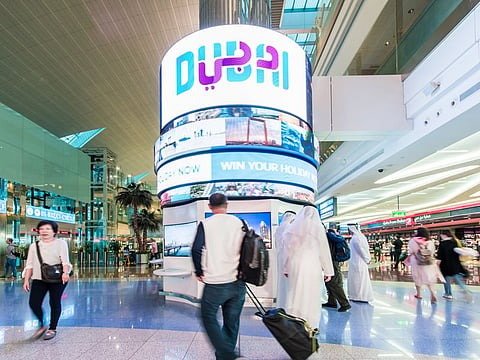
AI‑powered ‘red carpet corridor’ speeds immigration at Dubai International Airport
Dubai International Airport’s main terminal saw a surge of efficiency as Dubai Airports rolled out its AI‑enabled smart travel system.
Faster immigration clears the way for travelers
The system processed 9.4 million passengers over a six‑month span, letting travelers move through immigration without pulling out passports. Its “red carpet corridor” uses biometric AI to reduce processing times to as little as six seconds, lifting overall passenger flow and satisfaction.
Biometric technology is fully integrated across Dubai International Airport’s smart corridors, enabling passengers to move through key touchpoints with minimal document checks.
This boost aligns with Dubai’s broader push to embed smart technologies in public services, keeping the emirate’s transport hubs among the world’s most advanced.

Etihad Rail Dubai station opening date set for Sept 30
Jumeirah Golf Estates rail hub to launch end‑September, slashing Abu Dhabi‑Dubai commute
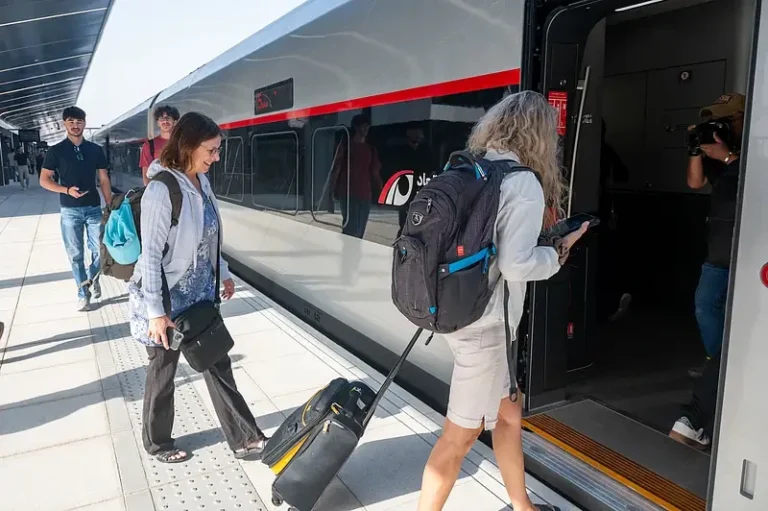
Etihad Rail’s Dubai passenger station at Jumeirah Golf Estates is scheduled to open on September 30, 2026, as the Dubai node of the UAE’s expanding national passenger rail network, and turning the quiet estate into a gateway for inter‑city travel.
Shorter Abu Dhabi‑Dubai trips for JGE commuters
The new stop will let riders zip between Abu Dhabi and Dubai in roughly 57 minutes, a big cut from the current road‑time. Etihad Rail highlighted the “standard” service, meaning the timetable will apply to most daily travelers, not just peak‑hour specials.
A direct footbridge links the rail platform to the adjacent JGE Metro station on the Red Line, so commuters can hop off a train and board a metro without stepping into traffic. The RTA confirmed the interchange is already built and ready for use when the rail station opens.
Looking ahead, Etihad Rail and the RTA have signed an agreement to accept Nol cards for ticketing at the new hub. That means a single smart card will cover both the train ride and any subsequent metro leg, and the station is also slated to join the future Dubai Metro Gold Line when it launches in 2032.
The UAE’s national passenger rail network is planned to be completed by March 30, 2027, according to the published rollout timeline for the expansion.
The project dovetails with the UAE’s wider push to weave national rail into the city’s public‑transport fabric, creating a seamless, multimodal network across the emirates.
OPEC+ August oil quotas up 188,000 bpd as Hormuz shipping resumes
OPEC+ raises August output by 188,000 bpd amid Hormuz shipping rebound
OPEC+ approved an increase of 188,000 barrels per day in August oil output targets at a virtual meeting on Sunday, July 5, 2026. The move impacts OPEC+ members including Saudi Arabia, Russia, Iraq, Kuwait, Kazakhstan, Algeria and Oman.
The hike extends a sequence of monthly quota increases begun in April as Gulf shipments resume through the Strait of Hormuz, pushing Brent crude toward $72 a barrel and WTI below $69.
The 188,000‑bpd boost adds to global supply, helping ease Brent crude to about $72 per barrel and WTI to stay under $69.
OPEC+ said the decision reflects a controlled restoration of supply now that shipping lanes in the Strait of Hormuz are partially reopened and that crude prices have retreated from wartime peaks. The group also noted that the increase continues a gradual unwinding of the voluntary output cuts that were introduced in 2023.
Members will implement the additional output in August while monitoring market signals. OPEC+ retained the flexibility to pause or reverse the upward trend if price weakness re‑emerges, underscoring a cautious approach despite the current easing.
The virtual session also confirmed that the monthly adjustments will proceed through the remainder of the year, subject to ongoing assessment of demand and price dynamics.
This follows April’s initial OPEC+ decision to lift output, which marked the start of the current upward trend.

Etihad Rail ticket prices: 50% child discount, senior deals
Kids get 50% off as Etihad Rail rolls out new fare rules
At the newly opened Etihad Rail stations that dot the UAE’s rail corridor, families are already feeling the difference in their wallets. The operator’s passenger charter, posted on its website this week, spells out exactly how much less a trip will cost for a child or a senior.
Family‑friendly fares take centre stage Etihad Rail announced that children under 17 travel for half the standard adult fare. Seniors aged 60 and above receive a 20 % reduction. Meanwhile, every adult ticket between ages 18 and 59 is being sold at a 50 % launch discount, a promotion that helped push ticket sales past the 10,000 mark before the service even began.
The discount structure is laid out in a simple table that commuters can check at any ticket vending machine:
| Age group | Discount |
|---|---|
| Under 17 | 50 % off standard fare |
| 18‑59 (launch period) | 50 % off standard fare |
| 60 + | 20 % off standard fare |
If plans change, passengers aren’t left stranded. Etihad Rail’s charter says tickets can be cancelled through the call‑centre or at any station’s ticket vending machine, with refunds issued according to the class of ticket purchased. The flexibility varies, premium‑class tickets allow more changes, while the basic fare is stricter, but the option to get money back is built into every fare tier.
These pricing moves dovetail with the UAE’s broader push to shift commuters onto public transport. By making rail travel affordable for families and retirees, the operator supports the national vision of diversifying mobility options and easing road congestion across the Emirates.