(Credit - The National)
Pope Leo XIV’s AI Warning Just Turned a Tech Debate Into a Global Security Conversation
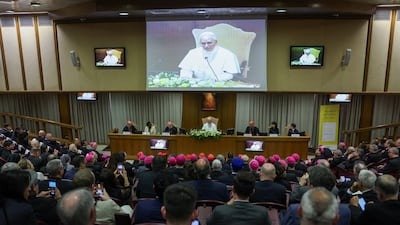
The Pope Leo XIV AI warning landed like a thunderclap this week, and it wasn’t just Catholics paying attention. In a statement that has reignited one of the most urgent policy conversations of our time, Pope Leo XIV declared that artificial intelligence could accelerate war and pose a genuine threat to humanity, calling for stronger oversight and accountability from governments and the tech industry alike.
What the Pope Actually Said, and Why It Cuts Through the Noise
Papal interventions on technology aren’t new, but this one arrives at a particularly charged moment. The core of the warning is straightforward: AI systems, especially those embedded in military and security contexts, can compress the time available for human judgment. When machines make targeting or surveillance decisions faster than humans can review them, the risk of miscalculation, and escalation, rises sharply. That’s not a hypothetical. It’s the central anxiety driving defence ministries and arms-control experts worldwide.
What makes this statement resonate beyond religious communities is its framing. Rather than speaking in purely theological terms, the message zeroes in on human dignity, accountability, and the moral limits of automated power, language that translates directly into policy. Historically, when the Vatican speaks on social issues with this kind of specificity, it shifts public opinion and gives political cover to legislators who want to act but need broader consensus to do so.
The Regulation Gap, and What ‘More Oversight’ Actually Means in Practice
When leaders call for “more oversight,” it can sound vague. In practice, it translates into a concrete set of policy tools that regulators are already debating: mandatory risk assessments before high-impact AI systems go live, transparency requirements around how models are trained and how they behave, independent audits, and clear liability rules for when AI causes harm. Tech companies have typically responded with voluntary safety pledges, but critics, and increasingly governments, argue that enforceable standards are the only way to prevent a race to the bottom on compliance.
The debate is now moving faster. The Pope’s intervention adds moral weight to calls that were already gaining traction in Brussels, Washington, and Beijing. For tech firms, the message is increasingly clear: voluntary commitments are no longer enough to satisfy regulators, investors, or the public.
What This Means If You Live or Do Business in Dubai
For UAE residents and companies, this global conversation is not abstract. The UAE has moved aggressively on AI adoption, across government services, aviation, logistics, finance, smart-city infrastructure, and education. The country’s AI strategy and the work of entities like the UAE Artificial Intelligence Office and Dubai’s Smart Dubai initiative have positioned the Emirates as a regional leader. But as international governance norms tighten, companies operating here will face rising expectations around data governance, model testing, and responsible deployment, particularly for AI used in hiring decisions, credit assessments, biometric identification, and critical infrastructure.
The practical consequence for Dubai-based businesses is a growing premium on what’s being called “compliance-ready AI”: documented processes, clear audit trails, and demonstrable human oversight for any high-stakes automated decision. Firms that can prove safety and accountability will move faster as regulatory scrutiny increases, both locally and across the international markets they serve.
- Who issued the warning: Pope Leo XIV, with reactions from tech companies and AI experts globally
- Core concern: AI could accelerate war and threaten humanity through reduced human oversight in military and security systems
- Policy ask: Stronger governance, mandatory risk assessments, independent audits, and clear liability frameworks
- Claim status: Reported as unverified by The National, details of the full statement are still emerging
- UAE relevance: Businesses using AI in high-stakes decisions face rising compliance expectations as global norms evolve
- Date: 28 May 2026
The Pope Leo XIV AI warning has done something rare: it has brought a moral voice into a debate that was in danger of becoming purely technical. For UAE residents and businesses, the takeaway is practical, AI governance is no longer a back-office concern, it’s a boardroom priority. The companies and governments that get ahead of enforceable standards now will be far better positioned when the next wave of regulation arrives.

Emirates ID Perks: 5 Tricks Every UAE Resident Needs
Emirates ID Perks Are Hiding in Plain Sight, Here Are 5 That Could Change Your Daily Routine
Emirates ID perks go far beyond proving who you are at a government counter, your wallet-sized card is quietly one of the most powerful tools in the UAE, unlocking everyday savings, faster travel, and payment shortcuts that most residents have never even tried.
Why This List Is Worth 3 Minutes of Your Time
Time Out Dubai recently shone a light on a handful of lesser-known Emirates ID benefits that most residents scroll past without a second thought. We're talking real, practical wins: discounted nights at luxury hotels, skipping queues at theme parks, paying for petrol without digging for cash, and breezing through airport gates using your face. These aren't loyalty-card gimmicks, they're built into the infrastructure of daily life in the UAE, managed and enabled by the Federal Authority for Identity, Citizenship, Customs & Port Security (ICP).
The card itself is issued and maintained by ICP, which links your verified identity, residency status, and biometric data to a single chip. That's the engine behind every perk on this list. When a hotel, ATM, or border gate reads your Emirates ID, it's pulling from that verified record, which is why the authentication is faster and more trusted than a manual document check. Think of it less as a card and more as a digital passport for everyday life.
1. Pay for Petrol Without Touching Your Wallet
Yes, really. Select petrol stations across the UAE have integrated Emirates ID-enabled payment flows, meaning you can authenticate a transaction using your card rather than fumbling for cash or a bank card. It's a small thing until you're in a rush on Sheikh Zayed Road at 8am, then it's everything. The exact stations and payment mechanics vary by operator, so it's worth checking with your regular forecourt, but the functionality is live and growing.
2. Withdraw Cash at ATMs Using Your Emirates ID
Certain UAE banks have rolled out Emirates ID-linked ATM services, allowing residents to initiate cash withdrawals or identity-verified transactions using the card's chip rather than a traditional bank card. This is particularly useful if you've ever left your debit card at home, a scenario that, in a cashless-first city like Dubai, still catches people off guard. Check with your bank directly to confirm whether your branch network supports this feature, as rollout is not yet universal across all institutions.
3. Unlock Resident Discounts at Hotels and Theme Parks
This one has real dirhams attached to it. A wide range of hospitality and leisure operators across Dubai and the wider UAE offer resident-exclusive rates, and your Emirates ID is the key. Flash it at check-in at participating hotels or at the gates of major theme parks and you can access pricing that tourists simply don't see. The savings can be significant, particularly during peak season when rack rates climb. Always ask upfront: "Do you have a UAE resident rate?", the answer is more often yes than you'd expect.
4. Speed Through Border Crossings With Facial Recognition
The UAE has invested heavily in biometric border processing at airports and land crossings, and your Emirates ID sits at the centre of it. Where facial-recognition-enabled eGates are deployed, including at Dubai International Airport, the system cross-references your live biometric against the identity record linked to your card, allowing you to clear immigration in seconds rather than minutes. No repeated document shuffling, no manual stamp queues. ICP oversees this infrastructure, and the technology is continuously being expanded across more entry and exit points nationwide.
5. Cut the Paperwork at Government and Private Service Counters
This one doesn't come with a discount code, but it saves something more valuable: time. Because your Emirates ID links to a verified, centralised identity record, presenting it at government service centres, banks, telecoms providers, and even some healthcare facilities can dramatically reduce the volume of supporting documents you'd otherwise need to bring. The card essentially vouches for you, your residency status, your personal data, your verification history, in a single tap or scan. In a city that runs on efficiency, that's a genuine quality-of-life upgrade.
The Verdict: One Card, Five Wins
- Best money-saver: Hotel and theme park resident discounts, the savings are immediate and repeatable.
- Best time-saver: Facial-recognition eGates at UAE airports, nothing beats a 10-second border crossing.
- Most underused: ATM and petrol payment integration, most residents don't know these exist.
- Issuing authority: Federal Authority for Identity, Citizenship, Customs & Port Security (ICP)
- Claim status: Specific perks (petrol payments, ATM withdrawals, hotel discounts, facial-recognition border crossings) are reported by Time Out Dubai, residents should verify current availability directly with relevant service providers and ICP.
Your Emirates ID is already in your pocket, the only question is whether you're using it to its full potential. From resident hotel rates to airport eGates, the card is quietly one of the UAE's best everyday tools. Start with one perk this week and you'll wonder why you waited.

Sheikh Mohamed bin Zayed Eid Al Adha Message: Peace & Prosperity
Sheikh Mohamed bin Zayed's Eid Al Adha Message Puts Peace and Prosperity Front and Centre for Every UAE Resident
The Sheikh Mohamed bin Zayed Eid Al Adha message landed on social media this week, and for the UAE's millions of residents, citizens, expats, workers, and visitors alike, it carried a meaning that goes well beyond a seasonal greeting: the country's leadership is doubling down on unity, security, and shared prosperity at a time when the wider region remains unsettled.
What the UAE President Actually Said, and Why It Resonates Right Now
His Highness Sheikh Mohamed bin Zayed Al Nahyan, UAE President, posted the Eid Al Adha greeting via his official social media channels, calling for "peace, stability, and prosperity to all." Three words. But in the context of 2026's regional backdrop, ongoing tensions that have kept governments across the Gulf on high alert, those three words are doing a lot of heavy lifting.
In the UAE, presidential Eid messages aren't just ceremonial. They're carried by state and national media, shared widely across platforms, and read as a direct signal of national priorities. When the President specifically names stability alongside prosperity, it's a deliberate reassurance to residents that daily life, public safety, and essential services remain firmly on track, even as the news cycle beyond UAE borders stays turbulent.
Why This Message Hits Differently During Eid Al Adha
Eid Al Adha is one of the UAE's most significant dates, religiously, socially, and economically. Mosques fill up for morning prayers, families gather across emirates, charitable giving surges, and the hospitality and retail sectors see some of their busiest days of the year. For Dubai specifically, the holiday coincides with peak outbound travel and a spike in domestic spending. A presidential message that leads with peace and stability isn't just warm words, it's a confidence signal to tourists, investors, and businesses that the UAE's operating environment is solid and uninterrupted.
The UAE's public communications strategy in recent years has consistently woven national resilience into its messaging, from infrastructure preparedness to economic continuity. This Eid message fits squarely into that pattern. For expats and long-term residents, it's a reminder that the country's leadership remains focused on protecting the quality of life that drew most of them here in the first place.
What This Means for You This Eid, and Beyond
Whether you're heading to prayers, travelling for the long weekend, or simply spending time with family, the practical takeaway is straightforward: the UAE's leadership has publicly reaffirmed its commitment to a safe, stable, and prosperous environment. Government services, public spaces, and emergency infrastructure remain fully operational. For businesses in hospitality, retail, and tourism, the message also functions as a green light, consumer confidence during the holiday period is backed by the highest level of national leadership.
- Who sent the message: UAE President His Highness Sheikh Mohamed bin Zayed Al Nahyan
- What was said: A call for "peace, stability, and prosperity to all" marking Eid Al Adha
- When it was posted: 28 May 2026, via official social media channels
- Why it carries weight: Presidential Eid messages in the UAE serve as national priority statements, not just greetings
- Regional context: The message comes as the UAE continues to emphasise preparedness and resilience amid wider regional tensions
- Economic signal: Stability messaging during peak Eid travel and spending reinforces investor and visitor confidence in the UAE
Sheikh Mohamed bin Zayed's Eid Al Adha message is a clear, public reaffirmation that the UAE's focus on peace, security, and shared prosperity holds firm, regardless of what's happening beyond its borders. For residents and businesses, it's the kind of leadership communication that keeps confidence high during one of the year's most active holiday periods. Eid Mubarak from the UAE's top office carries real weight, and this year, it carries it with purpose.

Iran Internet Access Restored After 8-Month Shutdown
Iran Internet Access Restored, But Don't Call It a Full Comeback Yet
Iran internet access restored, those four words sound like a clean ending, but the reality on the ground is far messier. After eight months of near-total shutdown, Iranian authorities have switched the lights back on, partially. The government has approved a phased return of connectivity following sustained pressure from international rights groups, but nobody is calling this a full restoration, and for good reason.
Eight Months Offline: What Actually Happened
To understand why this partial restoration is significant, you need to appreciate just how long eight months without reliable internet really is. Iran operates what experts describe as a two-track internet system: domestic services, local banking portals, government apps, some Iranian platforms, can stay reachable even during a national shutdown, while international traffic gets choked off at the country's centralised gateways. That means residents could technically access a local payment app while being completely cut off from WhatsApp, Instagram, international news, and global e-commerce platforms.
The mechanism behind this is straightforward. Iran's telecom infrastructure runs through national gateways that authorities can throttle or block selectively. Internet service providers operate under strict licensing rules that require them to comply with filtering directives from the government. When a shutdown order comes down, ISPs don't have a choice, they cut international bandwidth while keeping domestic traffic alive. Rights groups, including digital freedom organisations that track connectivity globally, had been criticising this shutdown for months, pointing to the economic and humanitarian cost of keeping millions of people offline.
What "Partial" Actually Means for Real People
Here's where it gets important for anyone with family, business, or financial ties to Iran, including the large Iranian diaspora community across the UAE. "Partial restoration" in practice rarely means flipping a switch and returning to normal. Authorities typically phase access back in stages: fixed broadband before mobile data, major cities before provinces, or business and institutional users before general consumers. Even when connectivity technically returns, users often experience throttled speeds, intermittent outages, and selective blocking of major global platforms. The internet is "on", but it may be functionally constrained for weeks or months longer.
For UAE residents sending remittances to family in Iran, or businesses that serve Iranian customers, this uncertainty carries a real operational cost. Payment channels, customer support lines, and digital marketing tools that depend on stable international connectivity remain unreliable. Companies that had put Iran-facing operations on hold can't simply reactivate them until it's clear whether the restoration holds, and whether major platforms become consistently reachable without workarounds like VPNs.
The Signals to Watch Before Declaring Victory
- Telecom regulator directives: Official statements from Iran's national telecom regulator will indicate whether ISPs have been instructed to restore full international bandwidth or only selective access.
- Platform availability: If major global services, messaging apps, social media, international news sites, become consistently reachable without VPNs, that's a strong indicator of meaningful restoration.
- Mobile data vs. fixed broadband: Mobile data is often the last to return and the first to be throttled. Watch for reports from users on mobile networks specifically.
- Rights group assessments: Organisations that monitor internet freedom track not just whether access is available, but whether it is stable, affordable, and free from broad platform blocks.
- Government policy signals: Because this restoration followed explicit government approval, any renewed security concerns or policy shifts could reverse gains quickly.
Iran's partial internet restoration is a step forward, but "partial" is doing a lot of heavy lifting in that sentence. For millions of Iranians and the diaspora communities, including many across the UAE, the real question isn't whether the internet is technically back, but whether it's stable, open, and here to stay. Until the telecom regulator issues clear directives and major global platforms become consistently reachable, households and businesses should stay in contingency mode rather than assume the worst is over.

Emirates ID Renewal Fine: Avoid Dh1,000 Penalty
The Emirates ID Renewal Fine Can Hit Dh1,000, Here's How to Stay Clear of It
The Emirates ID renewal fine is one of those costs that sneaks up on UAE residents fast, Dh20 a day, every day, until you either renew or hit the Dh1,000 ceiling. If your card has expired or is about to, this is the article you need to read right now.
The 30-Day Window You Cannot Afford to Miss
Here's the simple version: once your Emirates ID expires, you have a grace period to get it renewed before the daily fines kick in. The widely cited window is 30 days post-expiry. Renew within that period and you walk away without paying a dirham in penalties. Let it slide past that point, and the clock starts ticking at Dh20 per day.
That might not sound like much on day one, but do the maths, 50 days of delay adds up to Dh1,000, which is the hard cap set under the penalty structure linked to ICP (the Federal Authority for Identity, Citizenship, Customs and Port Security). Once you hit the cap, the fine stops growing, but you're still left holding an expired ID that's blocking you from completing everyday tasks. The fine is just part of the problem.
Why an Expired Emirates ID Hits Harder Than Just the Fine
Your Emirates ID is not just a card in your wallet, it's the key that unlocks almost everything official in the UAE. Banks need it for KYC updates. Telecom providers require it for SIM registration. Landlords and property platforms reference it for tenancy processes. Government e-portals use it to verify your identity before processing anything. When it expires, you don't just risk a fine, you risk being locked out of routine transactions at the worst possible moment.
That's why the ICP and UAE authorities treat renewal timing as a compliance issue, not a casual admin task. An expired Emirates ID can stall your banking access, delay employment onboarding, and create friction at border crossings. The downstream disruption often costs residents far more in time and stress than the Dh1,000 fine itself.
Who Can Actually Get an Exemption, And What That Really Means
Exemptions from late renewal fines do exist, but they are not automatic and they are not handed out broadly. The ICP assesses exemption requests on a case-by-case basis, typically for situations where the delay was genuinely outside the resident's control, think documented administrative constraints or exceptional personal circumstances. If you believe your situation qualifies, you'll need to submit a formal request through official ICP channels, backed by supporting documentation. Treat exemption as a conditional option, not a fallback plan.
- Grace Period: 30 days after Emirates ID expiry before fines begin
- Daily Fine Rate: Dh20 per day after the grace window closes
- Maximum Fine Cap: Dh1,000 total
- Exemptions: Case-specific, assessed by ICP, not automatic
- Governing Authority: ICP (Federal Authority for Identity, Citizenship, Customs and Port Security)
- Services Affected by Expiry: Banking, telecom, tenancy, e-government portals, travel
The safest move is to start your Emirates ID renewal before expiry, not after. Build in enough lead time for biometrics, any visa-linked steps, and card delivery so you're never racing the 30-day clock. Check the latest grace period rules and fine calculations directly on ICP's official platforms at the time of renewal, since procedures can be updated. Proactive renewal costs nothing extra; last-minute scrambling can cost you Dh1,000 and a week of blocked services.

Dubai Dining Awards 2026 Winners: Full List Revealed
Dubai Dining Awards 2026 Winners Just Dropped, Here Are the 4 Restaurants You Need to Book Right Now
The Dubai Dining Awards 2026 winners list is officially out, and if you haven't already started scrolling OpenTable, you're already behind. Khaleej Times published the full rundown on 28 May 2026, crowning the restaurants that are genuinely shaping how this city eats, feels, and remembers a meal. From theatrical sensory journeys to a homegrown gem that proves Dubai-born concepts can punch with the best in the world, this list is your dining calendar for the rest of the year.
Why This List Is Worth Your Time (And Your Reservation Fee)
Dubai's restaurant scene doesn't just feed people, it drives hotel performance, shapes tourism corridors, and influences where billions in hospitality investment flows next. When a venue wins a category at an awards cycle this visible, booking windows tighten within days and peak-time pricing tends to creep upward. In short: read this now, book tonight.
The 2026 awards also signal a clear directional shift in what Dubai diners are willing to pay for. It's no longer just about premium ingredients on a plate. Categories like Best Sensory Experience and Best Tasting Menu tell you that story-driven, chef-led, immersive formats are now the mainstream expectation, not a niche novelty. That's good news for diners who want more than a meal, and a loud wake-up call for any venue still coasting on décor alone.
The 2026 Dubai Dining Awards Winners, Ranked by Wow Factor
### 🥇 1. Krasota, Best Sensory ExperienceIf you've ever wanted dinner to feel like a fever dream designed by a Michelin-starred chef and a conceptual artist working in tandem, Krasota is your answer. Winning Best Sensory Experience at the Dubai Dining Awards 2026 is no small thing, this category rewards restaurants that go beyond taste and engineer an entire emotional arc across a meal. Krasota has built its reputation on exactly that: theatrical presentation, immersive design, and a dining room that feels more like a curated installation than a restaurant. Book early. Post-award demand spikes are real, and tables here were already hard to come by.
### 🥈 2. KIGO, Best Tasting MenuTasting menus are the ultimate test of a kitchen's confidence, you're handing the chef full creative control and trusting them to take you somewhere unexpected, course by course. KIGO earned Best Tasting Menu at the Dubai Dining Awards 2026 by doing exactly that with precision and personality. In a city where multi-course formats have become a competitive sport, this win signals that KIGO's kitchen is operating at a level that justifies the set-menu commitment. If you've been on the fence about a tasting menu experience in Dubai, this is the one to start with.
### 🥉 3. Piérchic, Most Iconic DestinationSome restaurants are about the food. Some are about the view. Piérchic, perched at the end of a wooden pier at Al Qasr hotel with the Arabian Gulf stretching out in every direction, has always been about both, and the Most Iconic Destination award at the Dubai Dining Awards 2026 cements what regulars have known for years. This is the table you book for proposals, anniversaries, and the kind of dinner you're still talking about a decade later. The seafood-forward menu holds its own, but the setting is genuinely irreplaceable in a city that keeps building new landmarks.
### 🏅 4. Kinoya, Finest Homegrown RestaurantThis might be the most meaningful win on the entire list. Kinoya taking Finest Homegrown Restaurant at the Dubai Dining Awards 2026 is a signal that UAE-born concepts have fully arrived, not just as local favourites, but as venues that can stand alongside international imports on any credible list. Kinoya's Japanese-inspired menu, built with deep local customer loyalty and a sharp ear for resident feedback, represents exactly the kind of homegrown brand that investors and regional operators should be watching. For diners, it's simply one of the most consistent, soulful meals you can have in Dubai right now.
What These Wins Mean for Dubai's Food Scene in 2026
The Dubai Dining Awards don't exist in a vacuum. They're a proxy for where the emirate's hospitality economy is heading, and the 2026 winners collectively point toward experiential dining, chef-led storytelling, and homegrown brand maturity as the three forces reshaping the market. For the UAE's tourism and hospitality sector, which operates under the strategic direction of the Dubai Department of Economy and Tourism, awards visibility like this directly feeds concierge recommendation lists, corporate dining choices, and international travel media coverage.
- Best Sensory Experience: Krasota
- Best Tasting Menu: KIGO
- Most Iconic Destination: Piérchic
- Finest Homegrown Restaurant: Kinoya
- Published by: Khaleej Times, 28 May 2026
- Location: Dubai, United Arab Emirates
The Verdict: Which Table Should You Book First?
If you only have one reservation in you this month, make it Krasota, the Best Sensory Experience win reflects a dining concept that Dubai genuinely doesn't have a duplicate of. For a special occasion with a view that earns its own Instagram reel, Piérchic remains the city's most emotionally reliable table. And if you want to eat somewhere that proves Dubai can grow world-class restaurant brands from the ground up, Kinoya is the one that will make you proud to be a local.