(Credit - Gulf News)
Netflix New Board Chair Search Opens as Reed Hastings Exits in June 2026
Netflix’s new board chair search is now formally underway after co-founder and chairman Reed Hastings confirmed his departure from the company’s board of directors, effective June 2026, to concentrate on philanthropic work.
A Founder’s Final Exit: From CEO to Chairman to the Door
Hastings’ board exit completes a two-stage withdrawal from Netflix‘s operational and governance structure. He stepped back from the CEO role in 2023, transitioning to the chairman’s seat, a position he now vacates entirely. The Netflix board of directors, based at the company’s headquarters in Los Gatos, California, will conduct the search for a successor chair.
The board chair role carries weight beyond ceremony. The chair sets board agendas, manages the cadence of governance, and functions as the primary institutional check on the CEO and executive team. In practice, the incoming chair will determine how assertively the board engages on capital allocation, content spending discipline, and strategic pivots, all pressure points in a streaming sector facing intense competition and evolving monetisation models including advertising tiers and password-sharing enforcement.
What This Transition Signals to Investors and Industry Partners
Founder departures from boards are closely tracked by institutional investors because they typically mark a shift from founder-led governance to a more conventional institutional model. That shift can alter risk tolerance, the pace of strategic decision-making, and the board’s posture toward executive accountability. For Netflix, a company that has navigated subscriber volatility, a pivot to ad-supported tiers, and sustained high content expenditure, the identity and profile of the next chair will be read as a signal of the board’s strategic direction.
- Departure Timing: June 2026, completing a governance transition that began with the 2023 CEO handover.
- Reason for Exit: Hastings is redirecting focus toward philanthropy, consistent with his prior public commitments in that space.
- Chair Search Status: The Netflix board of directors has confirmed it will seek a new chairman; no successor has been named as of June 6, 2026.
- Operational Continuity: Day-to-day management remains with the existing CEO and executive leadership team; the chair transition affects governance oversight, not operations.
Reed Hastings built Netflix from a DVD-by-mail startup into the world’s dominant streaming platform, and his board exit marks the end of direct founder influence over its governance. The incoming chair will inherit a company that is profitable and globally scaled, but operating in a market where strategic discipline and board-level accountability are under constant investor scrutiny. Who the Netflix board selects next will say as much about the company’s next chapter as any content slate or pricing decision.

US Attacks Iranian Radar Sites After Gulf Missile Strike
US Attacks Iranian Radar Sites as Gulf Missile-and-Drone Exchange Sharpens Escalation Risk
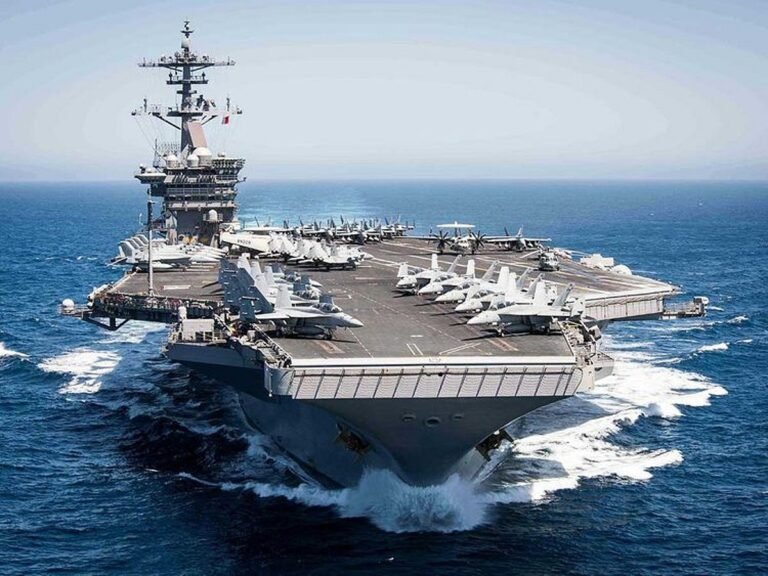
US attacks on Iranian radar sites were carried out on June 6, 2026, after Iran launched missiles and drones toward the Persian Gulf, a fast-moving exchange that saw US forces also shoot down four Iranian drones. The strikes directly affect military readiness across the Gulf corridor and raise immediate concerns for global energy shipments and commercial aviation routing through the region.
What the US Military Did, and Why Radar Sites Were the Target
The US military confirmed it struck Iranian radar installations in direct response to the Iranian missile and drone launches. Radar sites sit at the core of any country's air-defense and early-warning network: they detect incoming aircraft, missiles, and drones, then cue interceptors to respond. Degrading those nodes compresses the time available for decision-making on both sides, which is precisely what makes strikes on radar infrastructure so consequential during a live exchange, each side's ability to track and respond to the other is reduced, raising the probability of miscalculation.
US forces reported intercepting four Iranian drones during the engagement. No official damage assessment for the radar sites had been released as of the time of reporting, and the full scope of Iranian launches, including how many missiles were fired and whether any reached their intended vectors, had not been confirmed by an authoritative source.
A Critical Corridor Under Pressure
The Persian Gulf carries a significant share of global energy shipments and hosts multiple military installations and air-defense systems operated by regional and international actors. Even contained tit-for-tat exchanges in this corridor carry outsized downstream risk: maritime advisories can be issued within hours, insurance underwriters reprice Gulf exposure rapidly, and airspace notices from civil aviation authorities can redirect commercial flight paths at short notice.
- Trigger: Iran launched missiles and drones toward the Gulf on June 6, 2026
- US Response: Radar sites struck; four Iranian drones intercepted and shot down
- Key Risk: Degraded radar coverage increases miscalculation risk during follow-on exchanges
- What to Watch: Maritime and airspace advisories, further launches, and official damage assessments from both sides
The June 6 exchange marks a direct kinetic confrontation between US and Iranian military assets in the Gulf, with radar infrastructure now confirmed as a target set. Shipping operators, energy traders, and corporate security teams with Gulf exposure should monitor maritime advisories and airspace notices as the situation develops. No official ceasefire signal or diplomatic communication had been publicly confirmed at the time of reporting.*Source: US military statement on drone interceptions and radar strikes; Khaleej Times / WAM wire reporting, June 6, 7, 2026.*
Iran World Cup Visas Granted by US for Squad
Iran World Cup Visas Cleared by US, Squad to Base in Mexico for 2026 Tournament
Iran World Cup visas have been approved by the United States, a U.S. official confirmed on June 6, removing the most significant logistical barrier to the team's participation in the 2026 FIFA World Cup. Iran's players and staff are now cleared to enter the United States for matchdays, with the squad expected to establish its base across the border in Mexico between fixtures.
Cross-Border Setup Defines Iran's Tournament Logistics
The confirmation, attributed to an unnamed U.S. official, establishes that Iran's squad will be permitted entry into the United States specifically to compete in their assigned World Cup fixtures. The arrangement, playing matches on U.S. soil while residing in Mexico, reflects a base-camp strategy that several national teams have adopted for the tri-nation tournament, which is co-hosted by the United States, Canada, and Mexico.
Under this model, Iran's delegation would travel across the U.S.-Mexico border on matchdays, a logistical sequence that requires precise coordination of entry windows, transport, and security clearances. The scope of the visa approval, whether it covers players only or extends to the full technical and support delegation, has not been confirmed in available reporting. Entry validity dates and whether any individuals within the squad face separate administrative review also remain unspecified.
What the Visa Decision Changes on the Ground
For football fans, broadcasters, and accreditation holders tracking Iran's fixtures, the clearance means the team's participation is no longer in procedural doubt. Matchday travel between Mexico and U.S. venues will now be the operational focus for Iran's federation and FIFA's tournament logistics teams. Any further administrative complications, such as individual-level processing delays, could still affect pre-match schedules, though no such issues have been reported.
- Visa Status: U.S. entry visas granted to Iran's FIFA World Cup squad, confirmed by a U.S. official
- Team Base: Iran expected to stay in Mexico, traveling into the U.S. for scheduled fixtures
- Delegation Scope: Full coverage of players versus support staff not yet publicly confirmed
- Confirmation Date: June 6, 2026, ahead of the tournament's opening phase
Iran's visa clearance resolves the central uncertainty around the team's World Cup participation, though the cross-border base arrangement introduces its own logistical demands. The decision reflects the broader complexity of hosting a major international tournament across three sovereign nations with distinct immigration frameworks. Attention now shifts to the operational execution of Iran's matchday travel between Mexico and U.S. venues.*Source: Arabian Post / U.S. official statement as reported June 6, 2026.*

US authorises $2bn sale to Kuwait for drones
US Authorises $2bn Sale to Kuwait to Counter Rising Drone and Missile Threats
The United States has authorised a potential $2 billion sale of counter-drone systems to Kuwait, announced on June 7, 2026, as the Gulf state faces repeated waves of missile and unmanned aerial vehicle attacks. The authorisation directly affects Kuwait's military, airport operators, energy infrastructure, and port authorities, all of which sit within the threat envelope of low-cost drones and loitering munitions increasingly deployed across the region.
What the Counter-UAS Package Covers, and Why Kuwait Needs It Now
Counter-UAS systems, counter-unmanned aircraft systems, combine detection, tracking, identification, and defeat capabilities into layered defence networks. Detection typically relies on radar and radio-frequency sensors; defeat options range from electronic jamming and spoofing to kinetic interceptors capable of physically neutralising incoming threats. The package is designed to harden Kuwait's airbases, energy sites, ports, and military installations against the kind of saturation attacks that have tested Gulf air defences in recent years.
The United Kingdom has separately deployed advanced counter-drone systems to Kuwait, signalling a coordinated allied effort to improve interoperability, accelerate training cycles, and close gaps in point-defence coverage. The parallel US and UK moves indicate that Kuwait's defence partners view the threat environment as sufficiently urgent to act simultaneously rather than sequentially.
Gulf Security Calculus Shifts as Drone Threats Outpace Legacy Air Defences
For UAE-based defence contractors, logistics operators, and critical-infrastructure managers monitoring regional procurement trends, Kuwait's upgrade signals a broader GCC shift toward layered, sensor-fused air defence at the site level, not just at the national perimeter. The UAE's own defence procurement posture, overseen through the Ministry of Defence and coordinated with Abu Dhabi's defence industrial base, has tracked counter-UAS capability as a priority since drone incidents began targeting Gulf infrastructure.
- Deal value: Potential $2 billion, authorised by the United States on June 7, 2026
- Purchaser: Kuwait
- System type: Counter-UAS, detection, tracking, identification, and defeat capabilities
- Allied parallel action: The UK has deployed advanced counter-drone systems to Kuwait independently
Kuwait's $2 billion counter-drone authorisation is the most concrete signal yet that Gulf states are moving from reactive air defence to proactive, site-level protection against drone and missile saturation. The simultaneous US and UK deployments suggest allied partners have assessed Kuwait's threat exposure as immediate rather than theoretical. For the wider GCC, the deal sets a procurement benchmark that other member states are likely to reference in their own defence planning cycles.*Source: The National / US Foreign Military Sales notification, June 7, 2026.*

Cockroach Janta Party Leads India Exam Protest
Cockroach Janta Party Takes India's Exam Anger to the Streets
If you've been watching the Cockroach Janta Party go viral online and wondered whether it was just a joke, Abhijeet Dipke's return to India on June 6, 2026, made one thing clear: the satire has turned into a street-level political demand.
From Viral Joke to Real Protest: What the Cockroach Janta Party Actually Wants
Abhijeet Dipke, the founder of the satirical Cockroach Janta Party, flew back to India specifically to lead a protest over alleged exam irregularities, and the central demand is direct: the Education Minister must resign. The movement originally gained traction as political satire, linked to remarks attributed to the Chief Justice about unemployed youth, but the exam-fiasco allegations gave it a concrete grievance to rally around.
Exam irregularities in India, whether framed as paper leaks, result manipulation, or administrative failures, hit students where it hurts most: admissions, government job pipelines, and scholarship eligibility. When those systems are questioned, the anger doesn't stay online for long. Dipke's return signals that the Cockroach Janta Party is attempting to convert viral momentum into organised, accountable pressure on political leadership.
Why This Protest Is Bigger Than One Party's Stunt
Satirical micro-movements have surfaced before in India during moments of high youth unemployment and exam controversy, but they rarely survive the news cycle unless they attach to a specific, verifiable grievance. The demand for a minister's resignation is a well-established accountability pressure point in Indian education crises, it forces a political response rather than a bureaucratic one.
- Who is leading it: Abhijeet Dipke, founder of the Cockroach Janta Party, returned to India on June 6, 2026.
- Core demand: Resignation of the Education Minister over alleged exam irregularities.
- Origin of the name: The "Cockroach Janta Party" label went viral as political satire tied to remarks attributed to the Chief Justice regarding unemployed youth.
- Claim status: The protest's central claim, that the movement was launched specifically to demand the Education Minister's resignation over exam irregularities, is currently rated unverified by Gulf News.
What This Means If You're a Student, Job-Seeker, or Education Stakeholder
If you're a student whose admissions, government job application, or scholarship depends on a competitive exam result, this protest speaks directly to your situation. Allegations of irregularities, even unverified ones, create uncertainty about whether results will be accepted, re-evaluated, or challenged in court. That uncertainty has real costs: delayed joining dates, frozen hiring pipelines, and prolonged anxiety for candidates who played by the rules.
If you're an employer or institution that uses competitive exam scores as a hiring or admissions filter, a credibility crisis in the exam system raises your own compliance exposure. Independent audits, re-examinations, or legal challenges can delay intake cycles and force you to revisit selection criteria mid-process.
Next Steps: What to Watch and Where to Track It
1. Monitor official exam authority communications, Any re-examination announcements or audit decisions will come from the relevant national testing body, not from protest organisers. 2. Check Gulf News and verified Indian news sources, The claim driving this protest is currently rated unverified; follow credible outlets for confirmation or rebuttal. 3. If you are an affected candidate, document your results and correspondence now, before any potential re-evaluation process opens, timelines for grievance redressal in Indian exam disputes are typically short. 4. Track the Education Ministry's response, A formal statement or the absence of one will determine whether this protest gains further political traction or dissipates.The Cockroach Janta Party's return to Indian streets on June 6, 2026, shows how viral satire can pivot into organised political pressure when a concrete grievance, in this case, alleged exam irregularities, gives it something real to demand. The call for the Education Minister's resignation remains unverified in its specific claims, but the student anger fuelling it is not. Whether this translates into policy accountability or fades as a news cycle moment depends entirely on what the authorities do next.
UAE Ebola Travel Advisory: Visa Suspension Starts Now
UAE Ebola Travel Advisory Triggers Immediate Visa Suspension, Here's What Changes for You Today
If you're planning to travel abroad or sponsor a visa for someone from an Ebola-affected country, the UAE Ebola travel advisory issued today, June 6, 2026, changes everything about how you need to plan the next few weeks.
What Just Changed: Before and After at a Glance
| Area | Before June 6, 2026 | From June 6, 2026 |
|---|---|---|
| Visas for Ebola-affected country nationals | Processed under standard rules | Suspended with immediate effect |
| Travel guidance for UAE residents going abroad | General health advice | Five specific safety steps now in force |
| Symptom reporting obligation | Informal / self-managed | Seek medical advice promptly if unwell post-travel |
| Border screening posture | Routine | Heightened; entry controls tightened |
Breaking Down Who This Hits, and How
If you're a UAE resident planning international travel, the updated advisory asks you to follow five key safety steps before and during your trip. While the full list of steps comes from UAE authorities as reported by Gulf News, the core logic is straightforward: avoid direct contact with bodily fluids of any potentially infected person, maintain strict hand hygiene, steer clear of high-risk environments in affected areas, monitor your own health closely during and after travel, and, critically, seek medical assessment immediately if you develop fever or any compatible symptoms after returning. Do not wait it out at home.If you're a national of an Ebola-affected country holding a UAE visa application in progress, that application is now suspended as of today. This is not a processing delay, it is a suspension, meaning the clock has stopped until further notice. Employers, recruitment agencies, and families mid-way through sponsorship paperwork need to pause and await a formal update from the UAE's immigration authority before proceeding.If you're an employer, HR manager, or travel coordinator sending staff to or through regions currently classified as Ebola-affected, today's advisory creates an immediate duty-of-care obligation. Any itinerary touching affected countries should be reviewed now. Airlines and travel agents booking routes through those regions may face additional compliance checks at the ticketing and boarding stage.If you've recently returned from an Ebola-affected country and feel unwell, do not dismiss symptoms as ordinary travel fatigue. Ebola's early presentation, fever, fatigue, muscle pain, can overlap with common illnesses, but the risk calculus is different when you've been in an affected area. The advisory is explicit: get medical advice fast.Key Facts at a Glance
- Effective Date: June 6, 2026, the visa suspension and updated advisory are active now.
- Who Issued It: UAE authorities, as reported by Gulf News.
- Visa Impact: Nationals from Ebola-affected countries cannot currently obtain UAE visas; existing applications in process are suspended.
- Five Safety Steps: Outlined for UAE residents traveling internationally, covering contact avoidance, hygiene, high-risk area awareness, symptom monitoring, and prompt medical escalation.
- Transmission Reminder: Ebola spreads through direct contact with bodily fluids of an infected person or contaminated materials, not airborne transmission.
Your Next Steps, Right Now
1. Check your travel destination's status via the ICP (Federal Authority for Identity, Citizenship, Customs and Port Security) portal at icp.gov.ae, confirm whether your destination or transit point falls under the affected-country classification before booking or flying.2. If you are sponsoring a visa for a national from a potentially affected country, log in to the ICP smart services portal and check application status. Do not assume processing is continuing, contact ICP directly for clarification on suspended cases.3. Employers with staff in affected regions should update internal travel policies immediately and document the risk assessment. MoHRE (mohre.gov.ae) guidance on employer duty of care during health emergencies is the relevant reference point for labour compliance questions.4. If you feel unwell after recent travel, call the DHA (Dubai Health Authority) health information line or visit the DHA app (available on iOS and Android) to access a symptom checker and get directed to the appropriate facility. Do not self-diagnose and delay.5. Monitor official updates, the advisory landscape can shift quickly as outbreak status changes. Bookmark Gulf News health coverage and the ICP announcements page for real-time changes to the visa suspension scope.The UAE's updated Ebola travel advisory is a live, operational directive, not background guidance, and the visa suspension that came with it took effect the moment it was announced on June 6, 2026. Whether you're a traveller, a sponsor, or an employer, the window to act is now, not after your next scheduled trip review. Stay informed through ICP and DHA official channels, and treat any post-travel symptoms as a medical priority, not an inconvenience.## Frequently Asked Questions