(Credit - Gulf News)
Cockroach Janta Party Takes India’s Exam Anger to the Streets
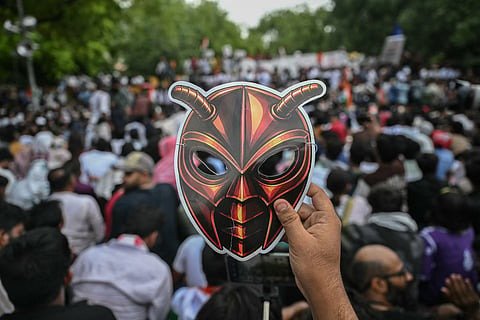
If you’ve been watching the Cockroach Janta Party go viral online and wondered whether it was just a joke, Abhijeet Dipke’s return to India on June 6, 2026, made one thing clear: the satire has turned into a street-level political demand.
From Viral Joke to Real Protest: What the Cockroach Janta Party Actually Wants
Abhijeet Dipke, the founder of the satirical Cockroach Janta Party, flew back to India specifically to lead a protest over alleged exam irregularities, and the central demand is direct: the Education Minister must resign. The movement originally gained traction as political satire, linked to remarks attributed to the Chief Justice about unemployed youth, but the exam-fiasco allegations gave it a concrete grievance to rally around.
Exam irregularities in India, whether framed as paper leaks, result manipulation, or administrative failures, hit students where it hurts most: admissions, government job pipelines, and scholarship eligibility. When those systems are questioned, the anger doesn’t stay online for long. Dipke’s return signals that the Cockroach Janta Party is attempting to convert viral momentum into organised, accountable pressure on political leadership.
Why This Protest Is Bigger Than One Party’s Stunt
Satirical micro-movements have surfaced before in India during moments of high youth unemployment and exam controversy, but they rarely survive the news cycle unless they attach to a specific, verifiable grievance. The demand for a minister’s resignation is a well-established accountability pressure point in Indian education crises, it forces a political response rather than a bureaucratic one.
- Who is leading it: Abhijeet Dipke, founder of the Cockroach Janta Party, returned to India on June 6, 2026.
- Core demand: Resignation of the Education Minister over alleged exam irregularities.
- Origin of the name: The “Cockroach Janta Party” label went viral as political satire tied to remarks attributed to the Chief Justice regarding unemployed youth.
- Claim status: The protest’s central claim, that the movement was launched specifically to demand the Education Minister’s resignation over exam irregularities, is currently rated unverified by Gulf News.
What This Means If You’re a Student, Job-Seeker, or Education Stakeholder
If you’re a student whose admissions, government job application, or scholarship depends on a competitive exam result, this protest speaks directly to your situation. Allegations of irregularities, even unverified ones, create uncertainty about whether results will be accepted, re-evaluated, or challenged in court. That uncertainty has real costs: delayed joining dates, frozen hiring pipelines, and prolonged anxiety for candidates who played by the rules.
If you’re an employer or institution that uses competitive exam scores as a hiring or admissions filter, a credibility crisis in the exam system raises your own compliance exposure. Independent audits, re-examinations, or legal challenges can delay intake cycles and force you to revisit selection criteria mid-process.
Next Steps: What to Watch and Where to Track It
1. Monitor official exam authority communications, Any re-examination announcements or audit decisions will come from the relevant national testing body, not from protest organisers. 2. Check Gulf News and verified Indian news sources, The claim driving this protest is currently rated unverified; follow credible outlets for confirmation or rebuttal. 3. If you are an affected candidate, document your results and correspondence now, before any potential re-evaluation process opens, timelines for grievance redressal in Indian exam disputes are typically short. 4. Track the Education Ministry’s response, A formal statement or the absence of one will determine whether this protest gains further political traction or dissipates.The Cockroach Janta Party’s return to Indian streets on June 6, 2026, shows how viral satire can pivot into organised political pressure when a concrete grievance, in this case, alleged exam irregularities, gives it something real to demand. The call for the Education Minister’s resignation remains unverified in its specific claims, but the student anger fuelling it is not. Whether this translates into policy accountability or fades as a news cycle moment depends entirely on what the authorities do next.