
Deadline Sep 18: Join Tiffany’s New UAE Design Residency
If you’ve been hunting for a high‑profile design course, the clock’s ticking. Tiffany & Co. just opened its Design Residency to UAE nationals and residents, and the last day to send in your paperwork is September 18, 2026.
The residency blends the House’s two‑century legacy in jewellery and watchmaking with the rich structure of Emirati culture, architecture and heritage. Participants will dig into the conceptual, creative and technical foundations of luxury design while carving out a personal design language through hands‑on experimentation, research and material exploration. In short, it’s a crash course that marries global luxury standards with local artistic DNA.
Only people who meet two simple criteria can throw their hat in the ring: you must be a UAE national or a resident, and you need to be at least 21 years old. The programme does not mention any educational prerequisites, so whether you’re a fresh graduate or a seasoned artisan, you’re welcome to apply as long as you satisfy the age and residency requirements.
When it comes to the paperwork, the residency’s guidelines are razor‑sharp. You’ll need three PDFs:
- A resume that doesn’t exceed 10 MB.
- A cover letter or statement of intent, also capped at 10 MB.
- A portfolio showcasing your work, with a maximum size of 100 MB.
Because the application portal isn’t tied to a government agency, there’s no need to file anything with the GDRFA, MoHRE or any other UAE authority. Just head to the Tiffany & Co. Design Residency online portal, upload the three PDFs, and hit submit before the September 18 deadline. Keep a copy of the confirmation email for your records; it’s the only proof that your files landed where they should.
The programme promises more than a certificate. Graduates will walk away with a portfolio that reflects both the precision of Tiffany’s design ethos and the soul of Emirati artistry. That blend could open doors in luxury retail, boutique ateliers, or even in the burgeoning UAE design scene that’s hungry for talent with a global outlook.
—

Eight New Countries Added to UAE Scholarship List, New Rules
UAE Overhauls Scholarship System: New Rankings, Priority Fields, and Added Destinations
The UAE Ministry of Higher Education and Scientific Research has rolled out a fresh set of scholarship rules under Ministerial Resolution No. 179 of 2026. Announced on Tuesday, the resolution reshapes how Emirati students secure overseas study places, tightening university quality checks, expanding the list of eligible destination countries, and earmarking strategic fields of study.
Who benefits The changes apply to every Emirati student who applies for a government‑funded scholarship. Within that pool, the ministry singled out three priority groups: children of martyrs, beneficiaries of social‑support programmes, and students living in remote areas. Applications from these groups will be weighed alongside academic merit, the relevance of the chosen field, and the standing of the host institution.
New destination environment Eight additional countries have joined the priority destination list, although the resolution does not name them individually. All approved institutions must now meet specific global‑ranking benchmarks that vary by region and language of instruction:
- Any university that ranks in the world’s top 50 for a particular subject qualifies, regardless of its overall position.
- Institutions in the United States and Australia must sit inside the top 100 for both the subject and the overall university ranking.
- Other English‑speaking countries are required to be within the top 200 for the subject and the overall ranking.
- Non‑English‑speaking nations need to reach at least the top 300 for both subject and overall standings.
Fields the ministry wants to grow The resolution earmarks eight priority sectors that align with the UAE’s long‑term economic blueprint. Students aiming for programmes in energy, transport and logistics, technology and engineering, healthcare, water and the environment, creative industries, science, or finance will enjoy a higher chance of selection. By steering talent toward these areas, the ministry hopes to plug skill gaps and fuel the nation’s shift toward a knowledge‑based economy.
Obligations for scholarship holders Receiving a scholarship now comes with a clear set of duties. Scholars must maintain steady academic progress and keep the ministry informed of any changes that could affect their studies, such as switching majors, dropping courses, or receiving additional financial aid elsewhere. They are also expected to represent the UAE positively while abroad. The ministry says these requirements will make it easier to monitor students throughout the scholarship term and ensure that the investment translates into tangible outcomes for the country.
What this means for your organisation If your company sponsors Emirati talent or partners with universities that host scholarship students, you’ll need to verify that your programmes meet the new ranking criteria. Aligning corporate training or internship opportunities with the eight priority sectors can also boost a student’s profile during the selection process. For HR teams handling scholarship‑related paperwork, the updated rules imply tighter documentation checks and more frequent status updates to the ministry.
No penalties disclosed The resolution does not specify any monetary fines or sanctions for non‑compliance. It focuses instead on eligibility standards, ranking benchmarks, and student responsibilities.
Cooler Evenings Arrive as Suhail star UAE Returns Aug 24
Milder Mornings Expected After Suhail star UAE Returns on Aug 24
Across the UAE, the night sky will welcome Suhail again on 24 August, and locals can already feel the first hint of relief from the blistering summer.
Morning joggers can expect milder temps after Aug 24
Ibrahim Al Jarwan, Chairman of the Emirates Astronomy Society, says the heat usually begins to ease a few days after the star’s return, with temperatures starting to dip gradually after 20 August. The change won’t be sudden; scorching days will linger into September, but the drop will make early‑morning outings noticeably more comfortable.
For anyone who likes to catch the dawn, Suhail, known to astronomers as Canopus, will rise in the south‑eastern sky about 40 minutes before sunrise. It will sit low on the horizon, a bright point that marks the end of a three‑and‑a‑half‑month disappearance that began in early May. Spotting it is as simple as stepping onto a balcony or a quiet street in Al Qusais or Jumeirah and looking toward the southeast just before the first light.
The temperature shift also carries a few practical side‑effects. While the air will start to cool, humidity will stay high and morning fog is expected to become a regular feature through September. That means a cooler breeze may feel damp, and drivers should keep headlights on during early‑hour commutes, especially on coastal routes like Al Maktoum Road where fog can linger.
Farmers across the Emirates have long used Suhail as a seasonal cue. Its appearance traditionally signals the start of “Al Safriya,” the first milder period of the year, prompting them to ready fields for the next planting cycle. Likewise, marine life responds: fish move closer to the shoreline as sea temperatures gradually fall, a subtle shift that benefits local fish markets and anglers alike.
Even though the heat won’t vanish overnight, the gradual cooling offers a welcome break for families planning evening walks or rooftop barbecues. The evenings after 24 August should feel less oppressive, allowing residents of neighborhoods such as Al Barsha and Satwa to keep doors open longer without the stifling indoor heat.
In short, Suhail’s return is more than a celestial event; it’s a practical marker that lets everyday life in the UAE start to breathe a little easier.

File Dubai Health Insurance Complaints via DubaiNow
Got a Rejected Health Insurance Claim in Dubai? Here's How to File a Complaint
If you're a Dubai resident facing issues with a rejected health insurance claim or problems with your insurance network coverage, you can now easily raise a complaint with your insurance provider through the DubaiNow app. The Dubai Health Authority (DHA) offers a free service that allows residents to file disputes against health insurance providers, covering treatment refusals, rejected claims, and health insurance network issues.
To file a health insurance complaint through DubaiNow, start by opening the app and tapping on 'services' and then 'health'. From the list of services, select 'Insurance complaint' and choose whether you're filing the complaint on your own behalf or someone else's. Next, select the type of complaint from the dropdown menu, which includes 12 different options, such as refusal to cover a treatment, rejection of a claim, or delay in activating your health insurance policy. You'll also need to select the insurance company name, provide your policy number, and enter a description of the complaint, along with any supporting documents.
The DHA's unified complaint system allows insured individuals to submit feedback, complaints, or suggestions regarding insurance companies. Once a complaint is registered, the DHA conducts an investigation in line with the Dubai Health Insurance Corporation's (DHIC) Insurance Complaints Management directive. The DHIC then raises the complaint with the insurance company or any other parties concerned and requests a formal response. If the complaint is upheld, the insurer or claims-management company is required to take corrective action.
For residents who have experienced difficulties with their health insurance claims, this service provides a straightforward and official mechanism to dispute rejected claims, treatment refusals, and insurance delays. By using the DubaiNow app, residents can easily file a complaint and have their issues addressed by the DHA.
The DubaiNow app is a digital government services app for the Emirate of Dubai, connecting residents to various government department services. The 'Insurance complaint' service is just one of the many services offered through the app, making it a convenient and efficient way to access government services.
If you're unsure about how to use the service or have questions about the complaint process, you can refer to the DubaiNow app's guide or contact the DHA directly. With this service, Dubai residents can now easily file a complaint against their health insurance provider and have their issues addressed in a timely and efficient manner.

Six‑Month Jail & AED 100k Fine for Abu Dhabi Wrong‑Way Drunk Driver
Driver jailed six months, fined AED 100k after drunk, wrong‑way crash in Abu Dhabi
A driver was sentenced to six months in prison, a AED 100,000 fine, vehicle confiscation and a three‑year licence suspension after being caught drunk and driving against traffic in Abu Dhabi.
The Abu Dhabi Criminal Court based its ruling on an arrest report, surveillance camera footage from monitoring and control centres, and the driver’s own admission. A blood sample analysed by the forensic evidence laboratory confirmed alcohol in the driver’s system.
In its judgment, the court said the conduct represented a serious breach of traffic regulations and applicable legislation. It highlighted the importance of strict enforcement of the Federal Decree‑Law on Traffic Regulation and the Crimes and Penalties Law to deter behaviour that endangers road users and threatens public security.
The sentencing highlights the UAE’s continued push to strengthen road safety and crack down on serious violations that put lives at risk.
| Category | Amount |
|---|---|
| Fine | AED 100,000 |
| Imprisonment | Six months |
| Vehicle | Confiscated |
| Licence suspension | Three years (effective after prison) |

88k Passengers Spike Dubai Airport passenger arrival numbers
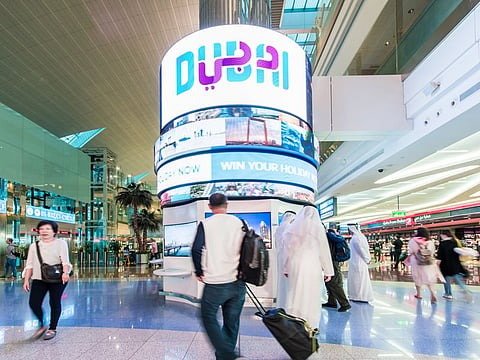
88,000 Travelers Touch Down, Families Reunite at DXB
Dubai International Airport’s Terminal 3 saw a rush of 88,000 arrivals in a single 24‑hour stretch on 17 August 2026, as residents poured back from summer holidays abroad. Lieutenant General Mohammed Ahmed Al Marri, Director General of the General Directorate of Residency and Foreigners Affairs in Dubai (GDRFA Dubai), confirmed the figure and warned that daily numbers could climb to about 90,000 in the next few days.
Families and seniors benefit from expanded assistance
The surge has prompted airport staff to line up before the passport counters, greeting passengers as they step off the escalators and steering them toward transport options inside the terminal. Dedicated teams are giving extra help to mothers with toddlers, senior citizens, patients and children, with specially trained counters handling youngsters’ needs.
The red‑carpet reception system, highlighted by Al Marri, gives particular attention to Emirates Airline flights arriving at Terminal 3, reinforcing the city’s reputation for warm, coordinated service. Employees describe the workload as a “responsibility and honour,” noting that performance assessments now go beyond a smile to include the breadth of new services they provide.
The sheer volume of arrivals means more taxis and ride‑hail cars line up outside the arrivals hall, stretching waiting times for locals who need a ride later in the day. While the airport’s internal transport links cope with the flow, the ripple effect is felt across nearby roads as families head home to neighborhoods across Dubai.
GDRFA Dubai expects the surge to continue as summer holidays end.