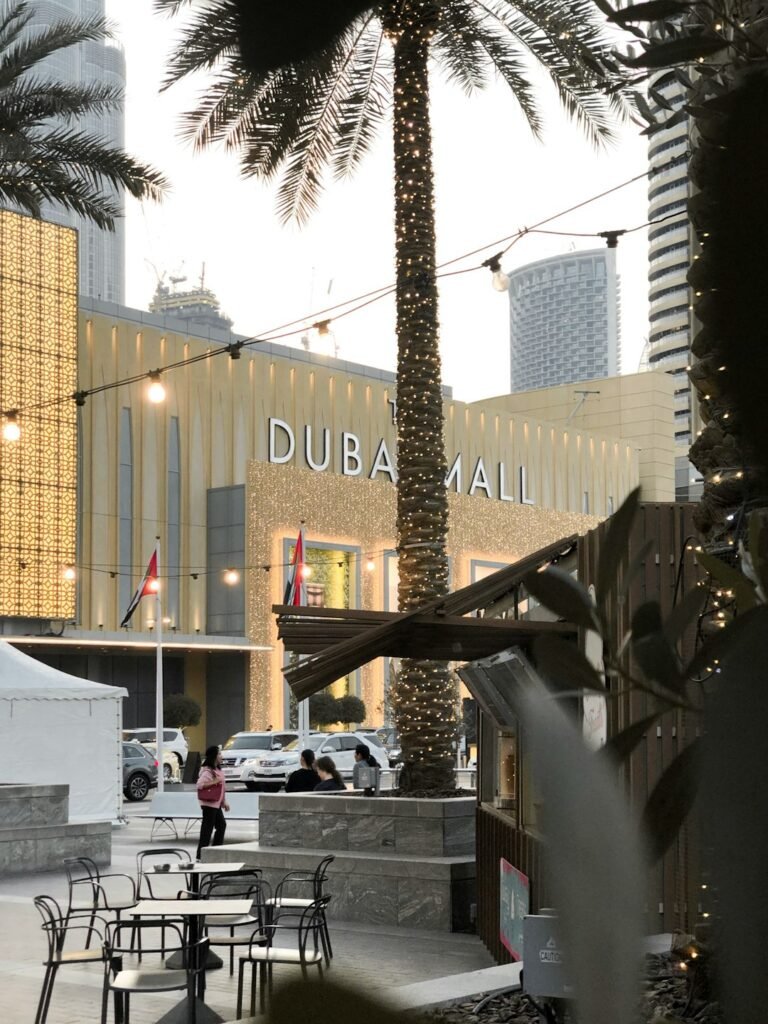
Ajman Government Declares August 28 Paid Holiday for Prophet's Birthday
Government offices across Ajman are clearing their desks early this week, with the Ajman Government Human Resources Department confirming a paid holiday for the emirate’s public sector on Friday, August 28, 2026.
Three-Day Weekend and Schedule Resumption
The Friday calendar slot gives government employees a clean three-day weekend, stacking the holiday neatly against Saturday and Sunday days off. Official duties across all local departments, entities, and institutions will pick back up on Monday, August 31.
The UAE cabinet previously lined up the exact same date for public and private sector employees nationwide to mark the birthday of Prophet Muhammad (PBUH), aligning local routines with federal scheduling.
Official duties across Ajman’s government entities resume on Monday morning, August 31.

Strait of Hormuz mines cleared by US Navy, Trump warns Iran
US Navy Clears Strait of Hormuz Mines as Trump Issues Warning to Iran
All naval mines within the international waters of the Strait of Hormuz were removed or detonated by the United States Navy, President Donald Trump announced on Tuesday. Commercial shipping operators and global energy markets face heightened stakes as military forces enforce a strict zero-tolerance policy across the vital corridor.
Trump stated on Truth Social that the US Navy informed him of the complete removal and detonation of all mines in the international passage. He warned that Iranian authorities had been notified that any ship or boat caught placing new mines would face immediate and systematic destruction by US forces.
Operations in the strategic waterway remain under intensive observation. Trump added that Space Force capabilities were monitoring every square inch of the strait, linking the surveillance to previous tracking of "Pickaxe Mountain" and three other destroyed nuclear sites.
The clearance initiative follows a series of security incidents affecting commercial traffic in the region. The United Kingdom Maritime Trade Operations reported that a bulk carrier attempting to leave the strait last Tuesday was struck by an unidentified projectile, resulting in one casualty and damage to its engine room. That incident marked the eighth vessel attack recorded by the UKMTO in the waterway for the month.
Disruptions have heavily impacted energy flows through the passage, which connects the Persian Gulf with the Gulf of Oman. Provisional Vortexa data cited by Reuters showed oil transits through the corridor stood at approximately 5 million barrels per day on Monday, down sharply from more than 20 million barrels per day before the war.

Dolly Parton Dies at 80 Following Health Treatment
Country Music Icon Dolly Parton Passes Away at Age 80
Country music icon Dolly Parton passed away peacefully at age 80 on August 25, 2026. Her nephew, Bryan Seaver, confirmed her death, ending a six-decade career that transformed global entertainment and affected millions of fans, musicians, and charitable organizations worldwide.
Passing Follows Canceled Las Vegas Shows and Ongoing Health Treatments
Parton’s death follows a public announcement in May that she was canceling a scheduled Las Vegas show to undergo health treatments. Her passing also comes amid recent personal tragedy for the family, following the death of her older brother, Coy "Denver" Parton.
Born on January 19, 1946, Parton built an entertainment empire spanning music, film, and business. Famous for solo classics such as "9 to 5" and "Jolene," she also expanded her career as an actress, playwright, author, and businesswoman, notably founding the Dollywood theme park alongside numerous global humanitarian initiatives.

Bitcoin Tops $80,000: August Rally Hits 28%
Bitcoin Touches $81,237 As August Surge Ignites Regional Portfolios
Bitcoin touched $81,237.94 before settling near $79,276 by the evening in the UAE, marking its highest point since mid-May. The move crowns a 28% gain for August alone, the asset's strongest monthly performance since November 2024.
The momentum accelerated after US President Donald Trump urged Congress to pass legislation clarifying crypto regulation. Concurrently, a softer US dollar and US Treasury Secretary Scott Bessent's efforts to ease bond market pressure helped reignite buying, sitting alongside roughly $7.2 billion in forced liquidations of bearish bets, according to Century Financial.
Market mechanics behind the move show a shift away from pure leverage. Alice Liu, Head of Research at CoinMarketCap, noted that open interest stands at just 1.2% of Bitcoin’s market cap, indicating that leveraged positioning was not the primary driver. Instead, exchange-traded funds absorbed close to $2 billion across six consecutive days of inflows, paired with $944 million in spot buying. As Liu put it, the shorts didn't cause the move, but served as fuel through the $80,000 barrier. Ryan Lee of Bitget Research pointed to a single-day inflow of $517 million, the strongest since early May, following a summer where prices lingered below $64,000.
The upside path hinges on whether spot demand can replace the short squeeze. Lee maps a near-term trading channel between $74,000 and $81,000, noting that a pullback to $75,000, $76,000 would align with standard profit-taking. If ETF inflows persist through upcoming US inflation data and the Federal Reserve chair's Jackson Hole speech, analysts see a path toward the $82,000, $87,000 range.
Conversely, Vijay Valecha, Chief Investment Officer at Century Financial, struck a note of caution, warning that a rapid surge driven by liquidations reflects momentum-chasing as much as structural allocation. True durability, Valecha argues, relies on continued regulatory progress and steady institutional commitments rather than a one-week squeeze. Meanwhile, Bitcoin's correlation with gold has climbed to +0.46, its highest level since 2021, reflecting a shift where the asset is trading more like a traditional hedge than a high-beta tech stock.

50% Counter-Tariffs Hit US Goods on September 8
Canada Hits US Imports With 50% Retaliatory Duties Starting Sept 8
Canada will impose counter-tariffs ranging from 15 per cent to 50 per cent on select US goods starting September 8, 2026. The retaliatory measure matches the rate of recent US trade actions and targets approximately 7.3 per cent of Canada's imports from the United States. To cushion the domestic fallout, Ottawa is simultaneously deploying a $5.4 billion (CA$7.5 billion) emergency aid package for impacted businesses and workers.
Finance Minister Francois-Philippe Champagne confirmed the unified response following the breakdown of trade negotiations, describing the cross-border duties as an unprecedented challenge for Canadian enterprise. The official response aligns directly with the timeline previously outlined by Prime Minister Mark Carney after US President Donald Trump levied 50 per cent tariffs on Canadian goods.
Targeted Sectors and Corporate Financial Exposure
The financial impact lands heaviest on cross-border supply chains handling industrial metals, agricultural goods, and manufactured hardware. Under the finalized Canadian duty schedule, US steel and aluminum imports that previously carried a 25 per cent tariff will jump to 50 per cent. A secondary tier of items will face a 25 per cent duty, encompassing commercial appliances, dairy goods such as cheese, and various steel and aluminum derivative products. A smaller category covering electrical tools and equipment will carry a 15 per cent duty.
On the US side, existing duties target approximately $20 billion in Canadian goods, representing roughly 5.5 per cent of Canada's total exports to its southern neighbor. Research from Oxford Economics reveals that these measures elevate the overall US effective tariff rate on Canadian products to 6.9 per cent, up from 5.1 per cent. Production hubs in Quebec, New Brunswick, and Ontario face the most severe immediate economic exposure, with plastics, electrical machinery, wood, and paper driving the rate increase.
Tariff Breakdown by Category
The immediate cost adjustments applying to imported US goods from September 8 break down across three distinct regulatory brackets.
| Imported Category | New Tariff Rate |
|---|---|
| US Steel and Aluminum Products | 50% (increased from 25%) |
| Appliances, Dairy Products, Steel and Aluminum Derivatives | 25% |
| Electric Equipment and Tools | 15% |
Escalation Risks and Structural Trade Shifts
Corporate compliance teams must brace for further structural disruptions heading into next year. The current tariffs bypass existing duty protections under the US-Mexico-Canada free trade agreement (USMCA), signaling an operational shift away from long-standing regional exemptions.
Additional pressure builds on the automotive sector, where US leadership has pledged to double tariffs on Canadian vehicles to 50 per cent starting next year on non-US content, up from the baseline 25 per cent rate. Provincial countermeasures have already trickled into energy supply chains, highlighted by Ontario's temporary 25 per cent surcharge on electricity exports sent to three US states. With the United States taking 70 per cent of all Canadian exports, commercial operators must adjust pricing models and inventory procurement strategies well ahead of the September 8 operational deadline.

AED 1,000 Fine For Ignoring UAE School Bus Stop Sign
AED 1,000 Fine and 10 Black Points Await Drivers Who Ignore School Bus Stop Signs
Drivers across the UAE caught ignoring an extended school bus stop sign face a Dh1,000 fine alongside 10 black traffic points. The Roads and Transport Authority (RTA) and federal traffic authorities enforce this strict mandate to protect children as they board and leave school transport.
The rule kicks in the moment a school bus flashes its red lights and swings out its 'STOP' arm. When that happens, motorists must bring their vehicles to a halt at least 5 metres away from the bus.
How you approach the stop depends entirely on the road layout. On undivided roads with no median or physical barrier separating the lanes, vehicles travelling in *both* directions must stop. On divided roads featuring a median or barrier, only the traffic travelling directly behind the bus needs to brake and wait.
You cannot move your vehicle again until three specific conditions are met: every student has crossed the road and reached a safe zone, the bus completely withdraws its stop arm, and the flashing lights switch off.
| Violation | Penalty |
|---|---|
| Ignoring school bus stop sign and arm | Dh1,000 fine and 10 black traffic points |