From Muroor Road to Zayed International Airport: Abu Dhabi’s 70-Year Aviation Journey
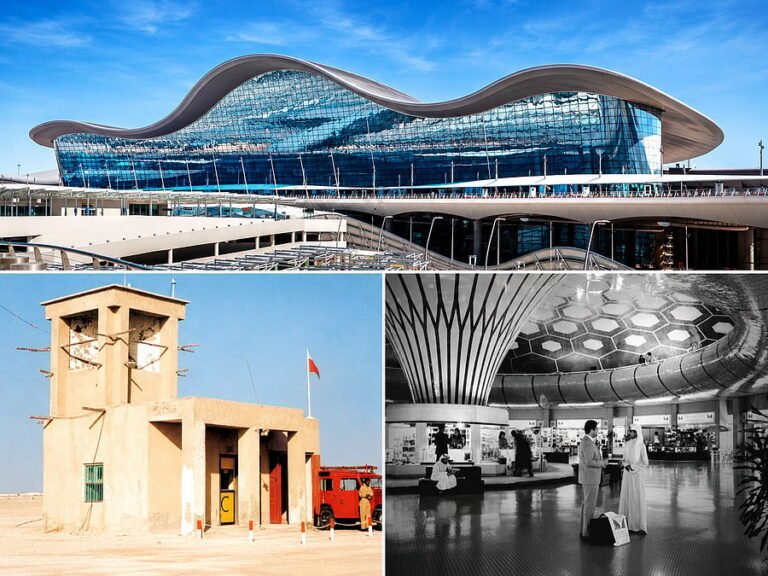
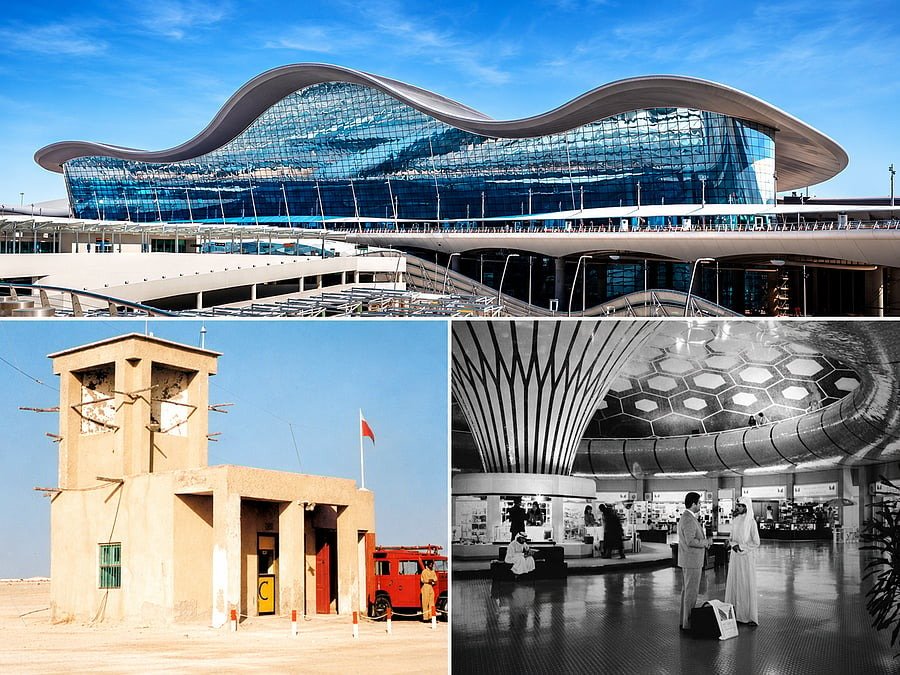
If you drive past Muroor Road today, you might miss the quiet reminder of where Abu Dhabi’s skies truly began. Tucked near the neighborhood is the capital’s original control building, a preserved relic from 1955, back when commercial flights landed on a modest sand runway and relied on a basic terminal.
That modest airstrip kicked off seven decades of aviation transformation across the emirate. By 1968, the city outgrew those early roots as Al Bateen Airport opened on what was then the desert outskirts. It served as Abu Dhabi’s first international gateway, handling the capital’s flights until the turn of the decade into the 1980s.
Growth pushed further out on January 2, 1982, with the official opening of Abu Dhabi International Airport, featuring its distinctive circular satellite terminal linked to a semi-circular main building. As passenger traffic climbed, expansions followed in steady succession: Terminal 2 opened in 2005, a second runway arrived in 2008, and Terminal 3 came online in 2009. The launch of Etihad Airways in 2003 anchored these physical expansions with a rapidly expanding global network.
A massive milestone reshaped the capital’s travel routine in November 2023 when Terminal A opened its doors. Spanning 742,000 square metres, the massive facility was built to handle up to 45 million passengers annually. Just months later, on February 9, 2024, the hub was officially renamed Zayed International Airport in honour of the UAE’s Founding Father, Sheikh Zayed bin Sultan Al Nahyan.
By 2025, the airport handled a record 32.5 million passengers, and operations now link the capital to more than 100 destinations worldwide.
Today, Zayed International Airport stands as a fully realized global aviation hub connecting millions of travelers through Abu Dhabi’s evolving airspace.