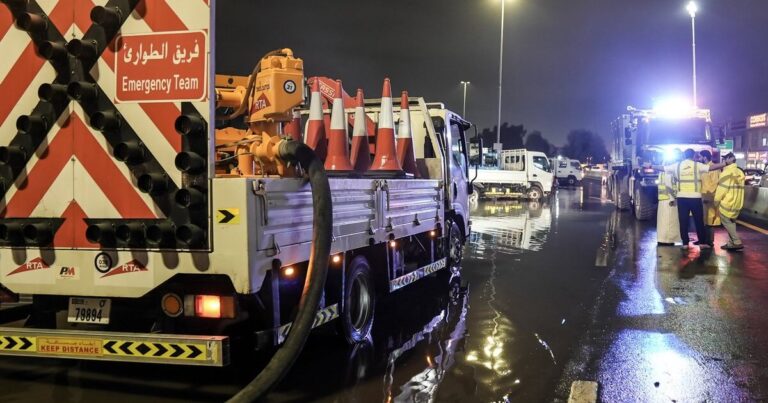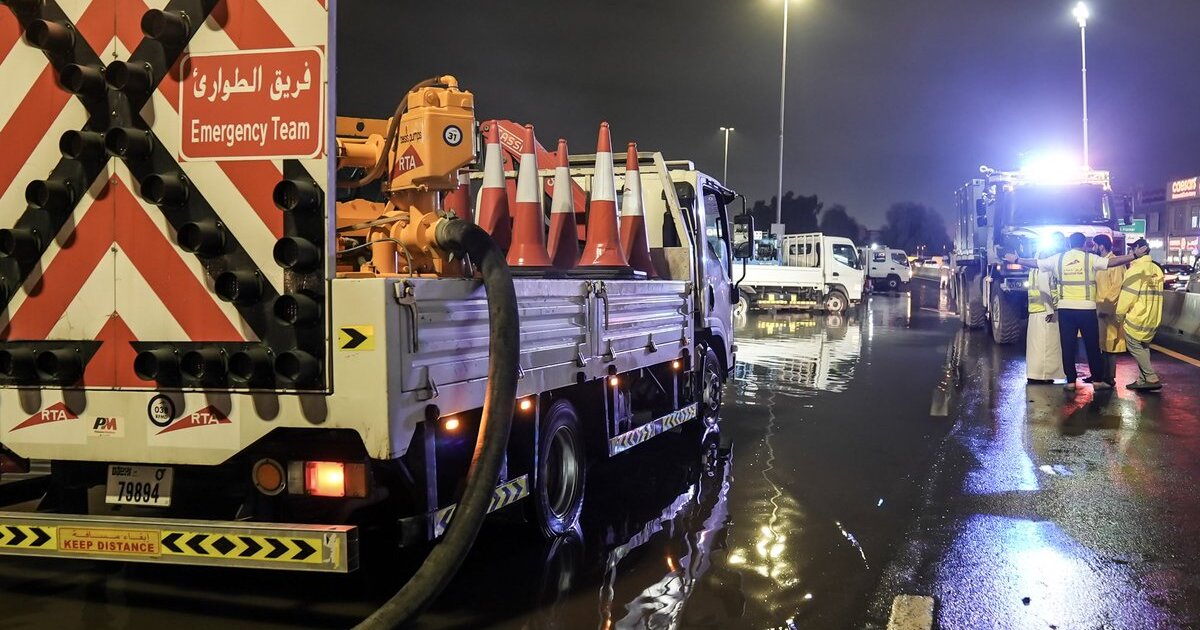
Dubai RTA weather monitoring operates continuously as the Roads and Transport Authority observes changing weather conditions and dispatches crews to manage rainwater pooling on roads. The authority’s message is simple and urgent: teams are already on the ground across Dubai, responding to rainwater accumulation to protect road safety and keep traffic moving, even as this week’s storm system has already challenged commutes and visibility.
The update comes at a time when many people are still changing their plans after forecasts earlier this week warned of heavy rain and strong winds, with the weather expected to be at its worst until March 28th. For drivers, the worst conditions usually leave behind the most persistent puddles in low areas, underpasses, and service roads, where a normal drive can become very slow.
“RTA continues to monitor weather conditions around the clock across various areas of Dubai, while field teams proactively respond to rainwater accumulation, contributing to enhanced road user safety and smoother traffic flow.”
Dubai Roads and Transport Authority (RTA)
A Quick Overview: Dubai’s Road and Rain Response
- RTA says it is monitoring weather conditions 24/7 across Dubai and deploying field teams to address rainwater accumulation.
- Goal: improve road user safety and maintain smoother traffic flow during periods of heavy rain and strong winds.
- Expect slower travel times in spots where water pools quickly, including service roads, underpasses, and other low lying areas.
- For real time routing, residents are advised to follow official channels for Dubai traffic updates during rain and any diversions.
During severe weather, RTA typically moves into multi agency readiness, working alongside municipal drainage operations and on road traffic management to reduce standing water and improve visibility. That can mean crews clearing grates, removing debris that blocks drainage, and pumping water where needed so key corridors do not seize up.
For drivers, the most noticeable effects are often nearby. A main road may seem clear, while a nearby side road or underpass stays flooded longer. This is also where temporary lane closures can happen as crews work, leading to more traffic during busy times.
Timeline: What’s happening now
Friday, March 27, 2026: RTA says it is monitoring conditions around the clock across various areas of Dubai and deploying field teams to respond to rainwater accumulation.
Transport and commuter impact
Heavy rain in Dubai does not only affect private cars. Bus reliability can slip when roads slow down, and first and last mile connections to Metro stations can become harder when sidewalks and access roads collect water. When conditions intensify, many commuters shift travel times, lean more heavily on the Metro where feasible, and keep a close eye on official advisories for diversions.
Businesses feel it too. Logistics, delivery fleets, and on demand mobility operators often see longer trip durations and higher costs as drivers reroute around pooling water and congestion hotspots.
Infrastructure and resilience
Dubai has consistently invested in road upgrades, drainage improvements, and smart traffic systems. However, brief intense rainfall can still exceed localized capacity. This highlights the importance of rapid response teams. Early clearing of grates and swift incident management can prevent secondary crashes and ensure emergency access routes remain open.
For drivers, the highest risk moments tend to come fast: reduced tire grip that can lead to hydroplaning, sudden braking in stop start traffic, and poor visibility during wind driven rain.
Public safety and information habits
During severe weather, residents increasingly rely on real time updates from official entities and navigation apps to avoid flooded routes and congestion. Clear, frequent advisories help reduce unnecessary trips and support safer driving behavior, especially in low lying areas where water can build quickly.
RTA’s public messaging during rain events generally advises residents to increasingly rely on real time updates from official entities and navigation apps to avoid flooded routes and congestion. Clear, frequent advisories help reduce unnecessary trips and support safer driving behavior, especially in low lying areas where water can build quickly.The authority has also used the safety message “YourSafetyOurPriority.”
What it means for you
- Plan extra time for trips today, especially if your route includes underpasses, service roads, or known low points where water collects.
- Drive for grip and visibility: reduce speed, increase following distance, and avoid sudden braking on wet surfaces to lower hydroplaning risk.
- Do not push through standing water if you cannot judge depth. Turn around and use an alternate route.
- Stay update ready by checking official RTA traffic updates and Dubai weather alerts before you leave, and be prepared for short term lane closures while crews clear water and debris.
The RTA is monitoring the system and addressing rainwater collection areas. Expect travel disruptions, remain flexible with routes, watch for water in low spots, and follow official updates.