China's 19-Seat Electric Passenger Plane Completes First Piloted Test
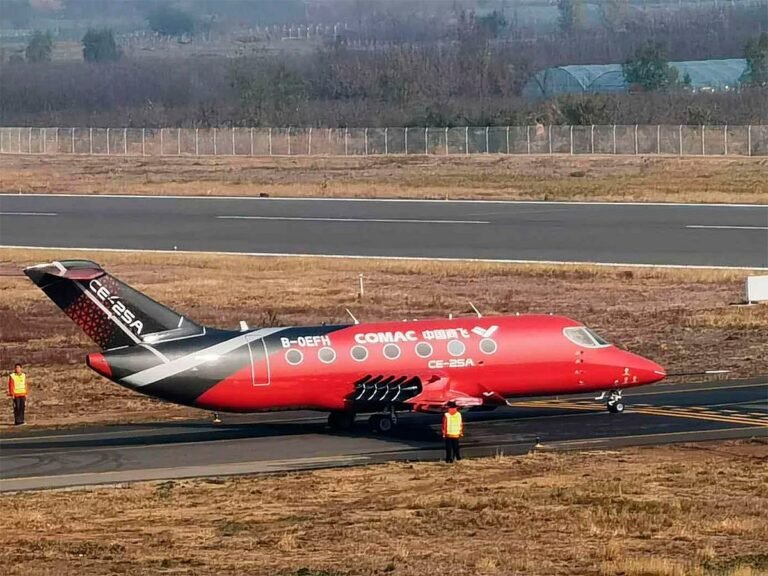
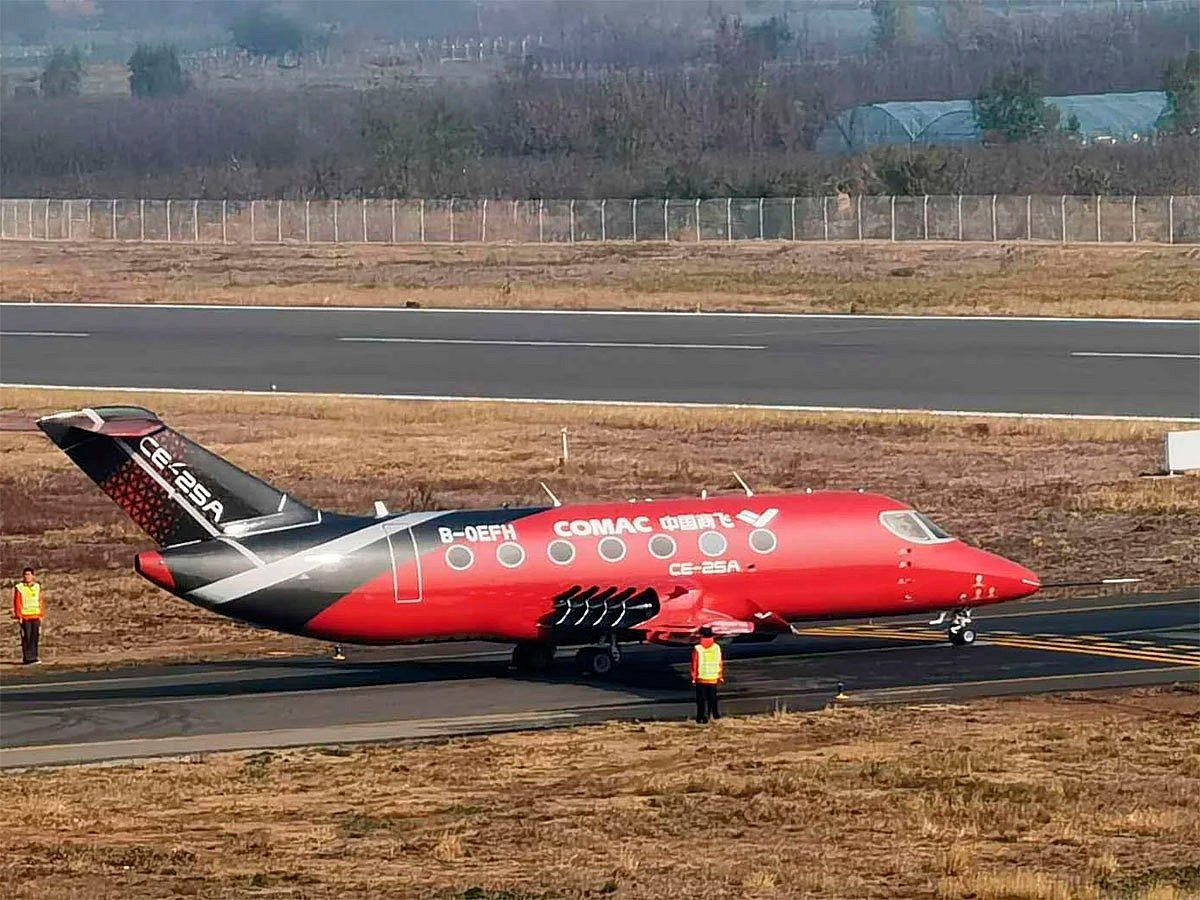
China has completed the first piloted flight of the CE-25A, a 10-tonne, 19-seat electric passenger aircraft developed by the Commercial Aircraft Corporation of China. Regional air carriers and aviation technology developers are tracking the trials as the battery-powered prototype advances toward commercial certification.
COMAC’s CE-25A Prototype Targets Regional Routes With Distributed Electric Propulsion
The aircraft took off on November 14 in Binzhou, Shandong province, carrying two pilots and a flight-test engineer onboard. During the test, the CE-25A remained airborne for 16 minutes and 38 seconds, covering 60.4 kilometres. The entire test operation lasted 57 minutes and 46 seconds, according to reports by Xinhua News Agency and China Daily. COMAC stated that the aircraft operated normally during the flight, with all performance indicators meeting expectations.
Designed primarily for short-distance commercial journeys between cities, the aircraft features a maximum take-off weight of 10 tonnes and a stated range of 400 kilometres. It maintains a cruising speed of 300 km/h and a cruising altitude of 2,400 metres. Its capacity of 19 passengers places it in the small regional aircraft category. Unlike conventional passenger aircraft powered by fuel engines, the CE-25A uses an electric propulsion system featuring 10 ducted fans mounted along its wings, driven by electric motors.
The aircraft is the result of a partnership involving COMAC, Chinese battery manufacturer CATL, Shanghai Jiao Tong University, and other organizations, combining aircraft manufacturing, battery technology, and academic research. Prior to the November milestone, the CE-25A completed its first uncrewed autonomous flight on February 2, 2026, and subsequently underwent 19 unmanned flight-validation exercises.
Despite the successful test, the CE-25A is not yet cleared to carry paying passengers. The Civil Aviation Administration of China has accepted COMAC’s application for a type certificate, initiating the formal regulatory assessment process. The aircraft must complete required certification and testing before entering commercial passenger service, and no commercial launch date has been announced.