Exploding Drones Hit Armor as Germany Tests New Strike Tools in Lithuania
The German army conducted its first tactical tests of kamikaze drones and AI-driven targeting software on Sunday during military exercises at the Rudninkai training ground in Lithuania. Military units and defense analysts evaluated loitering munitions equipped with inert warheads striking main battle tanks, advancing plans to permanently station combat troops near the Belarusian border.
Live-fire drills evaluate loitering munitions and Helsing AI software near Belarusian border
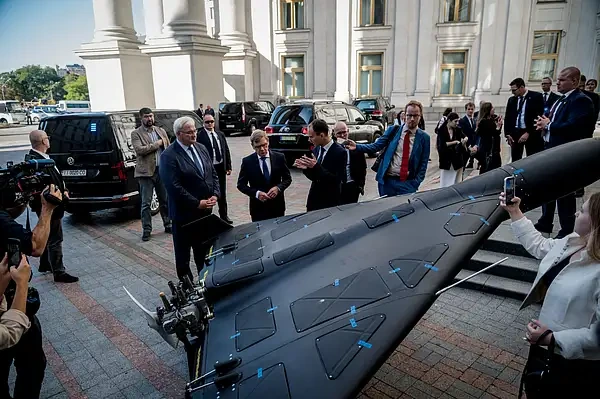
Army chief Christian Freuding observed loitering munitions manufactured by German firms Helsing and Stark striking armored targets during Freedom Shield, the largest German military exercise held in Lithuania to date. Squads at Rudninkai also conducted initial testing of Helsing’s Clarity targeting software, an artificial intelligence platform built to process surveillance data from satellites, drones, and ground sensors faster than human operators to generate strike recommendations. Lieutenant General Freuding, set to assume the role of chief of defense in February, confirmed both system types as essential components of modern tactical doctrine.
The weapons testing directly supports operational preparations for Panzerbrigade 45, based across stations in Rudninkai and Rukla. Germany plans to deploy 5,000 personnel and 2,000 vehicles, including dozens of main battle tanks, to the Baltic nation by the end of 2027, scaling up from the 1,800 troops currently on site.
The live-fire trials mark the tactical implementation of Berlin’s 2025 procurement decision to acquire exploding drones following extended policy debates over loitering munitions, aligned with defense spending increases initiated after Russia’s full-scale invasion of Ukraine.