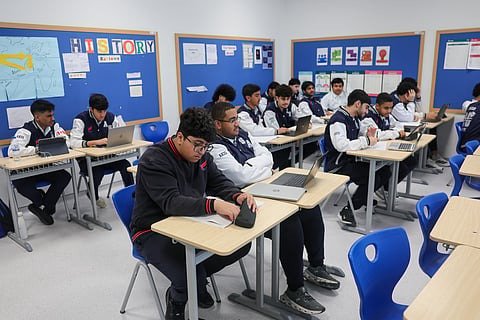
Personal Phones Banned for Student Contact Under New KHDA Safeguarding Policy
The Knowledge and Human Development Authority (KHDA) has introduced a mandatory policy framework that prohibits teachers and education staff from contacting students using personal mobile devices, private phone numbers, WhatsApp, or personal social media accounts. Under the *Policy Framework for Safeguarding and Learner Protection in Dubai’s Private Educational Institutions*, announced on November 13, 2026, all official communication and instructional activities must occur exclusively through institutionally approved devices and monitored platforms.
Institutional Scope and Covered Personnel
The regulatory mandate applies across all KHDA-permitted private educational entities operating within Dubai. Compliance is compulsory for:
- Early childhood centres and nurseries
- Private K-12 schools
- Universities and higher education institutes
- Vocational and training centres
Mandatory Compliance and Safeguarding Requirements
To maintain regulatory compliance, educational institutions must update operational procedures to enforce clear boundaries between staff and learners. Key procedural mandates include:
- Enforce Approved Communication Platforms: Prohibit personal phone numbers, private messaging apps, and personal social media profiles for student contact. Transfer all electronic interactions to institutionally owned channels equipped with administrative oversight.
- Implement Staff Induction Protocols: Require every adult working with learners, including contractors and volunteers, to formally acknowledge the institution’s Code of Conduct during induction.
- Establish Governance Structures: Appoint a safeguarding governor at the board level and designate a child protection coordinator or safeguarding lead to direct internal compliance.
- Restructure Physical and One-to-One Interactions: Ensure staff operate in visible, open spaces whenever feasible. Where one-to-one or closed-door meetings are required, staff must strictly follow documented supervision protocols.
- Regulate Digital Media and Conduct: Formalize internal policies governing photography, student digital content, gift-acceptance prohibitions, and preferential treatment prevention.
- Maintain Continuous Suitability Monitoring: Conduct ongoing oversight of staff suitability throughout employment and establish formal reporting procedures to address cyberbullying, online grooming, digital coercion, and artificial intelligence misuse.