Starship caught by launch pad arms in historic orbital return
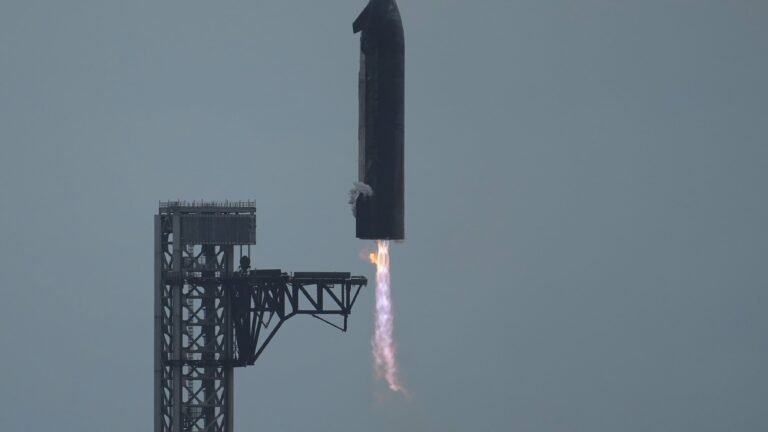
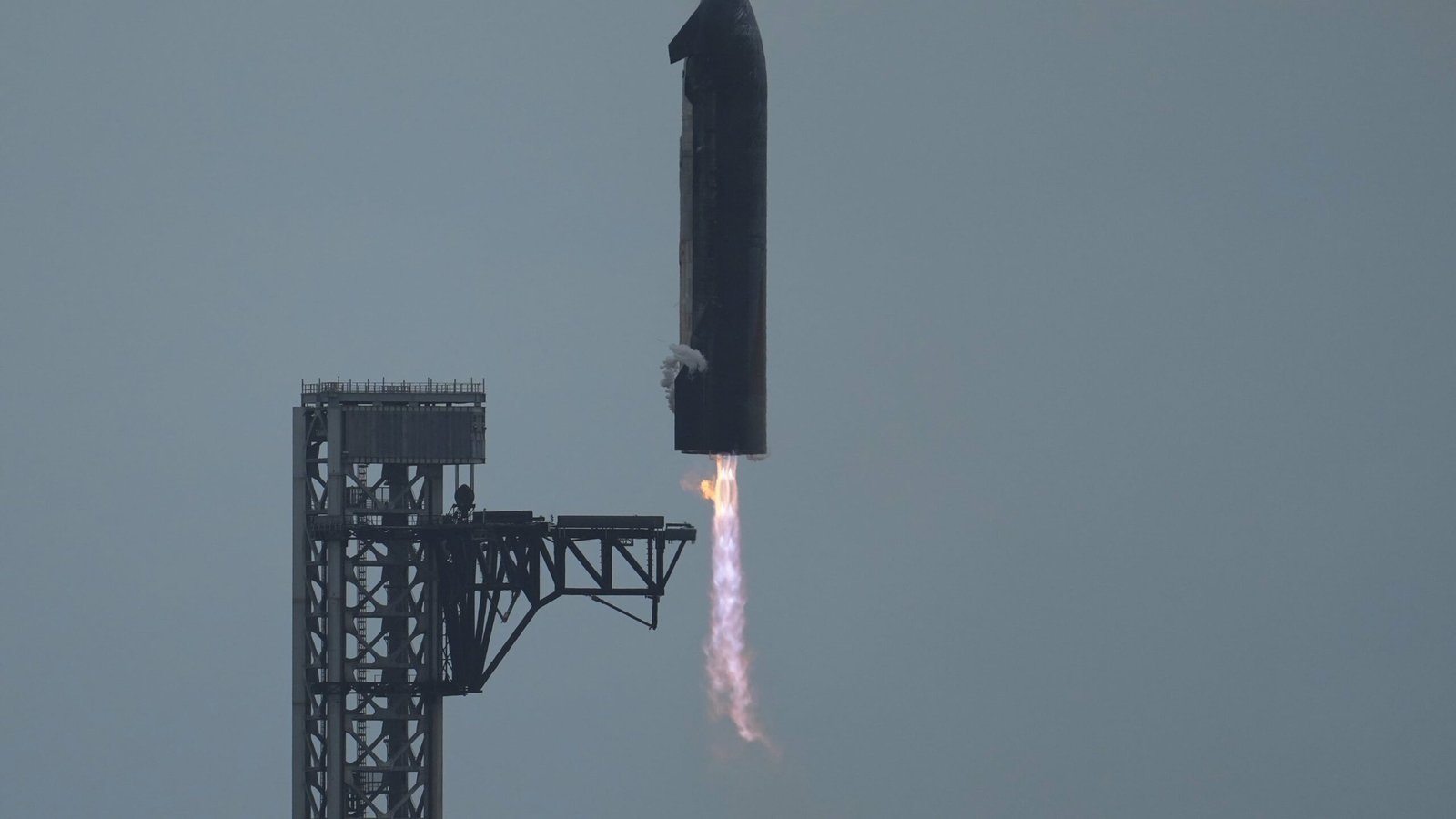
SpaceX successfully captured its upper-stage Starship spacecraft using launch pad mechanical arms at its Starbase facility in Texas on Saturday following a 22-hour orbital flight. The breakthrough demonstrates operational progress toward full vehicle reusability, providing critical verification for commercial satellite operators and aerospace agencies tracking deep-space infrastructure programs.
Upper-stage vehicle completes 14 orbits before landing while booster self-destructs
The 407-foot rocket system deployed 26 advanced Starlink satellites into orbit 165 miles above Earth and completed 14 laps before executing its pad landing. The flight marked the 15th test of a full-scale Starship since 2023 and its second journey to orbit. While the upper stage executed its capture sequence, the first-stage booster failed to complete its return when its engines stopped firing prematurely, prompting an automated guidance system to steer the stage into a self-destruction maneuver over the Gulf of Mexico.
The orbital test follows prior booster recovery successes as SpaceX prepares to initiate launches from Florida’s Kennedy Space Center in support of NASA’s Artemis program, which targets a human lunar landing as soon as 2028.