Hormuz Showdown: Trump's Clock Ticking Faster?
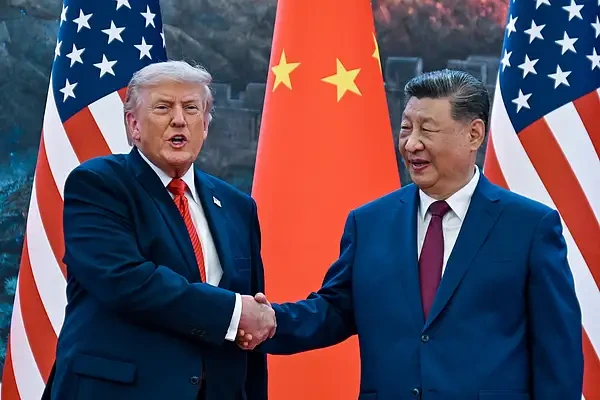
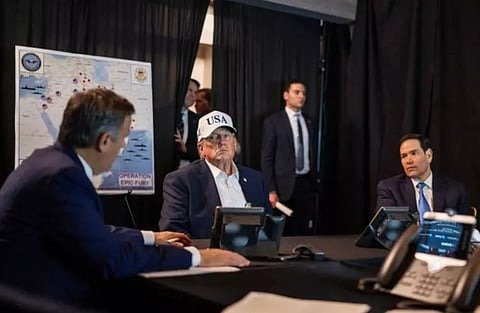
The conflict between the US and Iran over the Strait of Hormuz has evolved into a strategic battle of clocks, with Washington betting economic pressure will force Tehran to compromise while Iran calculates that US political pressures, dwindling munitions, and rising energy costs will force President Trump to seek an exit first. This standoff is not just about military power, but about which side can outlast the other. The US is counting on sanctions, a maritime blockade, and months of military pressure to weaken Iran’s economy, while Iran is leveraging its control over the Strait of Hormuz to pressure the US into offering a favorable exit.
The drivers behind this standoff are economic and geopolitical. The US is facing growing public frustration with the war, pressure on Patriot and THAAD missile stocks, and higher petrol and energy prices. According to CNN, average US petrol prices are back above $4 a gallon, creating a domestic political problem for Trump. On the other hand, Iran is withstanding the effects of sanctions, the US blockade, and damage inflicted during months of conflict. However, Tehran’s strategy is hardly risk-free, and the country must navigate the risks of renewed US strikes, pressure to restore normal trade, and the need to compensate for the war and sanctions relief.
The stakeholders affected by this conflict are numerous. The US midterm elections are approaching, and Trump’s political timetable is a critical factor in the standoff. The conflict is also affecting the global energy market, with the Strait of Hormuz being one of the world’s most important energy routes. Iran’s control over the strait has become a valuable leverage point, allowing the country to exert pressure on the US. Meanwhile, the US is trying to maintain its military commitments elsewhere while expending expensive weapons and resources on Iran.
The strongest counter-argument to the US position is that Iran may be able to outlast the US, given the country’s ability to withstand economic pressure and its leverage over the Strait of Hormuz. According to CNN political and national security analyst David Sanger, Iran’s leaders sense that Trump wants a way out of the conflict, and the US is “running out of munitions,” options, and patience. This perception could help explain why Tehran has little incentive to quickly accept a compromise over Hormuz. Instead, Iran has hardened its conditions for fully reopening the strait, demanding measures including an end to the US maritime blockade, withdrawal of American forces from the region, compensation for the war and sanctions relief.