Hormuz Ship Attack Raises Tensions
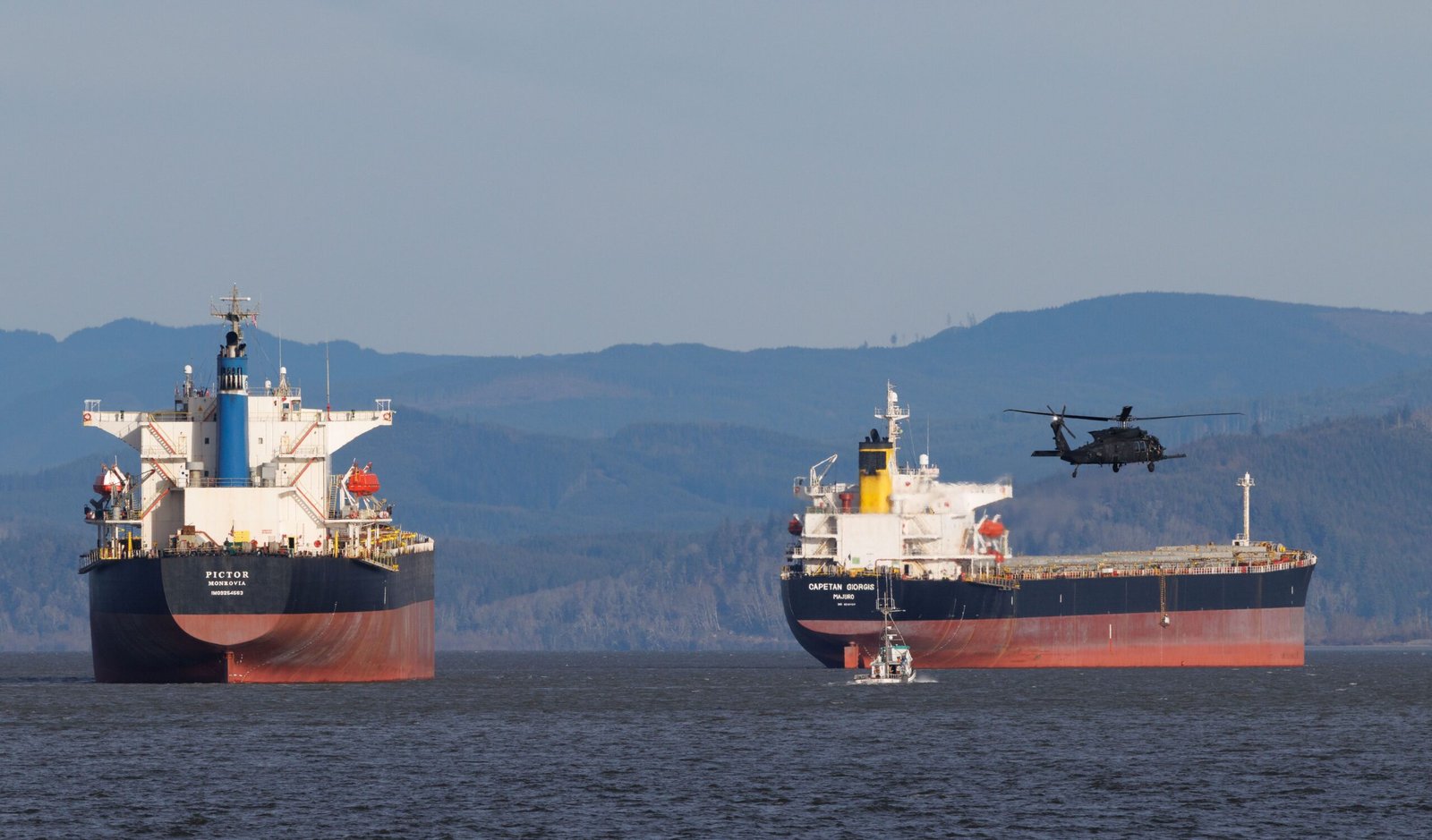
A cargo vessel was struck by an unknown projectile near the Strait of Hormuz off Oman’s coast, the United Kingdom Maritime Trade Operations (UKMTO) agency reported on Tuesday. This incident occurred amidst conflicting signals from the US and Iran over the status of talks to end their five-month-old war, boosting uncertainty and highlighting risks to global energy flows. Shipping activity in the Gulf has been significantly impacted, with only six vessels transiting the strait on Monday, down from seven the previous day, according to Kpler data.
The attack on the vessel and the rebound in oil prices on Tuesday highlightd doubts that the US-Iran war was nearing a resolution. Oil prices rose nearly 3% after a steep selloff in the previous session as investors reassessed optimism over diplomacy. Maritime sources told Reuters that the vessel struck near Hormuz was a dry bulk ship, and its crew had to abandon the vessel, with one seafarer missing.
US President Donald Trump said on Monday that talks with Tehran were under way and Iran faced a “last chance” to reach a deal, while Iranian officials insisted no negotiations with the United States were taking place. Trump stated that discussions were taking place at the request of Iran, Saudi Arabia, the United Arab Emirates, and Qatar. However, Iran says its only talks are with Oman about the Strait of Hormuz, and no major meetings are planned this week.
The situation in the Strait of Hormuz remains volatile, with the latest attack on shipping highlighting the ongoing threats to global energy flows. The incident has raised concerns over the safety of maritime shipping lanes and the potential impact on global energy supply. As the US-Iran talks remain uncertain, the international community is closely watching the developments in the region.
This latest incident is a reminder of the ongoing conflict in the region, which has been affecting global energy flows for months. The Strait of Hormuz is a vital route for international maritime shipping, with over 100 ships typically transiting the strait per day in peacetime. The current situation has led to a significant decrease in shipping activity, with only a fraction of the usual number of vessels transiting the strait.
The UKMTO maritime security agency has warned of the risks to shipping in the region, and the latest incident has highlightd the need for increased vigilance and cooperation to ensure the safety of maritime shipping lanes. As the situation continues to evolve, the international community will be closely monitoring the developments in the region and the impact on global energy flows.
In relation to previous events, the current situation in the Strait of Hormuz is a continuation of the ongoing tensions between the US and Iran, which have been escalating since the start of the year. The conflict has had a significant impact on global energy markets, with oil prices fluctuating in response to the latest developments.

Ceuta Migrant Rush: 60,000 Attempt Border Crossing
60,000 Migrants Rush Ceuta Border After Fake Online Posts
The recent migrant rush to Spain's Ceuta enclave was triggered by false online rumors that suggested the border with Morocco was open. These rumors, which spread like wildfire on social media platforms such as Instagram, Facebook, and TikTok, convinced thousands of Moroccans that Europe was within reach. As a result, an estimated 60,000 people made their way to the border, leading to one of the largest migration surges between Morocco and Spain in years.
The rumors started with Instagram posts claiming that the border would be open, followed by Facebook users sharing screenshots from vessel-tracking platforms to identify moments when coast guard patrols appeared lighter. TikTok videos even mapped the exact route swimmers should follow to reach the Spanish territory. These posts convinced many young people to head towards the border, with some attempting the roughly 3-mile swim around the border breakwater.
The situation quickly spiralled out of control, with mass chaos erupting at a narrow concrete breakwater where many tried to climb onto land. According to multiple migrants, people rushed to scramble over the slick rocks at the same time, pushing and climbing over one another. Several reported seeing people knocked back into the water and forced beneath others, leaving them unable to resurface.
The aftermath of the crisis has been devastating, with at least 83 people dead, including some who drowned and others who were killed in a stampede. Tens of thousands of migrants have since returned to Morocco, either after being expelled or after leaving by choice due to a lack of shelter, food, and water in Ceuta.
Some migrants had misunderstood recent legal developments in Spain, including Prime Minister Pedro Sánchez's immigration regularization measures and a court ruling limiting authorities' ability to immediately return migrants who swim into Ceuta. However, these measures were meant only for people already living in Spain prior to January 1, and not for new migrants attempting to cross the border.
The incident highlights the dangers of misinformation on social media and the need for authorities to be vigilant in monitoring and addressing false online posts. As the investigation into the crisis continues, it is clear that the spread of false information on social media played a significant role in triggering the migrant rush.
For those affected by the crisis, it is essential to understand the current situation and the measures being taken by authorities to address the issue. The Spanish and Moroccan governments have launched investigations into the spread of misinformation on social media, and efforts are being made to provide support to those affected by the crisis.
Here are some key points to note:
- The migrant rush was triggered by false online rumors, and authorities are working to address the spread of misinformation on social media.
- The crisis has resulted in at least 83 deaths and mass returns, with tens of thousands of migrants returning to Morocco.
- The Spanish and Moroccan governments have launched investigations into the crisis and are working to provide support to those affected.

Alexandra Eala Wins First WTA Singles Title
Eala Claims Historic First WTA Singles Title
Alexandra Eala rallied past Jessica Pegula 4-6, 6-4, 6-0 on Monday to capture her first WTA Tour singles title at the DC Open in Washington. The 21-year-old Eala became the first Filipina to win a singles title on the tour, completing a career-defining breakthrough at the same tournament where Pegula claimed her first WTA title in 2019. Filipino tennis fans celebrated as Eala's victory marked a historic milestone for the country, with the rising star transforming the atmosphere around the tournament while reaching her first WTA Tour final in her debut at the hard-court tuneup for the U.S. Open.
The women's final stretched across two days due to heavy rain, with Eala storming back to claim the second set and then sweeping through the third, winning each game of the final set to complete the comeback. Eala defeated all three of the tournament's top seeds, including Olympic champion Zheng Qinwen, second-seeded Elina Svitolina, and third-seeded former world number one Naomi Osaka, en route to her historic title. The victory is projected to propel Eala to a career-high 20th in the world rankings.
The DC Open title marked a significant milestone for Eala, who had previously failed to convert four championship points in her only prior final at Eastbourne last year. "Just pure happiness," Eala said of her first title, which comes after a storming run that included victories over top-ranked players. The tournament's outcome was a reflection of Eala's determination and skill, as she overcame a tough draw and challenging conditions to emerge victorious.
This historic win follows in the footsteps of Pegula, who claimed her first WTA Tour title at the same Washington tournament in 2019. Eala's achievement is a significant breakthrough for Filipino tennis, marking a new era of success for the country's players on the international stage.
Ramadan 2027 Start Date: February 8
Ramadan 2027 to Begin on February 8, Subject to Moon Sighting
Ramadan 2027 is expected to begin on Monday, February 8, in the UAE, subject to the official sighting of the crescent moon. This date is based on astronomical calculations, which indicate that the crescent moon will be sought on the evening of Sunday, February 7. If the moon is sighted, Muslims will perform the first Tarawih prayers that evening before observing the first day of fasting on Monday, February 8.
The Islamic lunar calendar, which governs the start of Ramadan, is around 11 days shorter than the solar Gregorian year. As a result, Ramadan gradually moves backwards through the calendar, falling in winter, spring, summer, and autumn over successive years. The final start date is confirmed only after religious authorities in each country observe the new crescent moon, making moon sighting an integral part of the beginning of the holy month.
In the UAE, Muslims will fast each day from dawn until sunset, abstaining from food, drink, and smoking while placing greater emphasis on prayer, charity, self-discipline, family, and community. The month is expected to last either 29 or 30 days, depending on the sighting of the Shawwal crescent, with Eid Al Fitr forecast to begin on Wednesday, March 10, 2027.
With around 198 days remaining until the expected start of Ramadan 2027, many Muslim-majority countries will begin planning for the holy month in the months ahead, from preparing mosques and public services to announcing official moon-sighting procedures. Despite increasingly precise astronomical calculations, the official beginning of Ramadan continues to be determined by the traditional sighting of the crescent moon in accordance with Islamic practice.
For Muslims in the UAE, the start of Ramadan is a significant event, marking the beginning of a month of spiritual reflection, self-improvement, and community bonding. As the expected start date approaches, residents can prepare by learning more about the Islamic lunar calendar, the significance of moon sighting, and the traditions and practices associated with Ramadan.
As the holy month approaches, residents can expect to see preparations underway in mosques, public services, and communities across the UAE. From special Ramadan-themed events to increased charitable activities, the start of Ramadan is a time of great excitement and anticipation for Muslims in the UAE.
UAE Mobile Bill Payment Due Dates
Missed Payment Deadline? Here's What Happens to Your UAE Mobile Service
If you're a postpaid mobile customer in the UAE, it's essential to understand how your billing cycle works and when your payment is due to avoid service suspension. Both e& and du, the UAE's leading telecom providers, have distinct billing cycles and payment due dates.
For e& postpaid customers, the monthly bill is generated on the first day of every month, with a 15-day payment window. You'll receive an SMS notification with the bill amount and due date, which is usually the 15th of the month. This date is also mentioned on your monthly bill, accessible through the e& app. Paying your bill on time not only avoids service interruption but also helps improve your credit score with the Al Etihad Credit Bureau.
On the other hand, du's billing cycle depends on when you subscribed to the postpaid plan. After a billing cycle ends each month, the invoice is generated within four days, and you'll receive an SMS with the amount due and the payment due date. Your du bill's exact due date is printed on your monthly PDF or digital statement.
If you fail to pay your bill by the due date, both e& and du will send reminders, and your line may be suspended. However, you can avoid this by setting up autopay through the e& or du app, which links your preferred credit or debit card to your account and deducts the amount due every month.
To pay your bill, you can use various options, including the e& or du app, payment machines at malls and community centers, phone banking, or money exchange houses. For e& customers, you can also visit etisalat.ae/quickpay to pay using your credit or debit card. For du customers, you can go to myaccount.du.ae/webapp/en/quick-pay to make the payment.
It's crucial to note that unpaid bills can negatively affect your credit profile in the UAE. Therefore, it's best to settle your bills on time to maintain uninterrupted service and protect your credit rating.
If you're a postpaid user, it's essential to keep track of your billing cycle and payment due dates to avoid any service interruptions. By understanding how your billing cycle works and taking advantage of autopay options, you can ensure that your mobile service remains active and your credit score is protected.
For e& customers, the autopay option is available through the e& app, which links your preferred credit or debit card to your account. For du customers, you can enable AutoPay through the du app by following a few simple steps: tap on 'settings,' select 'Billing & Payment,' choose 'Payment Method,' and then tap 'Set up Auto-payment.'
In conclusion, staying on top of your mobile bill payments is crucial to avoid service suspension and protect your credit rating. By understanding the billing cycles and payment due dates of e& and du, you can ensure that your mobile service remains uninterrupted and your credit score is protected.

UAE Fuel Prices Ease as Oil Markets Stabilize
UAE Fuel Prices Drop 30% From Conflict Peak
UAE fuel prices have started moving closer to pre-conflict levels as international oil markets stabilize after months of exceptional volatility triggered by the Middle East conflict. Brent crude has fallen by around 30% from its conflict peak above $120 a barrel, improving expectations that UAE fuel prices could continue moderating if lower oil prices are sustained.
Despite the recent decline, Brent remains about 15%-20% above the low-$70 range seen before the conflict began, reflecting continued uncertainty over Gulf energy supplies and the Strait of Hormuz, through which around 20% of global seaborne oil trade passes. For UAE motorists, the easing in oil prices points to improving market conditions, although the pace of further fuel price reductions will continue to depend largely on how international oil markets evolve.
The UAE Fuel Price Committee's August prices still reflect higher global oil prices, with Super 98 at Dh3.60, Special 95 at Dh3.49, E-Plus 91 at Dh3.41 and diesel at Dh3.80, compared with Dh2.45, Dh2.33, Dh2.27 and Dh2.72 respectively in February. The comparison reflects the sharp increase in international crude prices during the conflict, followed by the gradual moderation seen over recent weeks.
The UAE follows a market-linked fuel pricing mechanism introduced in 2015, under which retail fuel prices are reviewed each month using average international crude oil and refined fuel prices. As a result, local pump prices reflect broader market averages rather than daily fluctuations in crude oil prices. This approach means sustained increases or declines in international oil prices are gradually reflected in subsequent monthly fuel price revisions.
For UAE fuel prices to return to pre-conflict levels, several factors need to come into play. Firstly, oil prices need to remain lower, with Brent crude already falling significantly from the highs recorded earlier this year. Secondly, global supply needs to keep improving, with the latest OPEC+ production increase expected to add more oil to international markets. Lastly, greater stability around the Strait of Hormuz is crucial, with any sustained improvement in shipping conditions through the route supporting global energy supplies and helping reduce price volatility.
While the overall direction has become more favorable, uncertainty remains. Iran has denied that negotiations with the United States are under way, despite President Trump's comments. Oil markets also continue to react quickly to developments affecting Gulf shipping and regional energy infrastructure. Any renewed disruption to exports or shipping routes could slow the pace of normalization in global crude prices.
In the coming months, UAE motorists can expect a more balanced global energy market, although uncertainty remains. The UAE's market-linked fuel pricing mechanism will continue to reflect these international market trends, with further fuel price reductions possible if lower crude oil averages and stable Gulf shipping routes are sustained.
Here are some key questions and answers about the current state of UAE fuel prices: