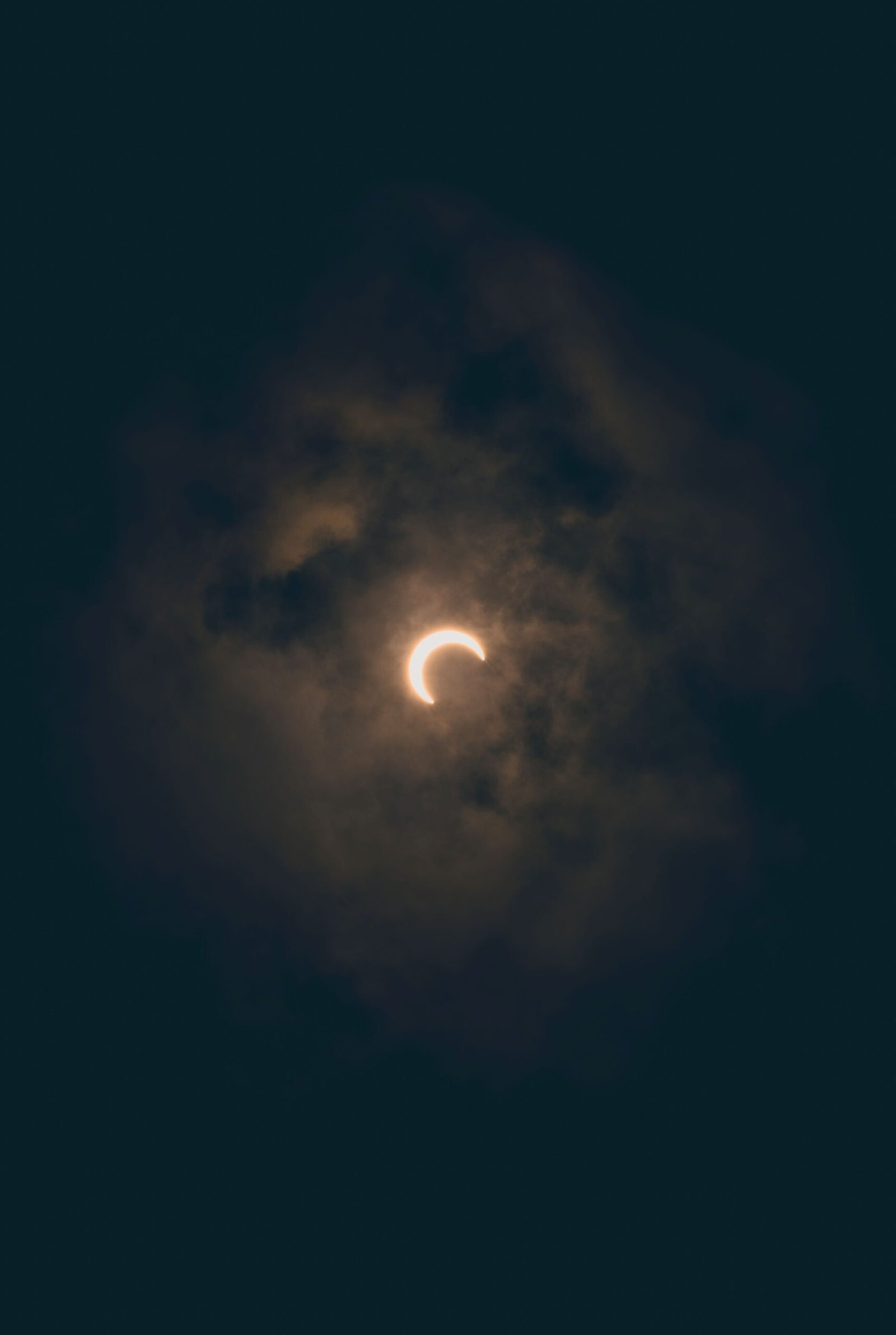
Total Solar Eclipse on August 12, 2026: What You Need to Know
A rare total solar eclipse will take place on August 12, 2026, with the path of totality sweeping across northern Russia, Greenland, Iceland, the North Atlantic, and parts of Portugal and Spain. The eclipse will be visible in different forms across Europe and North America, with some areas experiencing a deep partial eclipse and others seeing a more modest partial event.
The path of totality, where the Moon fully obscures the Sun’s disc, will be approximately 100 km wide and will last for less than two minutes in most areas. Observers in the center of the eclipse path in Greenland, Russia, or over the North Atlantic will enjoy a slightly longer spectacle, though still under two and a half minutes.
Beyond the path of totality, skywatchers in Europe and North America will witness a partial eclipse, with the Sun only partly obscured. The extent of coverage will vary sharply by location, with observers in the United States and southern Canada seeing only a small “bite” taken from the solar disc, while those nearer the path of totality across most of Europe and northwestern Africa will see the vast majority of the Sun concealed.
In the Arab world, several countries will enjoy a striking partial eclipse, including Algeria, Morocco, Tunisia, and Mauritania. However, the UAE will miss out entirely, as it lies outside the eclipse’s viewing path. According to Ibrahim Al Jarwan, Chairman of the Emirates Astronomical Society, the total solar eclipse will not be visible from the UAE.
For those who cannot view the eclipse in person, NASA and the European Space Agency (ESA) will provide live online coverage. NASA will stream the eclipse live from 1:15pm EDT on August 12 via nasa.gov/live, while the ESA will host a live broadcast on YouTube from the Observatorio Astrofísico de Javalambre in Teruel, Spain, beginning at 19:30 CEST on August 12.
If you’re interested in watching the eclipse online, you can visit the NASA or ESA websites for live streams and updates. Additionally, you can check the websites of local astronomical societies or planetariums for information on viewing events and online broadcasts.
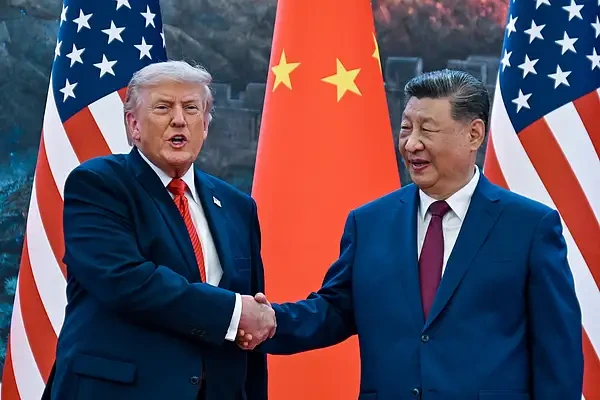

Gianni Infantino Scraps $20B FIFA Plan
FIFA's $20B Plan Scrapped Amid Global Backlash
FIFA President Gianni Infantino has withdrawn a controversial $20-billion commercial proposal, known as Fifa Forward Enterprise (FFE), to run the World Cup and its other events. The decision comes after intense global opposition and key executive resignations, including that of Infantino's senior adviser Carlos Cordeiro, who called the plan "a bad deal for football." FIFA's Chief Operating Officer Kevin Lamour also criticized the proposal, stating that staff had been "deceived" by Infantino.
European soccer's governing body, UEFA, had threatened a boycott of events and accused FIFA of putting the sport's "soul" up for sale. In response to the opposition, Infantino announced that he would not proceed with the proposal, citing the need to unite and improve the sport. FIFA had argued that selling a minority stake in its commercial operations would raise billions of dollars to fund global sports development.
The United Arab Emirates and Sri Lanka have welcomed the decision to scrap the investment plan, while reaffirming their support for Infantino. Other nations, such as Morocco and Egypt, have also expressed their continued backing for the FIFA president. Meanwhile, opposition to Infantino's leadership continues to grow, with British Prime Minister Andy Burnham stating that Infantino is "the wrong man to lead the organisation." North American football chief Victor Montagliani is reportedly looking to challenge Infantino in next year's election.
Infantino's decision to withdraw the proposal has been seen as a significant setback for his presidency, which is up for reelection next year. However, with no clear candidate emerging to challenge him, Infantino may still have an advantage in the upcoming election. The proposal's withdrawal has also sparked reactions from various football associations, with some welcoming the decision and others expressing their continued support for Infantino.

Mojtaba Khamenei military reshuffle: 6 commanders appointed
Iran's Military Overhaul: 6 New Commanders Appointed Amid US Tensions
Iran's Supreme Leader Mojtaba Khamenei has appointed six senior military commanders to key positions across the country's Armed Forces, the Islamic Revolutionary Guard Corps (IRGC), and the Basij Resistance Force. The reshuffle, which marks Khamenei's first major military overhaul since taking power, includes the appointment of Ali Abdollahi as chief of staff of Iran's Armed Forces, Kioumars Heydari as deputy chief of staff, and Ahmad Vahidi as commander-in-chief of the IRGC. The IRGC's new deputy commander-in-chief is Mostafa Izadi, while Ali Azmaei has been appointed commander of the IRGC Navy, and Hossein Taeb has been named head of the Basij Resistance Force.
These appointments come amid ongoing conflict with the United States and speculation over Khamenei's health, following his absence from public view since taking office. Iranian President Masoud Pezeshkian has stated that Khamenei is "completely healthy" after a nearly seven-hour meeting with the supreme leader, during which they discussed Iran's economy and the impact of US sanctions.
The reshuffle also follows the appointment of former IRGC chief Mohsen Rezaee as Khamenei's representative to Iran's Supreme National Security Council, replacing Mohammad Baqir Zolghadr. Rezaee's experience as one of the early commanders during Iran's eight-year war with Iraq was cited as the reason for his appointment.
In the context of recent events, this military reshuffle is significant, as it comes after the death of Khamenei's father, Ayatollah Ali Khamenei, in a US-Israeli strike in February. The move is seen as an effort to strengthen Iran's military command structure amid ongoing tensions with the United States.

US Visa Revoked: 175,000 Lose Travel Privileges
175,000 US Visas Revoked in Immigration Crackdown
The US State Department has revoked more than 175,000 visas from foreign nationals as part of its sweeping immigration crackdown, with most of the revocations stemming from law-enforcement encounters involving criminal activity, alongside visa violations, fraud, calls for violence, and other threats to national security. Foreign nationals, including those with prior convictions for assault, driving under the influence, theft, and drug offenses, are among those affected by the visa revocations.
Most visa revocations linked to crimes, such as reckless driving, sexual assault, child abuse, fraud, embezzlement, and other crimes, have been identified by the State Department. The department has also cited cases involving serious criminal charges, including the celebration of the assassination of conservative activist Charlie Kirk. The Trump administration has initiated a broad immigration crackdown, deporting an unprecedented number of migrants, including some who held valid visas, and has adopted a stricter policy on granting visas, with tightened social media vetting and expanded screening.
The US State Department pointed to several cases involving serious criminal charges, stating that it will continue to identify, investigate, and revoke the visas of foreign nationals who threaten the safety of the American people. The department emphasized that a US visa is a privilege, not a right, and that it will continue using available authorities to revoke visas from people who abuse that privilege.
This move is part of the Trump administration's expanded immigration crackdown, which has included the revocation of over 100,000 visas in January, a record at the time. The administration has also unveiled visa curbs on 'far-left terror' networks and has expanded visa curbs to 50 countries.
The revocations reflect the broad immigration crackdown initiated when Trump returned to the White House last year, with the administration also forcing US green card seekers to apply from abroad and introducing a $20,000 US visa bond.
In a related development, UAE residents have been granted visa-free access to Montenegro.
Shakira Colombia Earthquake: 111 Dead
Colombia Earthquake Kills 111, Shakira Urges Unity
A magnitude 7.4 earthquake struck western Colombia on Monday, killing at least 111 people and injuring 87 others, according to President Abelardo de la Espriella. The earthquake, which had its epicentre near San José del Palmar in the Chocó region, caused widespread damage across western Colombia, with buildings collapsing in cities including Pereira, Cali, Quibdó, and Manizales. Colombian pop star Shakira has offered her support to those affected, saying her heart is with everyone who felt the tremor and urging people to remain alert and follow instructions from authorities.
Shakira's message comes as emergency teams and communities across Colombia work to respond to the disaster and support families affected by the earthquake. The singer also expressed sympathy for families facing moments of anguish after the quake. In a message on X, Shakira said Colombians have a strong tradition of coming together during difficult times and urged people to embrace and stay tuned to the instructions so they can help as soon as possible.
The US Geological Survey said the earthquake occurred at a depth of about 107 kilometres, and tremors were also felt in neighbouring Ecuador and Panama, although little damage was reported there. The Colombian Geological Service described the earthquake as the strongest recorded in the country in more than a decade. President Abelardo de la Espriella declared a state of emergency following the earthquake, saying the measure would help speed up the government's response and recovery efforts.
The earthquake struck in Colombia's Pacific region, part of the Pacific Ring of Fire, a zone known for frequent seismic activity. Rescue teams continued searching damaged areas as authorities assessed the extent of the destruction and monitored for aftershocks. The remote and mountainous terrain in parts of Chocó could complicate relief efforts, with some communities difficult to reach by road.
This disaster follows other significant seismic events in the region, such as the Venezuela quakes that have resulted in thousands of deaths. The international community, including the UAE, has expressed solidarity with Colombia in the wake of this disaster.

Strait of Hormuz Blockade: US Navy Enforces Control
US Navy Blockades Strait of Hormuz, Targets Iranian Vessels
The US Navy has begun enforcing a naval blockade in the Strait of Hormuz, targeting Iranian ships and vessels that pay tolls to Iran, as announced by US President Donald Trump. The blockade, which extends into the Gulf of Oman and Arabian Sea, aims to prevent Iranian vessels and ships that have paid tolls to Iran from entering or leaving the strait. According to Trump, the US Navy has "100% control" of the Strait of Hormuz with an "infallible" blockade.
The US Central Command has confirmed that the blockade will not impede neutral transit passage through the Strait of Hormuz to or from non-Iranian destinations. However, any vessel entering or departing the blockaded area without authorization is subject to interception, diversion, and capture. The International Maritime Organization Secretary-General Arsenio Dominguez stated that the US blockade would extend a halt to ship traffic in the strait, with around 20,000 seafarers and 1,600 vessels currently stuck in the Gulf.
At least two ships have turned around in the strait as the blockade went into effect, according to ship-tracking data. The tanker Rich Starry and the vessel Ostria both changed course after approaching the strait. Trump warned that any Iranian "fast-attack" ships that approach the blockade would be eliminated, and that the US military is "fully locked and loaded" to respond to any threats.
The blockade is a response to the breakdown of US-Iran negotiations and Iranian efforts to impose tolls and deploy naval mines in the waterway. The US Navy's actions are expected to have significant implications for global trade and the regional security environment.
The US Navy's blockade of the Strait of Hormuz is connected to the ongoing tensions between the US and Iran, which have been escalating since the breakdown of peace talks. The blockade is the latest development in a series of events that have raised concerns about the security of the region and the potential impact on global trade.