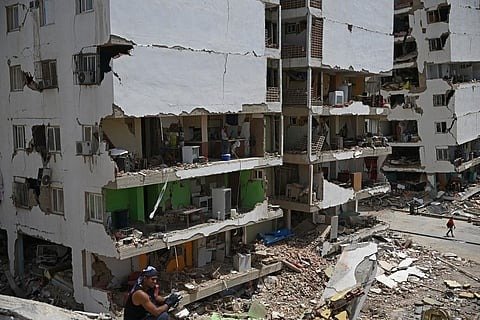
(Credit - Gulf News)
UAE Allocates $10 Million for Venezuela Earthquake Relief
The UAE has allocated $10 million in humanitarian assistance to support earthquake relief and recovery efforts in Venezuela. This funding was announced in June 2026 under directives from President Sheikh Mohamed bin Zayed Al Nahyan. The $10 million allocation is earmarked for earthquake relief and recovery support for affected communities in Venezuela, including assistance to victims and broader recovery efforts.
The announcement highlights the UAE‘s ongoing role as a major international humanitarian donor, with aid decisions issued via presidential directives and often followed by coordinated relief operations and fundraising or in-kind support initiatives. UAE disaster assistance is commonly deployed through official humanitarian channels and partner relief organizations, with funding directed toward urgent needs such as shelter, medical support, logistics, and early recovery.
For Venezuela, the focus will be on rapid and effective delivery of aid to those most in need. The UAE’s $10 million allocation is a significant contribution to the relief efforts, and its impact will be felt in the coming weeks and months as the recovery process unfolds. The UAE’s commitment to humanitarian aid reflects its role as a responsible and compassionate global citizen.
The UAE’s $10 million allocation for Venezuela earthquake relief is part of its broader commitment to humanitarian aid and disaster relief. The country has a long history of providing support to those in need, and its aid efforts are often coordinated with international partners and organizations. The $10 million allocation is a significant contribution to the relief efforts in Venezuela, and it will help to support the recovery efforts and provide assistance to those affected by the earthquakes.
In terms of the bigger picture, the UAE’s allocation of $10 million for Venezuela earthquake relief is a significant contribution to the global effort to support those affected by disasters and humanitarian crises. The UAE’s commitment to humanitarian aid reflects its role as a responsible and compassionate global citizen, and its aid efforts are often coordinated with international partners and organizations. The $10 million allocation is a significant step towards supporting the recovery efforts in Venezuela, and it will help to make a positive impact on the lives of those affected by the earthquakes.


UAE Visa-Free Entry: 70+ Nationalities Eligible
UAE Visa-Free Entry: What You Need to Know
As a traveler planning to visit the UAE, it's essential to understand the visa requirements for your nationality. The UAE allows visa-free entry or visa-on-arrival for over 70 nationalities, with common stay durations of 90 days and 30 days.
Citizens of certain countries can enter the UAE without a pre-arranged visa, while others can obtain a visa on arrival. The length of stay and visa requirements vary depending on the nationality and passport type. For instance, some nationalities are eligible for a 90-day visa-free stay, while others are limited to 30 days.
Travelers from eligible countries can enter the UAE without a pre-arranged visa, but they must meet specific requirements, such as carrying a valid passport, return or onward ticket, and accommodation details. Airlines and border officials may enforce these requirements, so it's crucial to verify the eligibility and stay duration before booking a trip.
To confirm the most current eligibility and stay duration, travelers should check with the UAE's federal immigration authority, the ICP, or the relevant emirate's entry channels. The ICP website provides up-to-date information on visa-free and visa-on-arrival nationalities, as well as the required documents and stay durations.
Here are the next steps for travelers:
- Check the ICP website for the latest visa-free and visa-on-arrival nationalities.
- Verify the required documents, such as a valid passport, return or onward ticket, and accommodation details.
- Confirm the stay duration and eligibility before booking a trip.

UAE July 2026 Changes: Etihad Rail Launches Passenger Services
Etihad Rail Passenger Services Start June 30: What You Need to Know
As the UAE gears up for a new wave of transport and compliance updates, residents and businesses are bracing for changes that will impact their daily lives. The most significant development is the launch of Etihad Rail's passenger services, which will initially connect Abu Dhabi and Fujairah, with additional stations in Dubai and Al Dhaid scheduled to open on September 30, 2026.
For commuters, the new rail service promises to revolutionize inter-emirate travel, offering a faster and more convenient alternative to driving. The first passenger is expected to be nominated by UAE residents, making the launch a significant public-engagement moment.
| Category | Details |
|---|---|
| Initial Route | Abu Dhabi to Fujairah |
| Launch Date | June 30, 2026 |
Businesses, on the other hand, will need to prepare for the rollout of e-invoicing, which will require them to adapt their invoicing systems and workflows to meet mandated digital requirements. This change is expected to have a significant impact on businesses, particularly those that are not already using digital invoicing systems.
Residents who drive in Dubai will also need to be aware of changes to parking rules, including extended parking hours. While the exact details of these changes have not been announced, it is expected that they will have a significant impact on city driving and parking routines.
To stay ahead of these changes, residents and businesses should keep an eye on official announcements from the relevant authorities, including the RTA and the FTA. They should also take steps to prepare for the launch of Etihad Rail's passenger services, including planning their travel routes and schedules in advance.
Here are the next steps to take:
- Check the official Etihad Rail website for updates on ticketing and timetables.
- Register for e-invoicing with the FTA to ensure compliance with the new regulations.
- Visit the RTA website for information on parking rules and updates.

Cape Verde vs Saudi Arabia 0-0 Sets Up Argentina Tie
Cape Verde Advances to World Cup Round of 32 After Goalless Draw with Saudi Arabia
Cape Verde progressed to the World Cup round of 32 after drawing 0-0 with Saudi Arabia, a result that eliminated the Saudis. The draw sets up a July 4, 2026 knockout showdown between Cape Verde and Argentina in the next phase.
The 0-0 draw was enough for Cape Verde to move into the World Cup round of 32, highlighting how knockout qualification can hinge on a single point and defensive game management rather than goals.
The result ends Saudi Arabia's tournament, underscoring the fine margins in final group-stage fixtures where one match can simultaneously decide advancement and elimination. The upcoming Cape Verde, Argentina tie on July 4, 2026 frames a classic knockout dynamic: a debutant/underdog nation facing a heavyweight, where tactical discipline, set pieces, and game-state management often become decisive.
This development comes as the World Cup round of 32 is set to begin, with Cape Verde's match against Argentina being one of the highly anticipated fixtures.
The draw provided Cape Verde with the point(s) needed to qualify for the round of 32, while Saudi Arabia failed to secure the result required to stay in the tournament.

Senegal vs Iraq 5-0 World Cup Thrashing
Senegal Stuns Iraq with 5-0 Win, Boosts Knockout Hopes
Senegal thrashed Iraq 5-0 on June 27, 2026, with Pape Gueye scoring twice to boost Senegal's hopes of reaching the World Cup knockout stage. The result marked the first time an African team scored five goals in a World Cup match.
Senegal’s 5-0 win over Iraq came in their final Group I match, keeping their chances of progressing alive via the tournament’s best third-placed teams route.
This decisive victory has significant implications for the group stage standings, as the large margin of victory improves Senegal's goal difference, potentially becoming a crucial factor in determining which teams advance to the knockout stage.
Pape Gueye scored twice for Senegal, while Seck, Sarr and Ndiaye also found the net in the 5-0 victory over Iraq.
According to the FIFA match report, this was a historic win for Senegal, marking a new milestone for African teams in the World Cup.
France finished top of Group I after defeating Norway, shaping the group’s final standings after Senegal’s win over Iraq. Senegal’s 5-0 victory over Iraq kept their qualification hopes alive rather than confirming advancement, with their fate dependent on comparisons with other groups’ third-placed teams.

Lebanon Israel framework agreement signed
US-Brokered Lebanon-Israel Deal Aims for Sovereignty and Security
Lebanon and Israel signed a US-brokered framework agreement on June 26, 2026, alongside the United States, aimed at restoring Lebanese sovereignty and reducing Hezbollah activity. The framework includes a phased Israeli withdrawal and security coordination intended to lower cross-border tensions and support longer-term regional stability.
The U.S.-mediated framework agreement does not include Hezbollah as a party to the deal, despite the accord’s stated aim of supporting Lebanese sovereignty and reducing border tensions..
The US-brokered framework agreement between Lebanon and Israel marks a significant step towards de-escalation in the region. By pairing security coordination with a staged withdrawal mechanism, the deal aims to reduce the risk of renewed border clashes.
The deal explicitly links sovereignty and security outcomes to curbing armed non-state activity, a central fault line in Lebanon’s internal politics and Israel’s border-security doctrine.
The framework agreement is designed as a structured pathway to de-escalation rather than an immediate final-status peace treaty. The key elements of the agreement include a phased Israeli withdrawal, intended to create measurable milestones, and security coordination, meant to manage incidents, verification, and communication channels that can prevent escalation.
The United States' role in brokering the deal highlights its continued involvement in Middle East diplomacy, particularly in regards to the complex relationships between Lebanon, Israel, and other regional actors.