- The UAE Ministry of Finance has introduced comprehensive electronic invoicing guidelines.
- These guidelines aim to streamline business processes and enhance compliance.
- Businesses are encouraged to prepare for a phased implementation of the system.
Imagine trying to keep track of all your household expenses using only paper receipts. Now, scale that up to the level of a bustling business, and you can see why the UAE Ministry of Finance has stepped in with its new electronic invoicing guidelines. These guidelines, published on February 24, 2026, are designed to help businesses transition smoothly to a digital invoicing system, promising not only increased efficiency but also greater transparency.
The Ministry of Finance has laid out a clear framework that outlines the objectives and scope of the electronic invoicing system. This initiative is part of a broader effort to modernize the country’s tax administration and align with international best practices in digital taxation. The guidelines provide businesses with a detailed roadmap, explaining not only the technical requirements but also the policy rationale behind them. This approach ensures that businesses understand the ‘why’ as well as the ‘how’ of compliance.
One of the key aspects of the guidelines is the phased implementation approach. This allows businesses to adapt gradually, ensuring that they have ample time to align their processes and systems with the new requirements. The guidelines also include practical advice on system readiness and governance, helping businesses to prepare effectively for the transition. Moreover, the guide clarifies which transactions fall under the new system and which are exempt, providing much-needed clarity for businesses navigating this change.
For those wondering, “What is the UAE electronic invoicing system?” it is essentially a unified digital platform that standardizes invoicing processes across the nation. This system not only enhances operational efficiency but also ensures consistent treatment of transactions, thanks to clearly defined tax codes and categories of e-invoices. The guidelines even offer illustrative templates to help businesses understand the formatting and data requirements.
In summary, the UAE’s electronic invoicing guidelines are a significant step towards digital transformation, aiming to streamline commercial processes and enhance compliance. Businesses are encouraged to review these guidelines and start preparing for the changes ahead.
UAE fuel Prices Next Month: The global signals that usually shape the petrol and diesel price
As April moves into its second half, attention in the UAE turns to a regular monthly event: the UAE Fuel Price Committee’s update of petrol and diesel prices for the next month. For families, this affects weekly budgets and school trips. For businesses, it changes transport costs, delivery prices, and daily inflation calculations. Fuel prices at stations across the Emirates are linked to global oil markets, especially Brent crude and refined fuel prices, with local distribution and operating costs added.
The April 2026 increase was driven by stronger global oil markets and elevated regional risks, as shipping and insurance costs rose due to tensions impacting Sea routes and broader security concerns in the Middle East.
The UAE Fuel Price Committee raised fuel prices for April 2026. Diesel saw the biggest increase compared to other fuels. The committee said the price rise is due to changes in the global oil market and aims to keep local prices in line with world trends.
Throughout April, market signals influencing UAE fuel prices next month are closely monitored, with the last one to two weeks holding particular significance as price averages and market sentiment stabilize. This is why global energy market data releases, OPEC+ announcements, and shipping risks near the Red Sea and Strait of Hormuz can suddenly have a direct impact on residents in Abu Dhabi, Dubai, Sharjah, and beyond.
What You Need to Know Before the Upcoming UAE fuel Prices Next Month Reset
- UAE fuel prices monthly updates tend to follow global crude and refined product pricing, with local distribution costs and policy settings affecting the final pump price.
- Brent crude price trends are important, but petrol and diesel prices can diverge when refined product crack spreads change, particularly shifts in the gasoline crack spread and diesel crack spread.
- OPEC+ production cuts, compliance levels, and any reintroduction of barrels can swiftly alter supply expectations, impacting oil prices and regional wholesale fuel costs.
- Geopolitical tensions along Red Sea routes and the Strait of Hormuz can increase shipping costs by adding risk premiums to freight rates, insurance, and market sentiment.
How the UAE Petrol and Diesel Price Update Works Explained
The UAE petrol and diesel prices are usually updated monthly for the upcoming month. The committee’s decisions primarily consider global crude oil and refined product benchmarks, followed by local factors like distribution and station operating costs. Additionally, policy settings play a key role in determining how global price changes are reflected at the pump.
UAE Fuel Price Committee: "UAE fuel prices are usually updated monthly and generally reflect changes in global oil and refined product markets."
This explains why Emirates fuel prices can fluctuate even when local driving habits remain unchanged. Fuel costs are influenced by global factors, and the UAE is integrated within the worldwide pricing system for oil and refined fuels.
Refined Fuel Markets: Understanding the Difference Between Petrol and Diesel
Drivers often assume petrol and diesel prices move together, but that is not always the case. The difference lies in refined product cracks, a term used to describe refining margins and the specific supply-demand dynamics for each fuel. Gasoline and diesel crack spreads can widen or narrow depending on refinery production levels, outages, and shifting demand patterns. This can cause petrol prices to rise while diesel prices fall, or vice versa, even when Brent crude remains stable.
OPEC+ Supply Policy: Key Meeting Highlights Shaping Market Expectations
OPEC+ decisions quickly affect how people expect future supply to look with just one announcement. Traders watch production goals, how well members follow them, and if any previously held-back oil will return. Talk of production cuts can make people expect less supply, while talk of more output can make them expect more. These expectations can change prices even before oil is sold, which then affects the monthly update of UAE fuel prices.
Geopolitics and Shipping: Navigating Risks in the Red Sea and Strait of Hormuz Routes
Energy markets factor in risk when shipping routes become less predictable. Disruptions or rerouting around the Red Sea and Suez Canal can increase freight and insurance costs while extending delivery times. Additionally, the Strait of Hormuz is closely monitored due to the significant volume of energy passing through this critical chokepoint. Even without physical supply interruptions, risk premiums can raise benchmark prices and impact final delivery costs.
Refinery Shutdowns and Repairs: The Primary Reason for Pump Replacements
Refinery outages can restrict the supply of gasoline and diesel, even when crude oil is abundant. Seasonal maintenance often amplifies this effect when several facilities reduce output simultaneously. When capacity limits are reached, prices for refined products can surge, reflecting in the next UAE petrol or diesel price update, even if Brent crude prices remain unchanged.
Global Demand Seasonality: Trends in Driving, Industry, and Travel Cycles
Demand fluctuates throughout the year. Seasonal driving increases gasoline consumption during peak travel periods. Diesel and gasoil demand varies with industrial activity, freight movement, and heating requirements in colder regions. Aviation and travel cycles also influence refinery economics and product balances. These variations are important because they affect the availability of specific products, impacting crack spreads and wholesale price benchmarks.
Inventories, Economic Data, and the US Dollar: Key Numbers That Can Influence Market Sentiment
Weekly inventory reports can rapidly influence prices, particularly when they contain unexpected data. The US Energy Information Administration (EIA) weekly inventory figures are closely monitored to assess near-term supply and demand dynamics. Additionally, the International Energy Agency (IEA) oil market report provides valuable insights into broader supply and demand forecasts.
Macro conditions are equally important. Markets respond to growth forecasts, inflation data, and interest rate signals, especially those from the Federal Reserve. Since oil is priced in US dollars (USD) and the UAE dirham is pegged to the USD, the strength of the US dollar impacts global pricing dynamics and risk appetite in energy markets. While the peg minimizes daily currency fluctuations for residents, it does not shield the UAE from global pricing trends driven by the US dollar.
Quick Reference: The Signals and Their Typical Market Movements
| Signal | What it is | Why UAE motorists and businesses watch it |
|---|---|---|
| Brent crude price | Global crude benchmark | Sets the tone for wholesale fuel costs that feed into Emirates fuel prices |
| Refined product cracks | Refining margins and product tightness | Explains why Petrol and Diesel can move differently in the same month |
| Gasoline crack spread | Gasoline margin versus crude | Often tracks the pressure behind the UAE petrol price update |
| Diesel crack spread | Diesel or gasoil margin versus crude | Often tracks the pressure behind the UAE diesel price update |
| OPEC+ supply policy | Targets, compliance, cuts or returns | Moves supply expectations that can reprice Oil quickly |
| Shipping costs Red Sea and Suez Canal | Freight, insurance, rerouting | Can lift delivered costs and add risk premia in Energy Markets |
| Strait of Hormuz risk | Chokepoint risk premium | Can move sentiment and pricing even without an actual disruption |
| IEA oil market report | Monthly market balance and forecasts | Shapes expectations for global oil demand and supply |
| EIA weekly inventories | High frequency stock data | Can trigger short term price swings that influence monthly averages |
| US dollar strength and AED-USD peg | Dollar pricing and UAE currency link | Influences global pricing behaviour and imported Inflation dynamics |
| Refinery outages | Unplanned shutdowns and constraints | Can tighten gasoline or gasoil prices even if Brent is stable |
| Seasonal driving demand | Shifts in consumption patterns | Can lift gasoline benchmarks and widen crack spreads |
Budget and Pricing Effects in the Emirates
For consumers, the best way to interpret the next update is to separate crude oil from refined products. If Brent crude prices are shifting but crack spreads remain stable, petrol and diesel prices are likely to move together. However, if refined product benchmarks tighten, petrol and diesel prices may diverge even when crude prices are steady. For businesses that price deliveries, transportation, or services, the monthly reset is crucial because it can rapidly alter transport costs, which in turn can contribute to broader inflationary pressures.
In the final days of April, the key indicators to watch are the direction of Brent crude, the performance of gasoline and gasoil benchmarks, and any changes in risk related to shipping routes. These factors, along with OPEC+ announcements and unexpected inventory changes, typically account for the majority of fluctuations in UAE fuel prices for the following month.

Proud of UAE campaign appears on phone networks across UAE
Why your phone says 'Proud of UAE'
Residents all across the entire UAE witnessed their mobile network label change to display the phrase 'Proud of UAE' this April, as an integral part of a comprehensive nationwide campaign designed to boost and celebrate national pride throughout the country.
The 'Proud of UAE' campaign, launched by His Highness Sheikh Mohammed bin Rashid Al Maktoum, aims to inspire unity and active participation, encouraging everyone to proudly display the UAE flag.
Across the UAE, residents and organisations visibly participated in the ‘Proud of UAE’ initiative by displaying the national flag and sharing pride-themed messages in homes, streets and public spaces.
In April 2026, mobile users across the UAE noticed their network labels displaying ‘Proud of UAE,’ showcasing a unified national pride message through telecom identifiers. In the UAE, telecom network names can be temporarily customized to broadcast nationwide public-awareness campaigns. During this period, several handsets featured ‘Proud of UAE’ as their carrier name, reflecting a coordinated effort to promote national pride.
Across the emirates, the campaign also creates a shared national moment that can lift engagement around community activity tied to national identity and the UAE flag.
- What changed: The network name on many phones now displays 'Proud of UAE'.
- What it means: A nationwide unity and national-pride campaign encouraging participation, including displaying the UAE flag.
The 2026 ‘Proud of UAE’ campaign encouraged citizens and residents to express their pride in the nation through iconic symbols, especially the UAE flag, paired with messages celebrating unity and a deep sense of belonging. Launched by His Highness Sheikh Mohammed bin Rashid Al Maktoum, the initiative inspired people across the country to proudly display UAE flags and share heartfelt messages of national pride in a unified celebration of togetherness.

Aani instant payments UAE tops 12.5 million users, merchants hit 774,000
Aani crosses 12.5 million users in UAE
Aani, the UAE's national instant payments platform, has exceeded 12.5 million users, according to Al Etihad Payments, a subsidiary of the Central Bank of the UAE (CBUAE). This milestone highlights the growing adoption of real-time bank transfers as a mainstream method for payments and receipts across the country.
Al Etihad Payments reported that recent operational data reveals a rapid increase in usage, with transfers rising sixfold and merchant adoption expanding to 774,000 across the UAE. This update highlights Aani as a rapidly growing component of the nation's essential payments infrastructure, alongside cards and digital wallets.
Aani facilitates near real-time money transfers that occur directly between bank accounts, significantly reducing the delays and friction often associated with traditional bank transfer methods. Functioning as national payment rails under the oversight of a Central Bank-linked entity, this innovative platform is purposefully designed to scale effortlessly across a wide range of banks and merchants, all operating on a unified and standardized network infrastructure.
For the UAE economy, a broader adoption of Aani instant payments accelerates the transition to a more digital, cash-light market, particularly in high-frequency sectors like groceries, food and beverage, delivery, and everyday services. For SMEs, faster settlements enhance cash flow visibility and minimize manual reconciliation efforts by ensuring payments arrive promptly and reliably.
For consumers, the key change is significant: as more locations now accept account-to-account payments, allowing transfers to be completed in seconds instead of waiting for processing times. As more merchants adopt this system, instant payments become increasingly valuable beyond person-to-person transfers, gradually replacing cash for everyday purchases.
- Platform: Aani, the UAE's national instant payments platform
- Announced by: Al Etihad Payments (subsidiary of the Central Bank of the UAE)
- Latest user milestone: 12.5 million users
- Network scale: Transfers up sixfold; 774,000 merchants on the network
Aani now serves 774,000 merchants across the UAE, expanding instant payments beyond person-to-person transfers into everyday retail and services.
Check with your bank's app or digital banking channels to see how Aani instant payments are enabled and where you can use them for transfers and merchant payments.
Gratuity UAE: The 2026 step by step guide to calculating end of service pay
If you work in the UAE, your end of service gratuity can be one of the largest payments you receive from an employer. As of 2026, the regulations governing gratuity UAE calculations remain under Federal Decree-Law No. 33 of 2021, where every detail is crucial. A minor misunderstanding regarding your basic salary, length of service, or eligibility can significantly affect the final amount, potentially by thousands of dirhams.
UAE end-of-service gratuity is a compulsory legal benefit for private-sector employees who meet the eligibility criteria. It is calculated based on the employee’s last basic salary and total years of service, excluding allowances and most other benefits from the gratuity calculation.
This guide is designed for employees and HR teams navigating UAE employment exits, including resignations, terminations, contract non-renewals, and role changes. It clarifies eligibility criteria, defines the salary base, provides precise formulas for various service durations, and outlines the legal maximum limits. Additionally, it directs you to the Ministry of Human Resources and Emiratisation (MOHRE) for official information. Whether you are evaluating job offers, planning a transition, or concluding a significant phase in your career, this resource covers Employee Rights and clear End of Service Benefits under the 2026 Regulations.
At a Glance: Understanding the 2026 Gratuity UAE Calculation
- Gratuity is calculated based on your last basic salary, excluding allowances, using a daily wage derived solely from that basic salary.
- Formula for up to five years: Daily Wage × 21 × Years of Service.
- Formula for service beyond five years: Daily Wage × 21 × 5 + Daily Wage × 30 × (Years of Service − 5)
- Maximum cap: total gratuity shall not exceed the equivalent of two years' basic salary. To check now Click HERE

UAE Labour Law: Who qualifies for gratuity in 2026
Gratuity is a mandatory end-of-service benefit for employees governed by UAE Labour Law, specifically Federal Decree-Law No. 33 of 2021. Eligibility depends on whether you are recognized as an employee under the law and if your employment concludes in a manner that qualifies for termination benefits under UAE regulations.
Most private sector employees who have completed at least one year of continuous service are entitled to gratuity upon the end of their employment. If you’re unsure whether your position qualifies, begin by reviewing your employment contract and the classification of your employer under UAE law. Then, verify your eligibility through the official MOHRE website and its guidance resources.
Basic Salary vs. Gross Salary: The Key Figure That Determines Your Gratuity
The most common error in end of service gratuity calculations is using the gross salary. According to UAE labour law, the gratuity is calculated based on your last basic salary only. Allowances such as housing, transport, phone, or other benefits are excluded from the gratuity calculation.
To keep your paperwork organized, gather your latest labor contract along with your most recent payslip. Your contract typically lists the basic salary separately from any allowances. If there are discrepancies between the documents, address them before proceeding with calculations. Many disputes arise at this stage, especially when employees have experienced promotions, salary adjustments, or compensation packages with significant allowances.
Daily Wage: How to Calculate Gratuity Rate from Basic Salary
Once you have your final basic salary, convert it into a daily wage. Many UAE gratuity calculators use a standard method of dividing the monthly basic salary by 30 to determine the daily wage for gratuity calculations. If you have all your details ready, you can easily use our UAE Gratuity Calculator here.
Gratuity Calculation UAE 2026: Precise Formulas for Employment Up to Five Years
If your total continuous service is five years or less, the formula is straightforward:
- Gratuity = Daily Wage × 21 × Number of Years Served
Most people can calculate this part on a phone calculator in under a minute, provided the service length is clear. For partial years, employers typically calculate proportionally based on the fraction of the year worked, applying the same daily wage logic.
End of Service Gratuity After Five Years: When the Higher Rate Applies
After you surpass five years, the calculation divides into two parts. The first five years remain at 21 days per year, while any time beyond that accrues at 30 days per year.
- Gratuity = (Daily Wage × 21 × 5) + (Daily Wage × 30 × (Years of Service - 5))
This is where long-serving employees experience the most significant increase. Errors often occur when someone incorrectly applies 30 days to the entire period or neglects to separate the first five years.
The Crucial Cap: Understanding the Maximum Gratuity Limit
Regardless of the length of your service, UAE Labour Law sets a maximum limit on the gratuity payout. The total gratuity cannot exceed the equivalent of two years' basic salary. This limit applies strictly to the basic salary, not the gross salary.
If your calculated gratuity exceeds the cap, the payable amount will be limited to the maximum cap.
Comprehensive Gratuity Formulas at a Glance
| Service length | Rate applied | Formula | What to watch |
|---|---|---|---|
| 1 to 5 years | 21 days per year | Daily Wage × 21 × Years | Use last basic salary only |
| More than 5 years | 21 days for first 5 years, then 30 days | Daily Wage × 21 × 5 + Daily Wage × 30 × (Years minus 5) | Split the period correctly |
| Any length | Legal maximum | Cap at two years of basic salary | Cap can reduce long service totals |
How to use a UAE gratuity calculator without getting misled
A UAE gratuity calculator can be useful for speed, but only if you feed it the right inputs. Before you trust the output, confirm three things:
- Your last basic salary is entered, not your total package.
- Your service length is accurate to the day, especially if you are close to the five year threshold.
- The calculator applies the two year basic salary cap.
Role of MOHRE in Resolving Disputes
When an employee and employer disagree on End of Service Benefits, the Ministry of Human Resources and Emiratisation (MOHRE) serves as the official authority overseeing labor matters in the private sector. MOHRE provides resources and guidance to help clarify how UAE labor law applies to your case, particularly when there are disputes regarding contract terms, salary details, or service dates.
If you plan to raise an issue, collect your UAE employment contract, payslips reflecting your basic salary, and any written notices or termination documents. Having clear records can help resolve the matter more quickly than disputes.
A thorough final review before signing your settlement agreement
Before signing any end-of-service settlement, carefully verify the calculation according to your length of service. Ensure the daily wage is based on your last basic salary, and compare the total against the two-year cap. If the figures don’t match, request a detailed written breakdown. This is a standard and prudent step to protect your employee rights.
Gratuity is not a bonus; it is a statutory entitlement under UAE Labour Law. As of 2026, its calculation remains formula-based. By knowing the daily wage and your service duration, you can easily and accurately verify the amount. Click to use a gratuity calculator
Helpful Resources to Keep Handy: Federal Decree-Law No. 33 of 2021, MOHRE Official Website, Guide to UAE Employment Contracts, Understanding Basic Salary vs. Gross Salary.
Dubai Police fraud warning: Report fake 'official' calls on 901
Dubai Police warn against fake 'official' calls
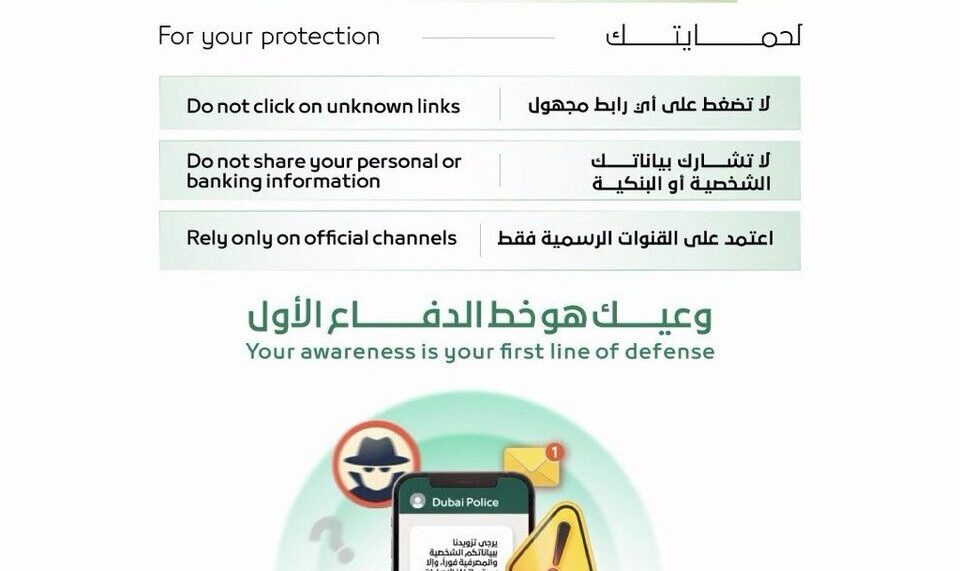
Dubai Police have issued a warning about fraudulent phone calls and fake messages impersonating official entities. This alert aims to raise awareness among residents and businesses in Dubai, as these scams seek to steal personal information, potentially resulting in financial loss and identity theft.
Dubai Police have warned that scammers are reaching out to individuals via phone calls and messages, falsely claiming to represent official organizations. The authorities urge the public to remain vigilant and report any suspicious behavior by calling the e-crime hotline at 901 or using the "Police Eye" feature on the Dubai Police smart app or official website.
Impersonation scams in the UAE frequently use tactics of pressure and urgency, sending messages like "your account will be blocked" or "a fine must be paid immediately" to coerce victims into revealing sensitive information. Dubai Police emphasize an important safety rule: never share one-time passwords (OTPs), PINs, verification codes, or personal identification details with unknown callers or messages, even if the sender’s name or caller ID appears familiar.
For Dubai residents, the risk is elevated as daily life relies extensively on digital services such as online banking, delivery apps, and government e-services. Dubai Police warned that scammers are increasingly using spoofed caller IDs and official-sounding messages to seem authentic, emphasizing that government agencies never ask for OTPs, PINs, or passwords via phone calls or SMS.
If you receive a message claiming to be from an official source, do not click on any unexpected links. Instead, verify the request by visiting official websites or using trusted apps. If you suspect your banking information has been compromised, contact your bank immediately to protect your accounts. Be sure to save screenshots, call logs, and message content to assist with any investigation.
- Authority: Dubai Police
- Warning: Fraudulent calls and fake messages impersonating official entities
- Report by phone: 901
- Report through the official channel: "Police Eye" service on the Dubai Police smart app or official website
Dubai Police strongly urged all residents to promptly report any suspected fraud attempts directly to the police force through its official and authorized reporting channels. They emphasized that quick and timely reporting plays a crucial role in minimizing potential financial losses for victims and significantly supports ongoing investigations by providing vital information early on.