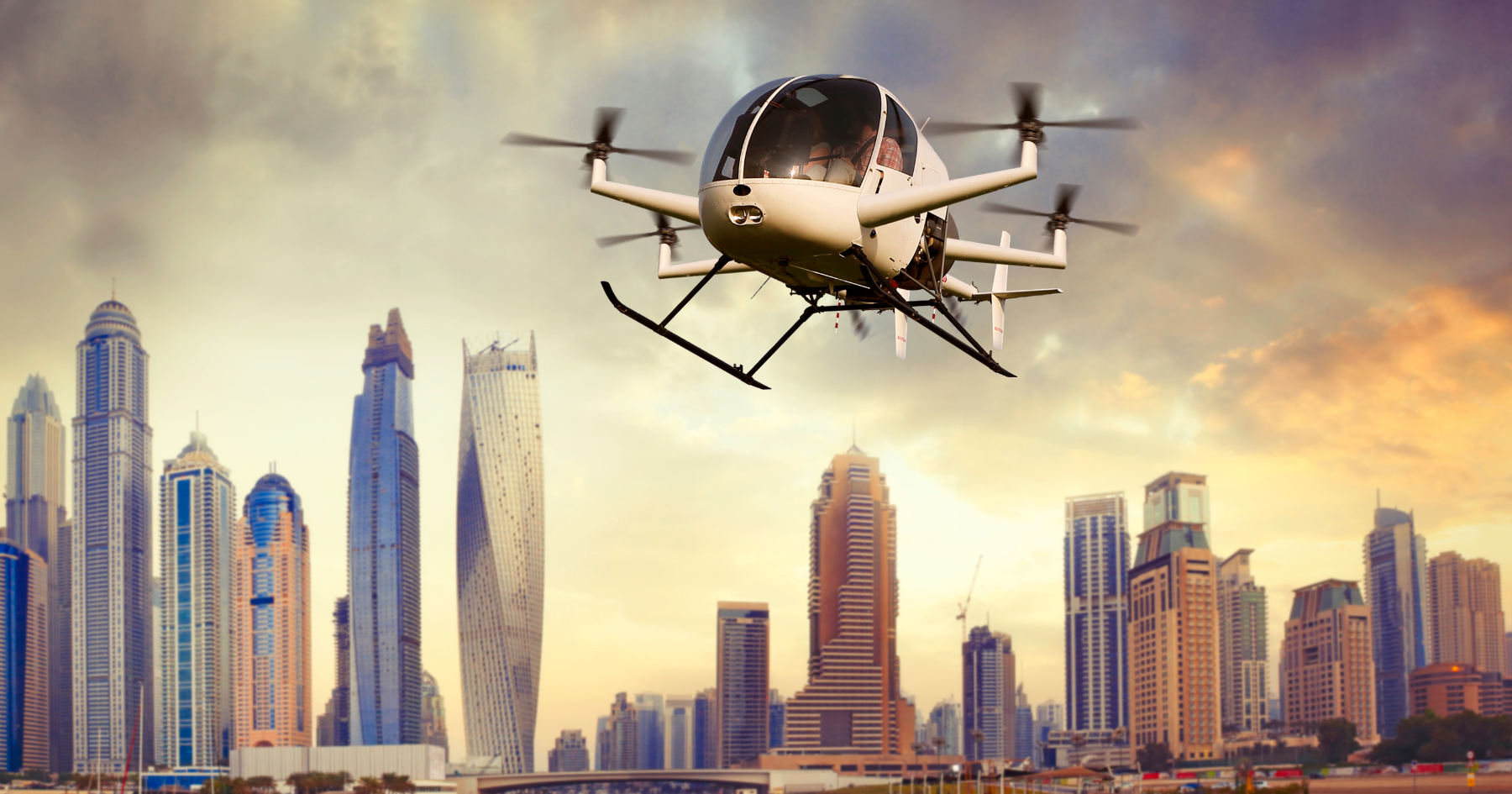
It’s not unusual in Dubai to see driverless shuttles on trial or to hear about flying taxis preparing for launch. The city that gave the world the tallest tower now wants to redefine mobility. By weaving *autonomous vehicles, **AI-driven public transport, and *flying taxis into its urban fabric, Dubai is positioning itself as a pioneer in future mobility.
How Dubai is Building Autonomous Mobility
The Roads and Transport Authority (RTA) has set an ambitious target: 25% of all journeys in Dubai will be autonomous by 2030. Trials of self-driving shuttles in business districts and residential areas have already taken place. AI-powered traffic management is in place to optimize routes and reduce congestion. Partnerships with international technology firms are bringing advanced autonomous systems into Dubai’s transport network (rta.ae).
The Flying Taxi Project
Dubai has attracted global attention for its flying taxi ambitions. In partnership with firms like Joby Aviation and *Volocopter, the city is preparing to roll out *electric vertical take-off and landing (eVTOL) vehicles. Test flights have already taken place, with plans for commercial launch once regulatory approvals and vertiport infrastructure are in place. These taxis promise to cut travel times dramatically, linking key areas like Downtown, Palm Jumeirah, and Dubai Marina in minutes.
Evidence on the Ground
• Autonomous Shuttles: Pilot projects in Downtown Dubai and Expo City demonstrated safe, reliable short-route transport.
• Flying Taxi Trials: Successful demonstration flights in 2017 and renewed trials in 2023 reinforced Dubai’s credibility as an early adopter.
• AI Traffic Systems: Smart cameras and predictive modeling are already helping the RTA reduce congestion and accidents.
• Infrastructure: Plans are underway for vertiports near Dubai International Airport and strategic business hubs to support eVTOL services.
Broader Context and Impact
Autonomous mobility aligns with the UAE’s Net Zero 2050 and Vision 2031 strategies. Electric autonomous vehicles and flying taxis reduce emissions, ease congestion, and create new business opportunities. They also strengthen Dubai’s global brand as a hub for innovation, tourism, and investment.
Globally, cities from Singapore to Los Angeles are experimenting with autonomous transport, but Dubai’s regulatory agility and infrastructure readiness give it an edge. Where others pilot, Dubai scales.
Challenges and Adaptation
The road to autonomous mobility is not without obstacles. Cybersecurity threats, public trust, insurance frameworks, and air traffic regulations must evolve. Yet Dubai’s model of rapid piloting, strong regulation, and private-sector partnerships is helping it address these issues faster than many global peers.
Where Momentum is Heading
• Commercial launch of eVTOL flying taxis with integrated vertiports.
• Expansion of self-driving buses and ride-hailing fleets.
• Greater AI integration in traffic and logistics management.
• Public-private partnerships accelerating adoption of green mobility solutions.

Parkin signs multi-year Binghatti deal for 1,200 Dubai parking spaces
Parkin to run 1,200 parking spaces at Binghatti sites
Parkin has signed a multi-year parking management deal with Binghatti Holding Ltd to operate around 1,200 parking spaces across selected Binghatti developments in Dubai. A move that aims to make parking accessible and payments more consistent, reducing delays around busy building entrances.
Under the agreement, Parkin will operate a defined portfolio of approximately 1,200 spaces at Binghatti properties in Dubai, according to a statement shared online by Dubai Media Office. The announcement also referenced senior executives, including Mohamed Abdulla Al Ali, CEO of Parkin, and Katralnada Binghatti, CEO at Binghatti Holding as having signed the contract for the proposed partnership which includes the deployment of advanced digital parking technologies across the managed Binghatti sites as the programme is rolled out.
A central element of the plan is to incorporate managed parking spaces into the Parkin app, uniting privately operated parking with the digital platform that many drivers already use to find and pay for parking. Practically, this app integration enables clearer parking regulations, more efficient customer support, and standardized operations across multiple locations, replacing isolated, building-specific systems.
In Dubai, where high-density towers and mixed-use developments often strain access roads and drop-off zones, well-managed private parking can significantly ease traffic flow and reduce congestion during peak hours. For Binghatti communities, streamlined parking operations enhance the experience for both tenants and visitors, while Parkin continues to grow its managed parking presence across the city.
Drivers can expect a smoother experience when arriving at participating Binghatti locations, particularly those who previously encountered varying rules across different buildings. With parking spaces now visible in the Parkin app, users can manage everything through one convenient platform instead of juggling multiple building systems.
- Agreement: Multi-year deal between Parkin and Binghatti Holding Ltd
- Scope: Parkin to operate approximately 1,200 parking spaces
- Location: Selected Binghatti developments in Dubai
- Next step: Parking spaces expected to be integrated into the Parkin app
The rollout of Parkin’s parking management operations at selected Binghatti locations is scheduled to begin in Q2 2026, with advanced digital parking technologies introduced as sites come online.

DMCC growth 2025: Free zone adds 2,300+ firms, tops 26,000 members
DMCC adds 2,300+ firms in 2025, tops 26,000 members as tech leads
Dubai Multi Commodities Centre (DMCC) reported strong growth in 2025, adding more than 2,300 companies and taking its total membership to over 26,000. DMCC said the tech cluster has surpassed 4,000 companies, making it the biggest segment by number of firms within the free zone.
Dubai Multi Commodities Centre (DMCC), one of Dubai's premier free zones and business districts centered around Jumeirah Lakes Towers (JLT), announced that technology has become its largest business sector. This growth is fueled by emerging clusters in cryptocurrency, artificial intelligence (AI), and gaming. DMCC highlights these developments as part of its broader mission to serve as a global hub connecting trade, technology, and finance from Dubai.
The growth comes from DMCC's cluster model, where companies in the same field join a shared system that includes licensing, community programs, and access to service providers. For example, crypto and digital-asset companies need strong compliance like customer checks and risk controls. AI and gaming companies usually need more engineers and cloud infrastructure.
For the UAE economy, significant annual growth in a major Dubai free zone typically drives increased activity in professional services, including legal, audit, and compliance sectors. It also boosts demand for banking and fintech solutions supporting trade flows. Additionally, this growth accelerates Dubai's efforts to attract foreign direct investment and diversify into the digital economy, complementing its well-established trade and commodities foundation.
For entrepreneurs and international companies, DMCC's growth is closely tied to the functioning of free zones in Dubai. Businesses establish themselves within a regulated free-zone framework, secure licenses through the authority, and leverage Dubai as a hub for regional operations and trade-related services. DMCC’s ecosystem model organizes firms by sector, enabling businesses to easily connect with suppliers, access talent, and obtain specialized support including banking, legal, accounting, and logistics services.

For business owners exploring company formation in Dubai, the key figures highlight both strong competition and exciting opportunities: an increasing number of firms are selecting DMCC, while the ecosystem is expanding in sectors like crypto, AI, and gaming. The crucial next step is to identify the appropriate license category for your business activities and understand the compliance requirements before finalizing your setup timeline.
- Free zone: DMCC (Dubai Multi Commodities Centre), based in the Jumeirah Lakes Towers (JLT) area of Dubai, UAE
- 2025 intake: More than 2,300 new companies joined, according to DMCC
- Total membership: Over 26,000 member companies, according to DMCC
- Largest ecosystem: Technology, with more than 4,000 tech companies, according to DMCC
- Key growth drivers: New clusters in crypto, AI and gaming
A growing DMCC membership base drives increased hiring, boosts demand for office space in JLT, and strengthens business for service providers supporting new company formations. The expansion of technology as DMCC's leading ecosystem aligns seamlessly with the UAE’s broader focus on knowledge-based industries such as software, fintech, cybersecurity, e-commerce, and digital trade services.

Nafis salary support up to AED 3,000 outlined as UAE extends programme to 2040
Nafis outlines salary support up to AED 3,000
The UAE has extended the Nafis salary support program until 2040, providing eligible Emiratis working in the private sector with financial assistance of up to AED 3,000. This initiative aims to strengthen incentives for Emiratis to secure and retain jobs outside government roles.
The extended Nafis program now includes a child allowance with no limit on the number of children covered, broadening family support for eligible Emiratis in the private sector. Alongside wage top-ups, the expanded benefits package offers additional family support, emphasizing relief for household expenses.
For Dubai and the wider UAE, this extension through 2040 signals a long-term commitment affecting both employees and employers. Emirati jobseekers can benefit from increased take-home pay, making private-sector opportunities more attractive. Companies benefit by accessing a larger pool of Emirati candidates, aiding recruitment in competitive, fast-growing industries.
A common scenario involves a private-sector employee considering a transition from a government role; the salary top-up helps clarify the financial benefits and reduces the risk of switching jobs. For families, targeted support connects workforce participation with broader social stability objectives.
- Programme: Nafis (extended until 2040)
- Support amount: Salary packages of up to AED 3,000
The Nafis extension to 2040 functions as a comprehensive long-term strategy specifically designed to significantly enhance both the employment opportunities for Emiratis and their retention rates within various private-sector roles across the country. This initiative aims to create sustainable job growth and provide ongoing support for Emirati workers to thrive in the competitive private sector over the coming decades.

DHCA waives late penalties for Dubai Healthcare City renewals
DHCA waives penalties for licence renewals
Dubai Healthcare City Authority (DHCA) has introduced Dubai Healthcare City Authority measures, a new economic relief measures for commercial licence renewals, including waivers of reinstatement fees and late renewal penalties for licences renewed between April 1 and June 30, 2026. This initiative helps Dubai Healthcare City businesses reduce compliance costs and improve cash flow by offering instalment payment options. The DHCA’s support package aims to assist partners within Dubai Healthcare City and promote sustainable growth across the healthcare and life sciences sectors. It applies to all commercial licences within the DHCC community, encompassing hospitals, clinics, diagnostic centres, educational and research institutions, and supporting service providers. Under this relief, businesses renewing their commercial licences during the April to June 2026 period will have reinstatement fees and late penalties waived. Additionally, DHCA offers structured instalment plans for renewal fees, including the acceptance of post-dated cheques, with payment schedules extending until September 30, 2026. Commercial licences are vital for daily operations in Dubai Healthcare City, enabling firms to contract suppliers and maintain service continuity. By eliminating penalty charges during the waiver period and allowing phased payments, DHCA’s measures help businesses avoid escalating fees and manage their licensing status while preserving working capital. Operators who missed their renewal deadlines can use this window to become compliant without incurring reinstatement or late fees and spread renewal payments over an agreed instalment plan extending to the end of September. Businesses are advised to coordinate their finance and compliance deadlines with DHCA and confirm eligibility and payment plan details directly.| Measure | Timeframe |
|---|---|
| Waiver of reinstatement fees and late renewal penalties (commercial licences) | Renewals completed April 1 – June 30, 2026 |
| Instalment payment plans for renewal fees (including post-dated cheques) | Payment plans available until September 30, 2026 |
- Authority: Dubai Healthcare City Authority (DHCA)
- Relief offered: Waiver of reinstatement fees and late renewal penalties for eligible commercial licence renewals
- Waiver window: Renewals completed between April 1 and June 30, 2026
- Payment option: Renewal fees can be paid via structured instalments, including post-dated cheques, up to September 30, 2026
Ensure you confirm your commercial licence renewal date and agree on any instalment plans with DHCA before the respective deadlines of June 30 and September 30, 2026. The Dubai Healthcare City Authority measures waiver is positioned as a partner-support measure designed to promote sustainable growth and business continuity across the Dubai Healthcare City ecosystem.

e& money launches digital gold buy/sell in UAE with SafeGold
e& money adds in-app digital gold in UAE
e& money has launched a digital gold buy-and-sell service in the UAE with SafeGold, allowing users to trade 24K gold (99.99% purity) directly inside the e& money app. The move matters for residents because it brings a low entry point — from AED 10 — into a familiar wallet app, with options to redeem gold when needed.
The new e& money digital gold feature is being rolled out UAE-wide and is positioned as a small-ticket way to build gold holdings without buying a full bar or coin upfront. e& money said customers can buy, sell and redeem 24K (99.99% purity) gold through the app, starting from AED 10.
The service works as an app-based gold holding recorded in small amounts, rather than requiring a large one-time purchase. SafeGold supports the back-end side of the product, including secure storage and delivery support for customers who choose redemption, while e& money provides the in-app experience for buying and selling.
For UAE consumers, the biggest impact is convenience and accessibility. Gold is a common savings and gifting choice across the Emirates, and an AED 10 starting point makes it easier for younger earners and first-time investors to build a regular habit, while still dealing in bullion-grade 24K purity.
A typical use case is a resident setting aside small amounts weekly inside the app, then selling instantly back into cash when they need liquidity, or choosing redemption when they want physical gold. Users should still confirm the app's pricing method, any spreads or charges, and the redemption terms before placing their first order.
- Service: Digital gold buy, sell and redemption inside the e& money app
- Partners: e& money (fintech arm of e&) and SafeGold
- Gold purity: 24K (99.99% purity)
- Minimum start: AED 10
Check the e& money app's disclosures for pricing, redemption conditions, and any delivery-related terms before you buy or redeem gold.