Dubai Opens the Door to Fully Driverless Robotaxis as WeRide and Uber Begin Public Commercial Operations
Dubai residents can now book fully driverless robotaxis through the Uber app. This move shifts autonomous technology from limited trials into a public commercial service. Unlike previous tests, these vehicles operate on city streets without a human safety operator inside. This rollout signifies that Dubai authorities now treat autonomous driving as a standard utility rather than a technical showcase.
The operation is a coordinated effort between the Roads and Transport Authority (RTA), Dubai Taxi Company (DTC), Uber, and WeRide. This launch follows a similar milestone in Abu Dhabi. UAE officials are using a specific strategy to validate autonomous performance in one city before expanding to different road patterns and traffic demands. WeRide engineering leads indicate that this start represents a major increase in deployment maturity for the region.
In an interview shared by the Government of Dubai Media Office, You Yue, WeRide’s Director of Delivery Engineering for the Middle East, positioned the Dubai start as a step-change in deployment maturity, underscoring that the service is now commercial and public-facing.
Operating with an empty driver seat forces the technology to meet real consumer expectations. The system relies on vehicle hardware redundancy, precise mapping, and remote supervision to manage incidents. Reliability is measured by consistent pickup times and predictable behavior in dense traffic. This service also proves how easily autonomous fleets can integrate into existing ride-hailing apps used by thousands of residents daily.
The economics of the service are as important as the sensors. Robotaxis can support transport capacity during major events and peak hours when human drivers are in high demand. This shift also changes labor needs toward specialized roles in remote assistance and fleet management. As approved operating zones grow, these driverless cars will become a primary part of the city’s transport infrastructure.
- Access: Residents can book the fully driverless fleet directly via the Uber app in approved Dubai zones.
- Staffing: No human safety driver is present on board; oversight is handled through remote traffic-control coordination.
- Partnership: The service is a joint commercial venture involving RTA Dubai, DTC, WeRide, and Uber.
- Scale: Expansion speed depends on active performance metrics and the broadening of geofenced operational areas.
Dubai’s transition to public, commercial, fully driverless robotaxis marks a significant milestone in both governance and operations. It sets a new benchmark for the rapid integration of autonomous technology from pilot programs to everyday urban transport.
Update your Uber app to the latest version to check for driverless vehicle availability in your neighborhood.

Dubai transport infrastructure: Al Khaleej Street Tunnel Project progress
Al Khaleej Street Tunnel Project Hits 80% as Deira Commuters Near Relief
Dubai's Roads and Transport Authority (RTA) confirmed, that the Al Khaleej Street Tunnel Project has reached 80% completion, bringing one of Deira's most anticipated road upgrades within striking distance of the finish line. The 1,650-metre tunnel is engineered to push up to 12,000 vehicles per hour through one of Dubai's most congested urban corridors , a figure that signals a fundamental shift in how traffic moves through this part of the city.Al Khaleej Street Tunnel Project: 1,650m Route Confirmed
The tunnel runs from the end of the Infinity Bridge ramp in Deira to the Al Khaleej Street, Al Wuheida Street intersection. It carries three lanes in each direction, creating a six-lane grade-separated facility beneath a stretch of road that has long been bottlenecked by surface-level junctions and signalised crossings. The project forms part of Phase 4 of Dubai's broader infrastructure development programme , a sequenced approach that ensures new capacity feeds cleanly into the surrounding road network rather than simply relocating congestion to the next junction.Grade separation is the core engineering principle at work here. By routing through-traffic underground, the tunnel removes the conflict points that force vehicles to slow, stop, and merge at surface intersections. Local access, deliveries, and bus movements continue at street level without being blocked by cross-city traffic passing through. The Al Khaleej Street, Al Wuheida Street intersection , currently one of the denser signal-controlled nodes in Deira , stands to see a significant reduction in peak-hour queuing once the tunnel is operational.What This Means for Deira Drivers and Businesses
For the tens of thousands of commuters and freight operators who pass through Deira daily, the RTA's milestone update points to faster and more predictable journey times on a corridor that connects dense residential neighbourhoods to major bridges and arterial roads feeding central Dubai. Logistics companies operating out of Deira's commercial districts face lower idle-time costs when stop-start congestion eases. Retailers and hospitality businesses near the waterfront gain improved access for customers arriving from across the emirate , an advantage that compounds during peak seasons and large city events.| Project Detail | Specification |
|---|---|
| Tunnel Length | 1,650 metres |
| Start Point | End of Infinity Bridge ramp, Deira |
| End Point | Al Khaleej Street, Al Wuheida Street intersection |
| Lane Configuration | Three lanes in each direction (six total) |
| Designed Capacity | Up to 12,000 vehicles per hour (both directions) |
| Completion Status | 80% as of May, 2026 |
| Infrastructure Phase | Phase 4 of Dubai's road development programme |
- Corridor Role: Al Khaleej Street is a key coastal artery linking Deira's residential and commercial zones to central Dubai and the northern waterfront.
- Traffic Relief: The tunnel removes surface conflict points, allowing through-traffic to bypass signalised intersections entirely.
- Network Integration: Phase 4 sequencing ensures the tunnel connects to adjacent road upgrades without creating new bottlenecks at entry and exit points.
- Urban Constraint Solution: Grade separation was chosen because street-level widening in built-up Deira is restricted by existing buildings, utilities, and pedestrian infrastructure.
Dubai’s Roads and Transport Authority is delivering the Al Khaleej Street Tunnel as part of the Al Shindagha Corridor Improvement Project, one of the emirate’s flagship mobility programmes aimed at easing congestion and improving connectivity across Deira and Bur Dubai.With 80% of the 1,650-metre tunnel complete as of May, 2026, the remaining construction window will determine exactly when the 12,000-vehicles-per-hour capacity comes online and how quickly journey time savings materialise. The 1.65-kilometre Al Khaleej Street Tunnel remains under construction and is expected to be completed soon, positioning it as a near-term capacity boost for one of Deira’s busiest corridors.

Etihad Rail cuts Abu Dhabi‑Fujairah commute to 1h 40m
Kalba commuter shaves two hours off daily trip thanks to new rail
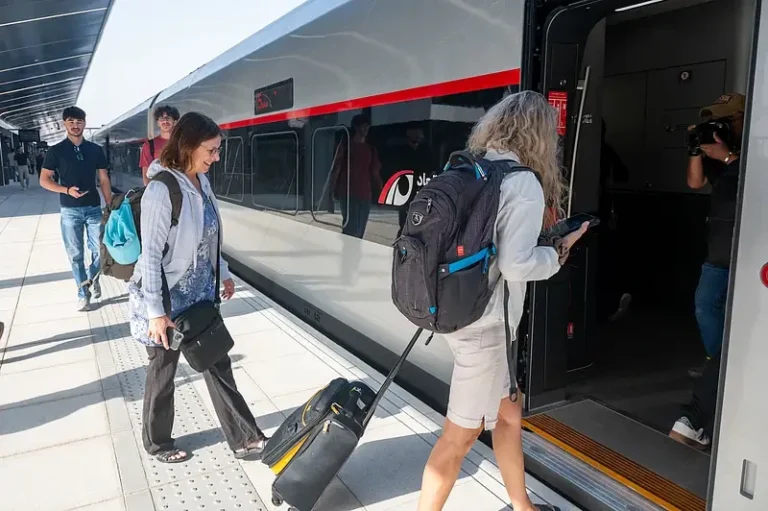
At 7 a.m. on a Tuesday, a Kalba commuter steps onto the Etihad Rail platform, ticket in hand, ready for a journey that will end in Abu Dhabi in just 1 hour 40 minutes.
From three‑hour drives to a two‑hour commute

Emirates urges early arrival at DXB July 3‑5
DXB faces heavy traffic July 3‑5; Emirates tells flyers to add three‑hour buffer
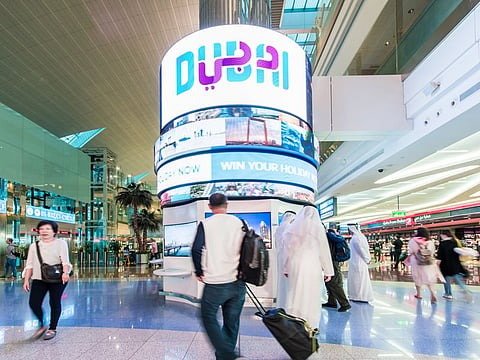
Dubai International Airport (DXB) will see a surge of passengers from July 3‑5, 2026.
Longer queues and tighter gate cut‑offs at DXB terminals
The advisory reflects Dubai’s broader effort to keep airport flow smooth during seasonal travel spikes.

Dubai Customs Foil Pregabalin Smuggling Attempt
Dubai Authorities Thwart Pregabalin Smuggling Attempt
Dubai Customs and Dubai Police seized 278,850 Pregabalin pills in the initial smuggling attempt, according to official details of the joint operation, a controlled substance, weighing around 200 kg. The operation resulted in the arrest of a four-member gang, underscoring the authorities' ongoing efforts in border-security and anti-narcotics enforcement.
The seizure of 278,850 pregabalin tablets is a significant blow to drug trafficking networks in the UAE. Dubai Customs and Dubai Police have been working together to identify and intercept shipments of controlled substances, and this operation reflects their effective collaboration.
Dubai Customs and Dubai Police's joint operation is part of a broader effort to protect the community from the harm caused by controlled substances. Pregabalin is treated as a controlled substance in the UAE, and trafficking cases are typically handled as serious narcotics/controlled-medicine offenses.
The authorities' actions have prevented the diversion of these pills into local distribution markets, reducing the risk of harm linked to their misuse. This operation demonstrates the commitment of Dubai Customs and Dubai Police to enforcing border security and anti-narcotics laws, ensuring the safety and well-being of the community.
Officials said the joint operation reinforced Dubai’s leadership in border security and efforts to counter smuggling and protect the community.
The 200kg shipment of pregabalin pills was seized in a joint operation, resulting in the arrest of a four-member gang. This operation is a significant achievement for Dubai Customs and Dubai Police, demonstrating their effectiveness in identifying and intercepting shipments of controlled substances.

Emirates ID: Risks You Should Know Before You Share
Protect Your Emirates ID: The Hidden Dangers of Routine Sharing
As a resident in the UAE, you're likely familiar with the importance of your Emirates ID. However, a common habit among residents - sending Emirates ID copies for routine requests - can increase your exposure to identity theft and fraud. Authorities are warning against this practice, especially when sharing ID copies over WhatsApp or email.
The warning focuses on the potential risks of sharing Emirates ID copies, which can be stored, forwarded, or reused without the holder's knowledge. Emirates ID is a high-trust identifier used across many verification flows, and if misused, it can enable impersonation attempts, fraudulent account creation, unauthorized service sign-ups, or social-engineering scams.
Residents are advised to verify whether the request is mandatory and whether the recipient is authorized. It's recommended to prefer official portals or in-person verification when possible, avoid sending ID images over informal channels like WhatsApp, and limit exposure by sharing only what is necessary for the stated purpose. Red flags include requests from unverified numbers or emails, pressure to share immediately, unclear purpose for collection, or businesses that cannot explain how the data will be stored and protected.
For those who have already shared their Emirates ID copies, it's essential to be vigilant and monitor their accounts and personal data for any suspicious activity. If you suspect that your Emirates ID has been misused, you should report it to the relevant authorities immediately.
In the UAE, residents can take steps to protect their Emirates ID data by being cautious when sharing their ID copies. By being aware of the potential risks and taking the necessary precautions, residents can reduce their exposure to identity theft and fraud.
To protect your Emirates ID data, follow these best practices:
- Verify the recipient's authenticity before sharing your ID copy.
- Use official portals or in-person verification when possible.
- Avoid sending ID images over informal channels like WhatsApp.
- Limit exposure by sharing only what is necessary for the stated purpose.