(Credit - Dubai Roads and Transport Authority (RTA) X Page)
Al Khaleej Street Tunnel Project Hits 80% as Deira Commuters Near Relief
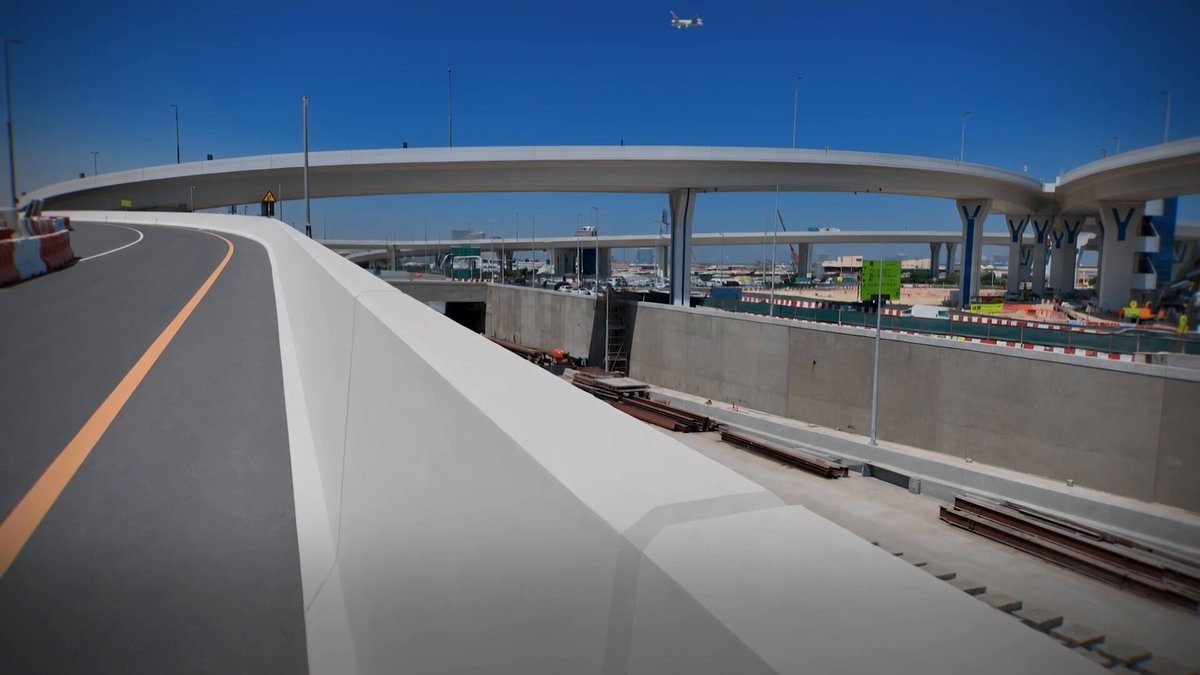
Dubai’s Roads and Transport Authority (RTA) confirmed, that the Al Khaleej Street Tunnel Project has reached 80% completion, bringing one of Deira’s most anticipated road upgrades within striking distance of the finish line. The 1,650-metre tunnel is engineered to push up to 12,000 vehicles per hour through one of Dubai’s most congested urban corridors , a figure that signals a fundamental shift in how traffic moves through this part of the city.
Al Khaleej Street Tunnel Project: 1,650m Route Confirmed
The tunnel runs from the end of the Infinity Bridge ramp in Deira to the Al Khaleej Street, Al Wuheida Street intersection. It carries three lanes in each direction, creating a six-lane grade-separated facility beneath a stretch of road that has long been bottlenecked by surface-level junctions and signalised crossings. The project forms part of Phase 4 of Dubai’s broader infrastructure development programme , a sequenced approach that ensures new capacity feeds cleanly into the surrounding road network rather than simply relocating congestion to the next junction.
Grade separation is the core engineering principle at work here. By routing through-traffic underground, the tunnel removes the conflict points that force vehicles to slow, stop, and merge at surface intersections. Local access, deliveries, and bus movements continue at street level without being blocked by cross-city traffic passing through. The Al Khaleej Street, Al Wuheida Street intersection , currently one of the denser signal-controlled nodes in Deira , stands to see a significant reduction in peak-hour queuing once the tunnel is operational.
What This Means for Deira Drivers and Businesses
For the tens of thousands of commuters and freight operators who pass through Deira daily, the RTA’s milestone update points to faster and more predictable journey times on a corridor that connects dense residential neighbourhoods to major bridges and arterial roads feeding central Dubai. Logistics companies operating out of Deira’s commercial districts face lower idle-time costs when stop-start congestion eases. Retailers and hospitality businesses near the waterfront gain improved access for customers arriving from across the emirate , an advantage that compounds during peak seasons and large city events.
| Project Detail | Specification |
|---|---|
| Tunnel Length | 1,650 metres |
| Start Point | End of Infinity Bridge ramp, Deira |
| End Point | Al Khaleej Street, Al Wuheida Street intersection |
| Lane Configuration | Three lanes in each direction (six total) |
| Designed Capacity | Up to 12,000 vehicles per hour (both directions) |
| Completion Status | 80% as of May, 2026 |
| Infrastructure Phase | Phase 4 of Dubai’s road development programme |
- Corridor Role: Al Khaleej Street is a key coastal artery linking Deira’s residential and commercial zones to central Dubai and the northern waterfront.
- Traffic Relief: The tunnel removes surface conflict points, allowing through-traffic to bypass signalised intersections entirely.
- Network Integration: Phase 4 sequencing ensures the tunnel connects to adjacent road upgrades without creating new bottlenecks at entry and exit points.
- Urban Constraint Solution: Grade separation was chosen because street-level widening in built-up Deira is restricted by existing buildings, utilities, and pedestrian infrastructure.
Dubai’s Roads and Transport Authority is delivering the Al Khaleej Street Tunnel as part of the Al Shindagha Corridor Improvement Project, one of the emirate’s flagship mobility programmes aimed at easing congestion and improving connectivity across Deira and Bur Dubai.
With 80% of the 1,650-metre tunnel complete as of May, 2026, the remaining construction window will determine exactly when the 12,000-vehicles-per-hour capacity comes online and how quickly journey time savings materialise. The 1.65-kilometre Al Khaleej Street Tunnel remains under construction and is expected to be completed soon, positioning it as a near-term capacity boost for one of Deira’s busiest corridors.