(Credit - Khaleej Times)
Five Greatest FIFA World Cup Players of All Time, and Why Each One Earned the Spot
The five greatest FIFA World Cup players of all time have been named, Maradona, Messi, Pelé, Ronaldo, and Cruyff, and the list is already splitting opinion across football fans worldwide. These are not just the biggest names in the sport; they are the figures whose performances on the World Cup stage specifically defined what tournament football can look like at its absolute peak. One of them never even lifted the trophy, which tells you everything about how complex this debate really is.
How “Greatest” Gets Decided, and Why It’s Never Simple
Rankings like this typically weigh three things: tournament impact (goals, assists, match-winning moments), performance across multiple editions, and the kind of iconic individual moments that lodge permanently in football memory. No single metric settles it, a player can dominate one tournament so completely that it outweighs a longer but quieter career, while another can accumulate across four editions and still be questioned.
That subjectivity is exactly why lists like this generate heat. Depending on whether you prioritise trophies, individual awards, or tactical influence on the game itself, the five names could shift significantly, and plenty of legends sit just outside this group with legitimate claims of their own.
1. Diego Maradona, The One-Tournament Standard No One Has Matched
Maradona’s case rests almost entirely on Mexico 1986, and it is still enough. He scored five goals and provided five assists across seven matches, dragging Argentina to the title with performances that remain the benchmark for individual World Cup dominance. The “Hand of God” goal and the “Goal of the Century”, both scored against England in the quarter-final, happened in the same game, which captures the contradictory brilliance that made him impossible to ignore.Why it changes how you watch the tournament: When you understand that Maradona essentially carried a functional-but-not-exceptional Argentina squad to a World Cup title on individual will, every “best player at a World Cup” conversation starts and ends with 1986.2. Lionel Messi, The Long Game That Finally Paid Off
Messi’s World Cup story is one of sustained elite output across five tournaments (2006, 2022), culminating in Argentina’s triumph in Qatar in December 2022. He finished that tournament with seven goals and three assists, winning the Golden Ball for best player, his second such award at a World Cup, having also claimed it in 2014 despite Argentina losing the final. No other player has won the Golden Ball twice.Why it reshapes the GOAT argument: The 2022 title removed the one credible counterargument to Messi’s inclusion on any all-time list. He now holds both the individual accolades and the winner’s medal.3. Pelé, Three Tournaments, Two Titles, One Unbroken Record
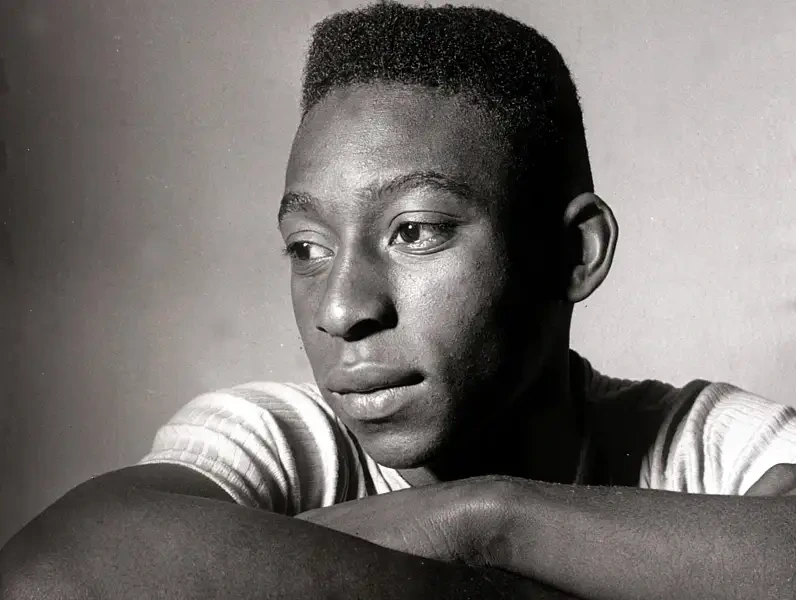
Pelé remains the only player in history to win three FIFA World Cup titles (1958, 1962, 1970), and he scored in all three winning campaigns. He was 17 years old when he won his first, making him the youngest World Cup winner ever, a record that still stands as of June 2026. His 1970 Brazil side is routinely described as the finest national team ever assembled, and Pelé was its centrepiece.Why the numbers still hold up: Three titles across three different decades of football is a volume of success no other player has come close to replicating at international tournament level.4. Ronaldo (Brazil), A Comeback Story Built Around Goals When They Counted
Brazil’s Ronaldo Nazário, not Cristiano Ronaldo, is the player referenced here, and his World Cup record is straightforward: 15 goals across three tournaments (1994, 1998, 2002), which remains the all-time record for goals scored at FIFA World Cups. His 2002 campaign in South Korea and Japan was particularly decisive: eight goals in seven matches, including a brace in the final against Germany, after a career-threatening knee injury had kept him out of the game for nearly two years.Why the comeback element is relevant: Ronaldo’s 2002 performance carries extra weight precisely because it came after a period when many assumed his career was effectively over. Scoring eight goals in a winning World Cup campaign under that kind of pressure is a different kind of achievement.5. Johan Cruyff, The Greatest Player Who Never Won It
Cruyff led the Netherlands to the 1974 World Cup final in West Germany, where they lost 2, 1 to the host nation. He never played in another World Cup, he boycotted the 1978 tournament in Argentina for reasons he only publicly confirmed years later. Despite that, his influence on how the game is played, through the “Total Football” system he embodied, reshaped football tactics globally in ways that are still visible today.Why a runner-up belongs on this list: Cruyff’s inclusion is the most debated of the five, but it reflects a broader point: World Cup greatness is not exclusively measured in trophies. His tactical and cultural impact on the tournament, and on football itself, is an argument that has held up for more than 50 years.The Five at a Glance
| Player | Country | World Cup Titles | Key Tournament | Notable Stat |
|---|---|---|---|---|
| Diego Maradona | Argentina | 1 (1986) | Mexico 1986 | 5 goals, 5 assists in one tournament |
| Lionel Messi | Argentina | 1 (2022) | Qatar 2022 | 2× Golden Ball winner |
| Pelé | Brazil | 3 (1958, 1962, 1970) | Mexico 1970 | Youngest-ever World Cup winner (age 17) |
| Ronaldo Nazário | Brazil | 2 (1994, 2002) | South Korea/Japan 2002 | All-time record: 15 World Cup goals |
| Johan Cruyff | Netherlands | 0 | West Germany 1974 | Finalist; never played 1978 tournament |
The Verdict
If forced to pick one name whose World Cup record is simply beyond challenge on every metric, titles, individual performance, and longevity, Pelé’s three-tournament, three-title run is the hardest to argue against. Maradona’s 1986 peak is the most spectacular single-tournament performance in the sport’s history, and Messi’s 2022 triumph finally gave him the complete résumé. But Pelé did it three times, starting at 17. That is the number that keeps coming back.Rankings of this kind are always editorial judgements, not official FIFA classifications, and reasonable cases exist for players outside this five. What makes this particular list durable is that each name on it changed something, a tournament, a tactical era, or the sport’s understanding of what one player can do. The debate over who was left out is, in many ways, the point.