(Credit - Khaleej Times)
Five Greatest FIFA World Cup Players of All Time, and Why Each One Earned the Spot
The five greatest FIFA World Cup players of all time have been named, Maradona, Messi, Pelé, Ronaldo, and Cruyff, and the list is already splitting opinion across football fans worldwide. These are not just the biggest names in the sport; they are the figures whose performances on the World Cup stage specifically defined what tournament football can look like at its absolute peak. One of them never even lifted the trophy, which tells you everything about how complex this debate really is.
How “Greatest” Gets Decided, and Why It’s Never Simple
Rankings like this typically weigh three things: tournament impact (goals, assists, match-winning moments), performance across multiple editions, and the kind of iconic individual moments that lodge permanently in football memory. No single metric settles it, a player can dominate one tournament so completely that it outweighs a longer but quieter career, while another can accumulate across four editions and still be questioned.
That subjectivity is exactly why lists like this generate heat. Depending on whether you prioritise trophies, individual awards, or tactical influence on the game itself, the five names could shift significantly, and plenty of legends sit just outside this group with legitimate claims of their own.
1. Diego Maradona, The One-Tournament Standard No One Has Matched
Maradona’s case rests almost entirely on Mexico 1986, and it is still enough. He scored five goals and provided five assists across seven matches, dragging Argentina to the title with performances that remain the benchmark for individual World Cup dominance. The “Hand of God” goal and the “Goal of the Century”, both scored against England in the quarter-final, happened in the same game, which captures the contradictory brilliance that made him impossible to ignore.Why it changes how you watch the tournament: When you understand that Maradona essentially carried a functional-but-not-exceptional Argentina squad to a World Cup title on individual will, every “best player at a World Cup” conversation starts and ends with 1986.2. Lionel Messi, The Long Game That Finally Paid Off
Messi’s World Cup story is one of sustained elite output across five tournaments (2006, 2022), culminating in Argentina’s triumph in Qatar in December 2022. He finished that tournament with seven goals and three assists, winning the Golden Ball for best player, his second such award at a World Cup, having also claimed it in 2014 despite Argentina losing the final. No other player has won the Golden Ball twice.Why it reshapes the GOAT argument: The 2022 title removed the one credible counterargument to Messi’s inclusion on any all-time list. He now holds both the individual accolades and the winner’s medal.3. Pelé, Three Tournaments, Two Titles, One Unbroken Record
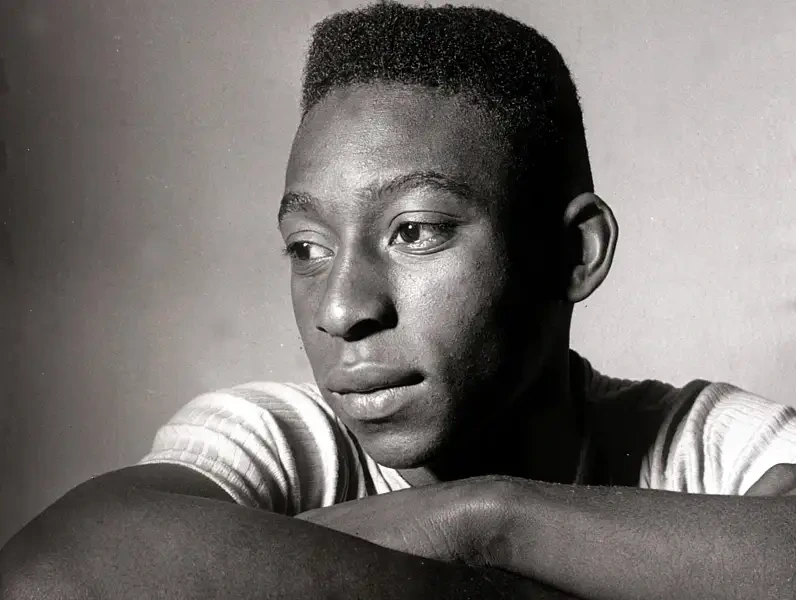
Pelé remains the only player in history to win three FIFA World Cup titles (1958, 1962, 1970), and he scored in all three winning campaigns. He was 17 years old when he won his first, making him the youngest World Cup winner ever, a record that still stands as of June 2026. His 1970 Brazil side is routinely described as the finest national team ever assembled, and Pelé was its centrepiece.Why the numbers still hold up: Three titles across three different decades of football is a volume of success no other player has come close to replicating at international tournament level.4. Ronaldo (Brazil), A Comeback Story Built Around Goals When They Counted
Brazil’s Ronaldo Nazário, not Cristiano Ronaldo, is the player referenced here, and his World Cup record is straightforward: 15 goals across three tournaments (1994, 1998, 2002), which remains the all-time record for goals scored at FIFA World Cups. His 2002 campaign in South Korea and Japan was particularly decisive: eight goals in seven matches, including a brace in the final against Germany, after a career-threatening knee injury had kept him out of the game for nearly two years.Why the comeback element is relevant: Ronaldo’s 2002 performance carries extra weight precisely because it came after a period when many assumed his career was effectively over. Scoring eight goals in a winning World Cup campaign under that kind of pressure is a different kind of achievement.5. Johan Cruyff, The Greatest Player Who Never Won It
Cruyff led the Netherlands to the 1974 World Cup final in West Germany, where they lost 2, 1 to the host nation. He never played in another World Cup, he boycotted the 1978 tournament in Argentina for reasons he only publicly confirmed years later. Despite that, his influence on how the game is played, through the “Total Football” system he embodied, reshaped football tactics globally in ways that are still visible today.Why a runner-up belongs on this list: Cruyff’s inclusion is the most debated of the five, but it reflects a broader point: World Cup greatness is not exclusively measured in trophies. His tactical and cultural impact on the tournament, and on football itself, is an argument that has held up for more than 50 years.The Five at a Glance
| Player | Country | World Cup Titles | Key Tournament | Notable Stat |
|---|---|---|---|---|
| Diego Maradona | Argentina | 1 (1986) | Mexico 1986 | 5 goals, 5 assists in one tournament |
| Lionel Messi | Argentina | 1 (2022) | Qatar 2022 | 2× Golden Ball winner |
| Pelé | Brazil | 3 (1958, 1962, 1970) | Mexico 1970 | Youngest-ever World Cup winner (age 17) |
| Ronaldo Nazário | Brazil | 2 (1994, 2002) | South Korea/Japan 2002 | All-time record: 15 World Cup goals |
| Johan Cruyff | Netherlands | 0 | West Germany 1974 | Finalist; never played 1978 tournament |
The Verdict
If forced to pick one name whose World Cup record is simply beyond challenge on every metric, titles, individual performance, and longevity, Pelé’s three-tournament, three-title run is the hardest to argue against. Maradona’s 1986 peak is the most spectacular single-tournament performance in the sport’s history, and Messi’s 2022 triumph finally gave him the complete résumé. But Pelé did it three times, starting at 17. That is the number that keeps coming back.Rankings of this kind are always editorial judgements, not official FIFA classifications, and reasonable cases exist for players outside this five. What makes this particular list durable is that each name on it changed something, a tournament, a tactical era, or the sport’s understanding of what one player can do. The debate over who was left out is, in many ways, the point.

Trump Addresses US Troop Deaths in Iran Attack
Trump Responds to Fatal Attack on US Troops in Jordan
President Trump addressed the deaths of US troops in an Iranian attack on Jordan. The incident occurred on July 20, 2026, and has resulted in US troop casualties, escalating regional tensions. US troops were killed in the attack, which has been attributed to Iran.
The US-Iran conflict has been escalating, with both countries trading strikes. This incident marks a significant development in the ongoing tensions in the Middle East. The attack on US troops in Jordan has raised concerns about the growing conflict in the region.
The conflict between the US and Iran has been worsening, with both sides engaging in military actions. The situation in the Middle East remains volatile, with various countries involved in the conflict. The deaths of US troops in Jordan have added to the tensions, and the international community is watching the situation closely.
This incident is the latest in a series of events that have increased tensions in the Middle East. The US and Iran have been involved in a conflict that has been escalating over time. The attack on US troops in Jordan is a significant development in this conflict, and its implications are being closely watched by the international community. The situation in the region remains unstable, with the potential for further escalation.
In related news, Yemen's Houthis have threatened a "maritime embargo" against Saudi Arabia, which could worsen the economic impact of the regional conflict. The Middle East conflict has been escalating, with various countries involved, and the situation remains volatile.

Zohran Mamdani Weighs Netanyahu Arrest
Mamdani Considers Arresting Netanyahu at UN Summit
New York Mayor Zohran Mamdani is consulting legal experts over whether to try to arrest Israeli Prime Minister Benjamin Netanyahu during an upcoming UN summit. Mamdani believes Netanyahu belongs in The Hague, calling him a "war criminal" who has been charged by the International Criminal Court. The mayor's comments have prompted a sharp rebuke from Netanyahu's camp.
Mamdani, who has called Israel an "apartheid regime," stated that his opinion is shared by many due to Netanyahu's actions over the years. He admitted uncertainty about his power to order the New York Police Department to detain a foreign leader but is discussing the matter with the city's legal team. Mamdani emphasized that he will take whatever action the law allows him to do in New York City.
The potential arrest of Netanyahu would be a significant development, with implications for international relations and the United Nations. As the situation unfolds, it remains to be seen what actions Mamdani will take and how the international community will respond.
This development comes as the UN summit approaches, scheduled for September 2026. The summit will bring together world leaders, including Netanyahu, to discuss various global issues. Mamdani's consideration of arresting Netanyahu adds a new layer of complexity to the upcoming summit.

US Troops Killed in Iran Attack
Iranian Attack in Jordan Kills Two US Troops, One Missing
Two US troops were killed and one is missing following an Iranian attack in Jordan. The incident occurred on July 19, 2026, and marks a significant escalation in regional tensions between the US and Iran. US military personnel are among those affected by the attack, which is part of the ongoing geopolitical conflict and proxy warfare between the US and Iran in the Middle East.
The attack has heightened concerns about the safety of US troops in the region and the potential for further escalation. Analysts warn that any attacks near the Red Sea could worsen the economic impact of the regional conflict. The incident is the latest in a series of strikes between Iran and the US, with the two countries trading blows for the ninth night.
The US-Iran war is increasingly escaping the control of those waging it, with Yemen\'s Houthis threatening a \"maritime embargo\" against Saudi Arabia. The situation is complex, with multiple parties involved and various interests at play. The US has announced the start of Israel\'s withdrawal from \"pilot zones\" in south Lebanon, which may have implications for the regional conflict.
This incident is connected to the broader Middle East conflict, which has seen various countries and factions involved in proxy warfare and geopolitical tensions. The US and Iran have been on opposite sides of the conflict, with each seeking to exert its influence in the region. The attack on US troops in Jordan is a significant development in this ongoing conflict.

US service members killed in Iran strikes on Jordan
Iran Strikes Kill US Service Members in Jordan
Two US service members were killed and one is missing after Iran launched missile and drone attacks on Jordan. The incident occurred on Friday, July 17, 2026, with US Central Command confirming the casualties. Jordanian air defenses intercepted additional missiles on Saturday, July 18, 2026. The attacks, which also injured four US service members, were carried out by Iranian ballistic missiles and drones against US and partner forces in Jordan.
The US Central Command, also known as Centcom, announced the incident on Saturday, July 18, 2026, after Jordanian national air defense systems intercepted 10 Iranian missiles. The Pentagon confirmed the details of the attack, which resulted in the deaths of two US service members and left one missing. The incident highlights the escalating tensions in the Middle East, particularly between the US and Iran.
The Jordanian air defenses played a crucial role in intercepting the Iranian missiles, preventing further damage and casualties. The US Central Command has been working closely with its partners in the region to address the growing threat posed by Iran's military activities. The incident has significant implications for the region's stability and security, with the US and its allies likely to reassess their military presence and strategies in response to the attack.
This incident is the latest in a series of escalations between the US and Iran, with both countries engaging in a war of words and proxy conflicts in the region. The attack on Jordan, a key US ally in the Middle East, highlights the complexities and challenges of the regional conflict. As the situation continues to unfold, the international community will be closely watching the developments and potential responses from the US and its allies.

Kuwait Reports Iranian Attack
Kuwait Power Plant Attacked Again by Iran
In Kuwait, a power generation and water desalination plant was attacked for the second time in two days by Iran, according to Kuwait\'s Ministry of Electricity, Water and Renewable Energy. The attack, which occurred on Sunday, July 19, 2026, caused a fire in parts of the facility and affected a large number of power generation units.
The ministry stated that emergency plans were activated immediately to contain the incident and preserve the stability of the national power grid. Kuwait Fire Force responded quickly to contain the blaze, while the ministry\'s technical and emergency teams, in coordination with relevant security authorities, began implementing precautionary measures, assessing the damage, and working to restore the affected units as quickly as possible.
This incident is part of the ongoing conflict between Kuwait and Iran, with Kuwait facing missile threats and drone attacks. The attack on the power plant has significant implications for the country\'s electricity and water supply, and the government is working to minimize the impact on citizens.
The attack on Kuwait\'s power plant is linked to the broader Gulf conflict, with the US striking Iran and other Gulf states facing missile threats. The situation remains volatile, with the potential for further escalation.
In the context of the Dubai Economic Agenda D33, which aims to enhance the emirate\'s economic security and resilience, the attack on Kuwait\'s power plant highlights the importance of diversifying energy sources and investing in renewable energy. The UAE\'s own experiences with ensuring energy security can provide valuable lessons for Kuwait as it navigates this challenging situation.