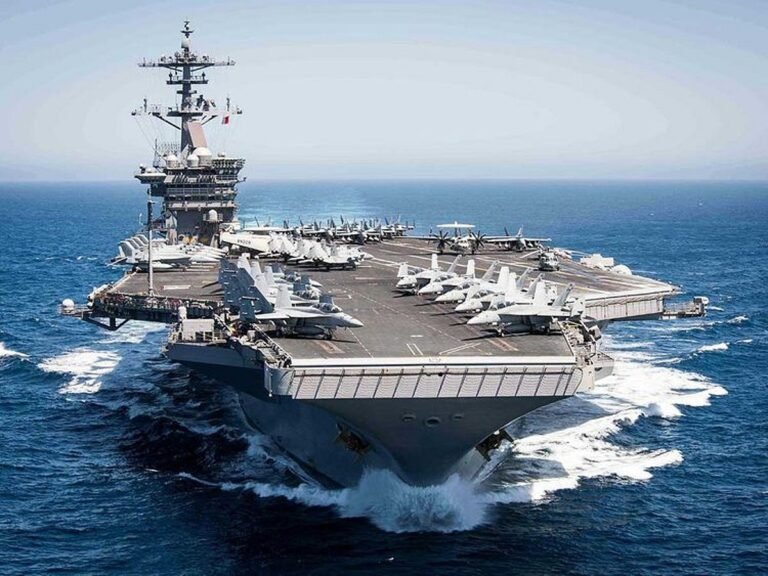
(Credit - The National)
US Shoots Down Iranian Drones Near Aircraft Carrier as Hormuz Shipping Risk Sharpens
US forces shot down Iranian drones threatening a US aircraft carrier in the Persian Gulf on June 7, 2026, in a direct aerial confrontation near the Strait of Hormuz, one of the world’s most heavily trafficked energy corridors. Iran subsequently launched a separate drone salvo targeting US military vessels in the same waters, completing a tit-for-tat exchange that has raised immediate concern among shipping operators, energy traders, and insurers monitoring the region.
A Strategic Chokepoint Under Active Military Pressure
The Strait of Hormuz links the Persian Gulf to the Gulf of Oman and the Arabian Sea, and a substantial share of globally traded oil and liquefied natural gas transits this corridor daily. Any military incident there carries immediate downstream consequences: war-risk insurance premiums typically reprice within hours, shipping firms reassess routing decisions, and naval advisories can restrict commercial access to specific lanes. Sunday’s drone exchanges compress those decision timelines further, drone encounters at sea reduce the window commanders have to identify, assess, and respond to incoming threats, raising the probability of miscalculation.
The sequence, US interception followed by an Iranian drone strike on US vessels, reflects a pattern of parallel military signaling that has persisted even during periods described as diplomatically sensitive. Tit-for-tat exchanges of this kind historically harden negotiating positions on both sides rather than defusing them, and the absence of confirmed casualties or vessel damage has not reduced the strategic weight of what occurred.
What This Means for Global Shipping and Energy Markets
Commercial operators transiting the Gulf are now weighing four immediate watchpoints: whether naval authorities issue new advisories or exclusion zones, whether war-risk insurers formally re-rate the corridor, whether convoy-style transit management is reintroduced, and whether any follow-on incident produces damage or casualties that would compel a broader military response. Energy cargo schedules and chartering terms for Gulf-origin shipments are likely to reflect elevated risk premiums in the near term, even if traffic volumes remain unchanged.
- Incident date: June 7, 2026, near the Strait of Hormuz / Persian Gulf
- US action: Drones threatening a US aircraft carrier were intercepted and shot down
- Iranian response: Drones subsequently launched at US military vessels in the same area
- Diplomatic context: Exchanges occurred against a backdrop of fragile US-Iran diplomacy, with no confirmed ceasefire or de-escalation framework in place
Sunday’s drone exchanges near the Strait of Hormuz mark one of the most direct US-Iran aerial confrontations in the Gulf in recent memory. With no confirmed damage or casualties reported, the immediate military risk remains contained, but the incident has already altered the calculus for commercial shipping, energy logistics, and insurance underwriting across the corridor. How both governments characterise the exchange in the hours ahead will determine whether this remains a tactical episode or the opening of a sustained escalation cycle.*Source: The National / WAM-aligned international reporting. Specific casualty figures, vessel identifications, and official damage assessments were not confirmed in available sourcing at time of publication.*