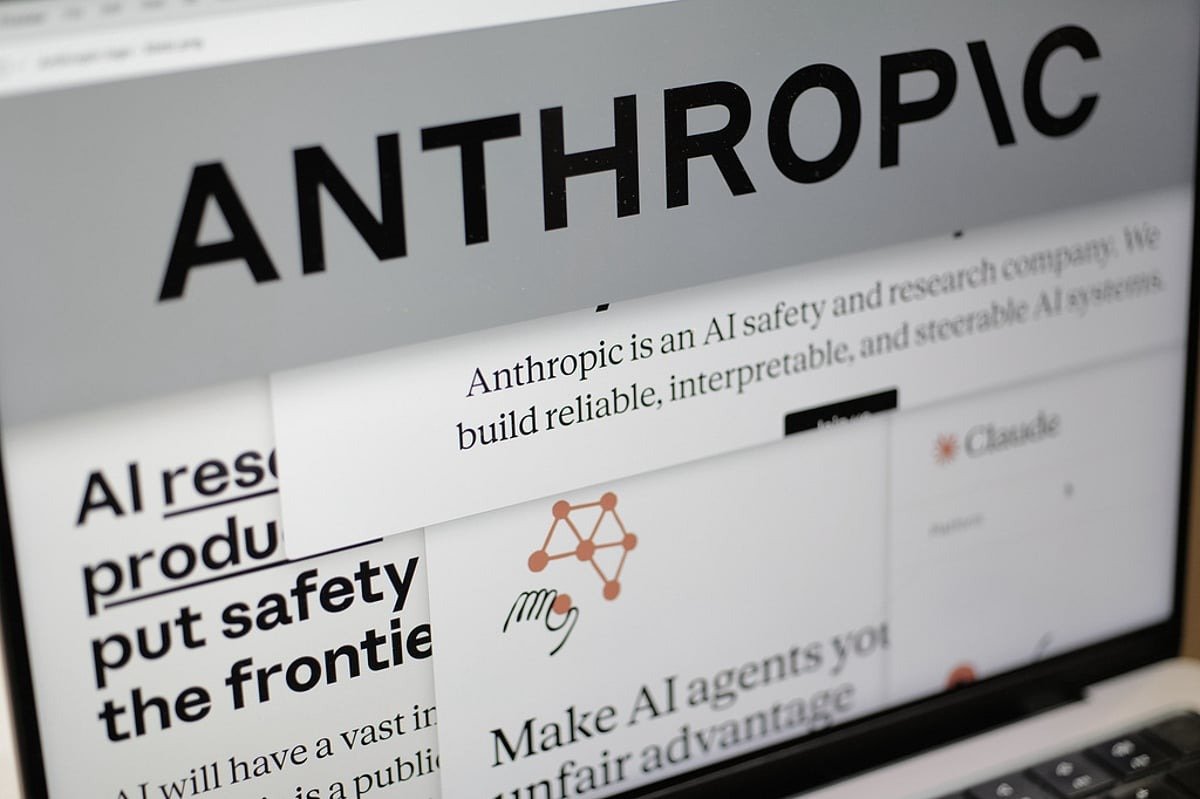
(Credit - Gulf News)
US Lifts Restrictions on Anthropic's Powerful AI Models
The US government has lifted restrictions on Anthropic‘s most powerful AI models, enabling broader global availability, the company said. This move affects businesses and researchers worldwide, particularly those in the software development, customer service, and data analysis sectors.
The decision to lift restrictions follows discussions focused on mitigating risks tied to advanced AI capabilities and export-control concerns. As a result, Anthropic’s advanced AI models will now be more accessible to global users, potentially reducing procurement friction and accelerating cross-border deployments of AI tools.
The Claridge Building in Washington, D.C. is the location where the policy decision was made, and it will have a significant impact on the global AI industry.
The US government’s decision to lift restrictions on Anthropic’s powerful AI models is a significant development in the AI governance and safety environment. This move signals a potential shift in how regulators balance competitiveness and innovation against safety and security concerns, especially as companies race to commercialize more capable models.

US, Iran Establish Communication Channel
US and Iran Agree on Strait of Hormuz Communication Channel to Reduce Shipping Risks
The United States and Iran have taken a significant step towards reducing tensions in the Strait of Hormuz by agreeing to establish a communication channel. This move, facilitated by indirect talks mediated by Qatar and Pakistan, aims to prevent incidents and support safe shipping through this critical maritime chokepoint. The communication channel is designed to quickly clarify intentions, warn of potential incidents, and prevent miscalculation during close-proximity encounters at sea.
| Before | After |
|---|---|
| No dedicated communication channel | Dedicated US-Iran communication channel for de-escalation |
| Higher risk of miscalculation and incidents | Reduced risk of vessel harassment, navigation misunderstandings, and escalation |
For shipping operators and stakeholders, the establishment of this communication channel can reduce the likelihood of incidents and escalation, potentially leading to lower disruption risk, tighter voyage planning, and reduced war-risk pricing. The effectiveness of this mechanism will depend on its consistent use during incidents.
Those involved in the shipping industry, particularly in the Gulf region, will be closely watching the implementation of this communication channel. The success of this initiative could have significant implications for the safety and efficiency of maritime trade in the region.
Next steps for stakeholders include monitoring the development and implementation of the communication channel, as well as assessing its impact on shipping operations and risk management.
Oil Prices Drop as US-Iran Talks Ease Supply Fears
US-Iran Talks in Doha Spark Third Day of Oil Price Declines
The global oil market isn't just reacting to the latest diplomatic developments - it's repositioning for a potential shift in supply dynamics. As US-Iran talks in Doha concluded with reported progress, oil prices fell for a third straight day, driven by easing supply concerns and a cut in Brent crude forecasts by UBS. This move signals a significant reduction in the geopolitical risk premium that had been factored into oil prices, potentially paving the way for further declines if diplomatic efforts continue to yield positive results.
Two key drivers are behind this oil price drop: the perceived progress in US-Iran talks and the downward revision of Brent crude forecasts by UBS. The former reduces the likelihood of near-term supply disruptions, while the latter reinforces expectations of softer pricing due to weaker demand or more resilient supply. These drivers are interlinked, as progress in diplomatic talks can lead to increased oil exports from Iran, thereby influencing global supply and demand dynamics.
The impact of this development is far-reaching, affecting various stakeholder groups. Oil market traders are adjusting their strategies, dialing back on supply-disruption fears and potentially shifting their hedging decisions. Businesses, particularly those in the energy and transportation sectors, may need to reassess their fuel procurement and inflation-linked budgeting, as the reduced geopolitical risk premium could lead to lower fuel prices. Additionally, consumers may benefit from decreased fuel prices, which could have a positive effect on inflation.
However, not everyone agrees that this development will lead to a sustained decline in oil prices. Some analysts argue that the progress in US-Iran talks is fragile and could be reversed, leading to a resurgence in supply concerns and higher oil prices. Others point out that the cut in Brent crude forecasts by UBS may not be sufficient to offset the potential risks of supply disruptions, particularly if other geopolitical hotspots flare up. While these counterarguments are valid, the current market sentiment suggests that the diplomatic progress and forecast revisions have, for now, eased supply concerns and reduced the geopolitical risk premium.
As the situation continues to unfold, traders will closely watch for any follow-on diplomatic meetings, official readouts from both governments, and near-term export/shipping indicators. Inventory data, OPEC+ supply signals, and refinery demand trends will also be crucial in determining the next direction of oil prices. The interplay between these factors will ultimately decide whether the current downward trend in oil prices will persist or reverse.

OpenAI Offers 5% Stake to Trump Administration
OpenAI's Strategic Move: Sharing AI Profits with the Public
OpenAI isn't just proposing a 5% stake to the Trump administration; it's making a calculated move to address political pressure and position AI profits as benefiting the public. This strategic intent is clear: by offering a minority stake, OpenAI aims to ease the political heat and demonstrate its commitment to sharing the benefits of AI development with the broader public.
The drivers behind this proposal are rooted in economic and geopolitical factors. The U.S. government has been discussing whether to take equity stakes in leading AI companies, and OpenAI's move can be seen as a preemptive step to shape the narrative and potentially influence the direction of these discussions. Furthermore, the increasing scrutiny of AI labs and their impact on society has led to calls for greater oversight and accountability, making OpenAI's proposal a tactical response to these pressures.
The ripple effect of this proposal will be felt across various stakeholder groups. For investors, a 5% stake for the Trump administration could signal a shift toward tighter political oversight of AI labs, potentially affecting investment terms and governance structures. For the AI industry as a whole, this move could raise questions about competitive neutrality, particularly if one AI firm is perceived as having a privileged relationship with the administration. Lastly, for the general public, OpenAI's proposal may be seen as a step toward greater transparency and accountability in AI development, although the actual impact will depend on how the stake is utilized and the benefits are shared.
One counter-argument to OpenAI's proposal is that it may not be the most effective way to address political pressure or ensure that AI profits benefit the public. Some might argue that a 5% stake is too small to have a significant impact or that it could create unintended consequences, such as undermining the company's independence or creating conflicts of interest. However, it's also possible that this move is broadly uncontested, as it represents a pragmatic response to the current political environment and a genuine attempt to share the benefits of AI with the public.

Trump Flies on $400m Qatari Jet as Temporary Air Force One
Trump's Temporary Air Force One: A $400m Qatari Gift
The use of a non-standard aircraft as "Air Force One" raises immediate operational and political questions. The call sign "Air Force One" applies to any US Air Force aircraft carrying the president, but presidential transport typically requires extensive communications, defensive systems, and security certification.
| Category | Details |
|---|---|
| Aircraft | Boeing 747 |
| Gift Value | $400 million |
| Donor | Qatar |
| Temporary Use | Until 2028 |
For federal contractors and aviation security suppliers, the temporary use of a Qatari-gifted Boeing 747 as Air Force One may require planning for short-term bridges or longer-term capability shifts. The governance optics of a foreign-state "gift" can create compliance, audit, and reputational risk across contractors and agencies supporting the mission.
The big question is what had to change on the plane before it could fly as "Air Force One". The aircraft had to complete final exams, and it is being used temporarily until a new Air Force One fleet is expected in 2028.
Here are the next steps for those affected:
- Review the security and certification requirements for the temporary Air Force One solution.
- Plan for potential changes in operational procedures and protocols.
- Ensure compliance with US rules and regulations regarding foreign-provided assets.

France vs Sweden 3-0 World Cup Round of 32
France Advances to Last 16 with 3-0 Win Over Sweden
France defeated Sweden 3-0 in the World Cup Round of 32, powered by a Kylian Mbappé double. The win sends France into the last 16 to face Paraguay. Those affected by this outcome include fans of both teams, as well as Paraguay, who will face France in the next round.
France's progression to the last 16 was sealed with a convincing 3-0 victory, highlighting the team's attacking form. The 3-0 scoreline against Sweden marks a significant win for France, with Mbappé's goals taking him to six in the tournament and 18 in his World Cup career.
The Stade de France will host the next match, where France will face Paraguay in the last 16. France's 3-0 win over Sweden comes at the start of the tournament's knockout phase, where single-elimination matches sharply raise the stakes and often reshape title odds.