UAE Flights Disrupted: Etihad, Emirates, Air Arabia Cancel Services
Travellers flying to and from the UAE on July 30 and 31 are being urged to check their flight status before heading to the airport, as fresh military action between the United States and Iran continues to disrupt air travel across the Middle East. Etihad Airways, Emirates, and Air Arabia have announced changes affecting selected routes to Bahrain, Kuwait, and Saudi Arabia, with several services cancelled due to operational reasons. Air Arabia has cancelled services including G9124 Sharjah-Kuwait, G9068 Sharjah-Kuwait, G9107 Sharjah-Bahrain, and G9195 Sharjah-Abha. Gulf Air has also cancelled services, including GF505 Dubai-Bahrain and GF509 Dubai-Bahrain.
British Airways has suspended flights to Dubai, Bahrain, Amman, and Tel Aviv until October 31, while Singapore Airlines, Air Canada, Cathay Pacific, Finnair, and ITA Airways have suspended Dubai services until October 24. Lufthansa and Swiss will not resume Dubai flights until September 13, and other Middle East routes remain suspended until late October. Aegean Airlines and Air Astana have extended Dubai suspensions until August 31, and KLM has suspended Dubai services until August 23. Philippine Airlines continues to suspend Dubai flights until October 2, although Manila-Doha services have resumed. Turkish Airlines has resumed flights to Dubai and Abu Dhabi but continues to suspend services to Iran.
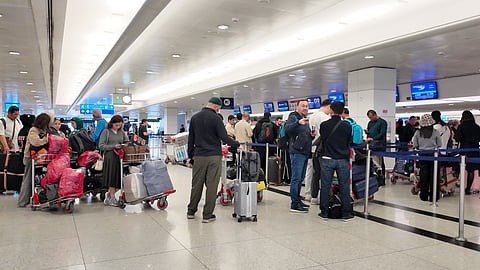
The updates come as UAE airports enter the peak summer travel period, with thousands of passengers departing for holidays. Airports and airlines are urging travellers to arrive early, allow extra time for security and immigration checks, and use online check-in options where available. Passengers may experience longer flight times as airlines avoid certain airspace areas due to security concerns.
This disruption is connected to the recent escalation of military action between the United States and Iran, which has led to explosions reported in several parts of Iran, including Qeshm Island in the Strait of Hormuz and Khuzestan province. Oil prices have surged about 7 per cent amid concerns over possible supply disruptions.