Two Indian Expats Claim $1 Million Each in Dubai Duty Free Draw
Two Indian expatriates based in Dubai each secured $1 million in the latest Dubai Duty Free Millennium Millionaire draw held on August 26 at Concourse A of Dubai International Airport, bringing the total number of Indian millionaires in the promotion to 282. Local residents Rohan Prakash Fernandes and Suresh PS claimed the top cash prizes in series 554 and 555, respectively.
Fernandes, a 38-year-old engineer who has lived in Dubai for 15 years, purchased his winning ticket online after drawing inspiration from a passing vehicle’s license plate. He stated that he intended to allocate the funds toward his child’s education, investments, and charitable contributions. Suresh PS, a 36-year-old HSE coordinator who has resided in the emirate for seven years, shared the cost of his ticket with nine friends who have participated in the promotion together for seven years. He indicated plans to use his portion of the winnings to purchase a home in Kerala.
Dubai Duty Free managing director Ramesh Cidambi oversaw the draw alongside senior company officials.
Beyond the cash prizes, the event distributed luxury vehicles to several other participants. Amit Saraf, a 52-year-old resident, secured a BMW 760i xDrive M Gran Lusso after purchasing 19 tickets online, marking his sixth win in the Dubai Duty Free promotion following prior vehicle and cash victories. Karnaiah Mandolla, a 48-year-old resident of Sharjah, won a Mercedes-Benz G 500 Station Wagon with a ticket purchased at Terminal 3 Arrivals, adding to a previous $1 million win from October 2023. Meanwhile, Belgian national David Kingen claimed a Ducati Panigale V2S motorbike, marking his third motorbike win in the history of the promotion.


Dubai diverse nationalities redefine what makes a home city
195 cultures, one city: How Dubai diverse nationalities make it work
Living across Dubai's neighborhoods brings you face-to-face with a daily reality few other global hubs manage: more than 195 nationalities sharing the same pavements, office floors, and community spaces. For Belgian expat Inge Van Belle, co-founder of Herculean Alliance, that mixing act is much more than a demographic footnote. It is a daily masterclass in perspective.
Managing the daily rhythm of a multicultural city
When you put a local population, long-term expats who originally planned to stay for just a few years, a diverse middle tier, and a vast workforce together on paper, it looks like an impossible puzzle to balance. Yet Van Belle, who first began visiting the emirate in 2009 alongside her husband and co-founder Yves Vekemans, points out that the city took that exact complexity and built an identity straight out of the mix rather than trying to flatten it.
Cultural norms rub shoulders seamlessly across daily routines. Punctuality carries different meanings depending on the background you grew up with. Some communities prefer eating with their hands, while others reach for forks and knives. In office meetings, certain cultures are entirely comfortable openly debating and disagreeing in public, whereas others prefer to discuss issues quietly at a manager’s desk in private.
Instead of forcing everyone to conform to one rigid standard, the city leaves room for individual flair while uniting residents around shared goals achieved with speed and mutual respect. Van Belle notes that living amid this constant cross-section of humanity makes people slower to judge and quicker to ask. That melting-pot environment has naturally birthed its own tongue-in-cheek humor and local turns of phrase that only truly resonate if you have spent time navigating life on the ground here.
What began as exploratory visits nearly two decades ago has given long-term participants a front-row seat to how a modern metropolis absorbs nearly two hundred cultures without losing its operational rhythm or unique local identity.

AED 1 Million Fines: Dubai Shared Housing Law Takes Effect
Subleasing Banned as Dubai Shared Housing Rules Enforce AED 1M Penalties
Dubai’s regulatory framework for shared accommodation, Law No. (4) of 2026, officially came into effect on August 26, 2026. Issued by His Highness Sheikh Mohammed bin Rashid Al Maktoum, Vice-President and Prime Minister of the UAE and Ruler of Dubai, the legislation governs how shared housing units are managed, occupied, and leased across all private development zones and free zones.
Target Audience and Coverage Exclusions
The framework directly impacts real estate developers, commercial operators, property owners, and tenants residing in shared apartments or villas. It does not apply across the board, however. The law explicitly excludes units designated for collective labour accommodation, which remain under separate regulatory oversight.
Operational Mandates, Space Limits, and Subleasing Bans
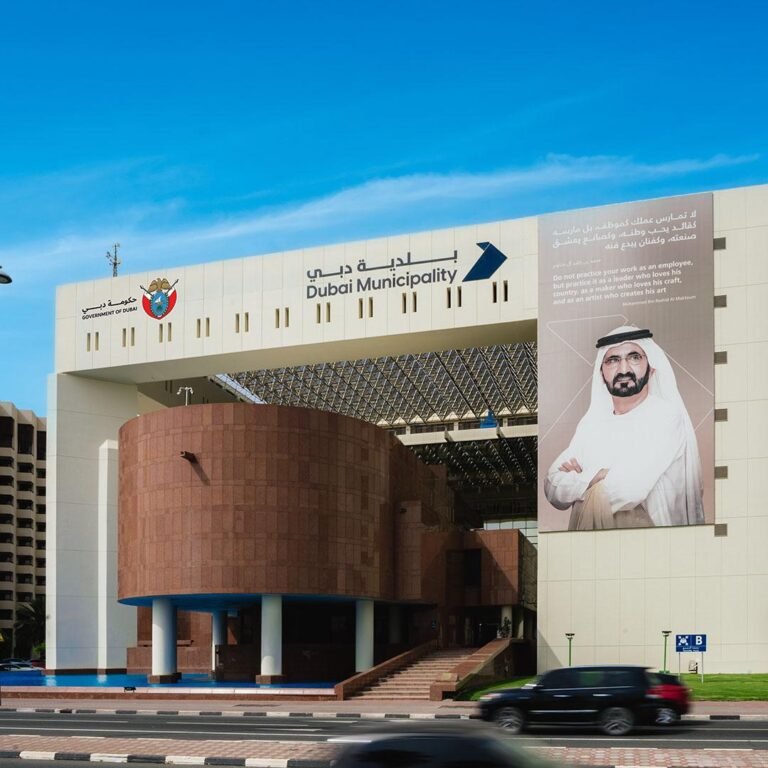
Under the operational standards enforced by Dubai Municipality, tenants are strictly prohibited from subleasing rooms, bed spaces, or partitioned sections of a housing unit to anyone. Managing shared setups now rests entirely with licensed owners and designated operators.
Property owners must obtain a municipal permit for every shared housing unit and register the property on the DLD Shared Housing Electronic Registry. Physical modifications are heavily restricted, temporary wooden and plastic partitions are illegal under the new standard.
Occupancy is also anchored to physical density rules. Every resident must be allocated a minimum of 5 square metres of habitable floor space, calculated strictly using bedroom and living room space.
Landlords and building operators have been granted a one-year transition window to adjust existing arrangements and bring non-compliant properties into alignment with the permit requirements. Any ongoing lease or operational disputes linked to these standards will flow through the Dubai Rental Disputes Centre.
Fine Schedule and Regulatory Penalties
Municipal inspectors will enforce compliance according to finalized official enforcement procedures, backing the law with substantial financial and operational penalties.
Initial violations trigger fines ranging from AED 500 to AED 500,000. If an operator or owner repeats the same violation within a one-year period, the fine doubles, reaching up to the maximum legal cap of AED 1,000,000.
Beyond monetary penalties, Dubai Municipality and partner entities can levy administrative measures depending on the severity of the breach.
| Violation Type | Penalty Structure |
|---|---|
| Standard Violation | AED 500 to AED 500,000 |
| Repeat Offence (Within 12 Months) | Fines double up to a maximum cap of AED 1,000,000 |
| Administrative Enforcement Actions | Permit cancellation, activity suspension up to 6 months, commercial licence revocation, utility service disconnection, or mandatory eviction |

UAE School Device Limits: What Changes in Core Subjects
Pen and Paper Return to UAE Classrooms Under New Device Limits
Physical books and pens are making a direct return to classrooms across the country. Starting in the 2026-2027 academic year, UAE schools will enforce a tightly regulated approach to electronic devices, pulling screens out of four core subjects: Arabic, English, mathematics, and science.
Announcing the shift during a media briefing on school readiness, Sarah bint Yousif Al Amiri, Minister of Education, explained that officials spotted clear warning signs regarding heavy screen time. Intensive use of digital platforms was taking a toll on student writing, reading, language development, and concentration, while also weakening the vital connection between thinking and writing.
This isn't a blanket ban on technology, though. Tablets and computers aren't disappearing from schools entirely; instead, the Ministry of Education is reserving them for learning activities that genuinely require them. If a digital tool adds real value for students and teachers, it stays. But for foundational subjects, paper materials take priority to reinforce core literacy and numeracy skills.
The decision didn't come out of nowhere. It builds directly on a pilot program run during the previous academic year, where a test group of students put down their screens and went back to traditional books and notebooks. According to officials, that trial paid off with measurable performance gains in certain subjects, alongside a sharp boost in student interaction and better classroom behavior.
Ultimately, the goal is smarter integration rather than sheer volume. By cutting back on constant screen use during core instruction, the ministry aims to protect student focus while keeping digital learning functional where it actually counts.

Harry Potter Movies UAE Return to Screens Starting Aug 27
All 8 Harry Potter Films Head Back to UAE Theaters Starting August 27
UAE moviegoers are getting a full wizarding marathon right at their local cinema halls starting Thursday, August 27. To celebrate the franchise's 25th anniversary, theaters across the country are bringing all eight original films back to the big screen.
Catch All Eight Wizarding World Films in UAE Theaters
The re-release kicks off with *Harry Potter and the Philosopher's Stone*, giving long-time fans and younger audiences a chance to experience the opening chapter in a theater setting. The remaining seven installments will follow over the next few weeks, running sequentially through *Chamber of Secrets*, *Prisoner of Azkaban*, *Goblet of Fire*, *Order of the Phoenix*, *Half-Blood Prince*, and both parts of *Deathly Hallows*.
Moviegoers are encouraged to turn the screenings into an event by dressing in house robes and wizarding gear. The theatrical run comes as HBO prepares to launch a new television series adaptation expected later this year around Christmas.
Ticket schedules and specific showtimes can be checked directly through local theater listings ahead of Thursday's opening roll-out.

1.27M Students Return as UAE Schools Open 11 Campuses
5,810 Buses and 11 New Campuses Ready for 1.27 Million Students
At a media briefing in Dubai ahead of the 2026-2027 academic year, Minister of Education Sarah bint Yousef Al Amiri confirmed that school gates across the UAE are ready to open for more than 1.277 million students. The total includes 26,700 new children entering the system for the first time across more than 1,180 public and private schools nationwide.
5,810 Buses and 11 New Campuses Ready for Morning Commutes
To handle the expanded enrollment, 11 new schools are joining the system alongside a fleet of 5,810 buses dedicated to morning and afternoon transit. Desk supplies are already in place, with 8 million textbooks distributed to campuses to cover subjects from day one.
Beyond physical setup, the ministry is shifting its routine focus straight into classroom practice. Policy decisions will rely on educational research and student data to evaluate how daily teaching impacts student behavior, skills, and practical application.
The ministry's data-driven model will continuously gather classroom feedback to update practical tools and teaching methods as the term progresses.