In Dubai, lease renewals often feel very personal. A family wants to keep their child in the same school area. A worker thinks about moving or a longer commute. A landlord handles mortgage payments and market changes. The main challenge is clear: when the renewal notice comes with a new price, both sides want to know what is legal.
This is where the Dubai rent increase calculator plays a crucial role. For rent adjustments in Dubai in 2026, both tenants and landlords depend on the official RERA rental index, available through the Dubai Land Department ecosystem, to verify if a proposed increase aligns with the market rate for a similar property. This tool is not merely a convenience; it serves as the authoritative reference that ensures rent changes comply with Dubai’s rental regulations. Often, it is the primary document consulted before disputes escalate into formal legal cases.
At a Glance: The Key 2026 Renewal Check You Should Do First
- Use the official RERA rental index through the Dubai REST app or the Dubai Land Department website to check the permitted increase before you accept a renewal offer.
- The calculator compares your current rent to the market value range for similar homes and sets the legal cap for any increase under Dubai rental law.
- The maximum increase can reach 20% when the current rent is significantly below market value, including cases where it is more than 40% below.
- Keep your Ejari registration details and contract terms ready, since accurate inputs determine whether the result reflects your unit correctly.
Dubai Rent: What the Calculator Is Really Analyzing
Dubai’s rent control framework is based on a straightforward principle: rent increases should reflect market trends, not arbitrary negotiations. The RERA Rent Calculator leverages the Rental Index to compare your unit’s category and location with current market rents. The result is the allowable range for your rent increase upon renewal, making it essential for protecting Tenant Rights and fulfilling Landlord Obligations.
If you are a tenant, this calculator provides immediate clarity when you receive a renewal email with a higher rent. For landlords, it offers a transparent way to demonstrate that any increase aligns with the official index, not random decisions. In both cases, it eliminates guesswork and helps prevent disputes in Dubai’s rental market.
RERA: The Rulebook for 2026 and Beyond
RERA is the regulatory authority overseeing rental regulations in Dubai, with the rental index updated annually. This means the reference point can change each year, even if your building remains the same. For lease renewals in 2026, both landlords and tenants are expected to review the latest index before agreeing on the new annual rent.
People often treat the calculator as a mere suggestion. However, under UAE Law, as applied within Dubai’s rental framework, it serves as the official benchmark to determine whether a rent increase falls within the permitted range.

Rental Index: Key Caps on Increases You Should Know
The cap is set based on how much your current rent is below the market rate shown by the index. Usually, rents can go up by up to 20% if the current rent is much lower than the market level.
| How your current rent compares to market value (per index) | Maximum permitted increase |
|---|---|
| Current rent is significantly below market value, including cases more than 40% below | Up to 20% |
Since the index result depends on the unit type and location inputs, two neighbors in the same tower may receive different outcomes if their layouts, views, or contract details vary.
Dubai REST: The Official Portal for Calculator Access
The official access points are the Dubai REST app and the Dubai Land Department website. Most residents use Dubai REST because it keeps the process in one place and is built for everyday property tasks, not just one-off checks. Use this to check now
When you open the calculator function, you will be prompted for the information that identifies your tenancy and the unit category. The goal is to match your home to the correct band in the RERA rental index.
Property in Dubai: A Step-by-Step Guide to Conducting a Pre-Renewal Check
- Gather your current tenancy contract details and ensure your Ejari registration information is accurate and up to date.
- Open Dubai REST and locate the rental services section that links to the RERA Rent Calculator and Rental Index.
- Enter the unit details carefully so the index comparison reflects your actual home category and location in Dubai.
- Save the result and share it in writing during renewal negotiations so both sides are working from the same reference.
Tenant Rights: How to Apply This Knowledge in a Renewal Discussion
If the calculator shows that no increase is allowed, respond calmly in writing, attach the result, and request a revised renewal offer. If an increase is permitted but the proposed amount exceeds the maximum allowed, refer to the limit and ask the landlord or agent to adjust the figure accordingly.
If timing concerns you, complete the check early. As the renewal date approaches, negotiating, planning a move, or preparing paperwork becomes increasingly stressful.
Landlord Responsibilities: Ensuring Compliance and Preventing Disputes
For landlords, the safest approach is to use the calculator before issuing a renewal notice and retain a copy of the result with the renewal file. This helps agents and owners demonstrate that the increase complies with the RERA rental index for 2026, reducing the risk of disputes escalating.
When raising rent, clear communication is crucial. Clearly state the current rent, the proposed new amount, and the calculations supporting the increase. Tenants are more likely to accept a rent increase when they understand the reasons and can verify the details themselves using Dubai REST.
Dubai Land Department: When Calculator Results Differ from Renewal Offers
When a tenant and landlord cannot reach an agreement, it is important to focus on the official index results and the terms of the contract. If the disagreement continues, residents typically turn to the Dubai Land Department (DLD) for official services and guidance. In some cases, disputes are escalated to the Rental Dispute Settlement Center for resolution.
Before it gets that far, double check the basics. Wrong unit type, wrong area selection, or outdated Ejari details can produce a result that does not reflect the tenancy. If you need a refresher, the Ejari registration process is the administrative backbone that keeps rental records consistent across the system.
Dubai Rental Law: Key Takeaways for 2026
The fairest lease renewals in Dubai typically follow a consistent process: both parties consult the Dubai rent increase calculator, agree on the allowable increase according to the RERA rental index, and document everything promptly. This approach safeguards tenant rights, clarifies landlord obligations, and minimizes the risk of costly disputes in Dubai’s fast-paced rental market.
Before signing a renewal this year, do this one crucial thing: run the official check on Dubai REST, save the results, and use them as the common reference point for all discussions. Click here to check now with the Official Rera Rent Calculator

UAE Emergency Visa Extension Claim: What's True?
UAE Emergency Visa Extension Claim Is Circulating, But There's No Official ICP or GDRFA Notice to Back It Up
A UAE emergency visa extension for stranded travelers is being shared widely right now, but before you cancel that airport run or tell your visiting relatives to relax, there is something important you need to know: no official announcement from the UAE's immigration authorities has been confirmed.
What People Are Whispering About
A headline published by TheTraveler.org, dated 28 May 2026, states that "the UAE has rolled out emergency visa extensions for stranded travelers." That's a significant claim. During periods of flight disruption, airspace restrictions, or sudden airline suspensions, the idea of an automatic visa buffer is exactly what anxious travelers and their UAE-based hosts want to hear. So it spread. Fast.
The problem? When you click through to the actual article, what you find is a general site index, a rolling list of TheTraveler.org's recent travel guides covering Ljubljana Castle, Heathrow layovers, and expat checklists for Germany. There is no policy text, no eligibility criteria, no effective date, and no quote from any UAE government official. The headline exists. The substance behind it does not.
What the UAE's Actual Immigration Authorities Say
In the UAE, two bodies run the show on visitor visas and entry permits. The Federal Authority for Identity, Citizenship, Customs & Port Security, known as ICP, handles immigration services for Abu Dhabi, Sharjah, and the other northern emirates through its digital platforms. Dubai operates its own system through the General Directorate of Residency and Foreigners Affairs, or GDRFA Dubai. Neither authority has published a dated circular, portal update, or press statement confirming any emergency extension window as of the time of publication.
That gap is not a technicality, it is the whole story. When the UAE has previously introduced genuine facilitation measures during disruptions, the process has been clear and traceable: official circulars go out, ICP and GDRFA update their portals, and major UAE outlets like Khaleej Times and Gulf News carry the confirmed details with dates and eligibility conditions. None of that chain has happened here. What exists is a headline without a policy behind it.
Why Getting This Wrong Has Real Consequences
For Dubai and UAE residents hosting visiting family members, and for corporate travel managers overseeing business visitors, the difference between an official waiver and a standard paid extension is not academic. UAE overstay fines accumulate daily after a visa expires. An irregular immigration status can block hotel check-ins, complicate insurance claims, affect airline boarding for onward flights, and create complications for future UAE entry. Assuming a relief measure exists when it has not been officially confirmed is a decision that can cost money and cause genuine disruption.
- Claim Source: TheTraveler.org headline, dated 28 May 2026
- Supporting Policy Text in Article: None, the linked page is a general site content index
- Official ICP Announcement: Not confirmed as of publication
- Official GDRFA Dubai Announcement: Not confirmed as of publication
- Claim Rating: Unverified
- Standard Extension Route (ICP): icp.gov.ae, online application for visit visa extension
- Standard Extension Route (Dubai): gdrfad.gov.ae, GDRFA Dubai portal for Dubai-issued permits
- Overstay Risk: Daily fines apply after visa expiry; no grace period confirmed under this claim
- Documentation Tip: If disruption is genuine, keep airline cancellation notices and rebooking confirmations, these are decisive when requesting any flexibility from authorities
The claim that the UAE has rolled out emergency visa extensions for stranded travelers is unverified, no ICP or GDRFA Dubai notice, date, or eligibility rule has been published to support it. Until an official circular appears on icp.gov.ae or gdrfad.gov.ae, treat standard UAE visa rules as fully in force. If your visa is approaching expiry and your flight situation is genuinely disrupted, apply for a paid extension through the correct official portal now, waiting for a relief measure that may not exist is the riskiest move you can make.THE VERDICT: FALSE UNTIL PROVEN OTHERWISE. The headline is unsubstantiated. The article behind it contains no policy details. ICP and GDRFA Dubai have not confirmed any emergency extension program. Do not rely on this claim to make immigration decisions.

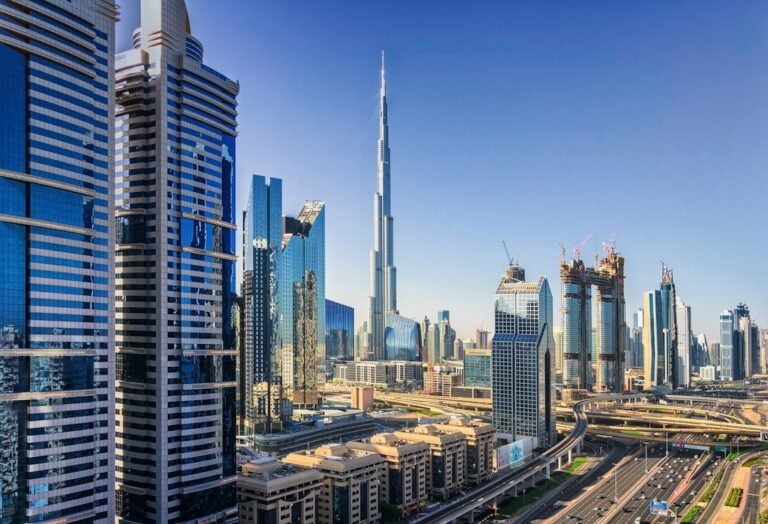
Dubai Skyscrapers: Icons of Urban Ambition
Dubai Skyscrapers Didn't Just Change the Skyline, They Rewrote the City's Entire Economic Story
When you look at Dubai skyscrapers rising from the desert, you're not just seeing impressive architecture, you're reading a deliberate, decades-long strategy to put one city on every investor's, tourist's, and multinational's shortlist.
From Trading Port to Global Skyline: What Actually Happened
Dubai's transformation didn't happen by accident. From the late 1990s onward, the emirate's leadership made a calculated bet: build structures so striking, so globally recognizable, that the city's brand would market itself. Emirates Towers, the twin-tower complex that redefined Sheikh Zayed Road, and the sail-shaped Burj Al Arab weren't just construction projects. They were announcements. Each one told the world that Dubai was open, ambitious, and capable of executing at a scale most cities only dream about.
The Dubai Government Media Office has confirmed what urban economists have long argued: these landmark buildings function as economic anchors, not just aesthetic statements. The model is straightforward, a headline project draws global attention, surrounding districts mature into mixed-use hubs, and suddenly you have a self-sustaining ecosystem of offices, hotels, retail, and residential communities clustering around a single iconic address. Emirates Towers helped birth the DIFC corridor. Burj Al Arab put Jumeirah on the luxury tourism map permanently.
Steel, Glass, and Cold Hard Cash: The Economic Engine Behind the Icons
Here's the part that doesn't always make the travel brochures: Dubai's signature skyscrapers are demand generators for the wider economy in very practical ways. Premium hospitality icons like Burj Al Arab concentrate high-spend tourists, which feeds aviation, retail, dining, and events infrastructure. Office towers like Emirates Towers pull in regional headquarters for professional services firms, which in turn drives demand for transport links, residential communities, and neighborhood amenities. The Dubai Department of Economy and Tourism has consistently leveraged these landmarks in global marketing campaigns, because a single recognizable silhouette communicates stability and capacity faster than any press release.
The city's vertical growth also reflects smart land-use thinking. Dubai's planners didn't just stack floors for the sake of height. Dense, transit-linked business and leisure corridors reduce sprawl, concentrate jobs near transport, and make the city more functional for the 3.6 million-plus people who live and work here. Over time, the toolkit has expanded beyond pure height, district planning, public realm upgrades, and mobility integration have kept high-density zones livable rather than just impressive.
What This Means for Residents, Expats, and Anyone Watching Dubai Grow
For the average person living in Dubai, the skyline's evolution is felt in daily life, in the commute corridors that formed around major commercial zones, in the neighborhood services that followed office clusters, and in the sheer availability of jobs concentrated around landmark districts. The city's ability to execute large-scale projects quickly and visibly has also shaped expectations: residents and businesses alike have come to expect continuous upgrading of urban services as new developments come online.
- Key Landmark: Emirates Towers, twin-tower complex on Sheikh Zayed Road, cornerstone of Dubai's financial and business district identity
- Key Landmark: Burj Al Arab, globally recognized hospitality icon that anchored Jumeirah as a premium tourism destination
- Development Model: State-led, accelerated from the late 1990s, pairing large-scale infrastructure with globally recognizable architecture
- Economic Function: Landmark buildings act as demand generators, attracting tourism, multinational offices, and investor confidence to surrounding districts
- Authoritative Source: Dubai Government Media Office confirms the role of signature architecture in the emirate's global-city positioning
- Planning Approach: Vertical growth paired with district planning, public realm upgrades, and mobility integration for long-term livability
Dubai's skyline is one of the most effective city-branding tools ever built, and it was designed that way from the start. Every tower that went up sent a signal to the world about what this city could do and how fast it could do it. For residents and businesses, that ambition translates into real infrastructure, real jobs, and a city that keeps reinventing the neighborhoods around its most iconic addresses.
Emirates ID Perks: 5 Tricks Every UAE Resident Needs
Emirates ID Perks Are Hiding in Plain Sight, Here Are 5 That Could Change Your Daily Routine
Emirates ID perks go far beyond proving who you are at a government counter, your wallet-sized card is quietly one of the most powerful tools in the UAE, unlocking everyday savings, faster travel, and payment shortcuts that most residents have never even tried.
Why This List Is Worth 3 Minutes of Your Time
Time Out Dubai recently shone a light on a handful of lesser-known Emirates ID benefits that most residents scroll past without a second thought. We're talking real, practical wins: discounted nights at luxury hotels, skipping queues at theme parks, paying for petrol without digging for cash, and breezing through airport gates using your face. These aren't loyalty-card gimmicks, they're built into the infrastructure of daily life in the UAE, managed and enabled by the Federal Authority for Identity, Citizenship, Customs & Port Security (ICP).
The card itself is issued and maintained by ICP, which links your verified identity, residency status, and biometric data to a single chip. That's the engine behind every perk on this list. When a hotel, ATM, or border gate reads your Emirates ID, it's pulling from that verified record, which is why the authentication is faster and more trusted than a manual document check. Think of it less as a card and more as a digital passport for everyday life.
1. Pay for Petrol Without Touching Your Wallet
Yes, really. Select petrol stations across the UAE have integrated Emirates ID-enabled payment flows, meaning you can authenticate a transaction using your card rather than fumbling for cash or a bank card. It's a small thing until you're in a rush on Sheikh Zayed Road at 8am, then it's everything. The exact stations and payment mechanics vary by operator, so it's worth checking with your regular forecourt, but the functionality is live and growing.
2. Withdraw Cash at ATMs Using Your Emirates ID
Certain UAE banks have rolled out Emirates ID-linked ATM services, allowing residents to initiate cash withdrawals or identity-verified transactions using the card's chip rather than a traditional bank card. This is particularly useful if you've ever left your debit card at home, a scenario that, in a cashless-first city like Dubai, still catches people off guard. Check with your bank directly to confirm whether your branch network supports this feature, as rollout is not yet universal across all institutions.
3. Unlock Resident Discounts at Hotels and Theme Parks
This one has real dirhams attached to it. A wide range of hospitality and leisure operators across Dubai and the wider UAE offer resident-exclusive rates, and your Emirates ID is the key. Flash it at check-in at participating hotels or at the gates of major theme parks and you can access pricing that tourists simply don't see. The savings can be significant, particularly during peak season when rack rates climb. Always ask upfront: "Do you have a UAE resident rate?", the answer is more often yes than you'd expect.
4. Speed Through Border Crossings With Facial Recognition
The UAE has invested heavily in biometric border processing at airports and land crossings, and your Emirates ID sits at the centre of it. Where facial-recognition-enabled eGates are deployed, including at Dubai International Airport, the system cross-references your live biometric against the identity record linked to your card, allowing you to clear immigration in seconds rather than minutes. No repeated document shuffling, no manual stamp queues. ICP oversees this infrastructure, and the technology is continuously being expanded across more entry and exit points nationwide.
5. Cut the Paperwork at Government and Private Service Counters
This one doesn't come with a discount code, but it saves something more valuable: time. Because your Emirates ID links to a verified, centralised identity record, presenting it at government service centres, banks, telecoms providers, and even some healthcare facilities can dramatically reduce the volume of supporting documents you'd otherwise need to bring. The card essentially vouches for you, your residency status, your personal data, your verification history, in a single tap or scan. In a city that runs on efficiency, that's a genuine quality-of-life upgrade.
The Verdict: One Card, Five Wins
- Best money-saver: Hotel and theme park resident discounts, the savings are immediate and repeatable.
- Best time-saver: Facial-recognition eGates at UAE airports, nothing beats a 10-second border crossing.
- Most underused: ATM and petrol payment integration, most residents don't know these exist.
- Issuing authority: Federal Authority for Identity, Citizenship, Customs & Port Security (ICP)
- Claim status: Specific perks (petrol payments, ATM withdrawals, hotel discounts, facial-recognition border crossings) are reported by Time Out Dubai, residents should verify current availability directly with relevant service providers and ICP.
Your Emirates ID is already in your pocket, the only question is whether you're using it to its full potential. From resident hotel rates to airport eGates, the card is quietly one of the UAE's best everyday tools. Start with one perk this week and you'll wonder why you waited.

Sheikh Mohamed bin Zayed Eid Al Adha Message: Peace & Prosperity
Sheikh Mohamed bin Zayed's Eid Al Adha Message Puts Peace and Prosperity Front and Centre for Every UAE Resident
The Sheikh Mohamed bin Zayed Eid Al Adha message landed on social media this week, and for the UAE's millions of residents, citizens, expats, workers, and visitors alike, it carried a meaning that goes well beyond a seasonal greeting: the country's leadership is doubling down on unity, security, and shared prosperity at a time when the wider region remains unsettled.
What the UAE President Actually Said, and Why It Resonates Right Now
His Highness Sheikh Mohamed bin Zayed Al Nahyan, UAE President, posted the Eid Al Adha greeting via his official social media channels, calling for "peace, stability, and prosperity to all." Three words. But in the context of 2026's regional backdrop, ongoing tensions that have kept governments across the Gulf on high alert, those three words are doing a lot of heavy lifting.
In the UAE, presidential Eid messages aren't just ceremonial. They're carried by state and national media, shared widely across platforms, and read as a direct signal of national priorities. When the President specifically names stability alongside prosperity, it's a deliberate reassurance to residents that daily life, public safety, and essential services remain firmly on track, even as the news cycle beyond UAE borders stays turbulent.
Why This Message Hits Differently During Eid Al Adha
Eid Al Adha is one of the UAE's most significant dates, religiously, socially, and economically. Mosques fill up for morning prayers, families gather across emirates, charitable giving surges, and the hospitality and retail sectors see some of their busiest days of the year. For Dubai specifically, the holiday coincides with peak outbound travel and a spike in domestic spending. A presidential message that leads with peace and stability isn't just warm words, it's a confidence signal to tourists, investors, and businesses that the UAE's operating environment is solid and uninterrupted.
The UAE's public communications strategy in recent years has consistently woven national resilience into its messaging, from infrastructure preparedness to economic continuity. This Eid message fits squarely into that pattern. For expats and long-term residents, it's a reminder that the country's leadership remains focused on protecting the quality of life that drew most of them here in the first place.
What This Means for You This Eid, and Beyond
Whether you're heading to prayers, travelling for the long weekend, or simply spending time with family, the practical takeaway is straightforward: the UAE's leadership has publicly reaffirmed its commitment to a safe, stable, and prosperous environment. Government services, public spaces, and emergency infrastructure remain fully operational. For businesses in hospitality, retail, and tourism, the message also functions as a green light, consumer confidence during the holiday period is backed by the highest level of national leadership.
- Who sent the message: UAE President His Highness Sheikh Mohamed bin Zayed Al Nahyan
- What was said: A call for "peace, stability, and prosperity to all" marking Eid Al Adha
- When it was posted: 28 May 2026, via official social media channels
- Why it carries weight: Presidential Eid messages in the UAE serve as national priority statements, not just greetings
- Regional context: The message comes as the UAE continues to emphasise preparedness and resilience amid wider regional tensions
- Economic signal: Stability messaging during peak Eid travel and spending reinforces investor and visitor confidence in the UAE
Sheikh Mohamed bin Zayed's Eid Al Adha message is a clear, public reaffirmation that the UAE's focus on peace, security, and shared prosperity holds firm, regardless of what's happening beyond its borders. For residents and businesses, it's the kind of leadership communication that keeps confidence high during one of the year's most active holiday periods. Eid Mubarak from the UAE's top office carries real weight, and this year, it carries it with purpose.

Iran Internet Access Restored After 8-Month Shutdown
Iran Internet Access Restored, But Don't Call It a Full Comeback Yet
Iran internet access restored, those four words sound like a clean ending, but the reality on the ground is far messier. After eight months of near-total shutdown, Iranian authorities have switched the lights back on, partially. The government has approved a phased return of connectivity following sustained pressure from international rights groups, but nobody is calling this a full restoration, and for good reason.
Eight Months Offline: What Actually Happened
To understand why this partial restoration is significant, you need to appreciate just how long eight months without reliable internet really is. Iran operates what experts describe as a two-track internet system: domestic services, local banking portals, government apps, some Iranian platforms, can stay reachable even during a national shutdown, while international traffic gets choked off at the country's centralised gateways. That means residents could technically access a local payment app while being completely cut off from WhatsApp, Instagram, international news, and global e-commerce platforms.
The mechanism behind this is straightforward. Iran's telecom infrastructure runs through national gateways that authorities can throttle or block selectively. Internet service providers operate under strict licensing rules that require them to comply with filtering directives from the government. When a shutdown order comes down, ISPs don't have a choice, they cut international bandwidth while keeping domestic traffic alive. Rights groups, including digital freedom organisations that track connectivity globally, had been criticising this shutdown for months, pointing to the economic and humanitarian cost of keeping millions of people offline.
What "Partial" Actually Means for Real People
Here's where it gets important for anyone with family, business, or financial ties to Iran, including the large Iranian diaspora community across the UAE. "Partial restoration" in practice rarely means flipping a switch and returning to normal. Authorities typically phase access back in stages: fixed broadband before mobile data, major cities before provinces, or business and institutional users before general consumers. Even when connectivity technically returns, users often experience throttled speeds, intermittent outages, and selective blocking of major global platforms. The internet is "on", but it may be functionally constrained for weeks or months longer.
For UAE residents sending remittances to family in Iran, or businesses that serve Iranian customers, this uncertainty carries a real operational cost. Payment channels, customer support lines, and digital marketing tools that depend on stable international connectivity remain unreliable. Companies that had put Iran-facing operations on hold can't simply reactivate them until it's clear whether the restoration holds, and whether major platforms become consistently reachable without workarounds like VPNs.
The Signals to Watch Before Declaring Victory
- Telecom regulator directives: Official statements from Iran's national telecom regulator will indicate whether ISPs have been instructed to restore full international bandwidth or only selective access.
- Platform availability: If major global services, messaging apps, social media, international news sites, become consistently reachable without VPNs, that's a strong indicator of meaningful restoration.
- Mobile data vs. fixed broadband: Mobile data is often the last to return and the first to be throttled. Watch for reports from users on mobile networks specifically.
- Rights group assessments: Organisations that monitor internet freedom track not just whether access is available, but whether it is stable, affordable, and free from broad platform blocks.
- Government policy signals: Because this restoration followed explicit government approval, any renewed security concerns or policy shifts could reverse gains quickly.
Iran's partial internet restoration is a step forward, but "partial" is doing a lot of heavy lifting in that sentence. For millions of Iranians and the diaspora communities, including many across the UAE, the real question isn't whether the internet is technically back, but whether it's stable, open, and here to stay. Until the telecom regulator issues clear directives and major global platforms become consistently reachable, households and businesses should stay in contingency mode rather than assume the worst is over.