
(Credit - What's On)
Air Canada Dubai flights grounded until 2027
Air Canada has confirmed that its Dubai route will remain suspended until mid-January 2027. Travellers flying with the airline will need to make alternative plans, as the carrier has stated that flights to and from Dubai continue to be suspended and will remain cancelled until mid-January 2027. This announcement applies only to Air Canada’s Dubai services, and passengers with bookings on the affected airline are encouraged to check directly with the carrier for the latest information on rebooking, refunds, or alternative travel arrangements.
Dubai International Airport (DXB) continues to operate as one of the world’s busiest airports, with hundreds of airlines connecting the city to destinations across the globe every day. The good news for travellers is that Dubai’s international connectivity remains strong, with a number of global carriers either returning to the emirate or increasing their services as the winter travel season approaches. Among the airlines expected to operate flights to Dubai later this year are British Airways, Cathay Pacific, KLM, Singapore Airlines, and Lufthansa, as they roll out their winter schedules.
Meanwhile, Emirates has released an updated travel advice ahead of one of the busiest travel periods of the year, with large numbers of passengers expected to pass through Dubai International Airport (DXB) during the school holidays. To help travellers avoid unnecessary delays, Emirates is encouraging passengers to plan ahead, use early check-in services where possible, and allow extra time before their flight. Passengers are advised to arrive at Dubai International Airport at least three hours before their scheduled departure, as security and immigration queues may take longer than normal during the busy summer period.
This suspension of Air Canada’s Dubai route is a continuation of previous disruptions, and travellers are advised to check with the airline for the latest information on their travel plans. With other major global carriers maintaining robust connectivity at Dubai International Airport (DXB) for the upcoming winter travel season, passengers have alternative options available.
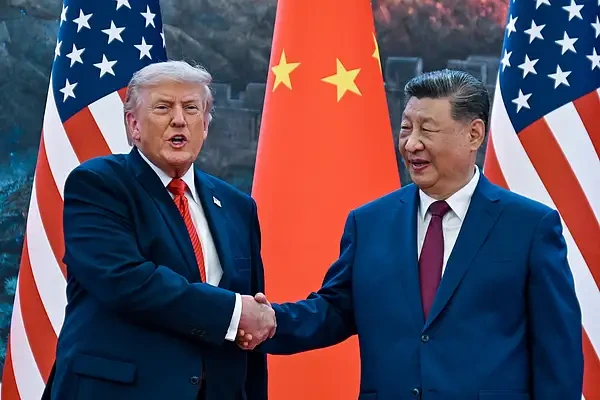

Trump Signs Order to Limit US Birthright Citizenship
Trump Limits US Birthright Citizenship Despite Supreme Court Ruling
US President Donald Trump signed two executive orders on August 6, 2026, in a bid to limit US birthright citizenship, despite a prior Supreme Court ruling rejecting his earlier attempt. The new orders target the practice of "birth tourism," where pregnant foreigners travel to the US to give birth, and also limit the rights of children born to foreign government employees in the US. According to White House aide Stephen Miller, "the practice of birth tourism is, as of the signing of this order, hereby banned."
The Center for Immigration Studies estimates that between 20,000 and 25,000 mothers came to the US for birth tourism in a year-long period between 2016 and 2017. The executive orders could also affect people born in US territories, should Congress enact a proposed law to end automatic citizenship there. Immigrant advocates have called the move an attempt to evade the Supreme Court's decision, with the ACLU predicting it is doomed to fail in court.
The Supreme Court had previously struck down Trump's earlier executive order, which targeted a wide swath of immigrants in the country illegally or temporarily. Trump's new orders are likely to face legal challenges, with legal experts saying it is unclear what effect the executive orders might have given the Supreme Court ruling. Deborah Fleischaker, a former Biden administration official, said, "Today's executive orders are nothing more than an attempt to get around that ruling."
The move is part of Trump's crackdown on immigration, with the White House taking particular aim at birth tourism. Trump called the Supreme Court's 6-3 ruling on June 30 a "very unfortunate decision," decrying that "people are building businesses around" birth tourism. The executive orders have sparked immediate backlash, with immigrant advocates calling for the government to establish guidelines honoring the Supreme Court ruling.
This development comes after the Supreme Court's June 30 ruling, which rejected Trump's earlier attempt to limit birthright citizenship. The new executive orders are a narrower attempt to curtail birthright citizenship, but are still likely to face significant legal challenges.

Strait of Hormuz vessel traffic drops
Hormuz Traffic Falls Amid Iran-Oman Talks
Vessel traffic through the Strait of Hormuz has decreased this week amid ongoing diplomatic talks between Iran and Oman. These discussions aim to address safe passage and potential fees for commercial navigation through this critical waterway. The strait, a vital corridor for global oil and LNG flows, remains a focal point for geopolitical tensions and economic implications. Local investors and shipping operators are closely watching the situation, with pricing in related prediction markets suggesting that the decrease in vessel traffic is consistent with scenarios where Iran might impose transit fees.
The pricing in the market for "US charges Hormuz fees by August 31, 2026?" implies a low probability of 1.7% for the U.S. imposing such fees, as recent developments suggest Iran is more likely to take that step. The ongoing Iran-Oman talks could influence these probabilities, depending on whether they lead to an agreement on the management of transit fees and shipping routes. Oman proposed managing shipping through two separate maritime corridors while also presenting a draft agreement to regulate navigation in the strategic waterway.
The UAE Ministry of Foreign Affairs has strongly condemned Iran's latest missile and drone attacks targeting Bahrain, Kuwait, and Jordan, describing them as a clear violation of the sovereignty and territorial integrity of fellow Arab states. The ministry reiterated the UAE's full solidarity with Bahrain, Kuwait, and Jordan, affirming its support for all measures taken by the three countries to safeguard their security, stability, and territorial integrity.
This development occurs against the backdrop of the 2026 Strait of Hormuz crisis, which began after military operations against Iran earlier this year. As the situation unfolds, the term structure of the prediction markets indicates expectations of a potential catalyst later in the year. The pricing for the December 31, 2026, market shows a slightly higher probability of 8.5% for the U.S. charges scenario, suggesting that market participants are accounting for possible developments in the coming months.
The Strait of Hormuz crisis has been a focal point for geopolitical tensions and economic implications since the beginning of the year, with the UAE and other regional countries playing a crucial role in maintaining regional security and stability.

US ammo stockpiles: Trump says 'massive amounts' remain
Trump: US Has 'Massive Amounts' of Ammo Left
President Donald Trump has pushed back against reports that the US has critically depleted its key missile and interceptor stockpiles after six months of conflict with Iran, stating that the military is "in great shape" and possesses "literally massive amounts of ammunition." Trump addressed questions about a supplemental funding request and recent media accounts of shortages, saying "We have certain types of munitions that are very powerful that we have unlimited, virtual unlimited supply." The US Air Force has used precision munitions and air-defence interceptors extensively, drawing scrutiny over stockpile levels.
The US-Iran conflict has raised concerns over the depletion of precision missiles, such as ATACMS and Precision Strike Missiles, with reports suggesting the US Army has used "virtually all" of its global stockpile. Patriot interceptors are also down substantially, with estimates suggesting roughly half to two-thirds have been expended. THAAD interceptors have seen major reductions, with reports ranging from 38% to 80% of pre-war stocks. Despite these concerns, Trump has requested additional congressional funding, estimated to be around $21 billion, to restock munitions, framing the need as ongoing prudence rather than a crisis.
The conflict has stretched into its sixth month, far longer than the initial four-to-six-week timeline projected by some officials. Think-tank analyses have warned that replenishing these systems to pre-war levels could take years, due to production constraints. Trump has indicated that the Iran conflict "is going to end soon," and Defence Secretary Pete Hegseth has maintained that stockpiles remain strong. The US is seeking to expand production of munitions, with defence companies building new plants and factories.
This development comes after a Reuters report stated that the US Army has used "virtually all" of its global stockpile of long-range precision missiles, and a Center for Strategic and International Studies (CSIS) analysis estimated that roughly half to two-thirds of Patriot interceptors have been expended. The Washington Post also reported that hundreds to over a thousand Tomahawk cruise missiles have been used in the early phases of the conflict. The US is working to restock its munitions, with Trump requesting additional funding to support the effort.
The situation is being closely monitored, with concerns over the readiness of the US military for potential contingencies elsewhere, such as the Indo-Pacific. The US is seeking to balance its military efforts with the need to replenish its stockpiles, and Trump's request for additional funding is seen as a key step in this process. As the conflict continues, the US will need to carefully manage its resources to ensure it can respond effectively to emerging threats.
In related news, the US has been expanding its production of munitions, with defence companies building new plants and factories. This effort is seen as critical to replenishing the US stockpiles and ensuring the military has the resources it needs to respond to emerging threats. The US is also working to improve its logistics and supply chain management, to ensure that munitions can be delivered quickly and efficiently to where they are needed.

GTA 6 Netflix Preview Set for August 28
GTA 6 Extended Preview Hits Netflix August 28
Rockstar Games has announced that the extended preview for Grand Theft Auto VI will debut on Netflix on August 28, 2026, before becoming available on Rockstar's own platforms a few hours later. Fans in the UAE can watch the preview on Netflix at 12:30am UAE time, while those without a subscription will have to wait until 6:30am UAE time to view it on Rockstar's YouTube channel and official website.
This move marks a first for Rockstar, as the developer has chosen to partner with a streaming service for an exclusive early premiere. The extended preview's content remains under wraps, leaving fans to speculate about what it might include, such as gameplay, exploration of Vice City, or details about the game's characters and story.
The extended preview arrives just a few months before the game's official launch, currently scheduled for November 19, 2026, for PlayStation 5 and Xbox Series X/S. This update is the biggest since Rockstar confirmed the launch date, and it has already sparked significant discussion online.
The GTA 6 extended preview on Netflix is a significant event for fans, especially in the UAE, where they can watch it before the rest of the world. With the game's release date approaching, this preview is expected to generate even more excitement and anticipation among gamers.
A similar preview event has not occurred in the past, as Rockstar usually releases trailers and gameplay videos on its own platforms. The decision to partner with Netflix for this exclusive premiere is a notable shift in the company's strategy, and it will be interesting to see how it affects the game's overall release and reception.

Dubai E-Scooter Fines: Up to Dh300 for Violations
Ride Safe: Dubai E-Scooter Fines Now Up to Dh300
As of May 1, 2026, Dubai has deployed a dedicated Personal Mobility Monitoring Unit to strictly enforce e-scooter and bicycle regulations. The Roads and Transport Authority (RTA) and Dubai Police have outlined specific rules and fines for e-scooter riders to ensure public safety and promote responsible riding.
E-scooter riders in Dubai are expected to follow all traffic rules and adhere to road markings. The RTA has set a maximum speed limit of 20km/h for e-scooters in shared zones, which will be clearly mentioned on road signs. Riders must also maintain a safe distance from other road users and give way to pedestrians, slowing down or dismounting at pedestrian crossings or in crowded areas.
There are 21 designated zones across Dubai where e-scooters are allowed, including popular areas like Jumeirah Lake Towers, Downtown, Al Rigga, and Dubai Internet City. However, riding on highways, footpaths, or roads with a speed limit over 60 km/h is strictly prohibited.
To ride an e-scooter in Dubai, you don't need a full driving license, but you do need a permit from the RTA, which can be obtained online by completing a short training course and test. The permit is free and can be obtained through the "RTA Dubai" app by uploading a copy of your Emirates ID, a personal photo, and your scooter's details.
Fines for violating e-scooter rules in Dubai vary depending on the offense. Some common penalties include:
| Violation | Fine |
|---|---|
| Failure to comply with speed limits | Dh100 |
| Riding without a valid RTA permit | Dh200 |
| Parking a scooter in non-designated zones or obstructing traffic | Dh200 |
| Carrying a passenger on an electric scooter | Dh300 |
| Riding an e-scooter on a road with a speed limit over 60km/h | Dh300 |
To avoid these fines, e-scooter riders must be at least 16 years old, wear safety gear, and follow all RTA rules. The RTA mandates that e-scooters must not exceed a maximum speed of 30 km/h, though speed limits within specific zones are often lower. The scooter must have functional front and rear brakes, a bell, front white and rear red lights, and reflectors.
In summary, e-scooter riders in Dubai must follow the rules and regulations set by the RTA and Dubai Police to avoid fines and ensure public safety. By obtaining a permit, following speed limits, and riding responsibly, riders can enjoy the freedom of e-scooters while minimizing the risk of penalties.