Water Cannons Deployed in Patna as Bihar Student Protests Turn Violent
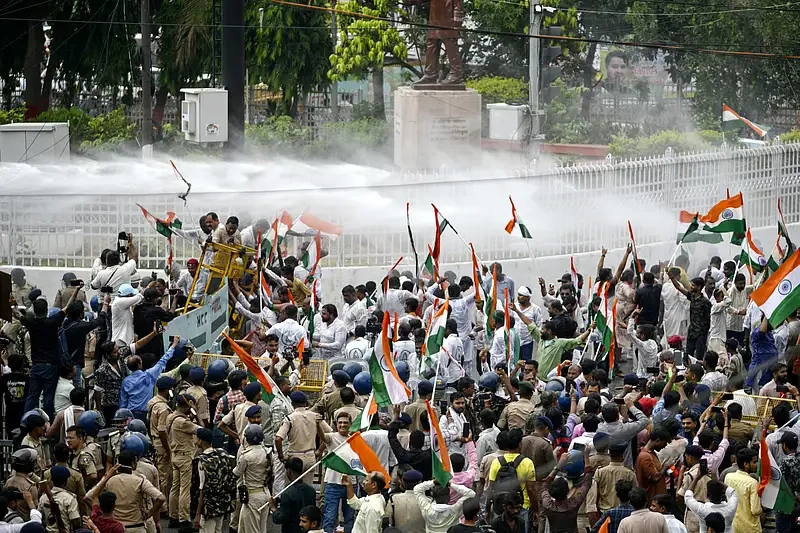
Police in Patna used water cannons on Tuesday, August 25, 2026, after thousands of demonstrators broke through security barricades during a march toward the residence of Bihar‘s chief minister. Unemployed youth and student groups across the state of 130 million people clashed with security forces to demand public sector job opportunities, the cancellation of a controversial recruitment exam, and sweeping systemic reforms to competitive testing.
State Launches Online Portal Following Stone-Pelting Accusations in Capital
Patna police superintendent Kartikeya K Sharma confirmed officers will identify and take legal action against demonstrators accused of pelting security personnel with stones during the march. In response to the growing unrest, Bihar Chief Minister Samrat Choudhary announced the immediate launch of an online ‘Student Support Camp’ allowing candidates to register and track recruitment grievances.
The violent confrontation follows youth-led demonstrations in New Delhi last month, organized by the Cockroach Janta Party, which forced the resignation of India’s education minister over national exam irregularities.


WhatsApp Strict Account Settings: How to Block Cyber Attacks
Stop Unknown Files and Calls With WhatsApp’s New Lockdown Feature
WhatsApp introduces lockdown-style security to block high-tech attacks
WhatsApp is rolling out a brand-new feature called Strict Account Settings to shield users from targeted cyberattacks, account hijacking, and stealth spyware. When activated, the security feature adopts a lockdown approach to untrusted communication: it automatically blocks media attachments, files, and incoming calls from unknown senders.
The upgrade arrives as cybercriminals increasingly use messaging apps to distribute malicious links, scrape user data, and hijack phone accounts. By stopping incoming media files and attachments from people outside your contact list before they touch your device, the system cuts off the primary methods bad actors use to install spyware secretly. While this restricts how freely non-contacts can share files with you, it creates a far tighter barrier against remote hacking.
Global deployment is currently underway. During this security upgrade, some users may notice brief 24-hour account reviews or temporary feature blocks while automated systems work to resolve mistakenly flagged accounts.
Who needs the new security feature most
Public figures and journalists face the heaviest exposure to tailored hacking attempts and stealth spyware campaigns. Attackers frequently single out high-profile targets with malicious links or dangerous file attachments disguised as routine messages. Enabling strict security blocks these dangerous attachments from untrusted accounts at the gate, keeping private chats and personal data out of reach.
General account holders also gain direct defensive benefits against widespread digital threats. Cybercriminals rely on mass messages containing bad media files to breach accounts, scrape private info, or execute account takeovers. Activating these controls ensures suspicious calls from strangers are silenced and unexpected files from untrusted numbers are immediately blocked.
How to activate Strict Account Settings on your device
Setting up the new security controls takes under a minute inside the app's existing privacy controls.
- Open WhatsApp on your device and navigate to Settings > Privacy > Advanced.
- Turn on Strict Account Settings to automatically block media attachments and silence incoming calls from unknown numbers.
- Turn on two-step verification inside your account settings for extra login protection.
- Protect your access by never sharing your account PIN or one-time registration codes with anyone.

Rial Hits 2M: Inside Trump Iran Economic D-Day
Rial Collapses Past 2 Million as Naval Squeeze Bottlenecks Iranian Oil
Washington's current strategy relies on an explicit bet that physical naval interdiction can convert theoretical financial sanctions into an immediate liquidity crisis. By pairing US Treasury Secretary Scott Bessent’s "economic D-Day" against covert financial networks with direct interdiction in the Strait of Hormuz, the United States aims to completely cut Tehran’s access to foreign currency before military deployment costs force an operational reset.
The Mechanics of the Maritime Chokehold
The current offensive combines regulatory financial isolation with direct maritime force. Treasury Secretary Scott Bessent structured the "economic D-Day" initiative to dismantle every remaining operational path supporting Iranian state revenues. The targets expand beyond conventional banking channels to encompass illicit ship-to-ship crude transfers, disguised financial transactions, and physical movements of gold.
Physical force actively reinforces these sanctions at sea. American warships are blockading Iranian ports to keep crude exports contained while simultaneously escorting third-country commercial tankers along southern transit routes near Oman. This dual operation shifts the maritime balance. Between February 28 and the first ceasefire on April 8, Iran maintained crude exports of roughly 1.8 million barrels per day, outstripping its 2025 daily average of around 1.7 million barrels per day while restricting regional traffic. Under active blockade enforcement, that revenue generation engine has effectively stalled.
Fiscal Collapse and Political Stress in Tehran
The direct effect of this chokehold is visible across Iran's financial indicators and political leadership statements. The Iranian rial has plummeted past two million to the US dollar, stripping purchasing power from the domestic market and signaling systemic financial stress.
Senior officials in Tehran have acknowledged the operational reality of the squeeze. Iranian Central Bank Governor Abdolnaser Hemmati confirmed the outcome directly, stating plainly that the country is not exporting oil. This admission reflects an unprecedented break in official revenue projections.
Political leaders are voicing open concern regarding institutional endurance. Iranian Parliament Speaker Mohammad Bagher Ghalibaf warned publicly that military strength cannot insulate the state if basic food supplies and financial circulation collapse, noting that the country cannot endure without economic growth. Concurrently, Iranian President Masoud Pezeshkian indicated that bringing the conflict to a close while maintaining power and dignity represents a necessary consideration, demonstrating the profound internal pressure facing Tehran's decision-makers.
Naval Deployment Strain and Foreign Trade Impact
Sustaining an absolute naval and financial blockade imposes severe operational demands on American military logistics. Enforcing interdiction mandates while providing active escorts for global commercial traffic requires continuous deployment of carrier strike groups in the Persian Gulf. The physical toll is demonstrated by the USS Abraham Lincoln, which logged more than 270 days at sea without touching land before being relieved by the USS George Washington. Reallocating the USS George Washington to the Persian Gulf leaves American military posture without a carrier deployed in the Pacific, creating clear strategic trade-offs for Washington.
The blockade also directly targets the trade links between Iran and its primary external buyer. Beijing remains Iran's primary crude customer, relying on complex maritime transfer protocols to receive shipments. As Washington tightens enforcement against ship-to-ship transfers and gold settlement mechanisms, processing non-compliant crude trades carries severe sanctions liabilities for foreign counterparties.
The Endurance Equation
Despite severe monetary depreciation and zeroed-out official crude exports, Tehran retains significant asymmetric retaliatory options. Stockpiles of ballistic missiles and long-range drones leave Iran capable of escalating the conflict or targeting energy infrastructure across the Persian Gulf.
The immediate trajectory depends on a structural timeline comparison. Tehran's domestic economy faces severe currency depreciation and depleted hard currency reserves, while Washington faces escalating naval deployment costs, asset wear, and geopolitical exposure in other theaters. The outcome hinges on which threshold is reached first: the exhaustion of Tehran's financial reserves or the operational limits of an extended American naval containment campaign.

7 Tracks That Defined Dolly Parton’s Songwriting Legacy
7 Songs That Reveal the Real Story Behind Dolly Parton’s Genius
Dolly Parton passed away at age 80 on Tuesday, August 25, 2026, leaving behind a career that stretched across decades, film sets, and global cultural history. At the absolute core of everything she built, from theme parks to philanthropy, was her work as a songwriter.
Selecting just a handful of tracks from a massive discography is tough, but these seven essential songs explain how a country storyteller became an enduring global figure.
1. "Just Because I’m a Woman"
Parton wrote this country classic following a direct conversation with her late husband, Carl Dean, who had asked if she had been with anyone else before they met.
The song tackled double standards head-on at a time when the women’s liberation movement was just taking off. Pushing back against traditional gender expectations, her protagonist delivers a plain truth to her partner: "My mistakes are no worse than yours, just because I’m a woman."
2. "Coat of Many Colours"
This autobiographical track tells the story of Parton's mother sewing her a winter coat out of discarded scraps of fabric.
Schoolmates mocked her for wearing rags, but the lyrics reframed the moment entirely. "Now I know we had no money, but I was rich as I could be, in my coat of many colours my momma made for me," she sang. It remains one of the most famous storytelling tracks in country music history.
3. "Jolene"
The dread-filled tone of "Jolene" actually came from a lighthearted running joke between Parton and her husband.
Speaking to NPR in 2008, Parton explained that a local bank teller had taken an obvious shine to Dean. He enjoyed visiting the branch just to get the extra attention, leading Parton to tease him: "You’re spending a lot of time at the bank. I don’t believe we’ve got that kind of money." What sounded like a tense ballad about marital collapse was, in reality, completely innocent.
4. "I Will Always Love You"
Before Whitney Houston turned it into a massive pop blockbuster, Parton wrote this ballad as a farewell gift to her long-time TV partner, Porter Wagoner.
She had worked with Wagoner since 1967 and used the song to signal her departure from *The Porter Wagoner Show* in 1974. Released as the second single from her 13th studio album, it was already a classic before Houston recorded her rendition for *The Bodyguard* soundtrack in 1992, a version that stayed at number one on the Billboard Hot 100 for a then-record-breaking 14 weeks.
5. "Here You Come Again"
This pop crossover hit stands out in Parton’s catalogue for a rare reason: she did not write it.
Penning credit belongs to Barry Mann and Cynthia Weil. The track was first recorded by B.J. Thomas and originally intended for Brenda Lee before finding its way to Parton. She took the pop arrangements in stride but made sure the studio mix kept her signature steel guitar loud and clear.
6. "9 to 5"
That rhythm playing at the start of "9 to 5" isn’t a percussion track, it was created by Parton clacking her long acrylic nails together.
Written for the 1980 movie of the same name, the track doubled as her acting debut alongside Jane Fonda and Lily Tomlin. Featured on her album *9 to 5 and Odd Jobs*, the song became an anthem for workplace equality and earned Parton her very first Oscar nomination.
7. "Islands in the Stream"
Written by the Bee Gees, this 1980s duet with Kenny Rogers proved how easily Parton's clarion soprano could cross over into mainstream pop.
Brothers Barry and Robin Gibb had conflicting views on who the track was originally for, Barry noted it was intended for Diana Ross, while Robin claimed it was written for Marvin Gaye. Once Parton and Rogers stepped into the studio together, their natural vocal harmony turned the song into a historic pop hit.
The Final Verdict
If you only play one track to understand Parton's full range as a cultural force, make it "9 to 5."
While "I Will Always Love You" showcases her raw mastery of the heartbreak ballad and "Coat of Many Colours" anchors her narrative roots, "9 to 5" hits every single mark of her legacy. It highlights her sharp rhythmic instincts, her talent for storytelling, and her lifelong commitment to standing up for working people.

Dolly Parton death at 80 draws tributes from Swift, Beyoncé
Swift and Beyoncé Lead Tributes Following Death of Country Icon at 80
Country music legend Dolly Parton died at age 80 on July 3, 2026, prompting an immediate outpouring of tributes across the global entertainment industry. Music icons, fellow country artists, and industry peers united to honor the singer-songwriter's six-decade career, hit records, and cultural impact following the announcement.
Music Legends and Collaborators Honor Parton's Lifelong Influence and Pathbreaking Legacy
Taylor Swift led artist tributes, praising Parton for her "true grace and true grit" and stating that a world without her did not feel possible or right. Beyoncé, who collaborated with Parton on her 2024 album *Cowboy Carter* and recorded a rendition of Parton's classic hit "Jolene," described the late singer as her "North Star" and a benchmark of brilliance and tenacity.
Sabrina Carpenter, who joined Parton in 2025 for a reworked release of her single "Please Please Please," shared a personal tribute reflecting on the conversations and laughter they shared during their work together. Country star Reba McEntire published a message expressing gratitude for Parton's contributions to music, stating she would treasure their final conversation. Media personality Paris Hilton also posted a statement, remembering Parton as an inspiration who left the world better than she found it.
Parton's passing follows a continuous string of late-career crossovers, including high-profile partnerships with pop and country performers that expanded her catalogue to new generations of listeners.

Micro-Loans Now Impact UAE Credit Reports
Over 1 Million CashNow Micro-Loans Are Now Hitting UAE Credit Reports
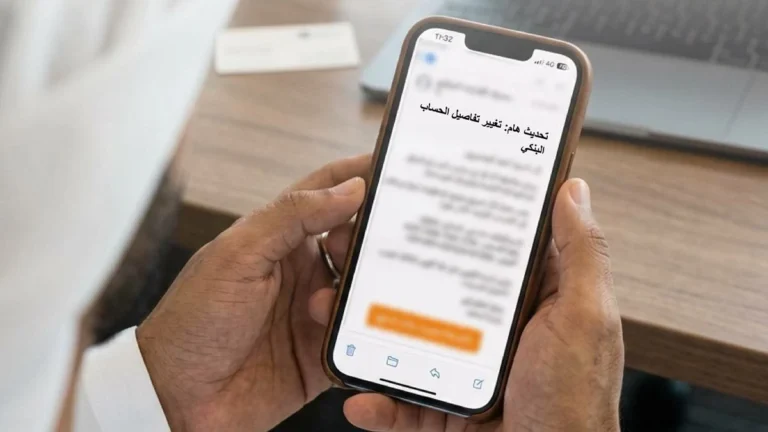
Small-scale borrowing in the UAE is no longer invisible to major financial institutions. Account data from micro-loan providers like CashNow, submitted through Botim Finance (formerly Quantix), is now formally included in official UAE credit reports.
This update builds on the recent inclusion of Buy Now, Pay Later (BNPL) records, giving banks and financial institutions a far clearer picture of total consumer debt. With Botim Finance supplying account records covering more than one million users, small app-based balances are now evaluated alongside traditional bank loans and credit cards.
Who the Credit Reporting Update Impacts
If you use mobile micro-lending platforms in the UAE, your payment activity now directly influences your credit standing. Whether borrowing AED 100 to cover an immediate expense or taking out up to AED 30,000 through providers like CashNow, those balances are now part of your official financial history.
For daily borrowers, this change carries two major operational consequences:
- Credit Building Potential: Repaying micro-loans on time now builds a verified credit history, helping borrowers demonstrate financial reliability to traditional banks.
- Liability Exposure: Unpaid micro-loans or overdue balances now show up during routine credit checks, potentially impacting future applications for larger personal loans, auto financing, or mortgages.