Dubai RTA starts 90,000 sq m sidewalk rehab under 2026 plan
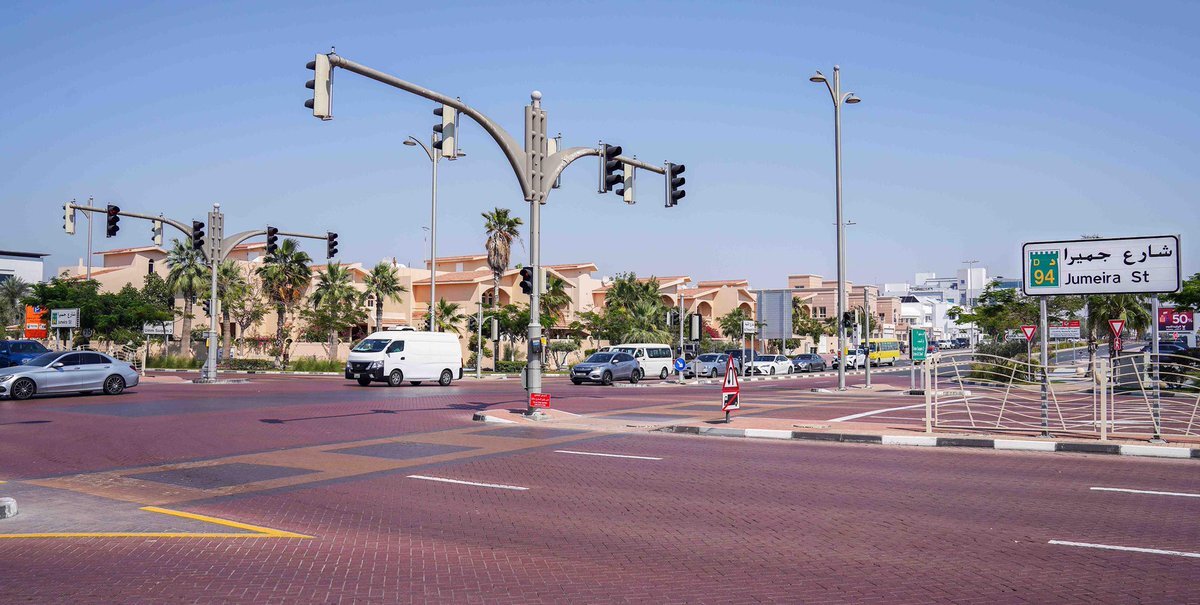
Dubai RTA sidewalk maintenance 2026 is now underway, with Dubai’s Roads and Transport Authority (RTA) confirming it has started sidewalk maintenance and rehabilitation works across the emirate covering a total of 90,000 square metres under its approved preventive maintenance plans for 2026.
RTA said the programme targets sidewalks in residential, tourist, commercial, economic, and coastal areas across Dubai, which means works can appear in multiple districts at the same time rather than in one long continuous closure.
The 2026 scope is slightly higher than last year’s completed output. RTA reported it maintained and rehabilitated about 88,000 square metres of sidewalks in 2025 across the same mix of area types around the emirate.
For residents and businesses, the immediate impact is practical. Expect short, localized work zones on footpaths and near storefronts. Temporary diversions may add minutes to walking routes to nearby services and public transport stops on affected streets.
Quick Intel
- Scale (2026): RTA confirmed 90,000 sq m of sidewalk maintenance and rehabilitation works across Dubai under the 2026 preventive maintenance plan.
- Benchmark (2025): RTA reported about 88,000 sq m of sidewalks were maintained and rehabilitated in 2025.
- Where: Works cover residential, tourist, commercial, economic, and coastal areas across the emirate, per RTA’s announcement.
- What to do: If your daily route includes a work zone, plan a short detour and allow extra time for walking to nearby destinations until the crew moves on.
Residents should watch for temporary pedestrian diversions in their neighbourhood and budget extra walking time while RTA’s 2026 sidewalk works move across Dubai.

Dubai Police reports 99.9% daytime safety score for 2025
Daytime safety perception hits 99.9%, What it means for Dubai’s bottom line
99.9%, Dubai Police achieved this daytime safety perception score in the 2025 Security Quality of Life Survey, conducted by the Federal Competitiveness and Statistics Centre with the UAE Ministry of Interior.
A near‑perfect safety index translates into tangible cost advantages: retailers can schedule extended opening hours without adding private guards, hospitality venues see higher evening patronage, and logistics firms face fewer disruptions during daylight deliveries.
| Metric | Operational impact |
|---|---|
| Daytime safety perception (2025), 99.9% | Residents enjoy unrestricted movement, reducing personal security expenses; retailers and hospitality operators can justify longer hours, boosting sales; insurers may lower premiums for businesses in low‑risk zones; event planners can market “safe‑city” confidence to attract international attendees. |
The survey’s perception‑based nature means the figure reflects how safe people *feel* during daylight, not a raw crime count. For entrepreneurs, that feeling drives foot traffic: a shopper who trusts the streets is more likely to visit a mall or boutique, directly lifting revenue per square metre. Hospitality managers can schedule late‑night service staff with confidence that the city’s safety reputation will keep reservation cancellations low, trimming overtime payroll. Real‑estate developers can leverage the index in marketing materials, justifying premium rents for office space that promises a secure environment for talent retention.
For the resident workforce, the index reduces the hidden cost of personal security, no need for private alarms or extra travel insurance when commuting. That extra disposable income can be redirected toward consumption, feeding the same retail cycle that businesses rely on. Moreover, the high perception score strengthens Dubai’s brand when courting foreign investors; capital allocation decisions often weigh safety metrics alongside tax regimes, and a 99.9% rating removes a potential risk flag from due‑diligence checklists.
While the figure is encouraging, savvy operators should still monitor complementary safety data, response times, incident reporting, and enforcement outcomes, to avoid complacency. A balanced view ensures that the optimism reflected in the perception index does not mask isolated hotspots that could affect localized operations. Aligning security budgets with the index’s confidence level can free up cash for growth initiatives, such as digital transformation or market expansion, without sacrificing protection.
Bottom line: the 99.9% daytime safety perception gives Dubai businesses a measurable edge, higher consumer confidence, lower private security spend, and a stronger case for premium pricing or rent. Companies that embed this metric into their risk‑management models will see immediate upside in cost structures and long‑term resilience.

UAE Cybersecurity Council Blocks Sophisticated Financial Sector Attacks
UAE Cybersecurity Council Stops Major Cyber Threats to Banking System
The UAE Cybersecurity Council announced that it had neutralized sophisticated cyberattacks aimed at the nation’s financial sector, with no interruption to banking services. The statement directly concerns banks, payment providers and their customers across the Emirates.
Proactive threat‑hunting teams and newly‑formed partnerships with telecom operators and cloud providers were credited for the swift containment. The council’s briefing highlightd a shift toward real‑time monitoring and coordinated response drills that go beyond routine compliance checks.
Banking services remained fully operational across the UAE, meaning ATMs, online portals and point‑of‑sale terminals continued to function without delay.
The council’s success follows a 2024 incident in which a ransomware strain briefly disabled a regional payment gateway, prompting the launch of the current joint‑defense framework.

Dubai Police warning after Jebel Ali crash injures 25
25 injured as broken‑down bus hit on Jebel Ali Road; police urge caution
A broken‑down bus on Jebel Ali Road was struck by three vehicles, injuring 25 people. Dubai Police issued an immediate road‑safety warning to motorists.
Police stress that abrupt stops on fast‑moving highways can trigger chain‑reaction collisions, a risk highlighted by the recent multi‑bus incident. The warning comes as Jebel Ali Road serves as a key artery for commuters and freight, where speeds regularly exceed 80 km/h.
The crash left 25 individuals with injuries ranging from minor cuts to serious trauma. Drivers are urged to keep moving unless a breakdown is unavoidable, pull into a designated emergency lane, activate hazard lights, and contact the police without delay. Rapid risk reduction, the force said, can prevent secondary impacts that otherwise turn a single breakdown into a multi‑vehicle pile‑up.
The police message aims to cut down on unexpected stoppages that historically pose significant dangers and heightened liability for all road users.

Lionel Messi 20th World Cup goal lifts Golden Boot lead
Messi's 20th World Cup strike crowns him Golden Boot frontrunner
Lionel Messi netted his 20th World Cup goal on July 4, 2026, during the 2026 FIFA World Cup. The tally propels Argentina’s captain to the top of the tournament’s Golden Boot race.
The strike extended his scoring run to eight straight matches and eclipsed Miroslav Klose’s all‑time World Cup tally.
Messi’s 20th World Cup goal puts him ahead in the Golden Boot standings. Kylian Mbappé and Erling Haaland were next in the Golden Boot standings with six goals each as of July 3, 2026, trailing Messi’s tournament-leading total.

Emirates urges early arrival at DXB July 3‑5
DXB faces heavy traffic July 3‑5; Emirates tells flyers to add three‑hour buffer
Dubai International Airport (DXB) will see a surge of passengers from July 3‑5, 2026.
Longer queues and tighter gate cut‑offs at DXB terminals
The advisory reflects Dubai’s broader effort to keep airport flow smooth during seasonal travel spikes.