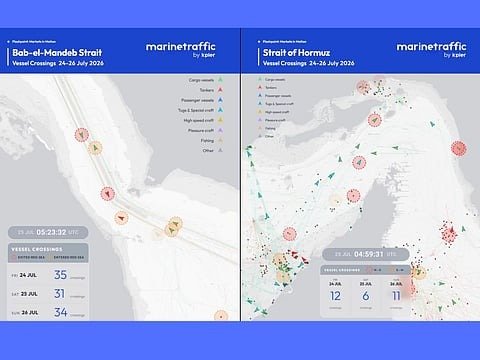
Hormuz Traffic Slows to 29 Crossings
29 Verified Crossings: The Strait of Hormuz, a vital artery for the global fossil fuel trade, saw a significant decline in ship traffic between July 24 and 26, with only 29 verified crossings, according to ship-tracking data from MarineTraffic. Of these, 21 vessels were exiting the Middle East Gulf, while 8 vessels were entering.
This divergence in maritime traffic patterns comes amid heightened regional tensions, including US-Iran confrontations, Houthi activities linked to Yemen, and attacks or threats affecting commercial shipping. The Bab al-Mandab Strait, which serves as the gateway between the Indian Ocean and the Red Sea, has seen 100 verified crossings during the same period, indicating a steady flow of traffic.
| Strait | Verified Crossings |
|---|---|
| Strait of Hormuz | 29 |
| Bab al-Mandab Strait | 100 |
The decline in ship traffic through the Strait of Hormuz may have significant implications for the global fossil fuel trade, as approximately one-fifth of global oil passes through this narrow waterway. The split routing in Hormuz, with 14 vessels using the Iranian unilateral scheme, 14 undetermined, and one following the Hormuz Traffic Separation Scheme, may also indicate a shift in navigation patterns due to security concerns.
For businesses and entrepreneurs involved in the global fossil fuel trade, this shift in maritime traffic patterns may result in increased costs and delays. The potential for rerouting or assessing alternative routes, including longer journeys around Africa, may also impact shipping schedules and supply chain logistics.