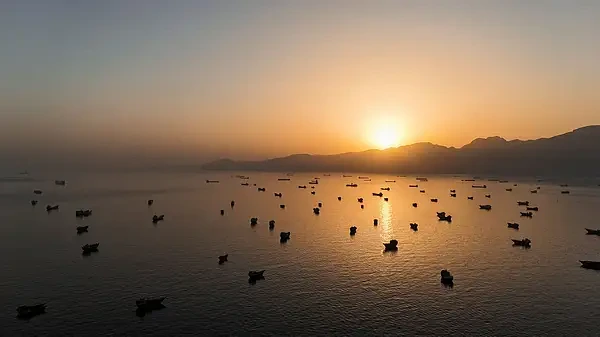
(Credit - Khaleej Times)
IEA Red Zone Warning: Hormuz Crisis Is Draining the World’s Oil Safety Net
The IEA red zone warning, issued June 5, 2026, is unambiguous, the International Energy Agency says the global economy is approaching a threshold where oil market buffers can no longer absorb further shocks from the ongoing Strait of Hormuz crisis, and severe supply shortages could materialise as early as July.
The Chess Move: Not Just a Shipping Dispute, A Systemic Stress Test
The IEA isn’t just flagging a regional chokepoint problem. It’s signalling that the architecture of global energy security, spare production capacity, commercial inventories, and emergency strategic stocks, is being quietly hollowed out in real time. When those layers thin simultaneously, the system loses its ability to absorb the next shock. That is what “red zone” means in operational terms: the cushion is gone before the crisis peaks.
The Strait of Hormuz is the world’s single most consequential oil-shipping corridor. A sustained disruption there doesn’t require a complete blockade to cause damage, even partial interference with tanker traffic compresses the physical availability of prompt cargoes, forces rerouting, and drives up freight and insurance costs. The IEA‘s warning is that this compression is already happening, and the buffers that would normally absorb it are no longer adequate.
Economic Driver: Buffers Were Already Thin Before This Crisis
Global oil markets entered 2026 with limited spare capacity headroom and commercial inventories that had not been rebuilt to pre-pandemic norms. The Hormuz disruption has accelerated the drawdown. Once commercial stocks fall below operational minimums, importers and refiners shift from managing price risk to managing physical availability, a qualitatively different and more destabilising problem. The IEA’s July, August window is not arbitrary: summer demand peaks for transport and power generation in the Northern Hemisphere, tightening the market precisely when the buffer erosion is most advanced.
Geopolitical Driver: The Strait Cannot Be Rerouted Around
Unlike some chokepoints, the Strait of Hormuz has no commercially viable bypass for the volumes it carries. Alternative routing, around the Arabian Peninsula via overland pipelines or longer sea lanes, exists for a fraction of normal throughput. The IEA’s explicit call for a “full reopening” of the strait reflects this structural reality: there is no market-based workaround at scale. The geopolitical resolution of the crisis, not a supply-side adjustment, is the primary variable the agency is watching.
Inflation Driver: Energy Costs Feed Everything Else
A supply shock of the magnitude the IEA is describing does not stay contained to fuel prices. Higher crude costs transmit into transport, petrochemicals, fertilisers, and manufacturing inputs within weeks. For central banks already navigating sticky inflation, an energy-driven price spike complicates the path to rate normalisation, potentially keeping borrowing costs elevated for longer and compressing growth. The IEA’s “red zone” framing is, in part, a warning to fiscal and monetary policymakers, not just energy ministers.
The Ripple Effect: Three Groups Facing Immediate Exposure
Energy-intensive industries and manufacturers face the most direct near-term pressure. If prompt crude and refined product availability tightens in July, August as the IEA warns, procurement costs rise and supply reliability falls simultaneously. Sectors with thin margins and limited hedging, mid-sized manufacturers, logistics operators, airlines, have the least capacity to absorb the shock. Inventory building ahead of the peak window is the rational response, but it accelerates the very drawdown the IEA is warning about.Governments managing import-dependent economies, particularly across South and Southeast Asia, which rely heavily on Gulf crude, face a dual exposure: higher import bills that widen current account deficits, and potential fuel subsidy pressures if retail prices are administered. The speed of any diplomatic resolution to the Hormuz situation will determine whether emergency stock releases become necessary. Strategic petroleum reserve drawdowns, if triggered, provide weeks of cover, not months.Financial markets and commodity traders are already pricing in elevated volatility. The IEA warning validates the directional risk that has been building in crude futures, tanker freight rates, and energy equity positioning. Wider spreads between near-term and forward delivery prices, a structure known as backwardation, signal that physical tightness is being priced into prompt markets. Shipping insurers and protection-and-indemnity clubs are also recalibrating war-risk premiums for Hormuz transits, a cost that ultimately flows through to end consumers.The Contrarian View
The strongest counter-argument is that the IEA has institutional incentives to issue precautionary warnings, and that markets, which process real-time tanker tracking, cargo data, and inventory flows, have not yet priced in a catastrophic shortage scenario. If major producers outside the Hormuz corridor accelerate output, or if a diplomatic channel opens faster than the IEA’s timeline assumes, the July, August crunch could prove less severe than the agency’s framing implies. The warning is calibrated to the current trajectory, not to a resolved scenario, and trajectories can change.
- Agency: International Energy Agency (IEA), warning issued June 5, 2026
- Risk window: Severe oil market shortages flagged for July and August 2026
- Core mechanism: Strait of Hormuz disruption draining spare capacity, commercial inventories, and emergency buffer stocks
- IEA’s stated requirement: Full reopening of the Strait of Hormuz to avert a deeper supply shock
The IEA’s red zone designation is a structural alarm, not a price forecast, it signals that the system’s shock-absorption capacity is being consumed faster than it can be replenished. The July, August window is the critical test: if the Strait of Hormuz remains disrupted through peak summer demand, the gap between available supply and market need narrows to a point where price and availability stress become unavoidable. The next key signals to watch are tanker traffic data, any coordinated emergency stock release, and the diplomatic timeline for strait access.

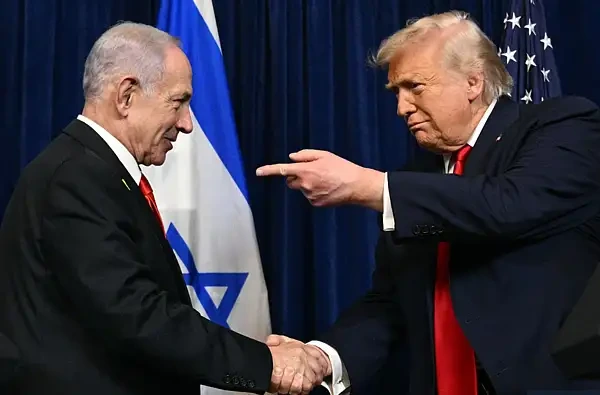
Trump Addresses US Troop Deaths in Iran Attack
Trump Responds to Fatal Attack on US Troops in Jordan
President Trump addressed the deaths of US troops in an Iranian attack on Jordan. The incident occurred on July 20, 2026, and has resulted in US troop casualties, escalating regional tensions. US troops were killed in the attack, which has been attributed to Iran.
The US-Iran conflict has been escalating, with both countries trading strikes. This incident marks a significant development in the ongoing tensions in the Middle East. The attack on US troops in Jordan has raised concerns about the growing conflict in the region.
The conflict between the US and Iran has been worsening, with both sides engaging in military actions. The situation in the Middle East remains volatile, with various countries involved in the conflict. The deaths of US troops in Jordan have added to the tensions, and the international community is watching the situation closely.
This incident is the latest in a series of events that have increased tensions in the Middle East. The US and Iran have been involved in a conflict that has been escalating over time. The attack on US troops in Jordan is a significant development in this conflict, and its implications are being closely watched by the international community. The situation in the region remains unstable, with the potential for further escalation.
In related news, Yemen's Houthis have threatened a "maritime embargo" against Saudi Arabia, which could worsen the economic impact of the regional conflict. The Middle East conflict has been escalating, with various countries involved, and the situation remains volatile.

Zohran Mamdani Weighs Netanyahu Arrest
Mamdani Considers Arresting Netanyahu at UN Summit
New York Mayor Zohran Mamdani is consulting legal experts over whether to try to arrest Israeli Prime Minister Benjamin Netanyahu during an upcoming UN summit. Mamdani believes Netanyahu belongs in The Hague, calling him a "war criminal" who has been charged by the International Criminal Court. The mayor's comments have prompted a sharp rebuke from Netanyahu's camp.
Mamdani, who has called Israel an "apartheid regime," stated that his opinion is shared by many due to Netanyahu's actions over the years. He admitted uncertainty about his power to order the New York Police Department to detain a foreign leader but is discussing the matter with the city's legal team. Mamdani emphasized that he will take whatever action the law allows him to do in New York City.
The potential arrest of Netanyahu would be a significant development, with implications for international relations and the United Nations. As the situation unfolds, it remains to be seen what actions Mamdani will take and how the international community will respond.
This development comes as the UN summit approaches, scheduled for September 2026. The summit will bring together world leaders, including Netanyahu, to discuss various global issues. Mamdani's consideration of arresting Netanyahu adds a new layer of complexity to the upcoming summit.

US Troops Killed in Iran Attack
Iranian Attack in Jordan Kills Two US Troops, One Missing
Two US troops were killed and one is missing following an Iranian attack in Jordan. The incident occurred on July 19, 2026, and marks a significant escalation in regional tensions between the US and Iran. US military personnel are among those affected by the attack, which is part of the ongoing geopolitical conflict and proxy warfare between the US and Iran in the Middle East.
The attack has heightened concerns about the safety of US troops in the region and the potential for further escalation. Analysts warn that any attacks near the Red Sea could worsen the economic impact of the regional conflict. The incident is the latest in a series of strikes between Iran and the US, with the two countries trading blows for the ninth night.
The US-Iran war is increasingly escaping the control of those waging it, with Yemen\'s Houthis threatening a \"maritime embargo\" against Saudi Arabia. The situation is complex, with multiple parties involved and various interests at play. The US has announced the start of Israel\'s withdrawal from \"pilot zones\" in south Lebanon, which may have implications for the regional conflict.
This incident is connected to the broader Middle East conflict, which has seen various countries and factions involved in proxy warfare and geopolitical tensions. The US and Iran have been on opposite sides of the conflict, with each seeking to exert its influence in the region. The attack on US troops in Jordan is a significant development in this ongoing conflict.

US service members killed in Iran strikes on Jordan
Iran Strikes Kill US Service Members in Jordan
Two US service members were killed and one is missing after Iran launched missile and drone attacks on Jordan. The incident occurred on Friday, July 17, 2026, with US Central Command confirming the casualties. Jordanian air defenses intercepted additional missiles on Saturday, July 18, 2026. The attacks, which also injured four US service members, were carried out by Iranian ballistic missiles and drones against US and partner forces in Jordan.
The US Central Command, also known as Centcom, announced the incident on Saturday, July 18, 2026, after Jordanian national air defense systems intercepted 10 Iranian missiles. The Pentagon confirmed the details of the attack, which resulted in the deaths of two US service members and left one missing. The incident highlights the escalating tensions in the Middle East, particularly between the US and Iran.
The Jordanian air defenses played a crucial role in intercepting the Iranian missiles, preventing further damage and casualties. The US Central Command has been working closely with its partners in the region to address the growing threat posed by Iran's military activities. The incident has significant implications for the region's stability and security, with the US and its allies likely to reassess their military presence and strategies in response to the attack.
This incident is the latest in a series of escalations between the US and Iran, with both countries engaging in a war of words and proxy conflicts in the region. The attack on Jordan, a key US ally in the Middle East, highlights the complexities and challenges of the regional conflict. As the situation continues to unfold, the international community will be closely watching the developments and potential responses from the US and its allies.

Kuwait Reports Iranian Attack
Kuwait Power Plant Attacked Again by Iran
In Kuwait, a power generation and water desalination plant was attacked for the second time in two days by Iran, according to Kuwait\'s Ministry of Electricity, Water and Renewable Energy. The attack, which occurred on Sunday, July 19, 2026, caused a fire in parts of the facility and affected a large number of power generation units.
The ministry stated that emergency plans were activated immediately to contain the incident and preserve the stability of the national power grid. Kuwait Fire Force responded quickly to contain the blaze, while the ministry\'s technical and emergency teams, in coordination with relevant security authorities, began implementing precautionary measures, assessing the damage, and working to restore the affected units as quickly as possible.
This incident is part of the ongoing conflict between Kuwait and Iran, with Kuwait facing missile threats and drone attacks. The attack on the power plant has significant implications for the country\'s electricity and water supply, and the government is working to minimize the impact on citizens.
The attack on Kuwait\'s power plant is linked to the broader Gulf conflict, with the US striking Iran and other Gulf states facing missile threats. The situation remains volatile, with the potential for further escalation.
In the context of the Dubai Economic Agenda D33, which aims to enhance the emirate\'s economic security and resilience, the attack on Kuwait\'s power plant highlights the importance of diversifying energy sources and investing in renewable energy. The UAE\'s own experiences with ensuring energy security can provide valuable lessons for Kuwait as it navigates this challenging situation.