(Credit - Khaleej Times)
Ruang Volcano Eruption Forces Airport Shutdown and Spreads Ash to Malaysia
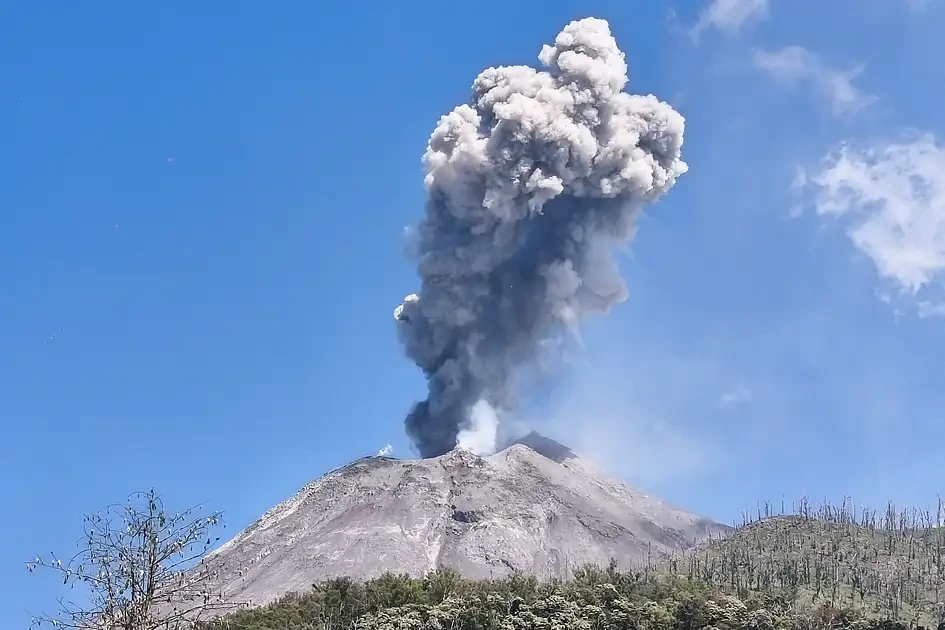
The Ruang volcano eruption in North Sulawesi, Indonesia on June 5, 2026 forced the closure of an airport approximately 60 kilometres from the crater, grounding flights and triggering evacuations as a spreading ash cloud reached as far as Malaysia. Passengers, airlines, and cargo operators across the Southeast Asian air corridor are facing immediate disruption with no confirmed timeline for resumption of normal operations.
Ash Cloud Crosses Borders, Grounding Flights Across the Region
Ruang volcano, located on Ruang Island in North Sulawesi, sent a sustained ash plume into the atmosphere following the eruption. Indonesian authorities responded by ordering the closure of the nearest airport, situated roughly 60 kilometres from the volcano, citing the acute hazard that volcanic ash poses to jet engines. Even at that distance, ash concentration in the air column was sufficient to make flight operations unsafe under standard aviation protocols.
Volcanic ash is not merely a visibility problem. Fine silicate particles can melt inside turbine engines, solidify on internal components, and cause catastrophic failure. Aviation authorities typically issue Volcanic Ash Advisories that trigger automatic airspace restrictions, forcing airlines to reroute, cancel, or hold aircraft on the ground. The ash from the Ruang eruption did not stop at Indonesia‘s borders, reports confirmed fallout reaching Malaysia, meaning regional air corridors linking the two countries came under pressure simultaneously. Airlines operating those routes faced rapid decisions on aircraft positioning, crew scheduling, and passenger reaccommodation, often with limited advance notice as the ash cloud’s trajectory shifted.
Evacuations Underway as Communities Face Respiratory and Safety Risks
Beyond aviation, Indonesian authorities initiated evacuations of communities near Ruang Island. Volcanic ash at ground level creates serious respiratory hazards, reduces visibility to dangerous levels, and signals the potential for further explosive activity. Airport closures in such scenarios also complicate disaster response logistics, slowing the movement of emergency personnel, medical supplies, and relief equipment into affected areas, adding pressure to local shelter and coordination capacity.
- Eruption location: Ruang Island, North Sulawesi, Indonesia
- Airport closure distance: Approximately 60km from the crater
- Regional ash impact: Fallout reported reaching Malaysia
- Ground response: Evacuations ordered for communities near the volcano
The Ruang volcano eruption has simultaneously shut down a regional airport, disrupted cross-border air routes, and forced evacuations on the ground, a cascading sequence that typically unfolds within hours of a major ash event. Travellers with flights connecting through North Sulawesi or on routes between Indonesia and Malaysia should contact their carriers directly for the latest schedule status. The situation remains active and ash advisory updates from aviation authorities will determine when airspace restrictions are lifted.*Source: Khaleej Times / AFP reporting, June 5, 2026.*


UAE delivery platforms roll out heat safety measures
UAE Delivery Platforms Introduce Heat Safety Measures for Riders
As the midday break rules take effect in the UAE, delivery platforms such as Careem and Talabat are rolling out heat safety measures to protect their riders from the extreme heat. In Dubai, where temperatures can soar up to 41.2°C, these measures are crucial to ensure the health and safety of delivery riders.
The new heat safety measures include capping orders at three during peak heat hours, which typically last from 12:30 PM to 3 PM. This cap is designed to limit the total delivery time to 60 minutes, reducing the exposure of riders to the extreme heat. Additionally, over 12,000 cooling stations have been made available across the country, providing riders with a safe and cool place to take a break.
The Ministry of Human Resources and Emiratisation (MoHRE) has implemented the midday break rules to protect workers, including delivery riders, from the extreme heat during the summer months. The rules, which are in effect from July 21, 2026, to September 15, 2026, aim to reduce the risk of heat-related illnesses and ensure the well-being of workers.
The introduction of heat safety measures by UAE delivery platforms is a welcome move, and it demonstrates their commitment to the health and safety of their riders. By providing access to cooling stations and capping orders during peak heat hours, these platforms are taking proactive steps to mitigate the risks associated with extreme heat.
The midday break rules and heat safety measures are part of a broader effort by the UAE authorities to protect workers and ensure their well-being during the summer months. As the country continues to experience extreme heat, it is essential for employers and platforms to take proactive measures to safeguard the health and safety of their workers.
In the UAE, the summer months can be challenging for delivery riders, who often have to work in extreme heat for extended periods. The introduction of heat safety measures by UAE delivery platforms is a positive step towards reducing the risks associated with heat-related illnesses and ensuring the well-being of riders.

UAE public holiday law may bring August long weekend
UAE Public Holiday Could Bring 3-Day Weekend in August
The UAE's public holiday transfer rule could bring a welcome three-day weekend in August for residents, with the Prophet Muhammad's Birthday potentially being moved to Monday, August 24. This shift, if approved, would create a long weekend, as the regular weekend would precede the holiday. The move is part of a 2025 Cabinet Resolution that allows certain public holidays to be transferred to the beginning or end of the week to create longer breaks, aiming to improve workplace well-being and support workforce planning.
Potential Impact on Residents and Employers
The potential three-day weekend would fall during the final week of the school summer break, with the 2026-27 academic year set to begin on August 31. This could provide a well-timed break for families before the new school year commences. Employers should retain flexible rosters until federal authorities publish the confirmed holiday date, as the transfer is not automatic and requires an official decision.The UAE's public holiday calendar includes the Prophet Muhammad's Birthday, but the final date and any change to the holiday will only be confirmed through an official announcement. Residents are advised to stay updated with the latest news for confirmation on the holiday dates.
How the Holiday Transfer Rule Works
The UAE Cabinet can move certain public holidays that fall during the week to the beginning or end of the week to create longer breaks. Such transfers are not automatic and require an official decision. According to the 2025 Cabinet Resolution, public holidays, except for Eid, can be moved to the beginning or end of the week. This rule is designed to provide more flexible and longer breaks for residents, enhancing their work-life balance.The potential long weekend in August is subject to official confirmation, but if approved, it would undoubtedly be a welcome break for UAE residents. As the summer heat continues, the possibility of an extended weekend is a positive note, offering residents a chance to relax, travel, or spend quality time with family before the new school year begins.

Emiratisation Drives UAE Private Sector Growth
Emiratis in Private Sector Hit 190,000
The number of Emiratis working in the private sector in the United Arab Emirates has exceeded 190,000 across nearly 32,000 establishments in the first half of 2026, according to the Ministry of Human Resources and Emiratisation (MoHRE). Local Emirati workers are increasingly being employed in the private sector, with this milestone highlighting the sector's growing commitment to national talent and the effectiveness of Emiratisation policies.
Emiratisation efforts have led to a significant increase in the number of Emiratis in the private sector, with nearly 32,000 establishments now employing over 190,000 Emirati workers. This development highlights the private sector's role in supporting the UAE's economic diversification and promoting Emirati participation in the workforce.
The Ministry of Human Resources and Emiratisation's report for the first half of 2026 confirms the progress made in Emiratisation, with the private sector demonstrating its capacity to absorb and retain national talent. This trend is expected to continue, driven by the UAE's strategic initiatives to enhance Emirati employment opportunities and develop a more inclusive and diverse workforce.
In the context of the UAE's broader economic strategy, this milestone reflects the country's efforts to promote economic growth, diversification, and sustainable development, as seen in previous initiatives such as the UAE's Vision 2021, which aimed to increase the number of Emiratis in the private sector.

UAE flight cancellations hit Kuwait routes
UAE Airlines Cancel Kuwait Flights Amid Tensions
Etihad Airways, Emirates, Air Arabia, and flydubai have cancelled flights to Kuwait as Gulf tensions disrupt UAE operations. Etihad has extended the suspension of selected Kuwait services until July 24, 2026. Passengers travelling between the UAE and Kuwait face disruption due to the cancellations, which were prompted by operational reasons amid heightened regional tensions.
The latest cancellations come after Iranian military strikes targeted US facilities in Kuwait and Bahrain, leading airlines to adjust their operations. Etihad Airways said flights EY653 and EY654 between Abu Dhabi's Zayed International Airport and Kuwait International Airport have been cancelled until July 24, 2026. Emirates has also cancelled flight EK857 from Dubai to Kuwait.
Kuwait International Airport had resumed operations on June 1, 2026, following a phased reopening plan, but the current tensions have led to further disruptions. The airlines have urged affected passengers to ensure their contact details are updated to receive the latest flight information.
This development is linked to the earlier announcement of US global travel caution issued in response to the escalating tensions in the region.

Dubai Smart Gates Eligibility Check
Skip Dubai Airport Queues with Smart Gates Eligibility Check
Travellers arriving at or departing from Dubai International Airport (DXB) can now check their eligibility for Smart Gates online before flying. The Smart Gates PreCheck tool allows passengers to scan their passports and confirm access to biometric gates, reducing immigration waiting times.
To check eligibility, travellers can use the Smart Gates PreCheck tool, which is accessible online. This tool takes less than a minute to complete and reveals whether passengers can skip traditional passport control queues and use biometric gates.
The General Directorate of Residency and Foreigners Affairs (GDRFA) Dubai has introduced this service to help travellers avoid traditional queues and utilize the expanding biometric border technology for faster processing. With this tool, passengers can clear immigration in just a few seconds.
| Category | Details |
|---|---|
| Eligibility Check | Smart Gates PreCheck tool |
| Processing Time | <td Less than a minute
Required documents for the Smart Gates PreCheck tool include:
- A valid passport
- Access the Smart Gates PreCheck tool online.
- Scan your passport using the tool.
- Confirm your eligibility for Smart Gates.
Last updated: July 20, 2026