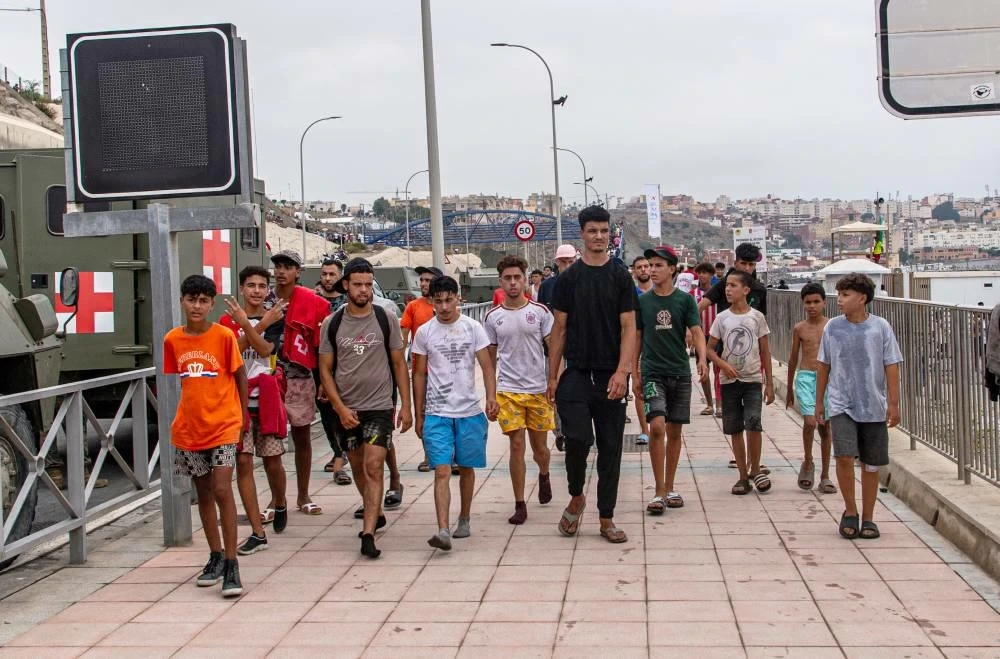
1,342 Migrant Minors to be Transferred from Ceuta to Mainland Spain
Spain‘s leftist government expects to transfer some migrant minors from overcrowded reception centres in the North African enclave of Ceuta to the mainland within weeks. Youth Minister Sira Rego stated that 1,342 minors have been registered so far, and more staff will be drafted in to help the effort. The transfer aims to alleviate the migration crisis in Ceuta after a deadly border rush last week, in which as many as 72,000 migrants illegally crossed into Ceuta from Morocco, resulting in dozens of deaths.
The situation in Ceuta remains challenging, with many unaccompanied minors still in the territory. Rego acknowledged the “painful images” of children sleeping rough on Ceuta’s streets and announced that two schools have been opened and more spaces will be evaluated as potential reception centres. Priority will be given to girls and boys under 13 for the transfer to the mainland.
The far-right opposition has raised objections to the transfers, citing concerns about regional authorities’ ability to handle the reception of migrant minors on the mainland. Meanwhile, Morocco has expressed its readiness to cooperate with Spain on the return of unaccompanied minors who crossed into Ceuta last week. Spain will evaluate Morocco’s offer on a case-by-case basis, with Rego emphasizing that the country will prioritize the safeguarding of children’s rights.
1,100 unaccompanied minors who arrived before the border rush have saturated the local facilities, which can host up to 90 children. NGOs and resident groups estimate that the total number of minors could be several thousand. The Spanish government’s efforts to transfer the migrant minors to the mainland are expected to provide some relief to the overcrowded reception centres in Ceuta.
The migration crisis in Ceuta is not a new issue, with the territory experiencing a major border rush in 2021, when 8,000 people crossed the border. However, Rego noted that the profile of child migrants has changed in the past five years, with more unaccompanied girls and very young children arriving in Ceuta.