(Credit - MoFA X Account)
UAE Strongly Condemns Attack on ADNOC Carrier in Strait of Hormuz
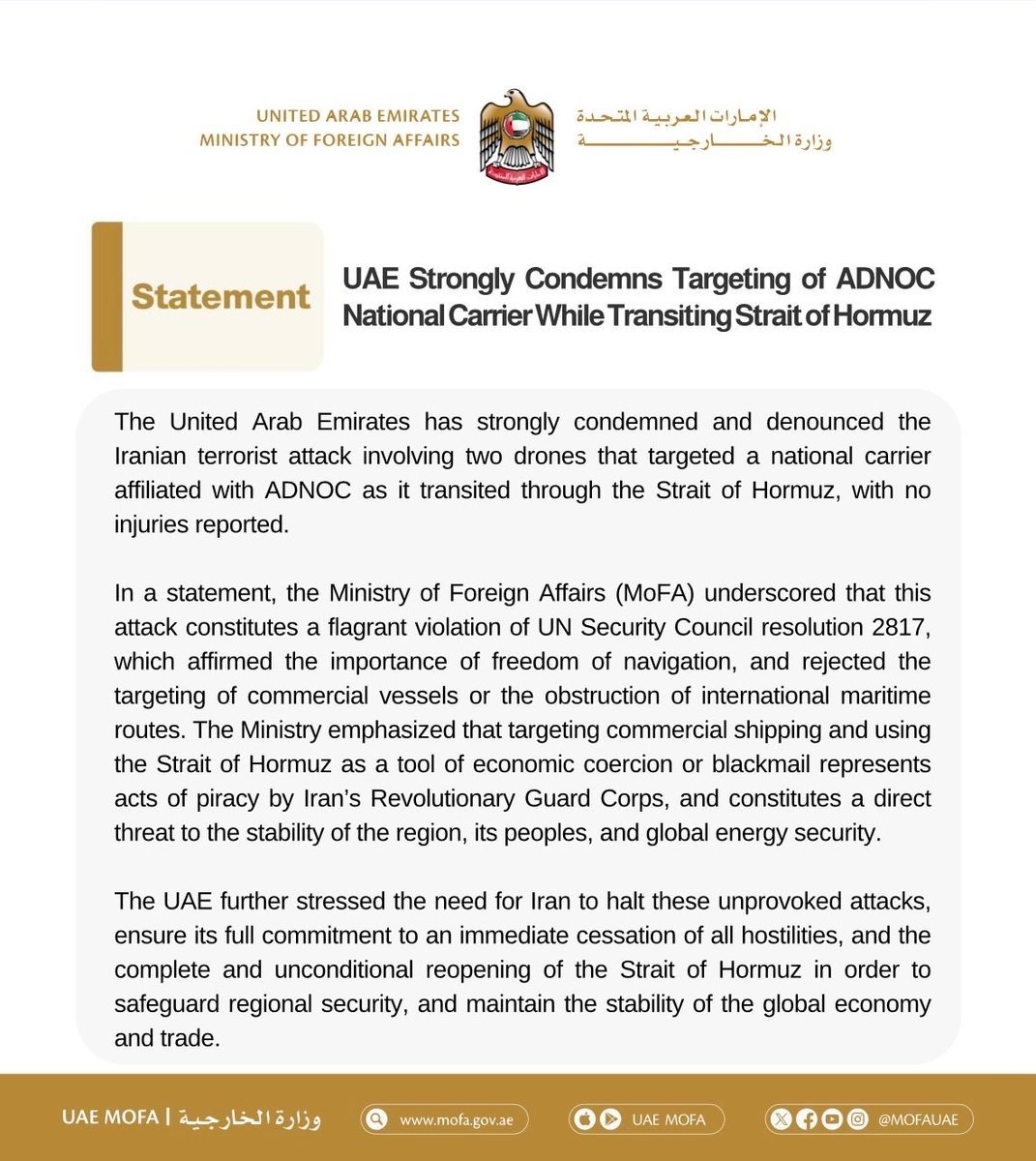
The UAE has condemned an Iranian attack targeting an ADNOC national carrier while it was transiting the Strait of Hormuz on May 4, 2026 , a direct strike on one of the world’s most critical energy shipping corridors that sends immediate shockwaves through global freight costs, maritime insurance rates, and regional supply chains.
UAE Condemns Attack ADNOC Carrier: MoFA Issues Official Statement
The UAE Ministry of Foreign Affairs issued an official condemnation of the attack, framing it as a threat to maritime security and the freedom of navigation through the Strait of Hormuz. The UAE also welcomed international condemnation of Iran‘s actions, signalling a deliberate push to build coordinated global pressure against attacks on commercial and energy shipping infrastructure. The Strait of Hormuz links the Arabian Gulf to the Gulf of Oman and the wider Indian Ocean, and a significant share of globally traded crude oil and liquefied natural gas moves through this narrow corridor every day.
ADNOC is a central pillar of the UAE economy and a major supplier to international energy markets. Its carriers regularly transit the Strait of Hormuz as part of the country’s export operations. When a vessel linked to ADNOC is targeted in transit, the consequences extend well beyond a single ship. Shipping operators reassess routing decisions, port call schedules shift, and war-risk insurance premiums rise , costs that cascade through supply chains and eventually reach businesses and consumers across the region.
What This Means for UAE Businesses and Shipping Operators
For logistics firms, energy traders, and importers operating out of Dubai and Abu Dhabi, the attack creates immediate operational pressure. War-risk premiums on vessels transiting the Strait of Hormuz are expected to rise in response to heightened threat perceptions. Charter rates can follow. Dubai’s trading and re-export ecosystem , one of the largest in the world , depends heavily on stable Gulf shipping lanes, and any sustained disruption forces companies to increase inventory buffers, widen delivery windows, or explore costlier alternative routes. The UAE Ministry of Foreign Affairs continues to monitor the situation and coordinate with international partners on the diplomatic response.
- Incident Date: May 4, 2026
- Location: Strait of Hormuz, during transit
- Vessel Targeted: ADNOC national carrier
- UAE Response: Official condemnation issued by the Ministry of Foreign Affairs (MoFA)
- International Position: UAE welcomed global condemnation of Iran’s actions
- Key Risk: Rising war-risk insurance premiums and potential freight rate increases on Gulf shipping routes
Subsequently in another report, the US Navy announced plans to escort vessels transiting the Strait of Hormuz following the attack, underscoring heightened security risks for commercial shipping in the waterway.
The Ministry of Foreign Affairs said the attack targeted an ADNOC-linked vessel in the Strait of Hormuz, warning it posed a direct threat to regional and global energy security.
The UAE called on Iran to halt actions that endanger international shipping and to reopen the Strait of Hormuz to ensure the uninterrupted flow of maritime trade and energy supplies.