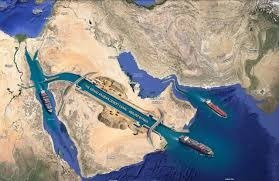
(Credit - Arabian Post)
UAE Pipeline Expansion to Double Fujairah Crude Exports by 2027
Abu Dhabi is accelerating a UAE pipeline expansion that will double crude export capacity through Fujairah by 2027, routing oil outside the Strait of Hormuz as US-Iran tensions tighten pressure on one of the world’s most critical shipping chokepoints. For energy traders, industrial buyers, and logistics operators, the move reshapes Gulf export flows and strengthens the UAE’s position as a reliable supplier to Asian and global markets.
UAE Pipeline Expansion: Fujairah Capacity Set to Double
The project targets a full doubling of the UAE’s crude export capacity from the Gulf of Oman coast, with Fujairah as the primary exit point. The initiative is being driven at the highest level of Abu Dhabi‘s leadership, with Crown Prince Sheikh Khaled bin Mohamed bin Zayed framing it as a national strategic priority rather than a routine infrastructure upgrade. ADNOC, Abu Dhabi’s state energy company, is the central operator behind the country’s crude export infrastructure and is expected to anchor the project’s execution.
The existing Abu Dhabi Crude Oil Pipeline , which already connects onshore production fields to the Fujairah terminal , forms the backbone of the bypass route. Expanding its throughput capacity means Abu Dhabi can sustain, and potentially increase, crude exports even if tanker traffic through the Strait of Hormuz is disrupted, delayed, or subject to elevated insurance premiums. Fujairah’s position on the Gulf of Oman places it entirely outside the Strait, giving the UAE a direct lane to open ocean shipping without passing through the contested waterway.
Why the Strait of Hormuz Risk Is Driving This Decision Now
The Strait of Hormuz handles roughly 20 percent of global oil trade. Any escalation between the United States and Iran , whether through sanctions enforcement, naval incidents, or direct confrontation , can spike tanker insurance costs, delay vessel scheduling, and inject sharp volatility into crude prices. For the UAE, whose fiscal planning and investment cycles are directly tied to export revenues, that exposure is a structural vulnerability. Accelerating the Fujairah bypass pipeline converts that vulnerability into a managed risk with a concrete operational alternative.
Fujairah has spent years building out the infrastructure to support exactly this kind of volume. The emirate already operates one of the world’s largest oil storage complexes, alongside bunkering facilities and port capacity capable of handling very large crude carriers. A capacity doubling by 2027 means Fujairah’s terminal throughput, storage utilisation, and port activity will all scale significantly , reinforcing its role as a major global energy hub independent of Gulf interior shipping lanes.
What This Means for UAE Energy Security and the Broader Economy
The Ministry of Energy and Infrastructure, alongside ADNOC, oversees the UAE’s energy resilience framework. A confirmed capacity doubling by 2027 represents a multi-year capital commitment that will influence upstream production planning, storage buildouts at Fujairah, and port throughput contracts. For businesses operating in the UAE, stable export continuity directly supports government revenue, which in turn underpins infrastructure spending, public services, and the broader investment environment. Energy traders holding long-term supply contracts with Abu Dhabi gain a concrete assurance that delivery reliability will not be hostage to Hormuz conditions.
| Factor | Detail |
|---|---|
| Project Goal | Double UAE crude export capacity via Fujairah |
| Target Completion | 2027 |
| Export Route | Gulf of Oman coast, bypassing the Strait of Hormuz |
| Key Location | Fujairah oil terminal, UAE |
| Strategic Driver | US-Iran tensions and Hormuz shipping risk |
| Leadership | Crown Prince Sheikh Khaled bin Mohamed bin Zayed |
| Primary Operator | ADNOC (Abu Dhabi National Oil Company) |
- Bypass Route: Fujairah terminal on the Gulf of Oman, fully outside the Strait of Hormuz
- Capacity Target: Double current crude export throughput from the Gulf of Oman coast by 2027
- Strategic Lead: Crown Prince Sheikh Khaled bin Mohamed bin Zayed has framed this as a national priority
- Operational Backbone: The Abu Dhabi Crude Oil Pipeline connects inland production fields directly to Fujairah
- Market Impact: Higher capacity reduces risk premiums tied to Hormuz route uncertainty for long-term buyers
- Fujairah Infrastructure: Existing large-scale storage, bunkering, and VLCC-capable port facilities support the expansion
Energy traders and industrial crude buyers holding long-term supply agreements with Abu Dhabi face a direct window of opportunity as the UAE pipeline expansion moves toward its 2027 capacity-doubling target. The near-term risk sits in the period before completion , any escalation around the Strait of Hormuz before 2027 could tighten shipping availability and push up insurance costs on Gulf-routed cargoes. Monitor ADNOC’s official communications and the Abu Dhabi Media Office for confirmed project milestones, procurement timelines, and capacity figures.